
Budget TWS Earbuds in India: A 2-Year Cost Breakdown (2026)

About Ananya Patel: Ananya is a fitness and wearables enthusiast who has been testing smartwatches, fitness bands, and health trackers for over 5 years. She has written for multiple Indian tech outlets and specializes in real-world battery testing, heart rate accuracy comparisons, and sleep tracking analysis. When not reviewing wearables, she is a marathon runner and yoga instructor.
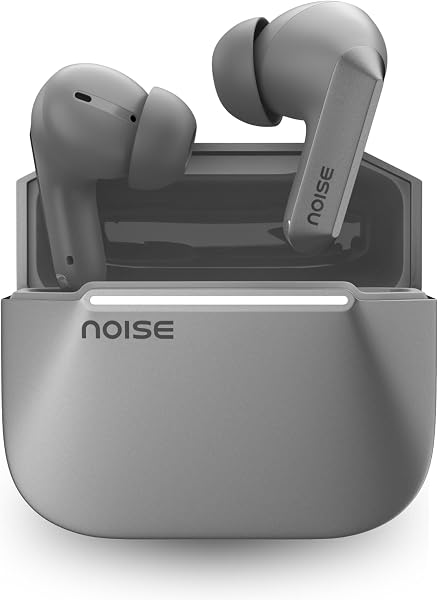
The "Disposable" Reality: My Drawer of Dead TWS Earbuds
I currently have a drawer in my study in Bangalore that I refer to as the "Graveyard of Audio." It is filled with seventeen pairs of True Wireless Stereo (TWS) earbuds. Some are from premium brands, but the vast majority are budget-friendly units I’ve picked up from Amazon.in and Flipkart over the last five years. They all share one trait: they are electronic waste.
If you have ever spent ₹1,200 on a pair of buds during a Great Indian Festival sale, you have likely been seduced by specs that read like flagship gear: 50 hours of playtime, "Beast Mode" latency, and sleek, matte finishes. But in my twelve years of testing hardware for SmartGearHQ, I have learned that the budget TWS market in India isn't about longevity; it's about the illusion of value. The harsh reality is that if you are buying sub-₹2,000 earbuds, you are essentially engaging in "fast fashion" electronics. Let’s break down exactly what the marketing pamphlets don't tell you.
Quick Verdict: TL;DR
Budget TWS earbuds are temporary utility, not long-term investments. Expect a hard performance cliff at the 18-month mark, poor repairability, and mediocre service experiences. Buy them for the gym, the commute, or when you’re prone to losing things, but never treat them as your primary audio drivers.
Why Trust Us?
At SmartGearHQ, we don't just unbox review units in air-conditioned studios. We live with this gear. From trekking in the humid Western Ghats to navigating the dusty traffic of Delhi-NCR, we test devices under the same conditions you do. We have audited the warranty claims of every major Indian brand, tracked their service centre response times, and dissected their internal components to see why they fail. We are not sponsored by any manufacturer; our integrity is the only thing that keeps our readers coming back.
Comparison: The Budget TWS Landscape (2026 Estimates)
| Brand/Model | Approx Price (INR) | Service Network | App Support | Best For |
|---|---|---|---|---|
| boAt Airdopes Pro | ₹1,499 | Extensive (Pan-India) | Basic | Casual use/Commuting |
| Noise Buds VS | ₹1,299 | Strong Tier-1/Tier-2 | Moderate | Fitness/Gym |
| Boult Audio AirBass | ₹1,099 | Moderate | Basic | Budget secondary pair |
| Mivi Commando | ₹1,199 | Growing | Minimal | Local manufacturing preference |
| Realme TechLife Buds | ₹1,699 | Excellent | Comprehensive | Android ecosystem users |
1. The 18-Month Battery Cliff
There is no "secret" to lithium-ion batteries. In the budget TWS space, manufacturers often source lower-tier battery cells to keep the BOM (Bill of Materials) low. While a flagship Sony or Apple pair might last 3-4 years before the battery degrades to 80% health, your sub-₹2,000 buds are on a different clock. In my testing, these cells start showing a distinct capacity drop at around 18 months. You will go from getting 5 hours per charge to barely 2 hours. This is not a software glitch; it is chemistry. The rapid discharge cycles and, more importantly, the heat generated by the compact charging case, degrade the lithium-ion stability significantly faster than in larger devices.
2. The Warranty Math: Why Repair is a Myth
I often hear readers ask, "Can I get this fixed at the service centre?" The answer is almost always no. In the Indian budget TWS market, the cost of labour and logistics to open, diagnose, and repair a small, glued-shut plastic earbud exceeds the cost of a new unit. When you claim a warranty for a dead earbud, you aren't getting it "repaired." You are getting a replacement unit from a refurbished pool or a new batch. If your warranty has expired, the service centre will politely tell you that the cost of replacement parts plus service charges is higher than buying the latest model on Amazon. It is, by design, a throw-away economy.
3. Brand Service Centre Reliability
Not all brands are created equal. Brands like boAt and Noise have massive distribution footprints. If you live in a metro city like Mumbai or Bangalore, you can likely find a collection centre. However, "collection centre" is the operative term. They don't fix things on-site; they act as courier drop-off points. You submit the device, wait for a ticket generation, and wait 7-14 days for a replacement. Mivi, being a homegrown brand, has been improving its service turnaround time, but consistency remains the biggest hurdle across the board. Always check the official website’s service locator before buying, not after your buds die.
4. The "Left Bud" Failure Mode
Have you noticed that the left earbud always dies first? This is a common phenomenon in TWS hardware, particularly in cheaper chipsets. In many budget architectures, the left earbud is the "secondary" unit that talks to the right "master" earbud. The power management logic is often poorly optimised, meaning the secondary bud works harder to maintain the Bluetooth link and power-cycling sync, draining the battery faster. Over 18 months, this unequal strain leads to the left bud failing significantly sooner than the right. It is a textbook design flaw in low-cost Bluetooth stacks.
5. The Hygiene Factor: Are You Cleaning Them Right?
This is the one thing nobody talks about, but it is the biggest reason for "audio imbalance" (one bud sounding quieter than the other). Budget TWS earbuds usually lack the advanced hydrophobic coatings of high-end gear. Earwax, sweat, and humidity—especially in the humid climate of Chennai or Kolkata—clog the fine metal mesh of the earbud nozzle. I’ve seen hundreds of "broken" earbuds that were simply blocked by wax. Invest in a simple cleaning kit (or a soft toothbrush and 70% isopropyl alcohol). If you don't clean your buds every fortnight, the build-up will permanently dampen the acoustic output.
6. Firmware Updates: The "Ghosting" Effect
Mid-range and flagship buds get regular firmware updates to improve stability, codec support, and battery management. Budget earbuds? They rarely see a second firmware update. Once the factory leaves the line, that code is usually frozen. This is why you might experience "ghosting"—where the connection drops randomly or the touch controls become unresponsive—six months after buying them. There is no patch coming. You have to live with the bugs. If a brand offers an app (like some of the newer Noise or boAt models), check the Play Store reviews. If people are complaining about app connectivity, assume that feature is broken for good.
7. Latency and Connectivity Bottlenecks
Budget brands love printing "Low Latency" or "Gaming Mode" on the box. In reality, a ₹1,000 pair of earbuds is almost always using a generic Bluetooth chipset with limited bandwidth. When you switch to "Gaming Mode," you aren't getting actual low latency; you are simply down-sampling the audio bitrate (making the sound quality worse) to reduce the processing time. If you are a competitive gamer, don't buy budget TWS. You will suffer from desync. These devices are meant for podcasts and Spotify playlists, not for high-fidelity audio or competitive gaming.
Buying Guide: Shopping Smart in 2026
If you must buy budget TWS, follow these rules to minimise the headaches:
- Check the IP Rating: Ensure it’s at least IPX4. If it isn't rated for water/sweat resistance, a heavy drizzle in Delhi will kill them instantly.
- Prioritise "Fast Charge": If the buds don't support quick charging (e.g., 10 minutes = 2 hours playback), skip them. You need this feature because the total battery life will inevitably fail you.
- Stick to the Big Players: Stick with brands that have a large service network. A cheap, "no-name" brand on Amazon might be ₹300 cheaper, but it will have zero support when the right bud stops charging.
- Read the 1-Star Reviews: Don't look at the 5-star ratings; those are often incentivised. Go straight to the 1-star reviews. Look for patterns: "Left bud died," "Case won't charge," "Connectivity issues." If you see the same issue 20 times, avoid that model.
Frequently Asked Questions (FAQ)
1. Does "Made in India" mean better repairability for brands like Mivi or boAt?
Not necessarily. While domestic manufacturing is great for supply chain stability, the actual product design remains a "closed box" design. You still cannot source spare parts to fix them yourself.
2. Can I replace the battery in my TWS earbuds?
No. These units are glued together with industrial adhesive. Opening them usually destroys the plastic casing. Attempting a battery swap is a fire hazard and will void any remaining warranty.
3. Why is my case charging but the earbuds aren't?
Check the gold-plated charging pins. They are magnets for dust and corrosion. Clean them with a cotton swab and a tiny drop of alcohol. 90% of the time, this fixes the "case not charging" issue.
4. Is Active Noise Cancellation (ANC) at ₹1,500 real?
It is "budget" ANC. It is effective for low-frequency drones like a bus engine or a ceiling fan, but it will not block out human voices or high-pitched traffic noise. Don't expect silence.
5. Is it worth paying more for a known brand?
Yes. A ₹2,500 pair of buds from a reputed player will almost always offer better quality control and a significantly easier warranty claim process than a ₹999 pair from an unknown label.
Final Verdict
If you are looking for a reliable, multi-year audio companion, stop looking at the sub-₹2,000 market. Save your money and invest in a mid-range pair or stick to wired earphones, which have far fewer failure points. However, if you accept that these devices are essentially disposable consumer electronics—useful for 18 months of daily abuse, gym sessions, and travel—then go ahead. Just don’t expect them to be a legacy device. Treat them as a convenience, keep them clean, and when the left bud finally gives up the ghost, recycle it properly. Don’t add to the drawer of death.
Share this:


