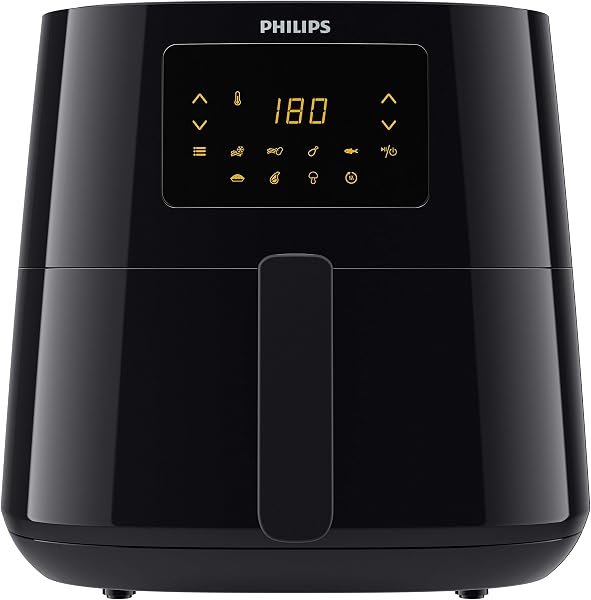
How to Choose Air Fryers in India: The Complete 2025 Buyer's Guide

About Rahul Verma: Rahul is a tech enthusiast and gadget reviewer with over 8 years of experience testing consumer electronics. He specializes in audio gear, smartwatches, and mobile accessories. When he is not testing products, you will find him exploring the latest in AI and smart home technology.

Walk into any Indian kitchen appliance store today, and you'll find an entire wall of air fryers — Philips, Ninja, Inalsa, Havells, Agaro, Kent, Faber, Prestige, Instant, and a dozen others, ranging from ₹2,999 to ₹25,000. They all look similar: a squat black appliance with a pull-out basket. But the differences between a good air fryer and a frustrating one are enormous, and they only show up after a month of daily use.
This guide is written specifically for Indian kitchens and Indian buyers. We'll cover how air fryers actually work, why wattage matters more in India than in most markets, which capacities suit which family sizes, how the ₹5,000 segment differs from the ₹12,000 segment, and the practical realities of cooking pakoras, tikkis, and tandoori chicken in one. By the end, you'll know exactly how to choose air fryers in India without overspending or ending up with an appliance that gathers dust.
Understanding Air Fryers: How They Actually Work
An air fryer is, mechanically speaking, a small convection oven with a very strong fan. A heating element at the top generates heat, and a high-speed fan pushes that heat down and around the food at 1,500–2,000 RPM. The result is rapid, turbulent hot air that strips moisture from the food's surface and creates the Maillard reaction — the browning and crisping that gives fried food its appeal — using a fraction of the oil.
The Science of Rapid Air Technology
Traditional deep frying works by heat transfer through oil at 170–190°C, which cooks food fast and seals the surface. An air fryer achieves something similar by maintaining a tight, hot environment (typically 80–200°C) with constant air circulation. Because the air moves fast, the thin layer of moisture around the food evaporates quickly, allowing the surface to brown rather than steam.
The catch is that air has a much lower heat capacity than oil. That's why air-fried food needs a light coating of oil (even ½ to 1 teaspoon makes a visible difference), and why results depend heavily on how crowded the basket is. Hot air cannot circulate around tightly packed food, so anything you pile up will steam instead of crisp. This single fact explains most air fryer disappointments.
Air Fryer vs. OTG vs. Deep Fryer vs. Microwave Convection
Indian homes often already own an OTG (oven toaster griller) or a microwave convection. It's worth understanding the overlap:
- Air fryer: Fastest preheat (2–4 minutes), best crisping for small batches, excellent for reheating, uses minimal oil, compact footprint. Limited capacity, can't bake large items well.
- OTG: Larger capacity, better for baking cakes and breads, but slower preheat and weaker crisping for things like pakoras or fries unless you use the convection mode.
- Deep fryer: Unmatched texture and speed for large batches, but uses 500 ml–1 litre of oil per session, which is both expensive and unhealthy when reused.
- Microwave convection: Good all-rounder, but the small cavity and lower air velocity mean less crisping than a dedicated air fryer.
If you already have an OTG with a convection fan, an air fryer is still worth it for daily small-batch cooking and reheating — but the gap narrows. If you're buying your first such appliance, an air fryer is generally the more useful starting point for Indian cooking.
Why Air Fryers Make Sense in Indian Kitchens
Indian cooking is oil-heavy by tradition, and not without reason — deep frying produces textures that are hard to replicate. But the everyday reality for most urban households is different: we're reheating leftovers, making quick evening snacks, and trying to cut down oil without giving up taste.
Air fryers handle a surprising number of Indian staples well: aloo tikkis, bread pakoras (with a light breadcrumb coating), frozen samosas, paneer tikka, tandoori chicken, fish fry, bhindi, gobhi, makhana, papad, roasted chana, and chicken 65. They're outstanding at reheating — leftover pizza, naan, samosas, and even day-old rotis come back to life in 3–4 minutes.
What they don't do well: gravies and curries, anything with a wet besan batter (the batter drips through the basket and burns), large whole chickens in small models, and dosas or chillas that need a flat cooking surface. Being honest about these limits is the first step in learning how to choose air fryers in India sensibly — buy for what you'll actually cook, not for the brochure photos.
Key Factors to Consider Before Buying an Air Fryer in India
There are roughly ten factors that determine whether an air fryer will suit your home. Most buyers only consider price and brand, then discover the rest the hard way.
1. Capacity: Match It to Your Household, Not the Brochure
Capacity is quoted in litres of basket volume, but usable capacity is typically 60–70% of that. A "4-litre" air fryer comfortably holds food for two to three people. Here's a practical mapping:
- 1.5–2.5 litres: One person, or couples making snacks. Compact and cheap (₹2,500–₹4,500), but you'll be cooking in batches.
- 3–4 litres: The sweet spot for 2–3 people. Handles a full basket of fries, 6–8 tikkis, or 4 chicken leg pieces.
- 5–6 litres: Families of 4–5. Good for a whole small chicken (1–1.2 kg) or a large batch of snacks.
- 8–12 litres (oven-style): Joint families, meal prep, or people who want to bake. Takes up serious counter space.
A common mistake is buying too small to save ₹1,500, then discovering that feeding four people requires two rounds of cooking. If you're unsure, size up — an underfilled large basket performs fine; an overfilled small one doesn't.
2. Wattage and Indian Electrical Load
This is where Indian buyers need to pay more attention than buyers abroad. Most basket air fryers draw 1,200–1,800W. At 230V, a 1,500W unit pulls about 6.5 amps — right at the limit of a standard 6A kitchen socket if anything else is running on the same circuit.
Practical implications:
- Avoid plugging a high-wattage air fryer into an extension board or multi-plug, especially with a mixer grinder or microwave on the same strip.
- If your kitchen has a dedicated 16A point (usually meant for the microwave or refrigerator), use it.
- Check that your MCB doesn't trip when the air fryer and another heavy appliance run together. If it does, stagger usage.
- In areas with frequent voltage fluctuation, a stabiliser is worth considering, particularly for digital models where the control board is the most failure-prone component.
Higher wattage isn't automatically better, but 1,400W and above generally means faster preheating and better recovery of temperature when you open the basket.
3. Heating Element Design and Airflow
Look for a spiral or mesh heating element positioned at the top, with a fan directly above it. Better models use a wider element and a more powerful fan, which translates to more even browning. Some budget units have a small element concentrated in the centre, resulting in a hot spot and pale edges.
Basket design matters too. A perforated basket floor with a raised tray underneath allows air to circulate below the food and lets oil drip away. Flat-bottomed baskets with tiny holes are noticeably worse.
4. Analog vs. Digital Controls
Analog (dial-based) models are cheaper, more durable in humid conditions, and perfectly adequate — you set a timer and a temperature and walk away. Digital models offer precise temperature, presets, and often a shake reminder, but the control board is the part most likely to fail over time.
In India, where kitchen humidity and voltage spikes are real, a well-built analog model from a reputable brand is often the more reliable long-term buy. If you do go digital, buy from a brand with a genuine service network.
5. Temperature Range and Presets
A range of 80–200°C covers everything you need. Some models start at 60°C for dehydration, which is a nice extra but rarely essential. Presets (fries, chicken, fish, cake) are convenient but usually just pre-set temperature and time combinations — you can replicate them manually in ten seconds. Don't pay a premium purely for presets.
6. Coating and Material Safety
Most baskets use a non-stick coating (typically PTFE-based), while some premium models offer ceramic coatings. Both are safe when intact. What matters:
- Look for PFOA-free claims and BIS certification (the ISI mark) — grey-market imports without BIS certification are a genuine risk in India.
- Ceramic coatings are more scratch-resistant in perception but tend to lose their non-stick properties faster if scrubbed hard.
- Avoid metal tongs and abrasive scrubbers entirely; use silicone or wooden tools and a soft sponge.
- If the coating chips or flakes, stop using the basket — replacement baskets are available for popular brands like Philips and Ninja.
7. Cleaning and Dishwasher Safety
Air fryers get greasy. Check whether the basket and tray are dishwasher-safe (many are, though hand-washing extends coating life), whether the basket has rounded corners without food traps, and whether the heating element is exposed at the top where splatter can bake on. Exposed elements need occasional wiping with a damp cloth — a fiddly job, but manageable.
Models with a separate crisper plate and a smooth basket wall are easiest to clean. Deep-ridged baskets with narrow grooves will test your patience every single time.
8. Dimensions, Noise, and Counter Space
Measure your counter before ordering. Basket models typically need 30 × 35 cm of footprint and 10–15 cm of clearance at the back and top for ventilation. Never place an air fryer directly under a wall cabinet — the exhaust gets hot and can discolour or damage the underside.
Noise levels sit around 55–65 dB, comparable to a kitchen chimney on low. Oven-style models are generally louder and take longer to preheat (8–12 minutes versus 3–4).
9. Warranty and Service Network
This is a genuinely underrated factor in India. Philips, Havells, Bajaj, Prestige, and Kent have extensive service centre networks across tier-2 and tier-3 cities. Imported or online-only brands may offer only 1-year warranty with courier-based service, which means weeks without the appliance if something fails.
A 2-year warranty on the product (and ideally on the heating element) is a meaningful advantage. Read the fine print — some warranties exclude the non-stick coating, which is the part most likely to wear out.
10. Safety Features
Look for auto shut-off when the basket is removed, overheat protection, cool-touch handles, and non-slip feet. A "shake reminder" is a convenience feature, not a safety one, but it does improve results significantly for beginners.
Types of Air Fryers Available in India
Basket-Style Air Fryers
The default choice. A pull-out drawer with a perforated basket, top-mounted heating element, and a compact body. Fast, easy to clean, and the most efficient design for crisping. Downsides: limited capacity, no visibility into the cooking process (unless the model has a window), and awkward for baking.
Oven-Style Air Fryers (Air Fryer Toaster Ovens)
These look like small OTGs with a strong convection fan — typically 10–25 litres, with racks, a rotisserie, and multiple levels. They can air fry, bake, grill, toast, and dehydrate. Better for families, baking, and making dosas or pizzas. The trade-offs are a much larger footprint, longer preheat, and slightly less intense crisping than a good basket model.
Dual-Basket Air Fryers
Two independent baskets with separate temperature and time controls, and often a "sync" function that finishes both at once. Excellent for families cooking a main and a side simultaneously, or for vegetarians and non-vegetarians sharing a kitchen. They're bulky and expensive (₹12,000–₹22,000), and rarely necessary for two people.
Air Fryers with Grill Plates and Rotisserie
Usually oven-style or premium basket models with accessories like skewers, a rotating cage, or a grill plate. Genuinely useful for tandoori-style kebabs, whole chicken, and even roasting. Worth it only if you'll actually use the accessories — most people don't after the first month.
Multifunction Combos (Air Fryer + Pressure Cooker)
Appliances that combine pressure cooking, air frying, and sometimes slow cooking in one body. Convenient for small kitchens, but they tend to do each job slightly worse than a dedicated appliance, and repairs are costlier. Consider only if counter space is genuinely constrained.
Comparison Table: Air Fryer Types at a Glance
| Type | Typical Capacity | Wattage | Indicative Price (₹) | Best For | Watch Out For |
|---|---|---|---|---|---|
| Compact basket | 1.5–2.5 L | 1,000–1,300 W | ₹2,500–₹5,000 | Singles, couples, snacks | Batch cooking needed for families |
| Standard basket | 3–4 L | 1,300–1,600 W | ₹4,500–₹9,000 | 2–3 people, daily use | Whole chicken won't fit |
| Large basket | 5–6 L | 1,500–1,800 W | ₹8,000–₹14,000 | Families of 4–5 | Bulky; needs 16A-friendly circuit |
| Dual-basket | 7–9 L total | 1,700–2,400 W | ₹12,000–₹22,000 | Cooking two dishes at once | Large footprint, high price |
| Oven-style | 10–25 L | 1,500–2,000 W | ₹9,000–₹20,000 | Baking, grilling, large families | Slow preheat, less crisping |
Prices are indicative for 2025 and fluctuate with sales on Amazon and Flipkart. Always verify current pricing and warranty terms before purchase.
What You Get at Each Price Band in India
Under ₹4,000
Mostly 2–3 litre analog models from brands like Inalsa, Agaro, Wonderchef, Pigeon, and Milton. Build quality is acceptable, coating durability is variable, and service networks are thinner. These are fine as a first air fryer or for a single person, but expect the non-stick coating to show wear within 18–24 months of regular use.
₹4,000–₹8,000
The most competitive segment. You'll find 3.5–4.5 litre models from Havells, Prestige, Bajaj, Kent, and entry-level Philips, with digital controls, better basket design, and 1–2 year warranties. This is where most Indian buyers should be looking.
₹8,000–₹15,000
Premium basket models from Philips, Ninja, Instant, and Cosori, plus entry oven-style units from Faber and Kent. Expect better temperature consistency, sturdier baskets, longer warranties, and superior service support. If you'll use the appliance 4–5 times a week, the extra spend is justified by durability alone.
Above ₹15,000
Dual-basket models, large oven-style air fryers, and multifunction combos. Buy here only if you have a specific need — a joint family, a baking habit, or a serious meal-prep routine.
Pros and Cons of the Main Options
Standard Basket Air Fryer (₹4,500–₹9,000)
Pros: Fastest cooking, best crisping, easiest to clean, compact, lowest price per unit of performance. Cons: Limited capacity, no visibility, poor for baking, requires shaking mid-cook for even results.
Premium Basket Air Fryer (₹9,000–₹15,000)
Pros: Better temperature stability, durable coatings, wider service network, longer warranty, often includes a window or shake reminder. Cons: Diminishing returns — you're paying for reliability more than dramatically better food.
Oven-Style Air Fryer (₹9,000–₹20,000)
Pros: Versatile (bake, grill, toast, dehydrate), large capacity, good for dosas, pizzas, and whole chickens, often includes rotisserie. Cons: Takes up significant counter space, slow preheat, weaker crisping than basket models, harder to clean the interior.
Dual-Basket Air Fryer (₹12,000–₹22,000)
Pros: Cook two dishes simultaneously with sync finish, great for families and mixed diets. Cons: Expensive, bulky, and overkill for households of two.
Buying Guide: A Practical Checklist
Before you add anything to your cart, run through this list:
- Measure your counter and check clearance.
Share this: