How to Choose Speakers in India: The Complete Buying Guide for Budgets Under ₹3,000

About Rahul Verma: Rahul is a tech enthusiast and gadget reviewer with over 8 years of experience testing consumer electronics. He specializes in audio gear, smartwatches, and mobile accessories. When he is not testing products, you will find him exploring the latest in AI and smart home technology.

Walk into any electronics aisle in India — or scroll through Amazon and Flipkart for ten minutes — and you'll be hit by a wall of speakers that all look suspiciously similar. Blinding RGB lights, "100W PMPO" stickers, "deep bass" claims, and prices that swing wildly from ₹699 to ₹2,999. For a buyer on a sub-₹3,000 budget, the spec sheet often raises more questions than it answers. What does PMPO actually mean? Is a 16W speaker louder than a 10W one? Why does one model sound flat in a 12×10 room while another rattles the windows?
This guide answers all of it. By the end, you'll know exactly how to choose speakers in India without falling for marketing gimmicks — what specs genuinely matter, which features are worth paying for in our climate and usage patterns, which categories (portable Bluetooth, desktop 2.0, mini soundbar) suit which purpose, and where the real value sits in the ₹1,000–₹3,000 band. You'll also get practical, India-specific tips on monsoon-proofing, voltage issues, and spotting fake reviews before you hit "Buy Now".
Understanding the Budget Speaker Market in India
India's sub-₹3,000 speaker segment is the most competitive audio category in the country, and that's genuinely good news for buyers. Brands like boAt, Zebronics, Portronics, Mivi, pTron, and Boult fight for shelf space alongside legacy names such as Philips, F&D, Sony, and JBL's entry-series. The competition has pushed features that were premium five years ago — TWS pairing, IPX5 ratings, Type-C charging, 12–16 hours of playback — down into the ₹1,500–₹2,500 range.
But competition has also produced a lot of noise. Borders and PMPO figures get inflated to grab attention on marketplace listing pages, and "bass" gets thrown around as if it's the only thing that matters. Understanding how to choose speakers in India starts with understanding what this category can and cannot deliver.
What ₹3,000 actually buys you
Realistically, a speaker under ₹3,000 can deliver clean, room-filling sound for a bedroom, a small living room, or an outdoor gathering of 10–15 people. It will give you punchy mid-bass and streaming convenience. What it will not give you is deep, floor-shaking sub-bass (that needs a dedicated woofer and cabinet volume), audiophile-grade stereo imaging, or the ability to fill a large hall. Knowing this upfront prevents disappointment.
How Speakers Actually Produce Sound (A Two-Minute Explainer)
You don't need an engineering degree, but three concepts explain 90% of the difference between two speakers at the same price.
The driver (speaker cone) is what moves air. A bigger driver — 52mm, 57mm, or 76mm in this price band — generally moves more air and produces fuller low-end sound than a 40mm driver. This is why a 10W speaker with a 76mm driver can sound warmer than a 16W speaker with twin 45mm drivers.
The amplifier provides the power. Its output is measured in RMS watts — the honest number — versus PMPO, which is a peak, momentary, marketing figure usually 5–10 times higher than RMS. A speaker rated "20W RMS" is genuinely louder than one rated "10W RMS". A speaker rated "200W PMPO" tells you almost nothing.
The cabinet and enclosure affect resonance and bass response. Passive radiators (visible on many boAt and JBL portables) and bass reflex ports help small speakers produce more low-end. A well-tuned 8W speaker with a passive radiator will beat a poorly tuned 15W speaker for perceived bass.
Key Factors to Consider Before Choosing Speakers in India
1. RMS power, not PMPO
Ignore the giant PMPO number on the box and hunt for the RMS figure in the spec sheet. For a bedroom (120–150 sq ft), 5–10W RMS is plenty. For a living room, 10–20W RMS. For outdoor use — a terrace party, a picnic, a small gathering — 20W RMS and above. If a listing doesn't mention RMS at all, that's usually a signal the honest number isn't impressive.
2. Driver size and configuration
Look for the driver diameter in millimetres. In the ₹1,500–₹3,000 range, you'll commonly see 45mm, 52mm, 57mm, 66mm, and 76mm full-range drivers, plus dedicated tweeters on some 2.0 desktop models. Bigger single drivers generally give a fuller, warmer sound; multiple small drivers give better stereo separation but thinner bass. For a single portable speaker, prioritise driver size over driver count.
3. Connectivity — Bluetooth version matters
Bluetooth 5.0 or 5.3 is now standard under ₹3,000 and offers better range, lower power draw, and more stable connections than Bluetooth 4.2. Also check:
- AUX (3.5mm) — essential for connecting older TVs, laptops, and music players. Many budget soundbars and desktop speakers sound noticeably better over AUX than Bluetooth.
- USB / microSD playback — genuinely useful in India where many people still carry music libraries on pen drives and cards.
- TWS (True Wireless Stereo) pairing — lets you pair two identical speakers for true stereo. Worth paying ₹200–₹400 extra for if you might buy a second unit later.
- Type-C charging — much more convenient in 2024–25 than micro-USB, since your phone charger will work.
4. Battery life and battery capacity
Look at both the claimed playback hours and the mAh rating together. A 2,000mAh battery typically yields 8–10 hours at moderate volume; 3,000mAh+ gets you 12–16 hours. Remember that claimed hours are measured at roughly 50–60% volume — at full blast, expect 40–50% less. If you mostly listen indoors, battery life matters less; if the speaker is going to picnics and road trips, prioritise 2,500mAh and above.
5. Build quality and IP rating
Indian conditions are brutal on electronics: monsoon humidity, dust during summer, and occasional knocks. An IPX5 or IPX7 rating (water resistance) is worth having even if you never take the speaker outdoors — it protects against splashes, kitchen steam, and monsoon dampness. Fabric mesh covers look premium but trap dust; rubberised or metal-grille bodies survive longer in Indian homes.
6. Sound signature — bass vs balance
Most budget Indian speakers are tuned bass-forward because that's what sells in a showroom demo. That's fine for Bollywood, Punjabi pop, EDM, and hip-hop. But if you listen to classical, ghazals, acoustic music, podcasts, or watch a lot of movies, a heavily bass-tilted speaker sounds muddy and voices get buried. Look for mentions of "balanced" or "clear vocals" in reviews, or check whether the speaker has an equaliser (app-based or hardware) so you can tune it.
7. Warranty and service network
This is the most overlooked factor when learning how to choose speakers in India. A one-year warranty is standard. What matters is whether the brand has service centres in your city or offers pickup-and-drop service. boAt, JBL, Sony, Philips, and Zebronics have reasonably wide networks. Smaller D2C brands often rely on courier-based replacement, which can take 2–3 weeks. Check the brand's service policy page before buying — not after.
How to Choose Speakers in India: A Quick Step-by-Step Framework
If you want a repeatable process rather than a list of specs, use this sequence:
- Define the primary use case. Bedroom music, TV audio upgrade, outdoor/portable, or desktop PC setup. Each points to a different product category.
- Fix a hard budget ceiling. Under ₹3,000 is a wide band. Deciding between ₹1,500 and ₹3,000 narrows your options dramatically.
- Shortlist by category (see the next section), then filter by RMS power and driver size.
- Check connectivity against the devices you actually own — especially whether your TV has Bluetooth or only optical/AUX.
- Read the 3-star and 2-star reviews, not the 5-star ones. Patterns of complaints about battery death, Bluetooth dropouts, or charging port failure are the most reliable signal.
- Verify warranty terms and seller before checkout.
Speaker Categories Under ₹3,000 — Which One Suits You?
Portable Bluetooth speakers
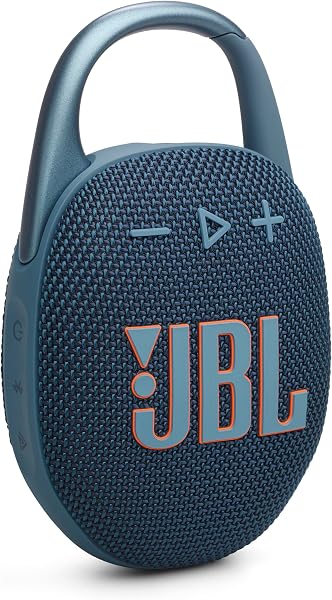
This is the default choice for most buyers, and it's where the best value sits in this budget. Expect 5–20W RMS, 8–16 hours of battery, IPX5+ ratings, and TWS pairing. They're ideal for bedrooms, balconies, terraces, small gatherings, and travel. The trade-off is stereo separation — a single portable speaker is mono, so you don't get a true left-right soundstage. If that matters, buy two and pair them in TWS mode.
Best for: General-purpose listening, outdoor use, students, hostel rooms, small flats.
2.0 desktop / bookshelf speakers
Mains-powered 2.0 speaker pairs — F&D, Philips, Zebronics, and Edifier's entry models — deliver something portables can't: genuine stereo separation and, usually, cleaner mids and highs. They're the right pick if the speaker will live permanently beside a laptop or PC. Downside: no battery, more cables, and typically less bass than a similarly priced portable with a passive radiator.
Best for: Desktop PC setups, work-from-home cabins, small-room music listening, students with a fixed desk.
Mini soundbars
Compact 16–24 inch soundbars under ₹3,000 are a huge upgrade over 20W TV speakers, especially for dialogue clarity in movies and cricket commentary. Most connect via AUX, Bluetooth, and sometimes optical. Be realistic about bass — a soundbar this thin cannot produce deep low-end without a separate subwoofer, which won't fit in this budget.
Best for: Bedroom TV setups, improving dialogue clarity, compact living rooms.
Party / trolley speakers
At under ₹3,000, true trolley speakers are rare and usually compromised — inflated PMPO claims, heavy distortion at high volume, and short battery life. If you need high volume for events, it's better to stretch to ₹4,000–₹5,000 than buy a cheap trolley unit.
Comparison Table: Speaker Types at a Glance
| Type | Typical Price | Typical Power | Best For | Watch Out For |
|---|---|---|---|---|
| Portable Bluetooth speaker | ₹999 – ₹2,999 | 5–20W RMS | Indoor + outdoor, travel, general use | Mono output; bass-heavy tuning |
| 2.0 desktop speakers | ₹1,299 – ₹2,999 | 10–30W RMS | PC/laptop desks, fixed indoor listening | No battery; cable clutter |
| Mini soundbar | ₹1,799 – ₹2,999 | 16–24W RMS | TV audio, dialogue clarity | Weak bass; check TV port compatibility |
| Party/trolley speaker | ₹2,499 – ₹2,999 (rare) | Claimed high, actual low | Loud gatherings | Distortion at high volume; inflated PMPO |
Decoding the Spec Sheet: Numbers That Mean Something
Frequency response
Listed as a range, e.g. 20Hz–20kHz. Human hearing spans roughly 20Hz to 20kHz, but in this price band a realistic figure is more like 60Hz–18kHz. Be sceptical of a ₹1,499 speaker claiming 20Hz response — that requires a large cabinet and a dedicated subwoofer. A speaker honest about 80Hz–20kHz will usually sound better than one lying about 20Hz.
Signal-to-noise ratio (SNR)
Higher is better. Above 80dB is decent; above 90dB is good. A low SNR means you'll hear a faint hiss when nothing is playing.
Total Harmonic Distortion (THD)
Lower is better. Under 1% is good. Cheap speakers often hit 5–10% THD at high volume, which is why they sound harsh and shouty when cranked.
Bluetooth codecs
SBC is universal; AAC is better for iPhone users; aptX is rare under ₹3,000. Don't over-index on codecs at this price — driver quality and tuning matter far more.
Real-World Usage Tips for Indian Consumers
Buying well is half the job; using well is the other half.
- Placement changes everything. Putting a portable speaker in a corner or against a wall boosts bass by 3–6dB — often for free. Elevate it to ear height for clearer vocals.
- Don't charge overnight, every night. Budget lithium batteries degrade faster if kept at 100% constantly. Charge to full, then unplug. Avoid using the speaker while charging in summer — heat is the biggest killer of battery life in India.
- Protect from monsoon humidity. Even IPX5 speakers shouldn't be stored in damp cupboards. A silica gel pouch in the storage bag genuinely helps.
- Use a voltage stabiliser for mains-powered speakers in areas with frequent voltage fluctuations — it protects the amplifier board, which is the most expensive part to replace.
- Clean the grille monthly. Dust in the driver mesh dulls high frequencies over time. A soft brush or low-vacuum nozzle does the job.
- Keep the invoice. Warranty claims in India require a GST invoice, and marketplace sellers sometimes don't include a physical copy — download the PDF from your order page and save it.
Where to Buy in India — and How to Avoid Getting Burned
Amazon India and Flipkart offer the widest range and the best prices, especially during Great Indian Festival and Big Billion Days sales, when sub-₹3,000 speakers routinely drop 25–40%. Stick to sold-and-fulfilled-by-Amazon/Flipkart listings or brand-authorised sellers — third-party sellers with suspiciously low prices often ship grey-market units with no warranty.
Croma, Reliance Digital, and Vijay Sales cost slightly more but let you audition the speaker before buying, which is genuinely valuable since sound preference is personal. Offline stores also handle warranty claims more smoothly.
Evaluating reviews properly: sort by "Most Recent" and read the 2- and 3-star reviews specifically. Look for repeated mentions of the same defect — charging port failure, Bluetooth disconnecting at 3–4 metres, battery dropping from 10 hours to 3 within six months. A single angry review is noise; twenty similar complaints is a pattern.
Common Mistakes to Avoid
- Buying by PMPO. It's a peak marketing figure with no standard definition. Always compare RMS.
- Assuming louder means better. A 10W speaker with good tuning sounds better than a 20W speaker that distorts at 70% volume.
- Ignoring your source device. A ₹2,999 Bluetooth speaker paired with a phone streaming 128kbps audio won't sound dramatically better than a ₹1,299 one. Consider a streaming service's higher-quality tier.
- Skipping the TV compatibility check. Many budget TVs lack Bluetooth audio output. Confirm your TV has Bluetooth, AUX-out, or optical before buying a soundbar.
- Overpaying for RGB lighting. Lights add cost without adding sound quality. If the budget is tight, choose the model without LEDs.
Price Bands: What Changes as You Spend More
| Price Band | What You Get | Realistic Expectation |
|---|---|---|
| Under ₹1,000 | 3–5W RMS, 40–52mm driver, micro-USB, 5–8 hrs battery | Personal listening, small rooms, basic calls |
| ₹1,000 – ₹2,000 | 5–10W RMS, 52–57mm driver, IPX5, Type-C, TWS | Best value sweet spot for most buyers |
| ₹2,000 – ₹3,000 | 10–20W RMS, 57–76mm driver, 12–16 hrs, better tuning, passive radiator | Room-filling sound, outdoor use, build quality |
Frequently Asked Questions
1. Is 10W loud enough for a room in India?
Yes. A genuine 10W RMS speaker comfortably fills a standard 120–150 sq ft bedroom at 60–70% volume. For a 250+ sq ft living room or an outdoor gathering, aim for 15–20W RMS. The caveat is that many budget speakers quote "10W" without specifying RMS — check the spec sheet carefully.
2. How do I choose speakers in India for use during monsoon and outdoor trips?
Prioritise IPX5 or IPX7 water resistance, rubberised or metal bodies over fabric, and sealed charging ports (a flimsy exposed micro-USB port is the first thing to corrode). Also favour Type-C charging and a battery of 2,500mAh or more, since you may not have easy charging access outdoors.
3. Are boAt, Zebronics, and Portronics speakers reliable?
Broadly, yes — they offer strong value and have wide service networks in India. Quality control is less consistent than with JBL or Sony, so the warranty matters more. Buying from authorised sellers and registering the product promptly improves your odds of a smooth claim.
4. Should I buy a portable Bluetooth speaker or a 2.0 desktop pair?
If the speaker will move around — bedroom to balcony to terrace — go portable. If it will sit permanently next to a laptop or PC, a 2.0 pair gives you true stereo separation and cleaner vocals for the same money. This is one of the most important decisions in how to choose speakers in India, because it determines the entire shortlist.
5. Does Bluetooth version really matter at this price?
Yes, but moderately. Bluetooth 5.0 and above gives noticeably better range and connection stability than 4.2, and draws less power. Don't pay a big premium for it, but if two otherwise similar speakers differ only in Bluetooth version, pick the newer one.
6. Can a ₹3,000 soundbar replace a home theatre?
Share this: