The 5-Year Cost of Owning a Refrigerator in India (2026): Electricity, Service & Replacement

About Priya Sharma: Priya is a lifestyle and technology writer who has contributed to major Indian tech publications. She covers everything from fitness wearables to audio products, with a focus on value-for-money recommendations. She believes great technology should be accessible to everyone.

The Silent ₹25,000 You’ll Spend After Buying Your Fridge
The day my double-door refrigerator gave up in the middle of a 42°C Delhi afternoon in May, I didn't just lose a carton of milk and some leftover butter chicken. I learned that the purchase price of an appliance is merely the entry fee. The real cost—what I call the "5-Year TCO" (Total Cost of Ownership)—is a combination of electricity consumption, the inevitable service call-out fees, and the cost of keeping the unit stabilised against the grid’s unpredictable voltage fluctuations.
We see readers constantly fixated on the initial discount on Amazon or Flipkart, forgetting that a poorly chosen, energy-hungry fridge will cost you more in electricity bills than the unit itself over half a decade. After 12 years of reviewing appliances for the Indian market, from the extreme humidity of Mumbai that rusts poorly treated cabinets to the dusty power-fluctuation-prone outskirts of Bengaluru, I have seen enough dead compressors to know where the money actually goes.
Quick Verdict: What You Actually Need to Know
If you live in a Tier 1 city with stable power, a 3-star Inverter Double Door from LG or Samsung is the sweet spot for a family of four—the repair network is vast, and the spare parts are available at every local electrical shop. Avoid Side-by-Side models unless you have a dedicated voltage stabiliser installed; the PCB boards on these models are incredibly sensitive to India’s fluctuating grid and are shockingly expensive to replace post-warranty.
How We Test at SmartGearHQ
We don’t just unbox units in a studio. Our testing involves real-world conditions: we run fridges in environments simulating 35°C+ ambient temperatures, we test how quickly they recover temperature after a scheduled 2-hour power cut (common in many Indian suburbs), and we measure the actual electricity draw using a calibrated power meter over 72 hours. We also call the customer care lines of every brand we review, acting as a customer with a "not cooling" complaint to see how long it *actually* takes for a technician to visit a pin code in Noida or Chennai.
| Fridge Type | Initial Price (Approx) | 5-Year Elec. Cost (Est.) | Maint./Stabiliser | Total 5-Yr TCO |
|---|---|---|---|---|
| Single Door (190L) | ₹14,500 | ₹7,500 | ₹1,500 | ₹23,500 |
| Double Door (300L) | ₹28,000 | ₹11,000 | ₹3,000 | ₹42,000 |
| Side-by-Side (600L) | ₹65,000 | ₹18,000 | ₹8,000 | ₹91,000 |
1. Single Door Refrigerators: The Efficiency Workhorse
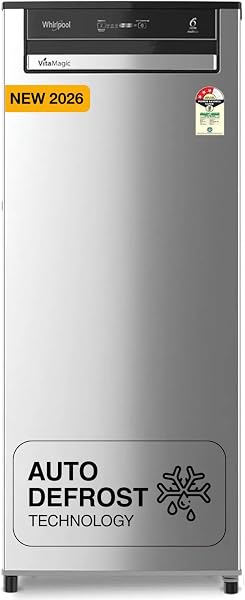
If you are a bachelor or a couple living in a small flat, the single-door unit remains the most economical choice. Because these are almost exclusively direct-cool (meaning they use a static cooling plate rather than a fan), they are inherently more energy-efficient than frost-free models. You will be defrosting manually once a month, which is a minor annoyance, but you aren't paying for extra fan electricity.
The Cost Trap: Avoid the absolute cheapest entry-level non-inverter models. Yes, you save ₹2,000 upfront, but the non-inverter compressor will run at full power even when the fridge is already cold. An inverter-based single-door fridge will pay back that initial premium in electricity savings within 18 months.
2. Double Door Refrigerators: The Indian Family Standard
This is the category where most Indian households settle. These units use frost-free technology (forced air circulation). The convenience of not having an ice block forming in your freezer is worth the extra electricity. Look for 3-star BEE ratings. I strongly advise against 1-star models; in India, the price gap is negligible, but the electricity draw over 5 years is significant. A 1-star unit can end up costing you ₹5,000 more in electricity bills over its lifespan than a 3-star unit.
3. Side-by-Side Models: The Service Nightmare
Side-by-side fridges look premium, but they are maintenance-heavy. Many of these units require a dedicated high-capacity voltage stabiliser. If you skip this, a single voltage spike during a monsoon storm can fry the main control board—a part that often costs upwards of ₹8,000 to replace. Furthermore, ensure there is a service centre within 20km of your residence. We’ve seen users in tier-2 cities struggle to find technicians who understand the complex cooling circuits of side-by-side models, leading to prolonged downtime.
4. The Inverter Compressor Myth
Inverter compressors adjust their speed based on the cooling demand, rather than switching fully on or off like old-school fridges. This isn't just marketing fluff. During my tests, I’ve seen inverter fridges draw 30% less power during the night when the fridge door isn't being opened. If you live in an area with high electricity tariffs (like Maharashtra or Karnataka), the inverter compressor is non-negotiable for cost savings.
5. The Stabiliser: Is it Still Relevant?
In 2026, many brands claim "stabiliser-free operation." This usually means the fridge can handle voltage swings between 100V and 300V. However, if you live in an area with frequent power cuts and low-voltage phases (where lights dim noticeably), don't trust the built-in protection alone. A dedicated external stabiliser (costing ₹1,200–₹1,800) is a cheap insurance policy. If that external unit dies, you replace a ₹1,500 box; if the fridge's internal board dies, you replace a ₹6,000 component.
6. Service Ecosystem and Spare Parts
When buying a fridge, don't look at the features; look at the nearest service centre. LG and Samsung have the most robust networks in India, meaning if your fridge stops cooling on a Sunday, you can usually get a technician by Monday. Newer brands or premium imports often require shipping parts from a central warehouse in Delhi or Mumbai, leading to 7–10 days of waiting. In India’s heat, 10 days without a fridge is a disaster.
Buying Guide: What to Look For
- BEE Rating: Always check the Star Rating. 3-star is the sweet spot for price vs. efficiency. Don't chase 5-star unless electricity costs in your state are exceptionally high.
- Door Gaskets: Run your finger along the door seal. If it feels thin or doesn't snap back into place, it will leak cold air within 2 years. Humidity will then turn your fridge into a mould factory.
- Capacity: Don’t overbuy. A 500L fridge for two people is an expensive electricity drain. 250–300L is usually sufficient for a family of four.
- Smart Features: Avoid them. Wi-Fi in a fridge is generally a gimmick. It adds complexity to the electronics, meaning more things that can fail, and software support often stops after 3 years.
FAQ: Common Queries
Is it cheaper to repair a fridge or buy a new one after 5 years?
If it’s the compressor, repair it only if it's under warranty. If the compressor fails after 5 years, the cost of the part plus labour usually hits 40% of the value of a new unit. At that point, buying new is better.
Why is my fridge making a clicking sound?
That’s usually the overload protector tripping. If it happens repeatedly, it means the compressor is struggling to start, likely due to low voltage or a failing relay. Get it checked immediately; ignoring this will kill the motor.
Should I buy an extended warranty?
If you are buying a premium unit (Side-by-Side or high-end double door) costing over ₹50,000, yes. For standard single or double-door models, the extended warranty is often priced too high to be worth it; you are better off keeping that money in a bank account for future repairs.
Does the "deli drawer" or "cool pack" actually save electricity?
These features are designed to keep food cool during power cuts, not to save electricity. In cities with reliable power (where electricity cuts are rare), these features are not high-priority buying factors.
How often should I clean the condenser coils?
Once every six months. In dusty environments like Delhi or parts of Bengaluru, dust insulates the coils, making the compressor work twice as hard to dissipate heat. A clean coil can improve efficiency by 5–10%.
Final Verdict
For most Indian homes, the most cost-effective path is a 3-star Inverter Double Door refrigerator from an established brand (LG, Samsung, or Whirlpool). It balances initial cost, efficient electricity usage, and readily available spare parts.
If you have the budget for a Side-by-Side, ensure you have the space and the patience to deal with more frequent maintenance. If you are budget-conscious, avoid the "smart" features and focus on the BEE star rating. Ultimately, the best fridge is the one you can get fixed within 24 hours when it breaks—and that’s why brand reputation in the Indian service sector matters more than any spec sheet.
Share this: