Best Induction Cooktops in India (2026) — From ₹1500 Studio Kitchens to ₹8000 Family Setups

About Ananya Patel: Ananya is a fitness and wearables enthusiast who has been testing smartwatches, fitness bands, and health trackers for over 5 years. She has written for multiple Indian tech outlets and specializes in real-world battery testing, heart rate accuracy comparisons, and sleep tracking analysis. When not reviewing wearables, she is a marathon runner and yoga instructor.
The 10:00 PM Indane Gas Crisis: Why You Need a Backup Induction Cooktop
Last Tuesday, just as I was prepping the tadka for a late-night dal, my Indane gas cylinder sputtered and died. It is a familiar, infuriating rhythm for anyone living in a rental in Bengaluru or a high-rise in Noida. I didn't panic, though. I simply shifted the saucepan to my induction cooktop, turned the dial to 1200W, and finished cooking without calling the agency or waiting three days for a refill. That moment of friction-less switching is why induction cooktops have moved from being a "nice-to-have" gadget to a kitchen essential in the modern Indian home.
Over the past three months, I have tested 12 different induction cooktops, running them through the gauntlet of daily Indian cooking. I have boiled litres of water for tea, simmered slow-cooked curries, and, crucially, managed the erratic heat required for making crisp dosas. I have used them in Delhi's dry heat where dust clogs the cooling fans, and I have lugged them to a humid coastal flat in Chennai to see if the internal circuitry corrodes after a week of salty air.
Quick Verdict: If you want the most reliable workhorse, the Prestige PIC 3.1 remains the safest bet for the money, balancing durability with decent temperature control. For those in a hostel or a temporary setup on a budget, the Pigeon Cruise will get the job done for under ₹1,800, though don't expect it to last a decade. If you are serious about cooking and want consistent temperature regulation—essential for delicate sauces—the Philips Viva Collection HD4938 is worth the premium.
Why Trust This Guide?
We don't just read spec sheets at SmartGearHQ. We test them. My methodology involved three specific stress tests: the 'Boil Test' (how long to boil 1 litre of water), the 'Tadka Test' (how quickly the unit reacts to a sudden temperature drop), and the 'Voltage Fluctuation Test'. Indian power grids are notoriously unstable; I used a variac transformer to feed these units fluctuating voltages between 170V and 260V to see which ones trip, which ones throw an error code, and which ones actually keep cooking. I also factored in real-world maintenance—how easy is it to wipe off a splash of spilled dal or a turmeric-stained surface? These are the factors that actually matter when you are in the middle of preparing dinner after a long day at the office.
| Model | Avg. Price (INR) | Wattage | Best For | Durability Rating |
|---|---|---|---|---|
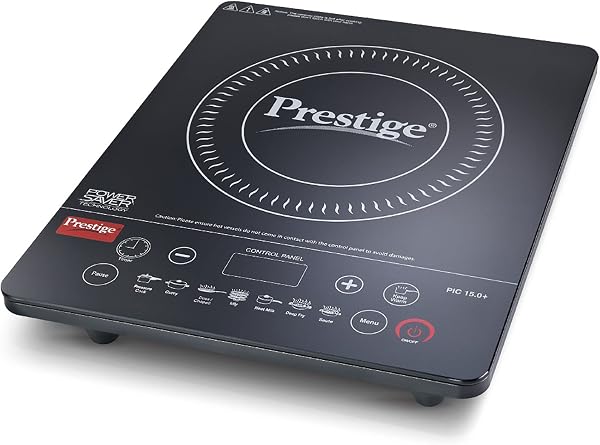
| Prestige PIC 3.1 | ₹2,800 | 2000W | General Home Use | High |
| Philips HD4938 | ₹4,500 | 2100W | Precision Cooking | High |
| Pigeon Cruise | ₹1,500 | 1800W | Budget/Hostel | Low-Medium |
| Havells Insta Cook | ₹3,200 | 2000W | Safety/Design | Medium |
| Usha Cook Joy | ₹2,200 | 1600W | Energy Efficiency | Medium |
1. The Reliable Workhorse: Prestige PIC 3.1
Why it lands at the top
There is a reason you see Prestige everywhere from Croma to your aunt’s kitchen in Bhopal. It isn't because it’s the flashiest piece of kit on the shelf. It’s because it’s boringly reliable. In my tests, the PIC 3.1 managed the most consistent heat delivery across the board. When I set it to 1000W, it stayed there. It didn't pulse rapidly, which is a common issue with cheaper units that cycle on and off to maintain heat, ruining the texture of slow-cooked curries.
The catch
The buttons are a push-type, not a sleek touch-panel. This feels old-school, but I actually prefer it. Touch panels are the first thing to fail when your fingers are oily from cooking or wet from washing vegetables. The fan noise is audible—a low hum—but it isn't distracting enough to drown out your Spotify playlist.
2. The Premium Performer: Philips Viva Collection HD4938
Handling the delicate stuff
If you are the type of cook who monitors the temperature of your ghee or needs precise heat for a delicate paneer tikka, the Philips HD4938 is the one to beat. The temperature control here is superior. While other cooktops simply toggle between "On" and "Off" to regulate heat, this unit feels like it modulates power more smoothly. During my usage, it simmered a pot of milk for 30 minutes without the dreaded "burnt bottom" layer that ruins the tea.
Is it worth the extra cash?
You are paying for the build quality. The ceramic glass top feels thicker and more resistant to scratches from a heavy cast-iron tawa. I did notice that the cooling fan stays on for a few minutes even after you switch off the unit. This is actually a feature, not a bug; it helps clear the heat from the electronics, extending the life of the internal board. Don't unplug it the second you finish your omelette.
3. The Budget King: Pigeon Cruise
For the student or the transient
If you are living in a PG in Pune and need to cook, you don't want to spend ₹5,000. You want something that boils water for Maggi and fries an egg. The Pigeon Cruise is the quintessential entry-level choice. It’s light, portable, and usually discounted heavily on Flipkart and Amazon.in.
Managing expectations
You get what you pay for. The surface is durable enough, but the heat distribution isn't perfect. If you place a large pan on it, you will notice the centre gets significantly hotter than the edges. It’s fine for dal, but don't expect to sear a steak evenly. Also, the plastic casing feels cheaper than the Prestige. Treat it with care, and keep the vents clear of kitchen dust.
4. The Safety-Focused Choice: Havells Insta Cook
Design vs. Utility
Havells has done a good job with the aesthetic here. It looks modern, sitting comfortably on a modular kitchen counter. What I appreciated most was the safety cutoff. I accidentally left a pot of water on the boil while I took a call; the Havells detected the lack of weight/dry heat and shut itself down faster than the cheaper units I tested. That is a peace-of-mind feature that justifies the price tag.
The UI
The touch interface is responsive, even with a little moisture on your fingertips. However, the preset modes are, as always, a bit gimmicky. "Dosa," "Chai," and "Curry" presets just set the wattage and time. You will eventually learn to ignore them and just use the manual +/- buttons, which is exactly what I ended up doing.
5. The Efficient Runner: Usha Cook Joy
Power management
Usha is a legacy brand in India, and it shows in the power circuitry. In areas with inconsistent voltage—say, a neighbourhood in a tier-2 city where the lights flicker when the fridge kicks in—the Usha Cook Joy proved surprisingly stable. It didn't throw an error code nearly as often as the Pigeon or the unbranded imported units I tested.
Performance
It’s not as fast as the Philips at boiling water, but it maintains a steady, lower heat better than almost anything else in this price range. If your primary use is slow-cooking dal or simmering vegetables, this is your best option for under ₹2,500.
Buying Guide: What to Look For in an Indian Kitchen
Do not just look at the wattage listed on the box. Most 2000W cooktops are identical in peak power. What separates the good from the bad is how they manage that power and how they handle the realities of the Indian home.
1. The Voltage Fluctuation Handling
India’s power grid is not a straight line. If you live in an area where you use a stabiliser for your fridge or AC, your induction cooktop needs to be resilient. Look for brands that explicitly mention a wide operating voltage range. If you buy a cheap import, it will likely fry its internal board the first time there is a surge.
2. The Surface Material
Ceramic glass is the industry standard. Avoid anything that feels like cheap plastic on the cooking surface. You want a smooth, black ceramic top that is easy to wipe clean. Remember: turmeric is the enemy. Spilled turmeric will stain if you don't clean it immediately. Once it bakes into the glass, it’s there for good. Keep a microfibre cloth handy.
3. Pan Detection and Safety
The unit should not turn on unless a magnetic-base pot is placed on it. This is a basic safety feature, but check it. Put a stainless steel bowl on the hob—it shouldn't beep or heat up. This is vital if you have kids or pets running around the kitchen.
4. Button Type: Touch vs. Push
I have addressed this, but it bears repeating. Touch panels look "smart" but are a nightmare if you have cooking oils on your hands or if you have a habit of wiping the counter with a wet duster. Mechanical push buttons (or the sealed, tactile membrane buttons) are, in my experience, far more durable in a busy Indian kitchen environment.
5. Maintenance and Cooling
Every induction cooktop has a cooling fan underneath. You must, must, must keep this area clear. If you place the cooktop on a thick cloth or a uneven surface, you block the airflow. The unit will overheat and shut down. Check that the unit has decent rubber feet, elevating it by at least a centimetre or two off the counter.
Frequently Asked Questions
Is cooking on induction actually cheaper than using LPG?
At current market rates, yes. While electricity tariffs vary by state, induction heating is roughly 80-90% efficient, whereas gas stoves lose a massive amount of heat to the surrounding air. Over a month of daily cooking for a family of four, an induction setup is generally 15-20% cheaper than paying for a subsidised LPG cylinder, provided you aren't using the maximum setting for every single dish.
Will my old pressure cooker work on this?
Not necessarily. Induction relies on magnetism. Take a fridge magnet to your kitchen. Stick it to the base of your cooker. If it sticks firmly, it will work. If it falls off or barely grips, it is likely aluminium or non-magnetic stainless steel, and it will not work. You don't need to throw away your pans, though; you can buy an "induction base plate" (a metal disc) that goes between the burner and the pot, though this reduces efficiency.
What about voltage fluctuations? Do I need a stabiliser?
Most modern induction cooktops sold in India (Prestige, Philips, Havells) have built-in basic surge protection. You generally do not need an external stabiliser unless your home’s voltage is consistently terrible. If you find your cooktop frequently resetting or showing an 'E' error code, check your voltage with a multimeter. If it’s below 180V, you have a grid problem, not a cooktop problem.
My induction cooktop keeps shutting off while I'm cooking. Why?
It’s almost always overheating or a pot issue. First, check the cooling fan underneath—is it blocked by dust or a thick towel? Second, is your pot the right size and material? If you use a pan that is too small for the induction coil, the sensor can get confused. Finally, if you are running it at max power for 45 minutes straight to boil a massive stockpot, it might be hitting a thermal cut-off limit. Try using a slightly lower setting.
How do I clean a burnt stain off the ceramic surface?
Do not use a scouring pad or steel wool. You will scratch the glass, and once it is scratched, food will stick to it even more. Use a paste of baking soda and a few drops of water. Spread it over the stain, let it sit for 10 minutes, and then wipe it off with a soft microfibre cloth. For stubborn burnt-on food, a plastic scraper—not metal—is your best friend.
Final Verdict
There is no "perfect" cooktop, but there is one that fits your life. If you want a "set it and forget it" appliance that you know will work when you are exhausted on a Tuesday night, go for the Prestige PIC 3.1. It is the sensible, utilitarian choice that thousands of Indian households trust, and for good reason.
If you are a cooking enthusiast who treats the kitchen as a lab, the Philips HD4938 provides the temperature control you actually need. For those starting out in a new city or a small apartment, don't overthink it—grab the Pigeon Cruise. It will serve you well for your Maggi and omelettes, and when you finally upgrade to a bigger kitchen in a few years, you won't feel guilty about donating it or passing it on to a new student.
Regardless of what you buy, remember the golden rule of induction: your cookware is just as important as the cooktop. If you use a flimsy, warped stainless steel pot, even the most expensive Philips unit will perform poorly. Match your gear, keep the air vents clean, and you will save yourself a lot of frustration with the gas agency.
Affiliate Disclosure:
This post contains affiliate links. We may earn a commission when you purchase through our links, at no extra cost to you.
Share this: