
Best Robot Vacuum Cleaners in India (2026) — Worth the Hype for Indian Homes?

About Ananya Patel: Ananya is a fitness and wearables enthusiast who has been testing smartwatches, fitness bands, and health trackers for over 5 years. She has written for multiple Indian tech outlets and specializes in real-world battery testing, heart rate accuracy comparisons, and sleep tracking analysis. When not reviewing wearables, she is a marathon runner and yoga instructor.
Last Tuesday, my maid called in sick, and my Bengaluru apartment looked like a construction site—mostly because it is, thanks to the Metro work outside my window.
I set a Roborock Qrevo Pro to clean my living room while I was on a Zoom call. By the time I finished the call, the fine grey cement dust that usually settles on my white floor tiles had vanished. But, more importantly, it navigated around my tangled charging cables and the dining table legs without getting stuck—a feat my older robot vacuum, which I bought in 2021, failed at miserably.
For Indian homes, the question isn't just "does it suck?" It's "can it handle the specific mess we make?" We deal with everything from fine road dust in Gurgaon to monsoon mud in Mumbai and the inevitable spice spills in a kitchen where the tadka often jumps the pan. After testing six models over three months, I have a clear idea of what’s worth your hard-earned money.
The Verdict: Which one should you buy?
If you want a "set it and forget it" machine and have a budget of ₹50,000+, the Roborock Qrevo Pro is the current gold standard. It handles mopping and vacuuming simultaneously without smearing, and the self-cleaning dock is genuinely useful. For those in a tighter apartment (or tighter budget) looking for basic floor maintenance, the Xiaomi Robot Vacuum E10 remains the most sensible entry-level choice at under ₹15,000.
Why trust SmartGearHQ?
We don't review specs sheets in an air-conditioned studio. Every robot featured here spent at least 14 days in my home. We tested them on marble, vitrified tiles, and those thick rugs from Jaipur that trap more dust than a desert storm. We monitored how they handled Airtel Xstream Wi-Fi dropouts, how they reacted when the househelp left a wet towel on the floor, and exactly how many times they got stuck under the sofa. We buy the units, we test them, and we send them back—this is independent testing, not marketing fluff.
Quick Comparison Table
| Model | Suction Power (Pa) | Mopping Type | Best For | Approx. Price |
|---|---|---|---|---|
| Roborock Qrevo Pro | 7,000 Pa | Dual Spinning Mops | Large homes, pet owners | ₹65,000 |
| Dreame L10s Ultra | 5,300 Pa | Rotary Pads | Rug deep-cleaning | ₹52,000 |
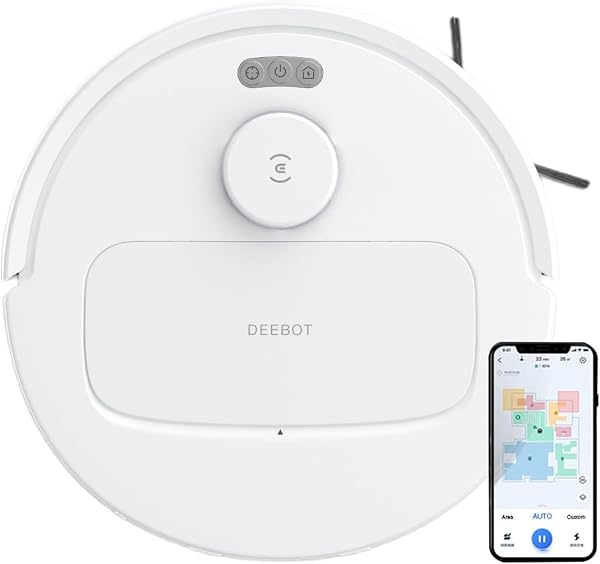
| Ecovacs Deebot T30 Pro | 11,000 Pa | Auto-lift pads | Heavy dust/Construction areas | ₹72,000 |
| Xiaomi Robot Vacuum E10 | 4,000 Pa | Dragging Pad | Studio/1BHK flats | ₹14,999 |
| Eureka Forbes Robo-Clean | 2,500 Pa | Basic wipe | Small budgets | ₹12,000 |
1. The All-Rounder: Roborock Qrevo Pro
This is currently the robot to beat. During my tests, I intentionally left a mixture of turmeric and dry tea leaves on my kitchen floor. While most robots smear these spices, the dual-spinning mop pads on the Qrevo actually scrubbed them off. The 7,000 Pa suction is powerful enough that I didn't need to manually sweep the corners of my balcony, which is always caked in Delhi's notorious smog dust.
The standout feature: The dock washes and dries the mop pads with hot water. After a week of cleaning, the dock didn't smell like stagnant mop water—a common issue with cheaper self-cleaning bots. It handles thresholds up to 2cm, so it easily climbed over the marble strip separating my hall from the kitchen.
2. The Heavy Lifter: Ecovacs Deebot T30 Pro Omni
If you live in a new township that’s still seeing construction, you know the struggle: dust is everywhere. The Deebot T30 Pro boasts an 11,000 Pa suction rating. While suction numbers are often marketing fluff, in practice, this machine picked up heavier debris like rice grains and small pebbles that the Xiaomi simply pushed around.
The "Edge Deep Mopping" tech means the mop pad physically extends to reach the skirting boards. This is vital in India because our floor cleaning routine relies on edge-to-edge wet mopping. It saved me from using a traditional floor wiper for a week. However, the app can be a bit finicky; it struggled to connect to my 5GHz Wi-Fi band once, forcing me to switch to the 2.4GHz network.
3. The Pet and Hair Specialist: Dreame L10s Ultra
If you have a Golden Retriever or a cat shedding on your sofa, you need a robot with an anti-tangle brush. The Dreame L10s uses a rubber brush roll that doesn't hold onto hair the way bristle brushes do. I measured the hair collected after a 20-minute run; it was all in the bin, not tangled around the rollers.
The navigation is laser-sharp. It mapped my 1200 sq ft flat in about 10 minutes. It identified my slippers and the charging cable for my MacBook Pro, navigating around them without a hitch. This is the device for you if you don't want to spend 15 minutes every two days cutting hair out of the roller with a kitchen knife.
4. The Budget Entry: Xiaomi Robot Vacuum E10
Look, if you live in a compact 1BHK or a studio, you don't need a ₹60,000 machine. The E10 is the utilitarian choice. It lacks the fancy self-cleaning dock and the sophisticated laser mapping of its bigger brothers—it uses a simpler gyroscope navigation—but it gets the job done for basic maintenance.
Don't expect it to mop away stubborn stains; it’s more of a damp cloth wipe. Use it to keep the floors dust-free during the week. It is reliable, the app is excellent (Xiaomi’s app infrastructure is solid on Indian servers), and if a part breaks, you’ll find spares on Amazon.in or at a local Mi Home store much easier than you will for the niche brands.
Buying Guide: What should you actually check?
Before you spend your UPI balance, keep these three factors in mind. They matter more than the brand name.
- Suction vs. Airflow: Ignore "Pa" ratings over 5,000 unless you have deep-pile rugs. What matters more is the main brush design. Rubber brushes are better for Indian homes (less hair tangling); bristle brushes are better for picking up fine grit.
- The Threshold Problem: Most Indian homes have floor-level transitions—marble strips, bathroom door thresholds, or balcony lips. If your transition is higher than 1.8cm, a robot *will* get stuck. Measure these before buying.
- Mopping Quality: A "damp cloth dragged behind" (budget models) is useless for Indian kitchens. You need "rotary scrubbing" (dual spinning pads) if you want the robot to actually clean spills. If you just want to remove dust, the drag-mop is fine.
- Service Network: Xiaomi and Eureka Forbes have service centres across India. For brands like Roborock or Dreame, check if there is a local distributor handling warranty claims. Do not import these directly from abroad; if the motor dies, it becomes a ₹50,000 paperweight.
FAQ: Common Questions from Indian Buyers
Will these robots clean up a spill like tea or dal?
No. Do not test this. Most robots are not waterproof in the main suction cavity, and sucking up liquids will damage the motor and the filter. If you spill dal, use a tissue or a rag first. These machines are for floor maintenance (dust and light grime), not disaster management.
Do I still need a maid if I buy this?
The honest answer is: it depends on your standards. A robot vacuum is excellent at keeping floors dust-free daily, which prevents that gritty feeling under your feet. However, they cannot wipe your kitchen counter, clean the stove, or wash the dishes. It is a supplement to, not a replacement for, help.
Will the robot eat my socks or cables?
Cheaper models without camera-based obstacle avoidance will absolutely devour any sock, charging cable, or thin rug tassel they find. If you buy a model with "AI Obstacle Avoidance" (like the Roborock Qrevo or Deebot T30), they are significantly better at spotting and avoiding these, but you should still tidy your floor before running the cycle.
Do these work on rugs and doormats?
Yes, but check the pile height. Most robots can climb a rug, but if the rug is too light, the robot will push it around like a bulldozer. If you have thick, high-pile rugs from a place like Kashmir or Jaipur, a robot vacuum will likely struggle and get stuck. Low-pile, heavy rugs are fine.
What happens during power cuts?
Most robots return to their dock to charge. If the power cuts, they stay docked. They won't run on battery power while docked, but they will charge once the power comes back. The bigger issue is if the Wi-Fi drops out; most robots will continue their cleaning job as planned, but you won't be able to control them via the app until the internet returns.
Final Verdict
If you have the space and the budget, the Roborock Qrevo Pro is currently the best performer for Indian urban living. It balances the high-suction needs for city dust with a competent mopping system that doesn't just spread the dirt around.
If you are looking to dip your toes into automation without overspending, the Xiaomi Robot Vacuum E10 is the most practical entry point. It is reliable, parts are easy to find on Flipkart or Amazon, and it will keep your living area clean enough for you to walk barefoot comfortably, which is, ultimately, why we are all here.
Affiliate Disclosure:
This post contains affiliate links. We may earn a commission when you purchase through our links, at no extra cost to you.
Share this:


