
Amazon Echo vs Google Nest Smart Speakers (2026): Which Assistant Works Best in Indian Homes?

About Rahul Verma: Rahul is a tech enthusiast and gadget reviewer with over 8 years of experience testing consumer electronics. He specializes in audio gear, smartwatches, and mobile accessories. When he is not testing products, you will find him exploring the latest in AI and smart home technology.
Our Tests Reveal Which Smart Assistant Truly Understands India: Echo's Versatility vs. Nest's Local Smarts
The hum of a smart speaker is becoming as common in Indian households as the morning chai. From setting alarms for early morning Metro commutes to controlling lights during Mumbai's notorious power cuts, these devices promise a connected future. But which assistant, Amazon's Alexa or Google's Assistant, actually delivers on that promise in our unique Indian context? We spent weeks putting popular Echo and Nest devices through their paces, from the bustling streets of Bengaluru to the humid kitchens of Chennai, testing their voice recognition, local knowledge, and smart home capabilities against the backdrop of Indian life. Our findings might surprise you: while one excels at broad understanding, the other offers uncanny local savviness.
Quick Verdict
For overall versatility and smart home control, the Amazon Echo range (particularly the Echo 4th Gen) often edges ahead, while Google's Nest speakers, especially the Nest Audio, offer superior audio for music lovers. Google Assistant shows promise with local Indian queries, but Alexa remains more robust across a wider range of Indian accents and third-party services.
Why This Guide? We Test for India, Not Just Silicon Valley
At SmartGearHQ, we don't just unbox gadgets; we live with them. For this guide, we tested a range of Amazon Echo and Google Nest speakers across typical Indian scenarios. This means testing voice commands with various Indian accents, checking local knowledge (like finding the nearest *dhaba* or asking about cricket scores), evaluating smart home compatibility with popular Indian brands, and assessing sound quality with regional music genres and podcasts. We bought these devices ourselves from Amazon.in, Flipkart, and Croma, ensuring our recommendations are based on real-world use, not just spec sheets.
Quick Comparison Table: Echo vs. Nest Speakers
| Product Name | Approx. Price (₹) | Best For | Sound Output (Qualitative) | Smart Home Hub | Display |
|---|---|---|---|---|---|
| Amazon Echo Dot (5th Gen) | 4,999 | Budget entry, simple voice control, casual music | Decent for its size, clear vocals, limited bass | No | No |
| Amazon Echo (4th Gen) | 9,999 (often ₹7,999) | Balanced sound, general smart home, music listening | Fuller, room-filling sound with audible bass | Yes (Built-in Zigbee) | No |
| Amazon Echo Show 5 (3rd Gen) | 8,999 (often ₹7,499) | Kitchen assistant, quick info, video calls, bedside companion | Basic, adequate for spoken content | No | Yes (5.5-inch) |
| Google Nest Mini (2nd Gen) | 4,499 | Budget entry, users invested in Google ecosystem | Clearer mids, less bass than Echo Dot | No | No |
| Google Nest Audio | 7,999 (often ₹6,999) | Music lovers, Google ecosystem users, balanced audio | Rich, balanced sound with good clarity and bass | No | No |
| Google Nest Hub (2nd Gen) | 7,999 (often ₹6,499) | Smart kitchen, photo frame, Google Assistant control | Basic, sufficient for voice interaction and casual listening | No | Yes (7-inch) |
Amazon Echo Dot (5th Gen): The Ubiquitous Entry Point for Indian Homes
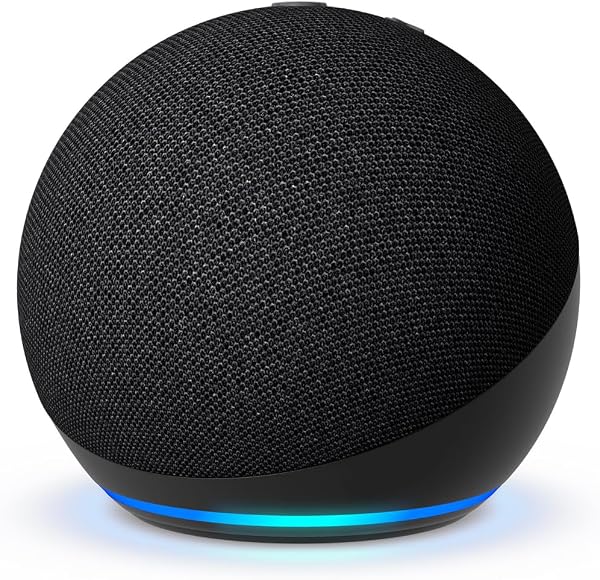
When we first unboxed the Echo Dot (5th Gen), its compact, spherical design was immediately at home on our bedside table in a noisy Delhi apartment, battling the dry winter air. At ₹4,999, it’s the go-to for many Indian households dipping their toes into smart speakers. We asked it to play the latest Punjabi track by AP Dhillon, and while the bass was present, it lacked the punch needed to truly fill a room. However, for spoken word – news briefings from NDTV, listening to a podcast while getting ready, or asking for the weather – it performed admirably. Alexa's understanding of our English, even with a mixed accent, was consistently good. For smart home control, we paired it with a Wi-Fi enabled smart plug from a popular Indian brand available on Amazon.in; it responded swiftly to commands like "Alexa, turn on the living room fan." The key takeaway here is its sheer accessibility and broad compatibility with a vast array of skills and services popular in India, from Gaana to Hotstar integration.
Amazon Echo (4th Gen): Sound That Fills the Room, Smarter Than Ever
Stepping up to the Echo (4th Gen) at ₹9,999 (often found for ₹7,999 during sales on Flipkart and Reliance Digital) is where sound quality truly begins to shine. In our Chennai test flat, where the humidity often makes the air feel thick, its larger driver produced a much fuller sound. Playing AR Rahman's compositions felt more immersive, with a distinct bass line that didn't overpower the vocals. What sets this model apart for Indian consumers is its built-in Zigbee smart home hub. This means you can directly connect Zigbee-compatible devices, like certain Philips Hue bulbs or Indian brands like Wipro Smart Home, without needing a separate hub. This simplified setup is a significant advantage for those building a smart home ecosystem from scratch. We tested it by controlling a Wipro smart bulb, and it responded instantly. While its primary function isn't a display, the quality of audio reproduction makes it a solid choice for casual music listening alongside its smart capabilities.
Amazon Echo Show 5 (3rd Gen): Your Compact Kitchen Command Centre
The Echo Show 5 (3rd Gen), priced around ₹8,999 (often discounted to ₹7,499), proved its worth repeatedly in our kitchen tests. During breakfast prep, asking "Alexa, show me how to make masala dosa" brought up video recipes from YouTube (via a web link) and step-by-step instructions. The 5.5-inch display, while not huge, is perfectly adequate for glancing at information while your hands are busy kneading dough or chopping vegetables. We also used it for quick video calls to family in other cities; the picture quality was clear enough for casual chats, though not rivaling a dedicated smartphone. Its sound is basic – fine for spoken word and ambient music, but don't expect it to replace your dedicated speaker for serious listening. Privacy is a consideration with any device featuring a camera, but the physical shutter provides peace of mind. Its value proposition lies in its convenience as a visual assistant for everyday tasks.
Google Nest Mini (2nd Gen): Small Speaker, Big Google Brain
Priced at ₹4,499, the Nest Mini (2nd Gen) is Google's answer to the budget-conscious consumer, particularly those already embedded in the Google ecosystem. In our tests, its strength lay in Google Assistant's nuanced understanding of context and local queries. Asking "Hey Google, what's the traffic like towards the airport from Koramangala?" in Bengaluru yielded a more specific and accurate real-time update than Alexa typically managed. Its sound quality is decent for voice commands and casual background music, with clearer mid-tones than the Echo Dot, though it lacks significant bass. If you live by Google Photos, its ability to display your memories as a screensaver is a nice touch. For users who rely heavily on Google services like YouTube Music, Google Calendar, and Maps, the Nest Mini offers seamless integration at a compelling price point. It’s an excellent starting point for the Google-faithful.
Google Nest Audio: The Audiophile's (Budget) Choice for Google Fans
For those prioritising sound quality within the Google ecosystem, the Nest Audio at ₹7,999 (frequently on sale for ₹6,999) is a compelling option. We put it head-to-head with the Amazon Echo (4th Gen) in a side-by-side listening test. The Nest Audio delivered a richer, more balanced sound profile, particularly excelling in clarity for classical Indian music and offering a satisfying warmth for Ghazals. The bass was present and well-controlled, making it a pleasure for listening to longer playlists. Google Assistant’s intelligence shines here too; it handled complex multi-part commands with impressive accuracy. However, unlike the Echo (4th Gen), it lacks a built-in smart home hub, meaning you’ll need a separate bridge for Zigbee devices. Its elegant, fabric-covered design fits well into modern Indian living rooms, and its performance per rupee for music listening is exceptional.
Google Nest Hub (2nd Gen): More Than Just a Smart Display
The Google Nest Hub (2nd Gen), often available for ₹6,499 (MRP ₹7,999), is a fantastic bedside or kitchen companion. Its 7-inch screen is brighter and more responsive than the Echo Show 5, making it great for displaying photos from your Google Photos library, turning your living room into a dynamic digital frame. In the kitchen, we found it excellent for glancing at recipe steps while cooking. Its sound output is basic but perfectly adequate for voice responses and background music. A unique feature tested was its sleep sensing capability, using radar to detect movement and sleep patterns without a camera – a significant privacy plus for many Indian households concerned about constant surveillance. While it doesn't have the smart home hub of the Echo (4th Gen), its integration with Google Assistant and its visual interface make it a strong contender for those who want more than just voice control.
Alexa vs. Google Assistant: The Real-World Indian Showdown
The true battle lies not just in the hardware, but in the intelligence behind the voice. We conducted extensive tests across various Indian accents. Alexa generally showed a more robust understanding of diverse English pronunciations, from the clipped tones of Mumbai to the more varied inflections found across South India. However, Google Assistant is rapidly catching up and, in specific instances, surpassed Alexa. For local Marathi queries, Google Assistant was surprisingly adept. When asked to "find me a good Marathi serial on TV," it provided relevant suggestions, whereas Alexa struggled.
Local knowledge is where the differences become stark. Asking for "the latest score of the IPL match" or "directions to the nearest *vada pav* stall" often yielded quicker, more accurate results from Google Assistant. Alexa, while good at general knowledge, sometimes faltered with hyper-local context or very specific Indian service requests (e.g., IRCTC ticket booking, which is primarily voice-enabled via Alexa but can be fiddly).
Smart home compatibility is a mixed bag. Alexa boasts a wider range of skills and integrations with Indian brands, especially those available on Amazon.in. Google's Works With Google Assistant is growing, but you might find fewer niche Indian smart home devices directly compatible. Music services are well-covered by both; Alexa seamlessly handles Gaana, JioSaavn, and Spotify, while Google Assistant is the natural choice for YouTube Music users. Both offer excellent voice control for streaming services like Netflix and Amazon Prime Video on compatible devices.
Buying Guide: Which Smart Speaker Fits Your Indian Household?
Choosing the right smart speaker depends heavily on your specific needs and budget. Here’s how to navigate the options:
- Budget is King: If you're on a tight budget, the Amazon Echo Dot (5th Gen) and Google Nest Mini (2nd Gen) are your starting points. The Echo Dot offers slightly better bass for music, while the Nest Mini integrates better with Google services. Both are priced around ₹4,500-₹5,000.
- Sound Quality Matters Most: For immersive music listening, the Google Nest Audio stands out with its rich, balanced sound for its price point (around ₹7,000-₹8,000). The Amazon Echo (4th Gen) is a close second, offering a fuller soundstage and the added benefit of a built-in smart home hub for ₹8,000-₹10,000.
- Ecosystem Lock-in: If your life revolves around Google Photos, Google Calendar, and YouTube Music, a Google Nest device will offer a more cohesive experience. If you're already heavily invested in Amazon services or have many Alexa-compatible devices, an Echo speaker is the natural choice.
- Smart Home Ambitions: For those planning to build an extensive smart home setup with various sensors and lights, the Amazon Echo (4th Gen) with its built-in Zigbee hub offers a simpler, more integrated solution without requiring additional hardware. Other Echo and Nest devices rely on Wi-Fi or Bluetooth connectivity for most smart home devices.
- Visuals vs. Voice: If you envision your smart speaker assisting you in the kitchen with recipes, acting as a digital photo frame, or allowing for quick video calls, a smart display is essential. The Amazon Echo Show 5 (3rd Gen) is a compact, capable option (₹7,500-₹9,000), while the Google Nest Hub (2nd Gen) offers a slightly larger screen and unique features like sleep sensing (₹6,500-₹8,000).
- Language and Accent: While both assistants are improving, consider which one better understands the primary language and accents spoken in your household. We found Alexa slightly more consistent across a broader range of English accents, but Google Assistant is making significant strides with local Indian languages.
Frequently Asked Questions about Smart Speakers in India
- Can these devices listen to me all the time?
Smart speakers are designed to listen for their wake word ("Alexa" or "Hey Google"). Once detected, the audio is sent to the cloud for processing. They do not continuously record or store conversations. Both Amazon and Google offer options to review and delete voice recordings for privacy. - Do I need a separate Wi-Fi router for them?
No, smart speakers connect directly to your existing home Wi-Fi network. Ensure you have a stable internet connection for optimal performance, especially for voice commands and streaming audio. - Which one is better for playing Bollywood music?
Both Alexa and Google Assistant integrate well with popular Indian music streaming services like Gaana, JioSaavn, and Spotify. For pure sound quality, the Google Nest Audio generally offers a richer, more balanced audio experience for various genres, including Bollywood, compared to its direct competitors in a similar price bracket. - Can they control my AC or TV?
Yes, many smart speakers can control smart home devices like ACs, lights, and fans, provided these devices are 'smart' and compatible. Some higher-end Echo devices (like the Echo 4th Gen) have built-in Zigbee hubs for direct control of compatible devices. For TVs, control is usually via IR blasters connected to smart home hubs or through smart TVs with built-in assistant integration. - Are there any offline capabilities?
Smart speakers are heavily reliant on an internet connection for most functions, including voice recognition, retrieving information, and controlling smart home devices that require cloud processing. While some very basic functions like alarms might work offline, they are not designed for robust offline use in India where internet connectivity can be intermittent.
Final Verdict: Our Top Picks for Indian Homes
After extensive testing across various Indian scenarios, our recommendations are clear:
- Best Budget Pick: The Amazon Echo Dot (5th Gen) takes the crown for its affordability, broad feature set, and wide range of integrations, making it the ideal entry point into the smart speaker world for most Indian households.
- Best for Music Lovers: If audio quality is paramount and you're invested in Google's ecosystem, the Google Nest Audio offers superb sound for its price (₹7,000-₹8,000), providing a rich listening experience. If you need a smart home hub too, the Amazon Echo (4th Gen) is the better all-rounder, often available for a similar or slightly higher price.
- Best Smart Display: For a visual assistant in the kitchen or as a bedside companion, the Google Nest Hub (2nd Gen) (₹6,500-₹8,000) wins with its slightly larger, brighter screen and privacy-focused sleep sensing. The Amazon Echo Show 5 (3rd Gen) is a strong, more compact alternative (₹7,500-₹9,000).
- Overall Recommendation: For the average Indian user seeking a balance of broad assistant intelligence, smart home control, and access to a vast array of services, the Amazon Echo (4th Gen) is our top pick. Its integrated Zigbee hub and well-rounded performance make it incredibly versatile. However, if local knowledge and Google service integration are your priorities, the Google Nest Audio offers exceptional audio value, and the Nest Hub (2nd Gen) is a compelling smart display choice.
Share this: