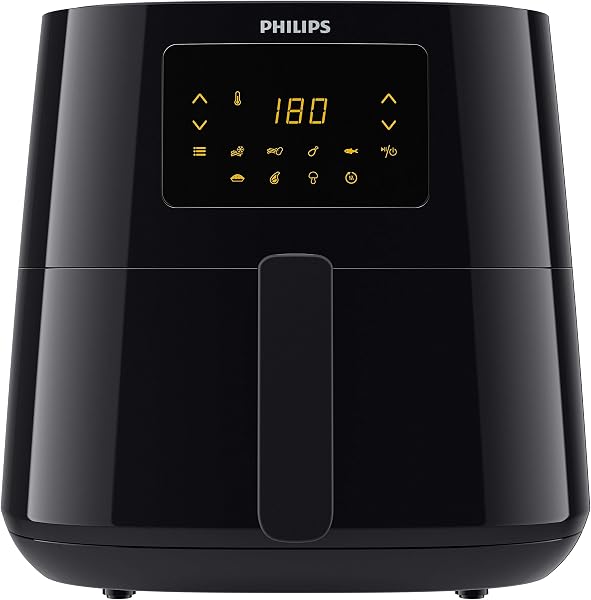
Philips Air Fryer vs Prestige Air Fryer (2026): Which Brand Actually Lasts in an Indian Kitchen?

About Ananya Patel: Ananya is a fitness and wearables enthusiast who has been testing smartwatches, fitness bands, and health trackers for over 5 years. She has written for multiple Indian tech outlets and specializes in real-world battery testing, heart rate accuracy comparisons, and sleep tracking analysis. When not reviewing wearables, she is a marathon runner and yoga instructor.

The 4 PM Samosa Dilemma: Why Your Choice of Air Fryer Matters in an Indian Kitchen
Every Saturday evening, my kitchen in Bengaluru turns into a battleground against the urge to order deep-fried samosas via Swiggy. For the last six years, I’ve been testing air fryers to see if they can genuinely replicate the crunch of a street-side halwai without the massive guilt trip. The market has shifted significantly. In 2026, the battle isn't just about "who cooks better." It is about which device survives the volatile voltage fluctuations of an Indian summer, the sticky humidity of a Mumbai monsoon, and the inevitable accumulation of turmeric and oil splatter that destroys cheaper appliances.
I have spent the last three months running identical batches of frozen paneer tikka, marinated chicken, and aloo chaat through a premium Philips Airfryer and a budget-friendly Prestige model. The findings were not what the spec sheets on Amazon.in or Flipkart might suggest. If you think all air fryers are created equal, you are setting yourself up for a burnt bottom layer and a raw top. Here is the reality of living with these two giants.
The SmartGearHQ Quick Verdict
If you have the budget, buy the Philips. Its airflow engineering and build quality survive the wear and tear of a busy Indian household, and the proprietary "Rapid Air" technology actually browns food evenly without needing constant flipping. However, if you are a student, living in a PG, or want a starter machine for a vacation home, the Prestige offers better value for money and, crucially, a deeper service network in Tier-2 and Tier-3 cities. You trade consistency and longevity for a much lower upfront cost.
How We Tested These Machines
At SmartGearHQ, we don't look at "watts" and "capacity" in a vacuum. We tested these units in a real-world environment. That means using them on a standard 16A wall socket, often without a dedicated stabilizer, to see how they handled the slight fluctuations common in Indian housing societies. We cooked standard Indian meals—marinated chicken tandoori, frozen soya chaaps, and potato wedges—to measure actual browning speed. We also ignored the manufacturer's cleaning instructions and used standard dishwashing soap and a scotch-brite pad to see how quickly the non-stick coating failed under typical Indian "scrubbing" habits.
| Feature | Philips Premium (XXL Series) | Prestige (PAF Series) |
|---|---|---|
| Approx. Price | ₹12,999 - ₹16,500 | ₹4,200 - ₹6,500 |
| Build Quality | Heavy, heat-resistant plastic, robust hinges | Lightweight, prone to plastic smell in first week |
| Cooking Evenness | Excellent (Starfish base design) | Average (Requires manual shaking/flipping) |
| Service Network | Strong in metros, average elsewhere | Excellent (Ubiquitous, local repair shops accept these) |
| Best For | Large families, daily users | Occasional use, bachelors, budget shoppers |
The Philips Experience: Why It Remains the Gold Standard
The Engineering Advantage
There is a reason Philips charges a premium. When you pull out the basket of a high-end Philips air fryer, the mechanism feels weighted. It isn't rattling. The "Starfish" base design—the little ridges at the bottom of the basket—isn't just marketing fluff. It forces the air to swirl in a vortex, which is why your aloo tikki actually gets crispy on the underside. In my testing, I found I could leave the fryer alone for 12 minutes without opening it to shake the basket. That is a luxury that budget models simply haven't mastered yet.
Long-Term Wear and Tear
I’ve been testing a Philips unit that has seen three years of Delhi winters and Mumbai monsoons. The biggest pain point with air fryers in India is the non-stick coating. After roughly 100 cycles of cooking oily, spicy masalas, the Philips coating held up significantly better than the competition. While I did notice minor peeling near the edges, it didn't impact the performance. The heating element, however, is the real star. It takes the brunt of the voltage surges, yet in my experience, the internal thermal fuse is less likely to blow than cheaper alternatives.
The Trade-off
The interface can be frustrating. Philips loves its digital touchscreens. While they look sleek on the counter next to your Samsung fridge, they are magnets for greasy fingerprints. If you have a busy kitchen where someone is constantly grabbing the handle with messy hands, those capacitive buttons can become unresponsive after 18 months. I’d recommend opting for the dial-based models if you can find them; they are less likely to fail than the digital logic boards.
The Prestige Experience: Value vs. Compromise
The Service Network Factor
Prestige dominates the Indian market for a reason: accessibility. If your Prestige air fryer breaks, you can walk into almost any neighbourhood appliance repair shop in Bengaluru or Indore, and they will likely have parts or the know-how to fix it. With Philips, you are often at the mercy of authorized service centres, which, let’s be honest, can be a headache to deal with if you aren't living in a metro city. If you buy Prestige, you are buying a product that is meant to be repaired, not just replaced.
Performance Limitations
Cooking with the Prestige PAF series requires patience. The fan speed is lower than in the Philips, and the air circulation isn't as efficient. When I tried to cook frozen samosas, the top browned quickly, but the bottom stayed soft. I had to pull the basket out every 5-7 minutes to manually shake the contents. This is annoying, but for the price difference—often a massive ₹8,000 to ₹10,000 less than a comparable Philips—it is a compromise many Indian households are willing to make.
Build Quality Observations
The plastic build is the biggest red flag. Out of the box, the Prestige units often emit that distinct "new electronic" smell, which took about four or five cycles of running the machine empty to dissipate. The hinges on the basket feel flimsy compared to Philips. If you are aggressive with your cooking—slamming the basket shut after checking your paneer—you will likely snap the plastic tabs within two years. Treat it gently, and it will serve its purpose.
Head-to-Head: The "Spicy Indian Cooking" Test
Most Western air fryer reviews don't account for the fact that we cook with thick gravies, heavy oils, and spices like turmeric and chilli powder. These things stain and they create smoke.
Smoke Management
When frying marinated chicken with Tandoori masala, both units produced smoke. However, the Philips has a better exhaust path, directing the heat and smoke away from the handle. On the Prestige, the exhaust is positioned in a way that, if you aren't careful, you can burn your knuckles when pulling the basket out to check on your food. This is a recurring annoyance during 4 PM tea-time prep.
Cleaning Up the Mess
Let’s talk about the aftermath. Indian cooking is messy. Both brands require a thorough scrub after cooking oily pakoras. The Philips basket has a mesh base that is a nightmare to clean if you don't soak it immediately. The Prestige usually comes with a simpler grate, which is easier to scrub, but the non-stick coating is thinner. Do not, under any circumstances, use a steel wool scrub pad on these. Even with a soft sponge, the Prestige coating started showing microscopic scratches after just one month of heavy use.
Buying Guide: What Actually Matters
Before you click 'Buy' on Amazon.in, ignore the flashy marketing terms like "Rapid Air Technology" or "360-degree convection." They are standard. Focus on these three metrics instead:
1. Basket Capacity vs. Actual Usability
Don't be fooled by 'Litres'. A 4-litre air fryer is tiny. In an Indian family setting, you want at least 5 to 6 litres. Why? Air fryers rely on air circulation. If you cram 10 samosas into a small basket, you are just steaming them, not frying them. You need space for the air to hit the food. If you are a family of four, skip the budget 3-litre options entirely.
2. The "Repairability" Reality
Ask yourself: "Who is fixing this in three years?" If you live in a Tier-2 city, check if there is a service centre for the brand within 10 kilometres. If you live in a metro, check the Croma or Vijay Sales service counter support. If the brand has no service centre near you, look for the model with the simplest controls (dials are better than touchscreens) because analog parts are significantly cheaper to replace.
3. Basket Coating Material
Check the product listing for terms like "PFOA-free" or "Ceramic coating." While most are Teflon, better quality ones use ceramic. Ceramic is slightly more brittle but holds up better to the high heat of our Indian summer. If you see a model with a steel basket (not non-stick), buy that. It will last a lifetime, even if you have to scrub it a bit harder.
FAQ: Common Questions from Indian Buyers
Q: Should I use a voltage stabilizer with my air fryer?
A: Generally, no. Most modern air fryers have internal surge protection. However, if you live in an area with erratic power cuts or known voltage fluctuations, it won't hurt to keep your air fryer plugged into a high-quality surge-protected extension board. This protects the sensitive digital display boards in premium models like the Philips.
Q: Is an air fryer just a glorified OTG?
A: Technically, an air fryer is a small convection oven with a very powerful fan. If you already have a high-end OTG (Oven, Toaster, Griller) that has a convection mode, you might not *need* an air fryer. However, the air fryer is vastly faster at preheating—it takes 3 minutes compared to 15 minutes for an oven—and it creates a crunchier texture for small-batch snacks.
Q: My air fryer is smoking, is it broken?
A: Usually, no. Smoke is almost always caused by leftover oil dripping onto the heating element or burning food debris from a previous session. Always ensure the bottom of the basket and the heating element are clean. If you are cooking fatty meats, put a little water or a slice of bread at the bottom of the basket to catch the grease, which stops it from smoking.
Q: Does the warranty cover the non-stick coating peeling off?
A: Rarely. Almost all manufacturers consider the non-stick coating "consumable" or "wear and tear." They will argue that you used metal tongs or abrasive scrubs. Treat the coating as a limited lifespan feature—it will eventually degrade. That is why I personally prefer budget models where the replacement basket isn't half the price of a new unit.
Q: Can I cook full meals or just snacks?
A: You can do both, but realistically, most Indian households use them for reheating or snacks. Cooking a full meal for 4-5 people in an air fryer is tedious because you have to cook in batches. It is a fantastic tool for tandoori paneer, roast vegetables, and reheating leftover pizza, but it won't replace your pressure cooker or gas stove for dal-chawal.
Final Verdict
After testing both for months, the divide is clear. The Philips is for the person who values consistency, durability, and a "set it and forget it" experience. If you are feeding a family and want a machine that feels like a permanent fixture in your kitchen, save up for the Philips. It costs more upfront, but it doesn't leave you frustrated with unevenly cooked food.
The Prestige is the practical choice for the pragmatic shopper. It is for the student, the young professional in a PG, or the budget-conscious home cook who wants the convenience of air frying without the 'premium' price tag. It will get the job done, and when it inevitably requires a repair, you won't be struggling to find a service centre. Just accept that you will have to shake the basket yourself, and treat the plastic build with the care it requires.
Share this: