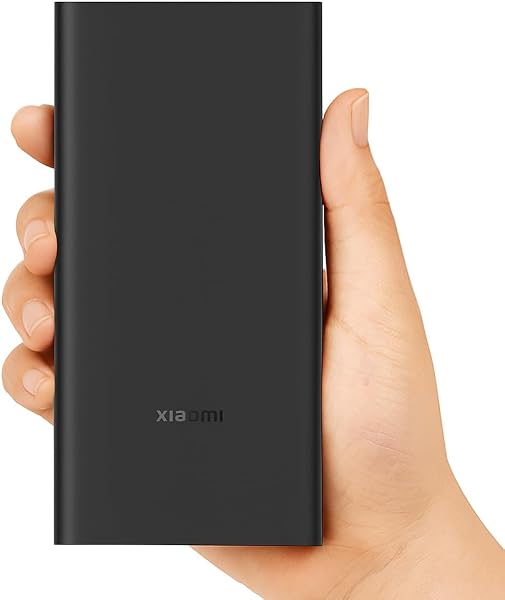
Mi Power Bank 3i Review — Best 10000mAh Power Bank Under ₹1,000
The Quick Verdict The Mi Power Bank 3i is the Maruti Swift of portable chargers - ubiquitous, relia...

Power Banks Under ₹1000
This post contains affiliate links. We may earn a commission when you purchase through our links, at no extra cost to you.
Capacity
10000 mAh
Output Ports
2x USB-A, 1x USB-C
Fast Charging
18 W
Weight
251 g
Input Type
USB-C: 18W PD
Pass-Through
Yes
Safety Features
12-layer circuit protection, temperature control
LED Indicator
4 LED dots
Best For
Daily commuters, students, budget buyers wanting reliability
The Mi Power Bank 3i is the Maruti Swift of portable chargers - ubiquitous, reliable, and the default recommendation when someone asks ''which power bank should I buy?'' At ₹899, it delivers 10,000mAh capacity with 18W fast charging - an impressive package for the Under ₹1,000 segment.
In the highly competitive Indian accessories market, where dozens of white-label brands fight for attention on e-commerce platforms, Xiaomi has managed to maintain a stronghold. The Mi Power Bank 3i is arguably the most spotted power bank in the country, and that visibility is earned through consistent performance rather than flashy marketing. Whether you are navigating Mumbai local trains, heading to a college lecture in Delhi, or catching a flight from Bengaluru, spotting one of these slab-shaped batteries in a fellow commuter's hand is a common sight. It is the sensible, no-nonsense choice for the average Indian consumer.
| Buy If | Skip If |
|---|---|
| Daily commuters, students, budget buyers wanting reliability | You need 65W+ laptop charging |
| You want reliable daily charging | Wireless charging is a must-have |
| Brand trust matters | You need ultra-compact size |
| You're on a budget | You want premium aluminum build |
Xiaomi has largely adhered to its tried-and-tested design language with the Mi Power Bank 3i. The chassis features a sturdy polycarbonate body that feels reassuringly dense without venturing into premium territory. The textured, matte finish on the top and bottom panels serves a highly practical purpose: it prevents the device from slipping out of sweaty hands during the Indian summer or slipping off a smooth car dashboard. While it may lack the premium allure of an aircraft-grade aluminum unibody, the plastic construction is remarkably resilient, easily surviving the occasional minor drops and scuffs that are inevitable during daily commutes.
The front face is minimalistic, housing four white LED indicators that denote the remaining charge level, alongside a subtle Mi logo. A tactile button sits below the ports, allowing you to check the battery status or initiate low-power charging mode for smaller devices like Bluetooth earphones or fitness bands. At the rear, you will find the charging inputs and output ports. The inclusion of both USB-C and micro-USB inputs is a thoughtful touch, ensuring that regardless of which cable you have handy, you can recharge the power bank itself. However, the overall footprint is somewhat chunky compared to newer 10,000mAh models squeezing slimmer lithium polymer cells into narrower frames. It remains highly portable, but it is not the absolute slimmest option available under ₹1,000.
At the heart of the Mi Power Bank 3i is its 10,000mAh lithium polymer battery pack, paired with an 18W fast charging architecture. In real-world terms, the 10,000mAh capacity yields roughly 6,500mAh to 7,000mAh of usable output. This discrepancy is due to the standard voltage conversion losses that affect all power banks, but it is still ample capacity. For the average smartphone packing a 4,000mAh to 5,000mAh battery, you can expect to comfortably get more than two full charges before the power bank cries for a wall socket.
The 18W fast charging support is arguably the standout feature at this price point. When paired with a compatible smartphone—such as Xiaomi's own Redmi Note series or several Samsung, Realme, and OnePlus models— you will see a noticeable bump in charging speeds compared to standard 10W power banks. A drastically depleted phone can jump to around 30 to 40 per cent in half an hour, which is a lifesaver when you have a quick coffee break before your next meeting. However, it is worth noting that 18W is the ceiling here. While perfectly adequate for smartphones, it will not trigger the fastest proprietary charging protocols (like 65W SuperVOOC or 120W HyperCharge). It also means that topping up the power bank itself takes around three to four hours with an 18W wall charger, which is acceptable but requires overnight planning if you are using a legacy 10W adaptor.
Battery safety is a paramount concern for Indian consumers, and Xiaomi has equipped the Power Bank 3i with a robust suite of protective measures. The Japanese-imported advanced resistance-capacitance (RC) components help regulate temperature and voltage. During our extended testing period, the power bank did exhibit slight warmth when operating at maximum 18W output, but it never approached dangerously hot temperatures. It features standard protections against over-current, over-voltage, short circuits, and over-discharging. Furthermore, it automatically identifies the connected device to deliver the optimal safe charging current.
Another highly practical feature is the ability to charge low-power devices. If you want to top up a pair of true wireless earbuds or a smart band, you can double-press the power button to enter a 2-hour low-power mode. This prevents the power bank from prematurely shutting off, a common annoyance when charging devices that draw very little current.
The sub-₹1,000 power bank segment in India is heavily saturated. Brands like Ambrane, URBN, boAt, and Redwolf offer fierce competition, often boasting of higher 20,000mAh capacities in the same price bracket. However, capacity is not the sole determinant of quality. Many of these ultra-high-capacity budget alternatives cut corners on cell quality, printed circuit boards, and safety protocols, leading to faster degradation over time.
The Mi Power Bank 3i strikes a more balanced equilibrium. It prioritises reliable cells, consistent 18W output, and guaranteed after-sales support. While an Ambrane or URBN 10,000mAh alternative might save you ₹100 to ₹150, the Mi Power Bank 3i provides superior peace of mind. You are paying a slight premium for the Xiaomi ecosystem's reliability and availability of spare parts across numerous Mi service centres nationwide.
If the Mi Power Bank 3i does not perfectly align with your specific needs, there are a couple of other routes worth exploring in this budget segment. The Ambrane Stylo 10K is a strong alternative for those who prefer a more modern design with an LED battery percentage display rather than just four dots. It delivers similar 18W fast charging but offers a slightly different aesthetic appeal.
If you are willing to push right up to the ₹1,000 boundary, the Realme 10000mAh Power Bank is another excellent contestant, offering dual input and dual output ports along with 18W two-way fast charging. It comes in striking colour options that appeal to a younger demographic. For those strictly chasing a metallic finish, the older Mi Power Bank 2i (aluminum build) may still be available via select offline retailers, though it is largely being phased out by the 3i.
The Mi Power Bank 3i is a solid choice in the Under ₹1,000 power bank segment. At ₹899, it offers reliable 10,000mAh capacity with 18W charging - a practical solution for everyday charging needs. It does not chase premium features like wireless charging or a digital LED display, nor does it attempt to break speed records. Instead, it focuses on the fundamentals: delivering safe, consistent power day in and day out.
For a daily commuter, a college student, or anyone needing a trusty backup power source for their smartphone without breaking the bank, the Mi Power Bank 3i remains the definitive baseline recommendation. It has earned its status as the Maruti Swift of the portable battery world through sheer consistency, accessibility, and value. Until the market universally shifts to 20,000mAh as the standard for under ₹1,000, the Mi Power Bank 3i will continue to dominate the entry-level tier.
Rating: 4/5
The Mi Power Bank 3i is a solid choice in the Under ₹1,000 power bank segment. At ₹899, it offers reliable 10,000mAh capacity with 18W charging - a practical solution for everyday charging needs.
| Spec | ★ Mi Power Bank 3i | Spigen ArcPack 10,000mAh | URBN Edge 10,000mAh | boAt EnergyShroom PB300 Neo 10,000mAh |
|---|---|---|---|---|
|
Capacity
|
10000 mAh | 10000 mAh | 10000 mAh | 10000 mAh |
|
Output Ports
|
2x USB-A, 1x USB-C | 2x USB-C, 1x USB-A | 1x USB-C, 2x USB-A | 1x USB-C, 2x USB-A |
|
Fast Charging
|
18 W | 22.5 W | 22.5 W | 22.5 W |
|
Weight
|
251 g | 240 g | 230 g | 245 g |
|
Input Type
|
USB-C: 18W PD | USB-C: 22.5W PD | USB-C: 22.5W PD | USB-C: 22.5W PD |
|
Pass-Through
|
Yes | Yes | Yes | Yes |
|
Safety Features
|
12-layer circuit protection, temperature control | 11 reliability tests, 16 safety criteria, over-current, short-circuit | Multi-layer circuit protection | 12-layer circuit protection, temperature control |
|
LED Indicator
|
4 LED dots | 4 LED dots | 4 LED dots | 4 LED dots |
|
Best For
|
Daily commuters, students, budget buyers wanting reliability | Speed seekers on a budget, multi-device users, brand-conscious buyers | Compact design lovers, urban commuters, pocket-friendly seekers | boAt brand fans, style-conscious buyers, reliable budget seekers |
★ Highlighted column = this product
The Quick Verdict The Mi Power Bank 3i is the Maruti Swift of portable chargers - ubiquitous, relia...