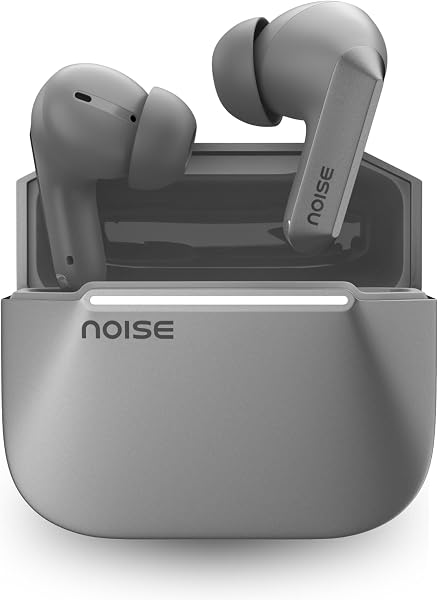
Airflow Neo Earbuds with 80H Playtime: Price, Features and Complete Buying Guide

About Rahul Verma: Rahul is a tech enthusiast and gadget reviewer with over 8 years of experience testing consumer electronics. He specializes in audio gear, smartwatches, and mobile accessories. When he is not testing products, you will find him exploring the latest in AI and smart home technology.

If you've been scrolling through Amazon or Flipkart looking for a pair of TWS earbuds that simply refuses to die on you, the airflow neo earbuds with 80h playtime have probably popped up in your feed more than once. And honestly, the pitch is hard to ignore: a claimed 80 hours of total playback, an ENC mic for calls, and a price tag that sits comfortably under ₹2,000.
But here's the thing about budget earbuds in India — the spec sheet is only half the story. The 80-hour claim is almost always the combined figure of the earbuds plus the charging case, which means real-world use looks quite different from the marketing sheet. Charging port quality, Bluetooth stability in crowded areas, and whether the touch controls actually work on the third tap matter a lot more six months down the line.
In this guide, we break down exactly what the airflow neo earbuds with 80h playtime offer, which variant makes sense at which price, how they stack up against boAt and pTron alternatives, and — most importantly — when and where to buy them so you don't overpay by ₹400 for no reason. We'll also cover practical tips for Indian users, from monsoon-proofing to getting the most out of the battery case.
Understanding the Airflow Neo Earbuds with 80H Playtime
The Airflow Neo is a true wireless stereo (TWS) earbud set aimed squarely at the value segment of the Indian market — students, daily commuters, gig workers, and anyone who wants long battery life without spending ₹5,000 on a "premium" pair. The headline feature, as the name suggests, is the claimed 80-hour total playback figure when you include the charging case.
What the "80H" figure actually means
This is the single most misunderstood number in budget TWS marketing, so let's be clear. The 80-hour claim is cumulative. It assumes:
- The earbuds themselves hold roughly 6–8 hours of playback on a single charge (typical for this class and battery size).
- The charging case holds roughly 8–10 additional full top-ups.
- You're listening at around 50–60% volume, which almost nobody does on a crowded Mumbai local.
In real-world Indian conditions — 70–80% volume, calls, and constant re-pairing — expect somewhere between 55 and 70 hours of total use before the case itself needs a wall charge. That's still genuinely excellent for the price, but don't plan a two-week trip assuming zero charging.
Who should consider these earbuds
The airflow neo earbuds with 80h playtime make the most sense for people who fit one of these profiles:
- Daily commuters who spend 1–2 hours on public transport and hate charging things every night.
- Students attending online lectures and watching content, where a low-latency mode helps with lip-sync.
- Work-from-home users who need a backup pair for calls and don't want to risk a ₹8,000 pair of earbuds in the kitchen.
- Gym-goers and walkers who need a snug fit and at least IPX4 sweat resistance.
They're not ideal if you're an audiophile chasing detailed mids and controlled bass, or if you need rock-solid multipoint connectivity between a laptop and a phone. At this price, you're buying endurance and convenience, not sonic refinement.
Key Factors to Consider Before Buying
Before you hit "Buy Now," run through these checkpoints. They're the difference between a pair you love for two years and one that ends up in a drawer by Diwali.
1. Split the battery spec into two numbers
Ask two questions: How long do the buds last on one charge? And how many full recharges does the case provide? A genuine 80-hour total usually needs at least a 6-hour single-charge figure. If a listing claims 80 hours but only 3 hours per bud, the case is doing all the heavy lifting and you'll be plugging in frequently.
2. Charging port type and speed
USB Type-C is non-negotiable in 2025 — a micro-USB port on a new product is a red flag. Also check whether the listing mentions fast charge (typically "10 minutes = 100 minutes of playback"). For Indian users who often forget to charge overnight before a morning train, fast charge is genuinely useful.
3. Bluetooth version and latency mode
Bluetooth 5.1 or higher gives noticeably better stability and lower power draw than 5.0. If you watch a lot of YouTube or play BGMI and Call of Duty Mobile, look specifically for a stated low-latency/game mode (usually 40–60ms). Without it, you'll notice a half-second lag between the gun firing and the sound.
4. Driver size and sound signature
Most budget earbuds in this bracket use 10mm or 13mm dynamic drivers with a V-shaped, bass-forward tuning. That suits Bollywood tracks, Punjabi pop, and EDM perfectly. It's less suited to classical or vocal-heavy content, where heavy bass can muddy the detail. If you listen mostly to ghazals or acoustic music, look for listings that explicitly mention "balanced" or "clear vocals."
5. ENC vs ANC — know the difference
Many budget earbuds advertise "ENC," which is Environmental Noise Cancellation for the microphone — it helps the person on the other end hear you better during calls. It does not reduce noise reaching your ears. True ANC (Active Noise Cancellation) is a different, more expensive technology. For the airflow neo earbuds with 80h playtime, ENC on calls is the realistic expectation.
6. IPX rating for Indian weather
IPX4 handles sweat and light rain; IPX5 handles splashes. Given monsoon humidity and the fact that most people use these while walking or commuting, IPX4 should be your minimum. Anything rated IPX4 should survive a drenched auto ride, but none of these should be submerged.
7. Fit and ear-tip options
Indian ears vary widely in canal size, and a poor seal destroys bass response and forces you to crank the volume — which drains battery faster and risks long-term hearing damage. Check whether the box includes at least two or three ear-tip sizes. Replacements are cheap on Amazon, so buy a set if needed.
Airflow Neo Earbuds with 80H Playtime: Detailed Breakdown
Airflow has positioned the Neo as its long-battery hero product, and it's usually listed in a couple of configurations. Here's how the variants typically differ and who each one is for. Note: specifications and prices shift frequently on marketplace listings — always verify the current spec sheet on the product page before checkout.
Airflow Neo (standard, budget pick)
The base model is the one most buyers land on, typically sitting in the ₹999–₹1,499 band depending on the sale and the colour variant. You get:
- True wireless in-ear design with a stem-style or pebble-shaped case
- Bluetooth 5.x with a low-latency toggle
- 10mm dynamic drivers with bass-forward tuning
- ENC-enabled mic for voice calls
- IPX-rated splash resistance (verify the exact rating on the listing)
- USB Type-C charging with fast-charge support
- Touch controls for play/pause, track skip, and voice assistant
Verdict: Best value of the lineup. If your primary need is "a pair that lasts a week between charges," this is the one to buy. The savings over the higher variant are better spent on a decent Type-C cable and a set of foam ear tips.
Airflow Neo Pro / higher-storage variant
Some listings offer a variant with a slightly larger case, better battery headroom (sometimes marketed as a higher combined figure), or a display showing remaining case charge. Expect roughly ₹1,499–₹1,999 for these.
Verdict: Worth it mainly if the battery indicator on the case matters to you — which, honestly, it should. Fumbling to guess whether your case has 20% or 60% left before a trip is annoying. If the price gap is under ₹300, take the better variant.
How the Airflow Neo compares with the usual suspects
At the ₹1,200–₹1,800 mark, the direct competition in India is the boAt Airdopes series, pTron Bassbuds, Boult Z40/K10 range, and Noise Buds. The general pattern:
- boAt wins on brand service network and app support, but equivalent battery claims often land lower.
- pTron is the closest price competitor and often matches the combined-playback claim at a slightly lower price, with softer build quality.
- Boult tends to offer better call quality in this bracket.
- The Airflow Neo sits right in the middle — strong on the 80-hour endurance promise and Type-C convenience, average on brand service reach.
If you're buying the airflow neo earbuds with 80h playtime purely on battery-per-rupee, they're competitive. If after-sales service in a tier-2 city matters more to you, a bigger brand may be the safer call.
Feature Comparison Summary
| Feature | Airflow Neo (Standard) | Airflow Neo Pro Variant | Typical Competitor at Same Price |
|---|---|---|---|
| Claimed total playtime | Up to 80 hours | Up to 80+ hours | 40–60 hours |
| Playback per bud charge | ~6–8 hours | ~7–8 hours | ~5–6 hours |
| Charging port | USB Type-C | USB Type-C | Type-C / micro-USB (varies) |
| Fast charge | Yes | Yes | Usually yes |
| Mic noise handling | ENC | ENC | ENC (often weaker) |
| Water resistance | IPX4 or better | IPX4 or better | IPX4–IPX5 |
| Case battery indicator | LED dots | Digital / LED display | LED dots |
| Typical street price | ₹999–₹1,499 | ₹1,499–₹1,999 | ₹1,199–₹1,899 |
Pros and Cons of the Airflow Neo Earbuds
What works well
- Trip-level endurance. A genuine 60+ hours of real-world use means you can forget the charger for a week-long trip — a big deal for anyone travelling by train.
- USB Type-C with fast charge. A 10-minute top-up before leaving home is often enough for the morning commute.
- Low-latency mode that actually helps with video and casual gaming, not just a checkbox.
- Comfortable for long sessions at this weight class, especially with foam tips.
- Price-to-battery ratio is among the strongest in the ₹1,500 bracket.
Where it falls short
- Bass-heavy tuning that can overwhelm vocals on acoustic tracks.
- ENC is basic. It helps indoors; on a busy road or in a moving auto, callers will still hear the traffic.
- Touch controls can misfire when you adjust the earbud — common across this price band, but worth knowing.
- No app support or EQ customisation on most variants, so you're stuck with the default tuning.
- After-sales reach is limited compared with boAt or Noise, which matters if you live outside a metro.
- No wireless charging and no multipoint pairing — you'll need to disconnect one device before connecting another.
Where and When to Buy for the Best Value
The airflow neo earbuds with 80h playtime are sold primarily through Amazon and Flipkart, with occasional listings on the brand's own site and quick-commerce apps. Pricing swings more than you'd expect for a sub-₹2,000 product — sometimes by 30–40% within a single month.
Amazon vs Flipkart
In practice, Amazon tends to have deeper discounts on smaller accessory brands, plus more reliable return handling if you get a defective unit. Flipkart frequently bundles these earbuds into "Buy 2 Get 1" or bank-offer promotions during Big Billion Days. Compare both on the day you buy — the gap is often ₹150–₹300.
One habit worth adopting: check the "Sold by" field. Third-party sellers on both platforms occasionally list older stock at inflated MRP. Prefer listings fulfilled by Amazon (Prime badge) or Flipkart Assured.
Best times to buy in India
- Great Indian Festival (Amazon) / Big Billion Days (Flipkart) — September–October. Usually the deepest cuts of the year.
- Republic Day sale (January) — good for bank card offers.
- Prime Day (July) — decent but rarely the lowest.
- Back-to-college and Raksha Bandhan sales — modest discounts, sometimes bundled freebies.
Outside sale windows, keep an eye on bank offers — a flat ₹100–₹200 instant discount on HDFC, ICICI, or Axis cards often brings the effective price below the sale price. Also check coupon codes on the listing page; the "10% off up to ₹100" coupon is almost always available and people routinely forget to apply it.
What price is a good deal?
As a rule of thumb: under ₹1,100 for the standard variant is excellent. Between ₹1,100 and ₹1,400 is fair. Above ₹1,600, you're better off looking at boAt or Boult options with stronger service networks. Never pay MRP on these — the listed MRP is almost decorative in this category.
Real-World Usage Tips for Indian Consumers
Buying is half the job. These practical habits will noticeably extend the life of your earbuds:
- Don't store them in a hot car. Dashboard temperatures in Delhi or Chennai summers will degrade the lithium cells inside the case far faster than normal use.
- Wipe the charging contacts monthly. Sweat and earwax build up on the pogo pins and cause "the left bud won't charge" complaints. A dry cotton bud fixes it in seconds.
- Keep the case out of monsoon rain. IPX ratings usually apply to the earbuds, not always the case.
- Use a 5V/1A or standard 5V/2A charger. Fast-charging bricks designed for phones can stress a tiny case battery over time.
- Choose the correct ear tip size. Most people use the medium tip by default when their left ear actually needs the small one. A proper seal gives you better bass and better battery life.
- For calls, speak toward the mic stem rather than away from it. ENC algorithms work better when your voice is louder relative to background noise.
- Register the warranty on day one. Keep the invoice PDF saved in your email — most Indian brands ask for it during claims and marketplace order pages get archived.
Frequently Asked Questions
Do the Airflow Neo earbuds actually deliver 80 hours of playtime?
Not in a single continuous session — the 80-hour figure is the combined total of the earbuds plus the charging case across multiple recharge cycles. On a single charge, expect roughly 6–8 hours of playback. Realistically, most users get 55–70 hours of total use before the case needs a wall charge, which is still very good for this price band.
Are the airflow neo earbuds with 80h playtime good for calls?
They're serviceable for calls in quiet indoor environments. The ENC microphone does a reasonable job of suppressing steady background noise like a fan or AC, but it won't isolate your voice well on a busy road or in a moving auto rickshaw. For heavy calling use, a brand with a stronger mic reputation in this price bracket may serve you better.
Can I use them while running or in the gym?
Yes, provided the listing confirms at least IPX4 water resistance. They handle sweat and light rain without issue. Just be careful with the case — it's usually not rated for water exposure, and a sweaty towel landing on it can be a problem.
Do they have active noise cancellation?
No. The Airflow Neo offers ENC (Environmental Noise Cancellation) for the microphone, which improves how you sound to the person on the call. It does not actively cancel noise reaching your ears. At the ₹1,000–₹1,500 price point, genuine ANC is essentially unavailable — be sceptical of any listing in this bracket claiming otherwise.
How long does the case take to charge fully?
Typically around 1.5 to 2 hours via USB Type-C, and most variants support fast charge, where 10 minutes of charging gives roughly 100 minutes of playback. Charging from a laptop USB port works but is noticeably slower.
Is there a warranty, and how do I claim it?
Most listings in this category offer a standard 1-year warranty against manufacturing defects, though the exact terms vary by seller. Always confirm the warranty period on the product page before purchasing, and register the product on the brand's website using your invoice number. Claim service is usually initiated over email or the brand's support number, with pickup arranged in serviceable pin codes.
Where can I buy the airflow neo earbuds with 80h playtime at the best price?
Amazon and Flipkart are the two reliable channels. Compare both on the day of purchase, apply any available coupon, and check for bank-card instant discounts. During Amazon Great Indian Festival or Flipkart Big Billion Days, the effective price typically drops to its lowest point of the year.
Can I connect them to two devices at once?
Most variants in this price band use single-point Bluetooth pairing, meaning you need to disconnect from one device before connecting to another. If seamless switching between a laptop and phone is essential, look for earbuds that explicitly advertise multipoint connectivity — usually priced above ₹3,000.
Final Verdict: Should You Buy Them?
If battery life is your single biggest frustration with wireless earbuds, the airflow neo earbuds with 80h playtime offer genuinely compelling value. Even after discounting the marketing figure down to a realistic 60-odd hours, that's still double what most sub-₹1,500 competitors deliver. Add USB Type-C fast charging, a low-latency mode, and a comfortable fit, and you have a solid daily-driver pair for commutes, study, and workouts.
Buy them if you want endurance, USB Type-C convenience, and a bass-forward sound without spending more than about ₹1,400. Look elsewhere if you need strong call clarity on noisy roads, app-based EQ control, multipoint pairing, or a brand with service centres in every city.
Our recommendation: Wait for a sale window, target ₹1,099–₹1,299 for the standard variant, and buy from a Prime or Flipkart Assured seller. At that price, with a 1-year warranty and a spare set of foam ear tips added to your cart, you'll have one of the better value-for-money audio purchases you can make under ₹1,500 in India today.
Affiliate Disclosure:
This post contains affiliate links. We may earn a commission when you purchase through our links, at no extra cost to you.
Share this: