Glen Infrared Stove with 3 Preset Functions and Digital Display 2200W: The Complete 2025 Buying Guide

About Rahul Verma: Rahul is a tech enthusiast and gadget reviewer with over 8 years of experience testing consumer electronics. He specializes in audio gear, smartwatches, and mobile accessories. When he is not testing products, you will find him exploring the latest in AI and smart home technology.

If you have ever stood in front of an induction cooktop watching your favourite aluminium kadhai get rejected because its base "isn't magnetic", you already understand why infrared cooktops have quietly become one of the most practical kitchen purchases in India. The Glen infrared stove with 3 preset functions and digital display 2200W sits right at the sweet spot of that shift — it accepts the vessels you already own, adds a layer of push-button convenience, and stays comfortably under the ₹5,000 mark.
In this guide, we break down exactly what this Glen model does well, where it falls short, how it compares with cheaper and pricier infrared cooktops from Pigeon, Prestige and Usha, and — most importantly — whether it deserves a spot on your kitchen counter. We also cover real running costs in rupees, the one electrical detail most buyers miss, and the best times of year to buy for maximum savings.
What Is the Glen Infrared Stove with 3 Preset Functions and Digital Display 2200W?
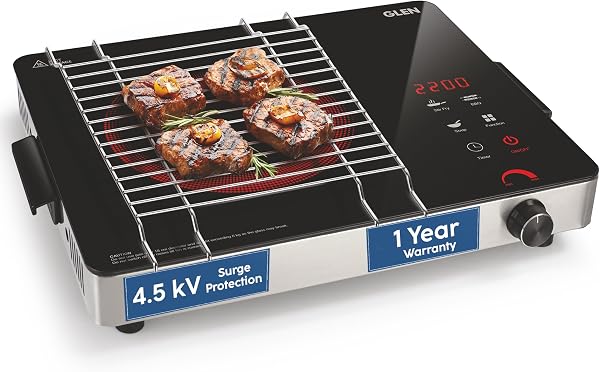
At its core, this is a portable, plug-in electric cooktop rated at 2200 watts, built around an infrared heating coil rather than the electromagnetic coil used in an induction stove. Glen packages it in a slim black glass-ceramic body with a touch-sensitive digital panel, a bright LED display showing power level, temperature and timer, and three dedicated preset cooking functions that let you skip the manual power adjustments for everyday Indian dishes.
How infrared heating actually works
Inside the unit, a tungsten-alloy heating element glows red-hot and radiates infrared energy upward. That energy passes through the glass-ceramic top and heats the base of whatever vessel is sitting on it. Because the transfer is thermal and not magnetic, the cooktop does not care what the vessel is made of — aluminium, stainless steel, cast iron, ceramic, clay, or even a glass-bottomed coffee pot will all work, provided the base is flat and makes proper contact.
This is the single biggest reason Indian buyers choose infrared over induction. The average Indian kitchen is full of aluminium pressure cookers, non-stick dosa tawas, anodised kadhais and clay handis — most of which simply do not work on an induction cooktop unless they have a magnetic base plate.
What the "3 preset functions" mean in daily cooking
Glen's preset menu is designed around the three most repeated tasks in an Indian kitchen — typically a boiling/simmering mode for dal, milk and rice; a frying mode that holds a steady high temperature for pakoras, puris and tadka; and a general cooking mode that balances heat for curries and sabzis. Selecting a preset locks in a pre-programmed power level and temperature band, so you are not nudging the "+" and "−" buttons every ninety seconds.
Are presets perfect? No. They are suggestions, not recipes. But for someone who cooks the same five dishes week after week, they genuinely cut down the fiddling — and for elderly family members or first-time cooks, they remove a lot of the guesswork.
The digital display — more than a gimmick?
A digital display on a sub-₹4,000 cooktop is often just a cosmetic upgrade over a basic LED indicator. Here it earns its place because of three things it shows clearly: the current power level (usually 1–8 or 1–10), the set temperature in degrees Celsius (typically ranging from around 60°C up to 240°C), and a countdown timer. The timer is the unsung hero — set it for eight minutes while boiling milk or twelve minutes for a dal pressure cycle, and the stove switches itself off instead of waiting for you to remember.
Why Indian Kitchens Are Warming Up to Infrared Cooktops
Infrared cooktops were initially seen as the "cheaper cousin" of induction, but their practical advantages have started to outweigh the efficiency gap for a large section of buyers. Three reasons stand out:
- Cookware freedom. Your existing aluminium kadhai, non-stick tawa and steel pressure cooker all work without buying anything new.
- Gentler, more forgiving heat. Infrared heats the vessel gradually, which is far kinder to non-stick coatings and to slow-cooked gravies than the sharp, instant surge of an induction coil.
- Lower entry price. A well-built 2200W infrared cooktop with a digital panel typically costs ₹3,000–₹4,000, while a comparable induction model with the same feature set often sits ₹800–₹1,200 higher.
The trade-off is that the glass surface gets hot and stays hot for 10–15 minutes after you switch off, and infrared is generally 10–15% less energy-efficient than induction for the same cooking task. Neither is a dealbreaker, but both should inform how you use it.
Key Factors to Consider Before Buying an Infrared Cooktop Under ₹5,000
1. The 16-amp socket — the detail most buyers miss
A 2200W appliance draws roughly 9.5 amps at 230V. That is well beyond the 5-amp rating of a standard kitchen wall socket. You will need a dedicated 16-amp point, the same kind used for air conditioners and geysers, or a good quality 16A-to-5A conversion plug used carefully and without extension cords. Running a 2200W cooktop through a cheap extension board or a multi-plug adapter is the leading cause of melted plugs and tripped MCBs. Budget for an electrician visit if your kitchen only has 5A points.
2. Cookware compatibility and base quality
Flat is the operative word. A warped or concave-bottomed vessel will make poor contact with the glass and heat unevenly, wasting energy and creating hot spots. Look for cookware with a base diameter between roughly 12 cm and 22 cm — anything smaller than the marked cooking zone wastes heat, and anything wider than the glass edge is a spill hazard.
3. Glass-ceramic top quality
Not all black glass is equal. Cheaper cooktops use tempered glass that scratches and can crack from a sudden temperature change; better units use glass-ceramic that handles thermal shock far more gracefully. On any infrared cooktop, never place a hot vessel straight from the flame onto the cold glass, and never put a cold vessel on a recently used hot zone.
4. Preset accuracy and manual override
A preset that cannot be overridden is a liability. Check that the three preset functions are options rather than a locked mode — you want to be able to jump to manual power or temperature control at any point mid-cook.
5. Safety features
At minimum, look for an overheat cut-off, auto shut-off when the timer ends, and a child lock. On an infrared stove, the "hot surface" indicator matters more than on induction because the glass genuinely remains hot after use.
6. Warranty and Glen's service network
Glen offers a standard one-year warranty on the appliance, with service handled through its own network of authorised service centres and on-site technician visits in most metros and Tier-2 cities. Glen's after-sales reputation is stronger than that of most budget online-only brands, which is a real consideration for a heat-generating appliance you will use daily.
Glen Infrared Stove 2200W — Detailed Product Breakdown
The Glen infrared stove with 3 preset functions and digital display 2200w is positioned as Glen's mid-tier infrared offering, sitting above its basic rotary-knob models and below its premium full-touch cooktops. Street pricing across Amazon India and Flipkart typically settles between ₹3,200 and ₹3,800, against an MRP that hovers around ₹4,995 — comfortably inside the under-₹5,000 bracket even at full price. Model codes differ slightly between listings and offline retail, so always confirm the wattage, preset count and display type in the spec sheet before ordering.
Specifications at a glance
- Power: 2200W, 230V, 50Hz — requires a 16A socket
- Heating element: Infrared coil with glass-ceramic crystal plate top
- Controls: Touch panel with digital LED display
- Presets: 3 dedicated cooking functions plus manual power and temperature modes
- Power levels: Multi-step, typically 8 levels
- Temperature range: Approximately 60°C to 240°C
- Timer: Up to 3 hours with auto shut-off
- Safety: Overheat protection, child lock, hot-surface indicator, anti-skid feet
- Body: Slim profile, roughly 4–5 cm thick, easy to store upright
- Warranty: 1 year standard
What works well in real use
The 2200W rating is genuinely useful — it brings a litre of water to a rolling boil in around 7–9 minutes, which is acceptable for a cooktop of this type and noticeably quicker than 1800W budget models. The digital display is legible from a standing distance, and the touch buttons respond reliably even with slightly damp fingers, which is more than can be said for some sub-₹2,500 cooktops.
The three presets are sensibly chosen for Indian cooking. The boiling mode holds a gentle simmer that will not boil over a pot of dal or milk; the frying mode stabilises temperature high enough for a proper tadka or puri without smoking the oil; and the general cooking mode is a decent default for sabzis and one-pot meals. The timer with auto cut-off is the feature you will end up using most.
Where it falls short
The glass top gets hot — properly hot — and stays that way. If you have toddlers in the house, the hot-surface indicator is a warning, not a safeguard. Infrared heating is also slower to respond than induction: turning the power down takes 30–60 seconds to reflect on the vessel, so it is not the tool for delicate tempering or precise chocolate work. And the fan noise, while not loud, is audible during long cooking sessions. Finally, the presets use fixed temperature bands rather than sensors that read your actual vessel, so results vary with pan thickness — treat them as starting points.
How It Compares: Infrared Cooktop Options Under ₹5,000
| Model | Power | Presets | Display | Indicative Price | Best suited for |
|---|---|---|---|---|---|
| Glen Infrared Cooktop 2200W (3 presets, digital display) | 2200W | 3 | Digital LED, touch | ₹3,200–₹3,800 | Families wanting presets, timer and Glen's service network |
| Pigeon Infrared Cooktop 2200W | 2200W | Menu-based | Digital | ₹2,300–₹2,900 | Budget buyers, first-time infrared users |
| Prestige IR Infrared Cooktop 2000W | 2000W | Limited | Digital | ₹2,800–₹3,500 | Brand trust and wide service coverage |
| Usha Infrared Cooktop 2200W | 2200W | Menu-based | Digital | ₹2,500–₹3,200 | Value pricing with a familiar brand |
| Lifelong / Amazon Basics Infrared 2000W | 2000W | Minimal | Basic LED | ₹1,800–₹2,500 | PG rooms, bachelors, backup cooking |
Prices are indicative street prices on Amazon India and Flipkart and fluctuate with sales, coupons and bank offers.
The ₹2,000–₹2,800 tier
Cooktops in this range — Pigeon and Lifelong being the most common — will boil water and make your morning chai perfectly well. What you give up is preset refinement, build quality of the glass top, and often the responsiveness of the touch panel after a year of use. If your usage is under 30 minutes a day, this tier makes complete sense.
The ₹3,000–₹4,000 tier (where the Glen sits)
This is the value sweet spot. You get 2200W rather than 2000W, a properly labelled three-preset menu, a working timer, child lock, and — crucially — a brand with an accessible service network. The Glen's closest genuine competitor here is the Prestige IR, which trades a little power for brand familiarity.
The ₹4,000–₹5,000 tier
At this price you start seeing full-touch panels, larger glass surfaces, more preset options and occasionally dual heating zones. Unless you specifically want a bigger cooking area, the Glen at its typical street price delivers most of the practical benefit for ₹800–₹1,200 less.
Pros and Cons: Glen Infrared Stove 2200W
Pros
- Works with all flat-bottom cookware, including aluminium and clay — no new vessel purchases needed
- 2200W delivers noticeably faster boiling than 1800–2000W rivals
- Three presets tuned for everyday Indian cooking, with manual override always available
- Clear digital display with temperature readout and a genuinely useful timer
- Glen's service network is a real advantage over online-only brands
- Comfortably inside the under-₹5,000 budget, often by a wide margin
- Slim, storable design suits small kitchens
Cons
- Requires a 16A socket — an added cost if your kitchen lacks one
- Glass surface stays hot for 10–15 minutes after switching off
- Slower heat response than induction; less precise for delicate cooking
- 10–15% less energy-efficient than an equivalent induction cooktop
- Presets use fixed bands rather than vessel-sensing, so results vary by pan
- Audible fan during extended use
Buying Guide: What to Look For and Where to Buy
Verify these five things before you click "Buy"
- Wattage and voltage — confirm 2200W at 230V and check the listing's plug type.
- Preset count and labels — three presets should be named and documented, not just claimed in the title.
- Glass type — glass-ceramic is preferable to plain tempered glass.
- Warranty terms — one year on the product; ask whether the heating element is covered separately.
- Seller — buy from the brand's official store on Amazon or Flipkart, or from Glen's own website, to keep warranty claims simple.
Where to buy in India
Amazon India is usually the most competitive on price and offers the widest choice of sellers, plus easy returns within the replacement window. Flipkart frequently matches or beats Amazon during Big Billion Days and often bundles bank instant discounts. For offline buyers, Croma, Reliance Digital and Vijay Sales stock Glen appliances and let you physically check the panel and build quality — worth doing if you are buying for elderly parents. Glen's own website (glenindia.com) occasionally runs direct offers with free installation support and is the safest route for warranty paperwork.
When to buy for the best price
Small kitchen appliances see their deepest discounts during Amazon Great Indian Festival and Flipkart Big Billion Days (usually September–October), followed by the Republic Day sale in January and Amazon Prime Day in July. Realistic festive pricing on this Glen model falls into the ₹2,900–₹3,300 range, sometimes lower with a bank card offer stacked on top. If you can wait six weeks for a sale, you will typically save ₹400–₹700. Avoid buying during the first week of a new model launch, when prices are held at MRP.
Real-World Usage Tips for Indian Households
- Pre-heat for two
Affiliate Disclosure:
This post contains affiliate links. We may earn a commission when you purchase through our links, at no extra cost to you.
Share this: