IFB 14 Place Settings Fits Up to 80 Utensils with DeepClean Technology: The Complete Buyer's Guide

About Rahul Verma: Rahul is a tech enthusiast and gadget reviewer with over 8 years of experience testing consumer electronics. He specializes in audio gear, smartwatches, and mobile accessories. When he is not testing products, you will find him exploring the latest in AI and smart home technology.

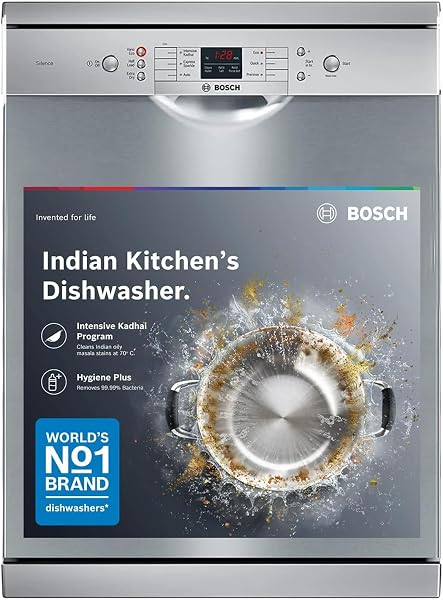
If you are running a family of four or more and have been hand-washing a mountain of plates after every meal, a 14-place-setting dishwasher is genuinely the practical upgrade. And the model family that keeps coming up in that conversation is the IFB 14 place settings fits up to 80 utensils with DeepClean technology range — a full-size, free-standing dishwasher built specifically for the kind of cooking and eating that happens in Indian homes.
But here is the honest part: most buyers do not actually understand what "14 place settings" means in the context of an Indian thali, whether 80 utensils is a realistic load, or whether DeepClean is a marketing phrase or a genuinely useful programme. That confusion leads people to either overbuy or — worse — buy a machine that does not suit their water quality and then complain that "dishwashers don't work in India."
This guide breaks down exactly what you get with the IFB 14 place settings fits up to 80 utensils with DeepClean technology range, which specific IFB models are worth your money at different budgets, current street prices on Amazon and Flipkart, the right time of year to buy, and the real-world usage habits that decide whether your dishwasher lasts eight years or eight months.
Understanding the IFB 14 place settings fits up to 80 utensils with DeepClean technology Claim
Before you compare models, you need to decode the three technical phrases packed into that product title. Each one answers a different question a buyer should be asking.
What does "14 place settings" actually mean for an Indian kitchen?
A "place setting" is a European standard unit of measurement, not an Indian one. One place setting is roughly one dinner plate, one smaller quarter plate or bowl, one glass, one cup with saucer, and one set of cutlery. Multiply that by 14 and you get the theoretical load capacity of the machine.
In Indian terms, 14 place settings comfortably covers:
- Dinner plates for 5–6 people across two meals
- Katoris, bowls and serving dishes from a typical sabzi-dal-roti-chawal meal
- Glasses, cups and steel tumblers
- One or two medium cooking vessels — a kadhai, a pressure cooker body without the lid, or a frying pan
This is the sweet spot size for a family of four to six. A 12-place-setting machine will force you to run two loads on days when you have guests or cook a heavier Sunday meal; a 14-place-setting unit absorbs that without drama.
Does it really fit 80 utensils?
The "fits up to 80 utensils" figure is the manufacturer's count of individual items — plates, bowls, glasses, cups, spoons, forks, knives, serving spoons — that can be loaded when the racks are used efficiently. It is a maximum, not an everyday average.
Practically, most households load somewhere between 55 and 70 pieces per cycle. Hitting 80 requires deliberate stacking: plates upright and evenly spaced in the lower basket, bowls face-down in the upper basket, and the cutlery basket filled methodically rather than tossed in. What the 80-utensil figure genuinely tells you is that the basket real estate is generous — you are not fighting for space, and you can usually squeeze in that extra serving bowl instead of leaving it in the sink.
What is DeepClean technology, and is it useful?
DeepClean is IFB's intensive wash programme, and it exists because Indian cooking is hard on dishes. Oil-based tadka, burnt-on masala at the bottom of a kadhai, greasy tawa residue, and dried dal are a completely different cleaning challenge from the light European-style soiling that standard eco cycles are designed for.
When you select DeepClean, the machine runs a longer pre-wash soak followed by a high-temperature main wash (typically in the 60–70°C band) with intensified spray pressure across the cycle. The soak is the critical part — it softens dried food before the spray arms have to do the work, which is what prevents the "I scrubbed it anyway before loading" frustration that defeats the purpose of owning a dishwasher.
It is not a cycle you use every day. DeepClean adds time and electricity, so reserve it for pressure cookers, kadhais, baking trays, and the aftermath of a party. For daily plates and glasses, a normal or eco programme with a good detergent does the job.
The unsung hero: Aqua Energie
Most listings bury this, but IFB's built-in water softener device is arguably the single most important feature for Indian buyers. Water in Bengaluru, Chennai, Hyderabad, parts of Delhi NCR and most of Gujarat is hard — high in dissolved calcium and magnesium. Hard water leaves white scaling on glassware, dulls steel, and eventually chokes the spray arms and heating element.
Aqua Energie treats the incoming water before it reaches the wash chamber, which is why IFB machines hold up better in hard-water cities than many imports. If you live in a hard-water area, this feature alone justifies sticking with IFB over a cheaper competitor.
Who Should Actually Buy a 14 Place Setting Dishwasher?
This size is right for you if you cook at home twice a day, have four or more people eating, and own cookware that fits inside a standard dishwasher basket. It is also the right choice if you entertain regularly or meal-prep in bulk.
It is the wrong choice if you live alone, eat out most nights, or have a compact kitchen where a 600 mm wide appliance simply will not fit — free-standing 14-place-setting models typically need about 60 cm of width, 60 cm of depth and 85 cm of height, plus clearance at the back for the inlet and drain hoses.
One more thing worth being honest about: a dishwasher needs a dedicated nearby water inlet and drain point. If your kitchen was not plumbed with that in mind, budget ₹1,500–₹3,500 for a plumber to extend the line and fit a tap adaptor. IFB's installation is usually free with the purchase, but civil plumbing work is not.
Key Factors to Consider Before You Buy
1. Water hardness in your area
Test this or ask neighbours. Above roughly 300 ppm, you must use dishwasher salt diligently and set the machine's hardness level correctly. No amount of DeepClean technology compensates for skipping salt in hard water.
2. Running costs, not just purchase price
A single cycle in a 14-place-setting machine typically consumes 10–13 litres of water and roughly 1–1.5 kWh of electricity. At ₹8 per unit in most cities, that is ₹8–₹12 per wash in electricity plus water. Add dishwasher salt (₹250–₹400 for a 1 kg pack that lasts six to ten weeks), rinse aid (₹200–₹350) and detergent (₹300–₹600 for 30–40 washes). Budget roughly ₹1,200–₹1,800 per month for a family running one cycle a day. That is still usually cheaper than a daily maid for vessels in a metro.
3. Service network
IFB has one of the wider authorised service networks among dishwasher brands in India, with presence in most tier-1 and tier-2 cities. Before buying, check the IFB service centre locator for your PIN code. In smaller towns, a brand with local service matters far more than a ₹2,000 price difference.
4. Rack flexibility
Look for adjustable or foldable tines in the lower basket and a height-adjustable upper basket. This is what lets you fit tall pressure cooker bodies, large serving platters and deep mixing bowls — the items that actually fail to fit in poorly designed machines.
5. Noise level and delay start
Anything under 50 dB is fine for an open kitchen. A delay-start timer of 2–9 hours is genuinely useful in India if you are on a time-of-day electricity tariff or want the machine to run after you sleep.
Top IFB 14 Place Setting DeepClean Options Compared
IFB's 14-place-setting free-standing range is small, which is actually helpful — you are choosing between a mid-tier workhorse and a premium variant, not wading through fifteen SKUs. Prices below are indicative street prices from Amazon and Flipkart and move up and down with sales; verify before ordering.
1. IFB Neptune VX 14 Place Settings Dishwasher — Best Overall Value
This is the model most buyers should shortlist. It delivers the full 14 place settings with up to 80 utensils capacity, the DeepClean intensive option, Aqua Energie water softening, multiple wash programmes including a quick cycle and an eco cycle, a half-load option for days when the basket is not full, and a delay-start timer. The stainless steel interior helps with drying and odour control.
Approximate price: MRP around ₹43,990; street price typically ₹33,000–₹38,000 depending on the sale.
Best for: Families of four to six in hard-water cities who want the core IFB feature set without paying for premium trim.
2. IFB Neptune SX1 14 Place Settings Dishwasher — Premium Pick
The SX1 sits above the VX in IFB's line-up and adds a more premium finish, a broader programme selection, and generally a quieter, more refined wash experience. The core capacity and DeepClean capability are the same — you are paying for build finish, extra programme flexibility and occasionally better energy performance.
Approximate price: MRP around ₹52,990; street price typically ₹41,000–₹47,000.
Best for: Open kitchens where the appliance is visible, buyers who want the top trim, or households that will use specialised programmes regularly.
3. IFB Neptune FX 12 Place Settings — The Budget Alternative
If your kitchen cannot accommodate a 60 cm wide unit, or your budget is firm under ₹32,000, the 12-place-setting FX is the sensible fallback. You lose roughly two place settings and some utensil capacity, but you keep Aqua Energie and the IFB service network.
Approximate price: MRP around ₹36,990; street price typically ₹27,000–₹31,000.
Best for: Couples, families of three, or compact kitchens — provided you accept running an extra cycle on guest-heavy days.
Feature Comparison at a Glance
| Feature | Neptune VX 14 | Neptune SX1 14 | Neptune FX 12 |
|---|---|---|---|
| Place settings | 14 | 14 | 12 |
| Utensil capacity | Up to ~80 pieces | Up to ~80 pieces | Up to ~65–70 pieces |
| DeepClean intensive programme | Yes | Yes | Limited |
| Aqua Energie water softener | Yes | Yes | Yes |
| Half load option | Yes | Yes | Yes |
| Delay start | Yes | Yes | Yes |
| Indicative street price | ₹33,000–₹38,000 | ₹41,000–₹47,000 | ₹27,000–₹31,000 |
| Best suited for | Most families | Premium buyers | Tight budgets/space |
Pros and Cons of the IFB 14 Place Settings Range
What works well
- Genuine Indian-kitchen capacity. The 80-utensil claim translates into real headroom for kadhais and cooker bodies, not just plates.
- Aqua Energie is a real differentiator. Fewer scaling complaints in hard-water cities than most competitor brands.
- DeepClean handles burnt masala. The soak-plus-hot-wash approach saves you from pre-scrubbing, which is the biggest reason people give up on dishwashers.
- Service reach. IFB's authorised network covers most of urban and semi-urban India, with reasonable spare-part availability.
- Free-standing installation is straightforward — no carpentry, no built-in cabinetry required.
Where it falls short
- It is loud on the intensive cycle. DeepClean is noticeably louder than a normal wash — fine if you run it at night with the kitchen door shut.
- DeepClean adds cycle time. Expect 2.5–3 hours on the intensive programme. Use the quick cycle for light loads.
- No BEE star rating system applies to most dishwashers in India, so energy comparison is not standardised the way it is for ACs and refrigerators — check European energy class on the listing.
- Detergent costs are real. Cheap powder plus separate salt works better and costs less than 3-in-1 tablets in hard water, but buyers often do not realise this until month two.
- Drying is not always bone-dry on plastic items — a common limitation across brands, not unique to IFB.
Where to Buy and When to Get the Best Price
Amazon vs Flipkart
Both platforms carry the full IFB 14 place settings range and both run aggressive appliance discounts during sale events. Amazon tends to have better IFB stock depth and clearer installation-service bundling; Flipkart frequently undercuts on headline price during Big Billion Days and often throws in exchange offers that Amazon does not match on large appliances.
Check both on the same day before ordering — the price difference on a ₹38,000 machine is routinely ₹3,000–₹5,000 during a sale week. Also confirm that the listing is sold by a brand-authorised seller; IFB's warranty is honoured on the serial number, but installation scheduling is smoother through authorised channels.
Offline stores worth visiting
Croma, Reliance Digital, Vijay Sales (West India), and IFB authorised dealers all stock this range. Offline is worth the trip for one reason: you can physically open the basket and check whether your pressure cooker body and largest kadhai fit. Sales staff also frequently match online prices or offer a bundled detergent starter kit and extended warranty at a discount. In tier-2 cities, buying offline often pays for itself in faster service escalation.
Best times of year to buy
- Amazon Great Indian Festival (Sept–Oct) and Flipkart Big Billion Days — typically the deepest discounts of the year, often 20–28% off MRP.
- Republic Day and Independence Day sales — good mid-year windows with exchange bonuses.
- End of financial quarter (March, June, December) — offline dealers push to hit targets and negotiate more.
- Avoid buying right before a known sale event; if a major sale is two weeks away, wait.
Whichever route you choose, add an extended warranty if it costs under ₹2,500 for two extra years. Dishwasher repairs — heating elements, drain pumps, control boards — routinely run ₹3,000–₹8,000, so the maths works in your favour.
Practical Usage Tips for Indian Households
- Scrape, do not rinse.
Affiliate Disclosure:
This post contains affiliate links. We may earn a commission when you purchase through our links, at no extra cost to you.
Share this: