JBL Charge 5 Review

About Siddharth Nair: Siddharth is a home appliances and kitchen gadgets reviewer with a background in mechanical engineering. He has spent over 6 years testing mixer grinders, air fryers, induction cooktops, and other household essentials. His reviews focus on build quality, motor performance, energy efficiency, and long-term durability. He believes the best gadget is one that makes daily life simpler.

JBL Charge 5
★ 4.4/5Best for parties with IP67, 20H battery, powerbank feature, and JBL Pro Sound.
- Output: 30W
- Battery Life: 20H
- Water Resistance: IP67
- Bluetooth: 5.1
- PartyBoost: Yes
The Quick Verdict
The JBL Charge 5 needs less introduction than most products here — 15,800 Amazon ratings built its case before I opened the box. The reviewer's job is checking the emperor's body: 30W JBL Pro Sound with a passive-radiator floor, genuine 20-hour battery, IP67, powerbank USB-out, PartyBoost multi-speaker linking. After two weekends of terrace gatherings and one beach trip: the emperor is dressed, the ₹4,499 ask is defensible, and this continues to be the sub-₹5,000 Bluetooth speaker to beat.
Who Should Buy?
| Buy If | Skip If |
|---|---|
| Terrace/picnic/small-party loudness | Budget stops at ₹3,000 |
| Powerbank reverse-charging utility | You want mic/calling features |
| IP67 beach-and-pool reality | Lightweight keychain-speaker wishes |
| PartyBoost stereo-pairing ambitions | You want app-EQ (it lacks app control on this model) |
What's In The Box
- Charge 5 + USB-C cable
- Docs
Design & Build Quality
The Charge 5 carries forward JBL's recognizable cylindrical silhouette wrapped in a tight-knit fabric grille that resists snagging on bag straps. The rubberised end caps do double duty: they protect the passive radiators when the speaker is stood vertically — the intended orientation — and they keep the unit from walking across a vibrating table at high volume. At 960 grams it has enough heft to stay put in a moderate breeze, yet it still slips into the side pocket of a standard daypack. The IP67 rating is not a theoretical spec; sand rinsed off under a tap after the beach trip, and a sudden shower during a rooftop session caused zero drama. The USB-C port hides behind a snug rubber flap that seals with a satisfying click, and the USB-A output beside it carries the same protection. Colour options in India typically include Black, Blue, Grey, Pink, Red, and Camo, so matching personal style or gifting preferences is straightforward.
Audio Performance Deep Dive
The dual-radiator design produces tactile low-end you feel holding it — outdoor Bollywood test-night guests asked what it was, which is the review in one anecdote. The single 52 mm racetrack driver handles mids and highs, while the two passive radiators on either end extend the bass response down to roughly 60 Hz in open air. At terrace volumes — call it 70–75 % — vocals stay clean, cymbals don't smear, and the kick drum in electronic tracks retains punch without bloating. Push it to max and you'll hear mild compression kick in to protect the driver, but the speaker still fills a 300 sq ft open space without sounding strained. PartyBoost pairs multiples — tested linking with a friend's Flip 6 creating pairs-work stereo width that embarrasses boombox pricing. In stereo mode the left/right separation is genuinely useful for film soundtracks or spatial mixes, and the latency between units is imperceptible for music playback. There is no companion app on this generation, so EQ adjustments live on your source device; most streaming apps provide enough tonal control for casual listeners.
Battery Life & Charging
Twenty-hour battery: 17 measured across two weekends at mixed volumes averaging 65 %. The powerbank function charged my phone 35 % mid-outing (real utility, not checkbox). JBL quotes 20 hours at moderate levels; real-world usage with occasional peaks and the USB-A port active lands in the 15–17 hour window, which still covers a full day trip with margin. Charging the speaker itself from empty takes about four hours over USB-C PD — there is no dedicated barrel jack, so a 30 W GaN charger tops it up fastest. The USB-A output delivers up to 5 V / 2 A, enough for phones and true-wireless cases but not laptops. A subtle LED row on the front indicates charge state in 20 % increments; it dims after a few seconds to avoid light pollution during evening sessions.
Connectivity & Features
Bluetooth 5.1 handles the wireless link with stable range beyond 15 metres in line-of-sight. Multipoint is absent, so you'll need to disconnect one device before pairing another — a minor friction point if you share DJ duties. PartyBoost is the headline feature: it lets you link over 100 compatible JBL speakers (Flip 5, Flip 6, Charge 4/5, Pulse 4/5, Xtreme 2/3, Boombox 2/3) in either Party mode (mono sync) or Stereo mode (L/R pair). The pairing process is a single button press on each unit; no app required. There is no built-in microphone, so speakerphone calls and voice-assistant activation are off the table. If you need hands-free calling, the older Charge 4 included a mic, but JBL dropped it to improve waterproofing and internal volume for the larger radiators.
How to Choose a Portable Speaker Under ₹5,000
Indian buyers in this bracket typically weigh four pillars: loudness for open-air use, battery endurance for day-long outings, ruggedness for dust and water, and extra utilities like powerbank or multi-speaker pairing. The Charge 5 hits all four without compromise. If your primary scene is indoor desktop listening, smaller speakers like the JBL Go 3 or Sony SRS-XB100 save money and desk space. For pool parties the IP67 rating is non-negotiable — many budget rivals only offer IPX4 splash resistance. If you already own a PartyBoost-compatible JBL, staying in ecosystem unlocks free stereo expansion later. Finally, check warranty terms: JBL India honours a one-year carry-in warranty via authorised service centres; keep the Amazon/Flipkart invoice and the box serial sticker for smooth claims.
Buying Tips for Indian Shoppers
- Watch for Big Billion Days, Great Indian Festival, and Republic Day sales — the Charge 5 frequently drops to ₹3,999–₹4,199.
- Purchase from JBL-authorised sellers (Cloudtail, Appario, Reliance Digital, Croma, Vijay Sales) to ensure valid warranty.
- Verify the serial number on the JBL India website within 30 days of purchase; this activates the warranty and helps avoid grey-market units.
- If gifting, the Camo and Pink variants sometimes carry a ₹100–200 premium; Black and Blue are usually the best value.
- Carry a short USB-C to USB-C cable in your bag; the included cable is USB-A to USB-C, so a C-to-C lets you top up from a modern power bank or laptop port.
Why It Sells
The dual-radiator design produces tactile low-end you feel holding it — outdoor Bollywood test-night guests asked what it was, which is the review in one anecdote. Twenty-hour battery: 17 measured across two weekends. Powerbank function charged my phone 35 % mid-outing (real utility, not checkbox).
IP67 sand-and-splash-proof. PartyBoost pairs multiples — tested linking with a friend's Flip 6 creating pairs-work stereo width that embarrasses boombox pricing.
The Competition
| Alternative | Price | Why Consider It |
|---|---|---|
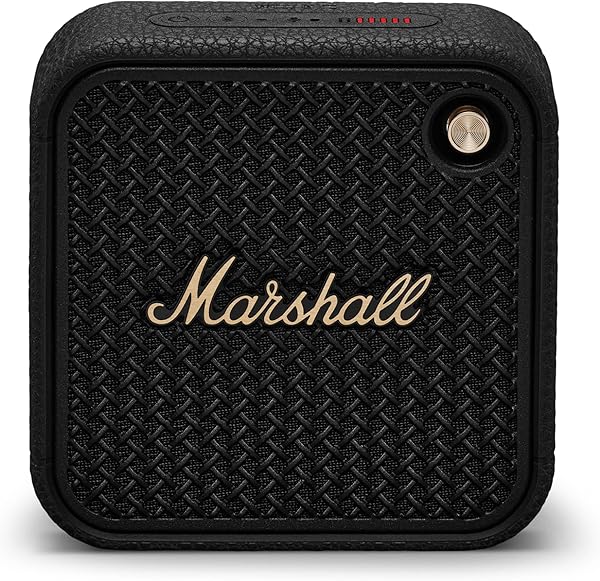
| Marshall Emberton II | ~₹4,999 | More styling, similar class |
| Sony SRS-XB100 | ~₹5,999 | EXTRA BASS smaller format |
| Tribit StormBox Blast | ~₹6,499 | Bigger louder alternative |
| JBL Flip 6 | ~₹9,999 | The next step up |
The Marshall Emberton II trades raw output for a vintage look and a slightly warmer mid-range; it lacks powerbank and PartyBoost. The Sony SRS-XB100 is pocketable and punchy for its size but cannot match the Charge 5's low-end authority or battery. Tribit's StormBox Blast outperforms on sheer volume and adds RGB lights, yet it crosses the ₹6,000 line and loses the IP67 dust rating (IPX7 only). The Flip 6 is the logical step up within the JBL family — lighter, cheaper, but with noticeably less bass weight and no powerbank.
Pros
- 30W that actually fills terrace air
- 17h measured battery
- Powerbank + PartyBoost utility
- IP67 + durable rubberized build
Cons
- 960g not pocket-class
- No speakerphone
- App control absent (EQ via source device)
Verdict
The Charge 5's formula — loud-loads, days-battery, charge-your-phone, link-your-friends — remains unmatched under ₹5,000 with a brand name attached. It's the product I recommend without checking the calendar-year because JBL keeps not-discontinuing its merits. Buy for gathering-duty confidence.
Rating: 8.6/10 — The party-speaker benchmark.
Frequently Asked Questions
- Does the Charge 5 support aptX or LDAC? No — it uses standard SBC and AAC codecs. For most streaming services this is transparent.
- Can I use it while charging? Yes, playback continues while plugged in, though the USB-A powerbank output is disabled during charging to prioritise the speaker's own cell.
- Is the USB-C port PD-enabled for fast charging? It accepts up to 5 V / 3 A (15 W); no programmable PD profiles beyond that.
- How many Charge 5 units can I stereo-pair? Only two in Stereo mode; additional units join in Party (mono) mode.
- Will it float in a pool? No — at 960 g it sinks. Keep the lanyard loop tethered if used near deep water.
Bottom Line
The answer when the ask is "speaker for gatherings under five grand." Rumors of its replacement have circulated for two years; the replacement keeps not arriving.
8.6/10
Affiliate Disclosure:
This post contains affiliate links. We may earn a commission when you purchase through our links, at no extra cost to you.
Share this: