Philips HD4928 Induction Cooktop: Price, Features, Review & Complete Buying Guide

About Rahul Verma: Rahul is a tech enthusiast and gadget reviewer with over 8 years of experience testing consumer electronics. He specializes in audio gear, smartwatches, and mobile accessories. When he is not testing products, you will find him exploring the latest in AI and smart home technology.
If you are tired of waiting for the cylinder delivery, or you simply want a second cooking surface that heats up in seconds, an induction cooktop is the most practical ₹2,000–₹3,000 you can spend on your kitchen. The philips hd4928 sits right in the sweet spot of that budget — a 2000W induction cooktop from a brand with one of the widest service networks in India. But is it actually the right pick for your kitchen, or should you spend a little more (or a little less)?
In this guide, we break down exactly what the philips hd4928 offers, how it compares with alternatives at three different price points, what it really costs today on Amazon and Flipkart, and the practical things Indian buyers tend to discover only after the warranty card is filed away. By the end, you will know whether to hit "Buy Now" or look elsewhere.
What Is the Philips HD4928 Induction Cooktop?
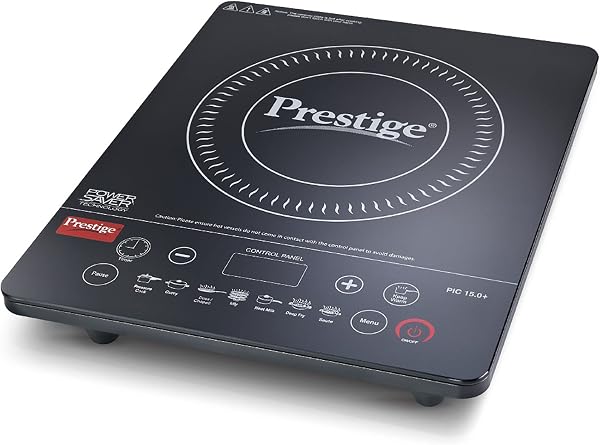
The philips hd4928 is a 2000W electric induction cooktop designed for everyday Indian cooking — dal, sabzi, chai, Maggi, dosa, and quick reheats. Instead of a gas flame, it uses an electromagnetic coil beneath a crystal glass surface to heat the base of the vessel directly. The cooktop itself stays relatively cool, the kitchen stays free of soot, and there is no open flame to worry about around children or curtains.
In Philips' India lineup, the HD4928 sits in the mainstream "value-plus" bracket — above the bare-bones entry models but below the feature-loaded HD4931 and HD4930 series. It is aimed squarely at the buyer who wants a reliable, branded cooktop with sensible presets and does not want to pay for touchscreen gimmicks they will never use.
Philips HD4928 Specifications at a Glance
| Feature | Details |
|---|---|
| Power output | 2000W (adjustable across multiple levels) |
| Power supply | 220–240V, 50Hz — standard Indian household supply |
| Top surface | Crystal glass / ceramic glass plate |
| Controls | Touch panel with LED display |
| Cooking modes | Manual power/temperature control plus preset Indian cooking menus |
| Timer | Built-in preset timer with auto shut-off |
| Safety | Overheat protection, auto-off when no vessel is detected, child lock |
| Cookware needed | Induction-compatible base (magnetic stainless steel, cast iron, induction-ready non-stick) |
| Warranty | 1 year standard (check the listing for seller-specific extended warranty) |
| Typical street price | ₹2,199 – ₹2,799 (MRP around ₹3,495) |
Do check the exact spec sheet on the product page before ordering, since Philips has revised bundles and packaging over time — but the 2000W rating, touch panel, and crystal glass top have remained consistent across the philips hd4928 listings.
Why the Philips HD4928 Suits Indian Kitchens
Indian cooking is not gentle. We run a tadka at high heat for thirty seconds, then simmer a gravy for twenty minutes, then crank the heat again for a final bhunai. A good induction cooktop needs to respond fast at both ends of that range, and a 2000W unit like the philips hd4928 does exactly that — full power boils a litre of water in roughly 5–7 minutes, while the lower settings hold a simmer without scorching.
Second, the preset menus matter more than reviewers admit. Most Indian households use induction primarily for boiling milk, making tea, reheating leftovers, and pressure-cooking rice. Presets take the guesswork out of those repeat tasks, especially for older family members who find touch panels fiddly.
Third, and this is the underrated bit — Philips' service footprint. Induction cooktops are electronics, and electronics fail. A brand with service centres in tier-2 and tier-3 cities is worth a ₹300–₹500 premium over a no-name import, and that is a large part of why the philips hd4928 sells steadily despite stiff competition from Prestige, Pigeon and Bajaj.
Key Factors to Consider Before Buying an Induction Cooktop
Before you commit to any model, run through these five checks. They are the difference between a cooktop you love and one that sits in the loft.
1. Wattage and Electrical Load
Almost every mainstream induction cooktop in India is rated 1800W–2200W. The philips hd4928 at 2000W draws roughly 9 amps at full power, which means it needs a 16A socket — the same kind used for air conditioners and geysers — not the standard 5A plug point. If your kitchen only has 5A points, budget for a 16A socket installation (₹500–₹1,000 with an electrician) or use a good-quality 16A-to-5A converter plug with caution. Running a 2000W appliance on a cheap converter is a genuine fire risk; do not cut corners here.
2. Cookware Compatibility
This trips up more first-time buyers than anything else. Induction only works with magnetic-base vessels. Your grandmother's aluminium kadhai, the copper-bottomed pan, and the glass casserole will all sit there doing nothing. Do the fridge-magnet test: if a magnet sticks firmly to the base, the vessel is induction-ready. Stainless steel pressure cookers (Hawkins, Prestige), cast iron tawas, and induction-labelled non-stick pans all work fine.
3. Preset Menus and Control Quality
Look for a touch panel that responds crisply and does not require a hard jab. Cheaper induction cooktops often have sluggish membrane panels that fail within 18 months. Philips panels are generally reliable, and the preset set on the philips hd4928 covers the essentials without cluttering the interface.
4. Safety Features
Non-negotiables: automatic shut-off when the vessel is removed, overheat cut-off, and a child lock. All three are present here. If you have toddlers at home, the child lock alone justifies choosing a branded model over a ₹1,200 local import.
5. Warranty and Service Access
One year is standard across the category. What varies is how quickly a technician reaches you. Philips has service partners in most district headquarters; check the Philips India service locator with your PIN code before buying if you live outside a metro.
Philips HD4928 vs Other Induction Cooktops at Different Price Points
The induction cooktop market in India is genuinely crowded, so let us place the philips hd4928 against real alternatives you will find on Amazon and Flipkart today.
Budget Pick: Under ₹2,000 — Pigeon by Stovekraft / Bajaj Platini
If your only goal is "cheapest usable induction for boiling water and making tea", a Pigeon 1800W model or a Bajaj Platini at ₹1,499–₹1,899 will do the job. You sacrifice a bit of build quality, the preset menus are cruder, and the touch panel is less refined. But for a hostel room or a rental flat where the cooktop may not survive the move, this bracket makes sense. The philips hd4928 is a clear step up in finish from here.
Mid-Range Pick: ₹2,199–₹2,799 — Philips HD4928
This is the value sweet spot. At its typical selling price, the philips hd4928 gives you 2000W of power, a crystal glass top that wipes clean in seconds, sensible presets, and brand-backed service — without the ₹3,500+ premium of the top-tier models. For a family of three to five using induction as a secondary or backup cooking surface, this is the most rational buy in the category.
Premium Pick: ₹3,000–₹4,500 — Philips HD4931 / Prestige PIC 16.0+
Step up and you get more preset programmes, sometimes a higher 2200W rating, softer-touch controls, and occasionally a dual-purpose "induction + infrared" mode that accepts non-magnetic cookware. If your household cooks primarily on induction rather than gas, the extra spend is defensible. If induction is a backup or a chai-and-Maggi machine, it is not.
Quick Comparison Table
| Model | Wattage | Approx. Price | Best For |
|---|---|---|---|
| Pigeon / Bajaj entry models | 1800W | ₹1,499 – ₹1,899 | Hostel rooms, rentals, minimal use |
| Philips HD4928 | 2000W | ₹2,199 – ₹2,799 | Everyday family use, backup cooking, best value |
| Prestige PIC 20.0+ | 2000W | ₹2,299 – ₹2,899 | Buyers loyal to Prestige cookware ecosystem |
| Philips HD4931 | 2000W+ | ₹3,299 – ₹4,299 | Induction-first kitchens wanting more presets |
Prices move constantly during sale events, so treat the figures above as a guide rather than gospel.
Pros and Cons of the Philips HD4928
What Works Well
- Fast, consistent heating. 2000W is enough to boil, sear and pressure-cook without the sluggishness you feel on 1800W units.
- Genuinely easy to clean. The flat crystal glass surface means a damp cloth handles 90% of spills. No burners, no grates, no scrubbing.
- Strong safety profile. Auto shut-off, overheat protection and child lock cover the realistic risks in an Indian kitchen.
- Service network. Philips authorised service centres exist well beyond the metros — a real advantage over online-only brands.
- Reasonable price-to-brand ratio. You are paying a modest premium over generics for meaningful after-sales support.
Where It Falls Short
- It needs a 16A socket. Many older kitchens are wired only for 5A points, adding an installation cost on top of the purchase price.
- Only one cooking zone. Like every cooktop in this price band, you cannot run two vessels side by side.
- Fan noise. The cooling fan is audible at high power settings. It is normal, but light sleepers cooking late at night will notice it.
- Presets need a learning curve. The default preset temperatures do not suit every dish; you will end up on manual mode more often than the marketing suggests.
- One-year warranty only. For an electronic appliance, that is on the shorter side.
Real-World Usage Tips for Indian Homes
These are the practical things owners of the philips hd4928 learn in the first month — worth knowing before you unbox.
- Buy at least two induction-ready vessels before the cooktop arrives. A stainless steel saucepan and a non-stick induction tawa will cover most daily cooking. Do not assume your existing kadhai will work.
- Keep the base and the glass top completely dry. Even a thin film of water under the vessel can cause the cooktop to misread the load and cut out.
- Use the "keep warm" setting for rotis and gravies instead of cycling between high and low — it saves power and prevents burning at the bottom.
- Do not place the cooktop on a wet countertop or near a window where splashes reach the air vents. Water ingress is the single most common cause of induction failure.
- Run the fan for a minute after switching off. The unit does this automatically — do not unplug it immediately, as the residual heat needs to dissipate.
- Budget for electricity realistically. At 2000W, an hour of full-power cooking uses about 2 units. At ₹7–₹8 per unit in most Indian cities, that is ₹14–₹16 per hour of active high-heat cooking — usually a wash against LPG for short tasks, and cheaper for boiling and reheating.
- Keep the original box for the first year. If a warranty claim arises, Philips service often asks for the packaging.
Where and When to Buy the Philips HD4928
Where: Amazon India and Flipkart are the two reliable channels, and both carry the philips hd4928 with the standard manufacturer warranty. Buy from the seller marked as the brand's authorised partner or from Philips' own storefront on the marketplace — third-party sellers occasionally ship older stock or grey imports without proper warranty registration. Croma, Reliance Digital and Vijay Sales are good offline options if you prefer to see the panel in person; expect to pay ₹200–₹400 more for that privilege.
When: The best windows in India are the Republic Day sale (late January), the Amazon Great Indian Festival and Flipkart Big Billion Days (September–October), and the festive run up to Diwali. During these events the philips hd4928 regularly dips to ₹1,999–₹2,199 — a meaningful saving over the ₹2,799 non-sale price. Bank offers (HDFC, ICICI, SBI credit cards) often add another 10% instant discount, and exchange offers can knock off ₹300–₹500 if you are replacing an old appliance.
Useful check: before ordering, confirm on the listing that the box includes the user manual, warranty card and the power cord with the appropriate plug. Missing accessories are a hassle to sort out post-delivery.
Frequently Asked Questions
Is the Philips HD4928 suitable for daily Indian cooking?
Yes, provided your cookware is induction-compatible. Its 2000W output handles everything from boiling milk to making a tadka, and the preset menus cover common Indian tasks. It works best as a primary cooktop for small families or as a reliable second cooking surface alongside a gas stove.
Does the Philips HD4928 work with all utensils?
No. It requires a magnetic, induction-ready base — stainless steel, cast iron, or induction-labelled non-stick. Aluminium, copper, glass and pure clay vessels will not heat. Test any vessel with a fridge magnet before using it on the philips hd4928.
What is the real price of the Philips HD4928 in India?
The MRP is around ₹3,495, but the street price on Amazon and Flipkart typically ranges between ₹2,199 and ₹2,799. During major sale events it has been spotted closer to ₹2,000. Always check the current listing, as induction cooktop prices fluctuate more than most kitchen appliances.
Affiliate Disclosure:
This post contains affiliate links. We may earn a commission when you purchase through our links, at no extra cost to you.
Share this: