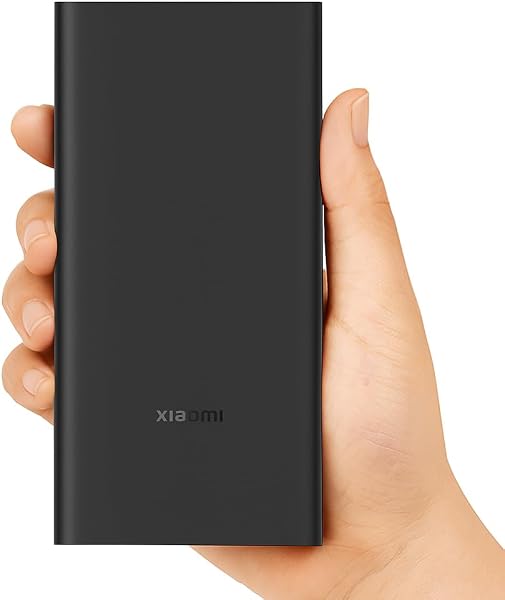
Portronics Power Pro 20K Review: Is This the Best 20,000mAh Power Bank Under ₹2,000?

About Rahul Verma: Rahul is a tech enthusiast and gadget reviewer with over 8 years of experience testing consumer electronics. He specializes in audio gear, smartwatches, and mobile accessories. When he is not testing products, you will find him exploring the latest in AI and smart home technology.

If you have ever watched your phone drop from 40% to 5% while stuck in a Bengaluru traffic jam or waiting for a delayed train at New Delhi station, you already know why a large-capacity power bank is not a luxury — it is basic survival gear. The Portronics Power Pro 20K has become one of the most searched 20,000mAh power banks in India, largely because it promises fast charging, a digital display and a genuinely large battery for well under ₹2,000.
But does it actually deliver, or is it just another spec sheet that looks good on Amazon? In this detailed buying guide, I break down everything you need to know about the portronics power pro 20k — real-world charging performance, what the 20,000mAh figure actually means for your phone, how it compares with the Mi Power Bank 3i, Ambrane and boAt alternatives, current pricing across Amazon and Flipkart, and the exact moments when you should buy it versus when you should wait.
By the end of this article, you will know whether the Portronics Power Pro 20K is the right power bank for your usage pattern, your phone, and your budget.
Understanding the Portronics Power Pro 20K: What Exactly Are You Buying?
Portronics is a Delhi-based accessories brand that has been operating in India for over a decade, and it has built a solid reputation in the budget-to-mid segment for cables, chargers, speakers and power banks. The Portronics Power Pro 20K sits at the top of their 20,000mAh lineup and is positioned as a "do-everything" power bank for people who travel frequently or share a charger with family.
At its core, this is a 20,000mAh lithium-polymer power bank with multi-port output and fast-charging support. The headline features that make the portronics power pro 20k stand out in the sub-₹2,000 bracket are:
- 20,000mAh capacity — roughly four to five full charges for a typical 4,500–5,000mAh Android phone, or about three to four charges for an iPhone 15.
- 20W USB-C Power Delivery output — enough to fast-charge modern iPhones and most Android phones that support PD.
- Quick Charge 3.0 support on USB-A — useful for older Qualcomm-based phones and mid-range Androids.
- Digital LED display — shows the exact battery percentage remaining instead of vague four-dot indicators.
- Multiple output ports — typically two USB-A ports plus one USB-C port, so you can charge three devices at once (with reduced speed).
One important clarification that most reviews skip: a 20,000mAh rating is measured at the internal cell voltage of 3.7V, which translates to roughly 74 watt-hours. When that energy is converted to 5V USB output and passed through the conversion circuitry, real-world usable capacity typically lands between 12,000mAh and 13,500mAh. That is completely normal and not a defect — every brand, including Mi and Samsung, works the same way. So do not panic when your Portronics Power Pro 20K does not deliver four full charges to a 5,000mAh phone from a single top-up.
Key Factors to Consider Before Buying a 20,000mAh Power Bank in India
Before you hit "Add to Cart", here are the things that genuinely matter — and the ones that are mostly marketing noise.
1. Output wattage versus your phone's charging standard
A 20W PD output is ideal for iPhones (which cap around 20W–27W) and for most mid-range Android phones. If you own a flagship like a OnePlus, Realme GT or iQOO that supports 65W–120W SuperVOOC or similar proprietary charging, no third-party power bank under ₹2,000 will fast-charge it at full speed — including this one. You will fall back to standard 18W–20W charging. That is a limitation of the phone's proprietary protocol, not the portronics power pro 20k.
2. Input charging speed (this is where most buyers get trapped)
Many budget power banks support fast output but only slow 10W input, meaning the power bank itself takes 9–10 hours to recharge. The Portronics Power Pro 20K supports USB-C input in the 18W range, which brings recharge time down to roughly 5–6 hours with a compatible 20W adapter. Always check the input spec — it is the single most ignored number on the box.
3. BIS certification and safety features
Every legitimate power bank sold in India must carry the BIS (Bureau of Indian Standards) mark. Look for it on the packaging or listing. Also check for mention of over-charge, over-discharge, short-circuit and temperature protection. A 20,000mAh battery pack holds a serious amount of energy, and skipping safety certification to save ₹200 is a bad trade.
4. Weight and portability
A 20,000mAh power bank weighs between 380g and 450g. The Portronics Power Pro 20K sits at roughly 400g — heavier than a smartphone. It is a bag accessory, not a pocket accessory. If you want something you can slip into jeans, a 10,000mAh unit is the better call.
5. Airline compliance
At approximately 74Wh, this power bank is comfortably within the 100Wh cabin-baggage limit enforced by Indian airlines and most international carriers. It must travel in hand baggage, never in checked luggage. This is one practical reason 20,000mAh is the sweet spot for frequent flyers.
Portronics Power Pro 20K: Detailed Feature Breakdown
Design and build quality
The unit uses a polycarbonate shell with a matte finish that resists fingerprints reasonably well. The digital display is the standout design element — a small LED panel that shows remaining charge as a percentage. In day-to-day use, this is far more useful than the traditional four-LED dots, because you know exactly whether you have 12% or 38% left before a long journey. Build quality is what you would expect at this price: solid enough for daily bag use, but not ruggedised or water-resistant.
Charging performance in real-world use
With a 20W PD charger, an iPhone 15 goes from 0% to about 50% in roughly 30 minutes. A Redmi Note 13 or Samsung Galaxy M-series phone on the USB-A Quick Charge port charges at a similar pace. Charging three devices simultaneously works, but the output is split, so each device charges noticeably slower. Best practice: fast-charge one device at a time when you are in a hurry.
The digital display advantage
This is genuinely the feature that converts buyers. On a multi-day trip, you can plan exactly how many charges you have left. On the flip side, the display stays lit for a few seconds after you press the button, which causes mild standby drain — nothing significant, but worth knowing.
What's in the box
Typically you get the power bank, a short USB-A to USB-C cable and documentation. There is no wall adapter included, so budget ₹500–₹900 extra for a good 20W or 33W charger if you do not already own one. Portronics generally offers a 12-month warranty, and service is handled through their India-wide network and Amazon/Flipkart return channels.
Portronics Power Pro 20K vs Competitors: Feature Comparison
| Model | Capacity | Max Output | Display | Approx. Price | Best For |
|---|---|---|---|---|---|
| Portronics Power Pro 20K | 20,000mAh | 20W PD / 18W QC 3.0 | Digital % | ₹1,499 – ₹1,999 | Best all-round value with display |
| Mi Power Bank 3i 20000mAh | 20,000mAh | 18W | LED dots | ₹1,799 – ₹1,999 | Brand trust, reliable cells |
| Ambrane 20000mAh (Powerlit) | 20,000mAh | 20W PD | Digital % | ₹1,299 – ₹1,599 | Tightest budget |
| boAt Power Bank 20000mAh | 20,000mAh | 20W PD | LED dots | ₹1,499 – ₹1,799 | Style, brand familiarity |
| Realme 20000mAh Power Bank | 20,000mAh | 20W PD | LED dots | ₹1,799 – ₹2,199 | Realme/SuperVOOC users |
Prices fluctuate constantly during sales, so treat the figures above as a benchmark rather than a fixed number. The Portronics Power Pro 20K consistently lands in the middle of this pack — slightly cheaper than Mi and Realme, slightly costlier than Ambrane — but it is the only one in this group that combines a digital percentage display with 20W PD at that price.
Pros and Cons of the Portronics Power Pro 20K
Pros
- Digital battery percentage display — a genuinely useful feature that most rivals at this price lack.
- 20W USB-C PD output handles iPhones and modern Android phones well.
- Three-device simultaneous charging is convenient for families and group travel.
- 18W USB-C input means a full recharge in about 5–6 hours, not overnight-plus.
- Airline-safe at ~74Wh, ideal for domestic and international cabin baggage.
- Competitive pricing — regularly drops below ₹1,600 during Amazon and Flipkart sales.
Cons
- No wall adapter included, which adds ₹500–₹900 to your effective cost if you are starting from scratch.
- Roughly 400g — heavy for pocket carry; it is a bag-only device.
- No proprietary fast charging for OnePlus, Realme, iQOO or Xiaomi's higher-wattage standards.
- No USB-C to USB-C cable in most boxes — you may need to buy one for iPhone 15 or newer Android devices.
- Not water-resistant, so avoid using it in the rain or near kitchen counters.
Buying Guide: How to Get the Best Value on the Portronics Power Pro 20K
This is where most buyers leave money on the table. Here is a practical, India-specific strategy.
Where to buy
Amazon India is generally the most reliable for Portronics products, with fast delivery, easy replacement and frequent bank offers. Flipkart runs competitive pricing during its Big Billion Days and Big Saving Days sales, and the Flipkart Axis Bank card often adds a further 5% cashback. For both platforms, always confirm that the seller is either the brand's official store or a Flipkart/Amazon-fulfilled seller — avoid third-party sellers with no return policy on a battery product.
When to buy: the timing matters
- Amazon Prime Day and Great Indian Festival (usually July and October) — the portronics power pro 20k frequently drops to the ₹1,399–₹1,499 range.
- Flipkart Big Billion Days (September–October) — similar or marginally better pricing, especially with bank offers.
- Republic Day and End of Season sales (January) — good for the ₹1,499–₹1,599 band.
- Avoid buying during exam season or the week before Diwali unless you must — demand spikes and discounts shrink.
What to check before clicking buy
- Confirm the exact model number on the listing — Portronics has multiple 20,000mAh variants, and specifications differ.
- Check that the listing mentions 20W PD output and 18W+ input, not just "fast charging".
- Look for the BIS mark in the product images or description.
- Read the most recent 20–30 reviews specifically for battery degradation after two to three months.
- Verify the warranty period and whether it is brand warranty or seller warranty.
Real-World Usage Tips for Indian Consumers
A power bank is only as good as how you use it. These tips will help you get the most out of the Portronics Power Pro 20K over its lifespan.
Charge it before you travel, not at the airport
With 18W input, a full recharge takes five to six hours. Plug it in the night before an early morning flight rather than scrambling for a socket at the terminal. Also remember: airlines require power banks in cabin baggage only, so pack it in your laptop bag, not your check-in suitcase.
Use the right cable and adapter
The charging speed is limited by the weakest link. A cheap ₹99 cable will throttle a 20W charger to 10W. Invest in a good 60W-rated USB-C to USB-C cable (₹300–₹500) and a 20W or 33W adapter from a reputed brand. This single upgrade will noticeably improve both the power bank's output and its own recharge time.
Watch out for Indian summers
Lithium batteries degrade faster when charged in heat. Do not leave the power bank on a car dashboard in May, and avoid charging it inside a closed bag in direct sunlight. If the unit feels uncomfortably hot during charging, unplug it and let it cool — this is true for every brand, not just this one.
Store it at 50–60% if unused for long
If you only use the power bank for occasional trips, keep it at roughly half charge rather than empty or full. Storing a lithium battery at 0% for months is the fastest way to kill its capacity. Top it up once every two to three months.
Do not expect miracle charges on flagship phones
If you are using a 100W-charging OnePlus or a 120W iQOO, this power bank will charge it at a standard 18W–20W. It will still fill the phone, just not in 20 minutes. Keep expectations aligned with the power bank's spec sheet, not your phone's marketing.
Frequently Asked Questions
1. How many times can the Portronics Power Pro 20K charge a phone?
Realistically, about three to four full charges for a 4,500–5,000mAh Android phone, and roughly three to four charges for an iPhone 15. This accounts for the conversion loss between the 3.7V internal cells and 5V USB output, which is normal across all brands.
2. Does the Portronics Power Pro 20K support fast charging for iPhones?
Yes. The 20W USB-C Power Delivery output is enough to fast-charge iPhone 12 and newer models at close to their maximum supported rate. You will need a USB-C to Lightning cable for older iPhones or a USB-C to USB-C cable for the iPhone 15 series.
3. Can I carry it on a flight?
Yes. At approximately 74Wh, it falls well under the 100Wh limit for cabin baggage on Indian airlines and most international carriers. It must be carried in hand baggage and cannot go into checked luggage.
4. How long does it take to fully recharge the power bank itself?
With an 18W–20W USB-C adapter, expect around five to six hours from empty to full. Using a standard 10W or 5W charger will stretch this to nine or ten hours, so a decent adapter genuinely matters.
5. Is the Portronics Power Pro 20K safe to use overnight?
It has over-charge protection built in, so leaving it plugged in overnight is generally safe. That said, good practice is to unplug once the display shows 100%, and to avoid charging it on soft surfaces like a bed or pillow where heat cannot dissipate.
6. What is the warranty and how do I claim it?
Portronics typically offers a 12-month warranty on this model. Claims are handled through their India service network, and for units bought on Amazon or Flipkart, the platform's return and replacement window is usually the fastest route for the first few weeks.
7. Is the Portronics Power Pro 20K better than the Mi Power Bank 3i?
It depends on priorities. The portronics power pro 20k wins on the digital percentage display and 20W PD output for a similar or lower price. The Mi Power Bank 3i wins on long-term brand trust and cell reliability. If you want features per rupee, Portronics is the better pick; if you want maximum peace of mind, Mi has the edge.
8. Does it come with a cable and adapter in the box?
A short USB-A to USB-C cable is usually included, but a wall adapter is not. Budget for a 20W or 33W charger separately if you do not already have one.
Final Verdict: Should You Buy the Portronics Power Pro 20K?
At its typical street price of ₹1,499–₹1,799, the Portronics Power Pro 20K is one of the better-balanced 20,000mAh power banks available in India today. It gives you a genuinely useful digital battery display, 20W USB-C PD output that handles iPhones and mainstream Android phones well, three simultaneous outputs for group charging, and airline-safe capacity — all without crossing the ₹2,000 mark.
Buy it if: you travel regularly, you need a reliable multi-device charger for the family, you own an iPhone or a mid-range Android, and you want to see exactly how much battery is left at a glance.
Skip it if: you own a flagship phone with 65W+ proprietary charging and expect that speed from a power bank, you want something pocketable, or you need rugged, water-resistant build quality for outdoor work.
The smartest buying move is to wait for an Amazon Great Indian Festival or Flipkart Big Billion Days sale, stack a bank offer, and pick it up closer to ₹1,400. Pair it with a good 20W adapter and a quality USB-C cable, and the portronics power pro 20k will comfortably serve you for two to three years of daily use. For the price, that is a genuinely solid deal.
Affiliate Disclosure:
This post contains affiliate links. We may earn a commission when you purchase through our links, at no extra cost to you.
Share this: