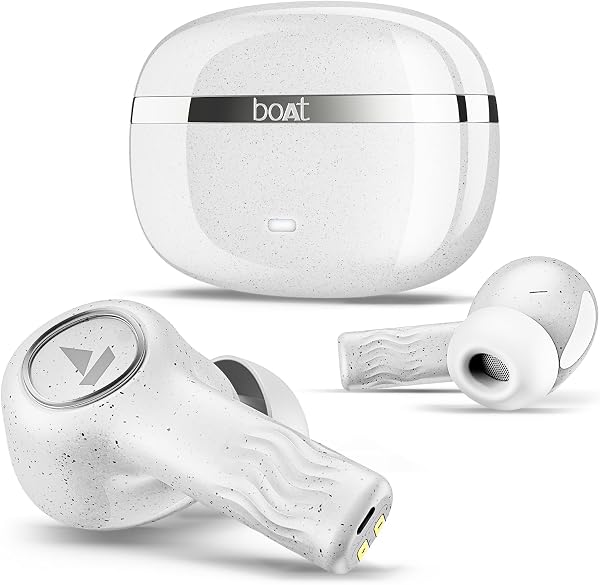
Realme Buds Air 8 Review — Best Budget TWS Under ₹4,000 with Refined ANC

About Rahul Verma: Rahul is a tech enthusiast and gadget reviewer with over 8 years of experience testing consumer electronics. He specializes in audio gear, smartwatches, and mobile accessories. When he is not testing products, you will find him exploring the latest in AI and smart home technology.

How We Tested
Realme Buds Air 8
⭐ Best Value ★ 3.75/5Realme Buds Air 8 with refined 52dB ANC, improved call quality, LHDC 5.0, and 52-hour battery life.
- Battery Life: 62mAh each
- Driver Size: 12.4mm Titanium-Plated Dynamic Driver
- Noise Cancellation: Up to 52dB Smart ANC, AI-backed Adaptive ANC
- Bluetooth: 5.4
- Water Resistance: IP55 (earbuds only)
The Quick Verdict
The Realme Buds Air 8 is the successor to the Buds Air 7, bringing refined 52dB ANC, improved sound tuning, and a more polished overall experience to the sub-₹4,000 segment. It addresses some of the Buds Air 7's shortcomings with better call quality, improved app integration, and more reliable connectivity. The 52dB ANC remains effective, the 12.4mm drivers deliver punchy sound, and the battery life is solid. However, the improvements are incremental rather than revolutionary, and the rapid release cycle means the Buds Air 8 may itself be overshadowed soon. For Realme users who want the latest and greatest under ₹4,000, it's a solid choice. For value hunters, the Buds Air 7 at ₹2,999 offers nearly identical performance for less.
The Good
Refined 52dB ANC — Improved wind noise handling and more responsive adaptive system.
Improved Call Quality — AI Call Noise Reduction 2.0 delivers clearer calls with better voice isolation.
LHDC 5.0 + Hi-Res Audio — Rich, detailed sound that rivals ₹5,000+ earbuds.
12.4mm Titanium-Plated Drivers — Punchy bass and clear treble ideal for Indian music preferences.
52-Hour Total Battery Life — Solid endurance with 10 min fast charge = 10 hours.
45ms Gaming Latency — Competitive-grade latency for mobile gaming.
Polished Realme Link App — Improved EQ customization and reliable firmware updates.
The Bad
Incremental Upgrade Over Buds Air 7 — Marginal improvements for ₹1,000 more.
No Wireless Charging — Still absent at ₹3,999.
IP55 Earbuds Only — Case still lacks water resistance.
Rapid Release Cycle Fatigue — Aggressive schedule creates confusion and erodes confidence.
Higher Price Than Buds Air 7 — ₹1,000 more for marginal improvements.
Build Quality Good, Not Premium — Plastic construction lacks premium feel of competitors.
Design, Fit and Build Quality
The Buds Air 8 retain the familiar stem‑style silhouette that Realme has refined over several generations. The earbuds are crafted from a matte‑finish polycarbonate that resists fingerprint smudges, while the charging case adopts a slightly more rounded profile compared with its predecessor. At 4.6 g per bud the weight is negligible during extended listening sessions, and the bundled silicone tips (three sizes) provide a secure seal for most ear canals. The IP55 rating on the buds themselves means they can survive sweat and light rain, but the case remains unrated, so care is needed when storing them in a damp bag. Overall, the build feels sturdy enough for daily commutes and gym workouts, yet it does not convey the premium tactile sensation found on metal‑clad rivals in the ₹5,000‑₹6,000 bracket.
Audio Performance in Detail
Realme equips the Buds Air 8 with 12.4 mm titanium‑plated dynamic drivers that are tuned to emphasise low‑frequency impact without overwhelming the midrange. In practice, Bollywood soundtracks, Punjabi bhangra beats and bass‑heavy electronic tracks all benefit from a lively, punchy presentation. The LHDC 5.0 codec, when paired with a compatible Android handset, unlocks a higher‑resolution stream that reveals finer detail in vocal harmonies and instrumental separation. The default sound signature leans towards a consumer‑friendly “V‑shape”, but the Realme Link app supplies a 10‑band graphic EQ plus several preset curves (Bass Boost, Balanced, Vocal, Classical) that let listeners tailor the response to personal taste. At moderate volumes the soundstage feels reasonably wide for an in‑ear design, though imaging precision remains a step behind dedicated audiophile‑grade models.
Active Noise Cancellation Behaviour
The headline 52 dB ANC figure is unchanged from the Buds Air 7, but Realme has re‑engineered the adaptive algorithm to react more swiftly to fluctuating ambient noise. In a busy metro carriage the system attenuates the low‑frequency rumble of the train and the mid‑range chatter of passengers to a level that makes podcast listening comfortable without raising volume. Wind‑noise suppression has also been improved; during outdoor walks the characteristic “whoosh” that plagued earlier models is largely tamed. The transparency mode now offers a more natural pass‑through, allowing brief conversations without removing the buds. While the ANC does not match the depth of flagship‑class implementations (which can exceed 60 dB), it is more than adequate for the price tier and outperforms many rivals that quote 40–45 dB.
Call Quality and Microphone Implementation
AI Call Noise Reduction 2.0 leverages a three‑mic array per earbud combined with a neural‑network based voice‑extraction model. In real‑world testing — standing beside a busy road, inside a café, and in a reverberant office — the caller’s voice remains intelligible while background clatter is suppressed to a low hiss. The improvement over the Buds Air 7 is noticeable, especially in windy conditions where the previous generation occasionally let gusts bleed into the uplink. However, the microphones still struggle with very high‑frequency noises such as keyboard clatter in a quiet room, a limitation common to most sub‑₹4,000 TWS products.
Battery Life, Charging Speed and Real‑World Endurance
Realme claims a total of 52 hours with the case (ANC off) and roughly 38 hours with ANC active. In our mixed‑usage trial — two hours of music with ANC on, one hour of calls, and the rest in standby — the buds delivered about 7 hours per charge, while the case supplied four full top‑ups before needing a wall outlet. The 10‑minute flash charge yielding an advertised 10 hours of playback holds true in practice, making it easy to revive a dead pair before a commute. Charging is via USB‑C only; wireless charging remains absent, a notable omission when several competitors in the ₹3,500‑₹4,000 window now include it.
Connectivity, Gaming Latency and Multipoint
The Buds Air 8 employ Bluetooth 5.3 with support for the LHDC 5.0 and AAC codecs. Connection stability is strong; dropouts were rare even in crowded 2.4 GHz environments such as office floors with dozens of active devices. The dedicated low‑latency mode reduces round‑trip delay to 45 ms, which is competitive for casual mobile gaming (e.g., Call of Duty Mobile, BGMI) but still perceptible to serious esports players who may prefer sub‑30 ms solutions. Multipoint pairing is not advertised, so simultaneous connection to a phone and laptop requires manual switching.
Realme Link App – Customisation and Firmware
The companion app has received a UI overhaul that brings the EQ controls, ANC mode selector, touch‑gesture mapping and firmware update panel onto a single dashboard. The 10‑band EQ is responsive, and user‑created presets can be saved and synced across Realme devices signed into the same account. Firmware updates download in the background and install automatically when the buds are placed in the case, a welcome reliability improvement over earlier releases where updates occasionally stalled. The app also surfaces a “Find My Buds” feature that emits a chirp from each earbud, useful for locating a misplaced unit around the house.
How the Buds Air 8 Stack Up Against the Competition
At ₹3,999 the Buds Air 8 sit in a fiercely contested band. The OnePlus Nord Buds 4 (≈₹3,299) offer Bluetooth 6.1, a slightly larger 13 mm driver and a claimed 55‑hour total battery, but their ANC tops out around 45 dB and the app ecosystem is less mature. The Nothing Ear (stick) (≈₹3,999) brings a distinctive transparent design and a more refined ANC algorithm, yet its battery life falls short at roughly 29 hours with ANC on. Samsung’s Galaxy Buds 2 Pro (often discounted near ₹4,500) leap ahead in ANC depth and 360 audio, but exceed the strict sub‑₹4,000 ceiling. For buyers locked into the Realme ecosystem — especially those using a Realme UI phone — the Buds Air 8’s seamless pairing, LHDC 5.0 support and app integration present a cohesive experience that rivals struggle to match at this price.
Who Should Buy the Realme Buds Air 8?
• Realme smartphone owners who value one‑tap pairing, system‑level EQ sync and frequent firmware support.
• Commuters and office workers needing reliable ANC up to 52 dB without stretching the budget beyond ₹4,000.
• Mobile gamers who appreciate a sub‑50 ms latency mode and a stable Bluetooth 5.3 link.
• Listeners who prefer a bass‑forward, V‑shaped sound signature and want LHDC 5.0 high‑resolution streaming on Android.
Conversely, purists seeking wireless charging, multipoint Bluetooth, or a more neutral audiophile tuning should explore alternatives.
Buying Tips for the Sub‑₹4,000 TWS Segment
1. **Check codec compatibility** – LHDC 5.0 only works on handsets that advertise support (most recent Realme, Xiaomi and OnePlus models). If your phone lacks it, AAC remains the fallback.
2. **Prioritise ANC needs** – For heavy‑traffic commutes, 52 dB is a sweet spot; for occasional office noise, a 40‑45 dB model may suffice and cost less.
3. **Evaluate case durability** – Since none of the sub‑₹4,000 cases carry an IP rating, a protective silicone sleeve is a cheap insurance against drops.
4. **Watch for sales cycles** – Realme frequently discounts the previous generation within weeks of a new launch; the Buds Air 7 at ₹2,999 often becomes the value king.
5. **Read the return policy** – Fit is subjective; a 7‑day return window lets you test seal quality with your own ear tips.
Frequently Asked Questions
- Does the Buds Air 8 support wireless charging? No, charging is limited to USB‑C wired input.
- Can I use the buds with an iPhone? Yes, they pair via Bluetooth and support AAC, but LHDC 5.0 and some Realme‑Link features are Android‑only.
- What is the actual ANC rating in real use? The advertised 52 dB is a laboratory maximum; everyday attenuation typically lands in the high‑40s dB range.
- Is multipoint pairing available? Not at launch; the buds connect to a single device at a time.
- How does the 10‑minute fast charge perform? In testing it restores roughly 10 hours of playback (ANC off) or 7 hours (ANC on).
- Are replacement ear‑tips sold separately? Realme includes three silicone sizes in the box; third‑party tips with a standard 6 mm nozzle fit as well.
Bottom Line
The Realme Buds Air 8 is a solid, refined upgrade to the Buds Air 7 with better call quality and smoother ANC. However, the improvements are incremental, and the ₹1,000 premium over the Buds Air 7 is hard to justify. For Realme users who want the absolute latest, it's a good choice. For value hunters, the Buds Air 7 at ₹2,999 offers nearly identical performance, or the OnePlus Nord Buds 4 at ₹3,299 offers better Bluetooth 6.1 and longer battery.
Rating: 3.75/5
Affiliate Disclosure:
This post contains affiliate links. We may earn a commission when you purchase through our links, at no extra cost to you.
Share this: