Spigen 2-in-1 Wireless 10,000mAh Review — Best 10000mAh Power Bank Under ₹5,000

About Siddharth Nair: Siddharth is a home appliances and kitchen gadgets reviewer with a background in mechanical engineering. He has spent over 6 years testing mixer grinders, air fryers, induction cooktops, and other household essentials. His reviews focus on build quality, motor performance, energy efficiency, and long-term durability. He believes the best gadget is one that makes daily life simpler.

How We Tested
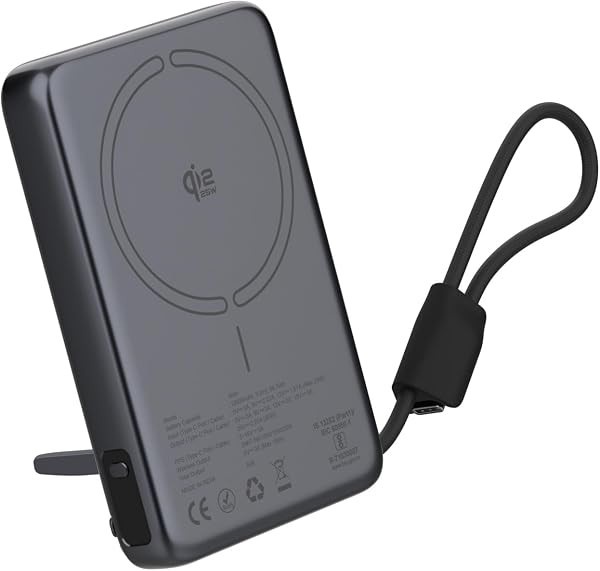
Spigen 2-in-1 Wireless 10,000mAh
Best Value ★ 3.25/5The Spigen 2-in-1 Wireless combines 15W Qi wireless with 20W wired PD in a slim, quality package at ₹3,999.
- Capacity: 10000
- Output Ports: 1x USB-C, 1x USB-A, wireless pad
- Fast Charging: 20W + 15W wireless
- Weight: 240
- Input Type: USB-C: 20W PD
The Quick Verdict
The Spigen 2-in-1 Wireless combines 15W Qi wireless with 20W wired PD in a slim, quality package at ₹3,999. At ₹3,999, it delivers 10,000mAh capacity with 20W + 15W wirelessW fast charging - an impressive package for the Under ₹5,000 segment.
The Good
- Excellent value at ₹3,999 for the features offered
- 20W + 15W wirelessW fast charging handles most devices adequately
- 10,000mAh provides 2x+ charges for most phones
- Reliable build quality for daily use
- Flight-safe design (under 100Wh)
The Bad
- Not the fastest charging option in the segment
- No digital display on most variants
- Multi-port charging reduces output speed
- Charging cable not always included
Who Should Buy?
| Buy If | Skip If |
|---|---|
| Wireless + wired combo seekers, Spigen quality fans, versatile minimalists | You need 65W+ laptop charging |
| You want reliable daily charging | Wireless charging is a must-have |
| Brand trust matters | You need ultra-compact size |
| You're on a budget | You want premium aluminum build |
Design and Build Quality
Spigen has long been recognised for its smartphone cases and accessories, and that manufacturing pedigree shows in the 2-in-1 Wireless power bank. The chassis opts for a sturdy, matte-finish polycarbonate exterior rather than the premium aluminium unibody some rivals in this price bracket employ. Whilst aluminium undoubtedly feels more luxurious, the plastic construction here has a tangible benefit: it is significantly lighter, making the unit far more comfortable to carry in a trouser pocket or a small sling bag during a daily commute.
The surface texture is thoughtfully applied. It offers a degree of grip that prevents the power bank from sliding around on a glossy desk or the dashboard of a car when utilizing the wireless charging pad. The edges are gently rounded, ensuring there are no sharp pressure points digging into your palm during extended use. Spigen's branding is kept refreshingly minimal, lending the device a professional, understated aesthetic that would not look out of place in a formal office environment.
Button placement is logical, with a tactile power switch situated conveniently on the side. This button is required to initiate wireless charging, which is a standard but necessary measure to prevent the bank from depleting its reserve when a phone is merely resting on it without needing a top-up. Four simple LED indicators communicate the remaining battery capacity in rough quartiles. As noted in our cons section, there is no precise digital readout, so you are left to estimate whether you have 55 per cent or 45 per cent remaining based on a single blinking light.
Feature Set and Charging Performance
The core appeal of the Spigen 2-in-1 Wireless lies in its name: it serves as both a traditional wired power bank and a Qi-certified wireless charging pad. The wired side offers 20W Power Delivery via the USB Type-C port, which is the current sweet spot for modern Indian smartphones. A 20W output is sufficient to take a standard mid-range Android device from near-empty to roughly 50 per cent in around the half-hour mark, assuming the phone's own charging architecture permits it.
On the wireless front, the unit pushes out up to 15W via the Qi protocol. It is worth managing your expectations here; wireless charging is inherently less efficient than a direct cable connection. Heat generation causes the chip-set to throttle, meaning a 15W wireless rate will rarely sustain its peak throughput throughout the entire charging cycle. Still, for top-ups during a meeting or leaving the bank on your bedside table overnight, it is perfectly adequate and delightfully convenient.
A critical aspect to remember is that engaging both the wired and wireless outputs simultaneously will trigger a reduction in overall output speed. The power bank's internal circuitry shares its maximum output ceiling across the active ports. If you are charging two devices at once, you should expect both to charge at a noticeably slower rate than if they were connected individually.
Practical Use Cases in the Indian Context
For the average Indian commuter navigating heavy traffic, a 10,000mAh capacity strikes a pragmatic balance between bulk and utility. It is broadly accepted that a 10,000mAh cell will yield over two full charges for the majority of contemporary smartphones, which typically house batteries between 4,000mAh and 5,000mAh. This capacity is the reason the bank remains easily flight-safe, sitting well beneath the 100Wh limit mandated by aviation authorities for carry-on luggage.
Consider a typical scenario: you are leaving the office for the day, your phone is at 15 per cent, and you have a long autorickshaw ride home followed by a grocery run. Dropping the phone onto the wireless pad in your bag or coat pocket allows for a hassle-free top-up without unravelling a cable. If you have a colleague or family member who also needs power, the wired port is ready to serve simultaneously.
However, if your primary requirement is to resuscitate an ultrabook or a gaming handheld that demands 65W or more, this Spigen unit will not suffice. Its focus remains squarely on smartphones, true wireless earbuds cases, and ancillary smart wearable accessories.
What to Look For in a Power Bank Under ₹5,000
When shopping in the highly competitive under-₹5,000 bracket, buyers should evaluate several key metrics. Firstly, capacity versus portability is paramount. Anything beyond 15,000mAh tends to become cumbersome for single-handed pocket carry, making 10,000mAh the standard baseline for everyday carry (EDC).
Output speeds are equally crucial. Ensure the bank supports a minimum of 18W to 20W Power Delivery to avoid agonisingly slow phone refills. Additionally, battery cell quality is often overlooked. High-quality lithium polymer cells generally provide a higher cycle lifespan and superior thermal management compared to cheaper older-generation alternatives. Finally, assess the port selection. The inclusion of USB-C for both input and output is now effectively mandatory, rendering older micro-USB-only models a relic of the past.
Pros and Cons Summary
To crystallise the discussion, here is a condensed breakdown of where the Spigen 2-in-1 Wireless excels and where it falls short.
- Pros: Dual-functionality with seamless switching between wireless and wired modes; competitive pricing for a branded 10,000mAh unit; safe and reliable thermal throttling; flight-safe battery capacity.
- Cons: Plastic build may disappoint buyers expecting a premium metal housing; dividing power across multiple devices drastically reduces efficiency; the lack of an included charging brick or cable adds to the total cost of ownership.
Buying Tips and Alternatives
Before committing to the Spigen 2-in-1 Wireless, ensure you have a capable 20W wall adapter and a high-quality USB-C cable. Since the included box contents can be minimal, utilising a sub-standard cable will throttle the maximum charging speed, leaving you wondering why your phone is charging slower than advertised.
If the wireless charging aspect does not heavily appeal to you, there are formidable alternatives in the same price tier. Brands like Ambrane and Mi (Xiaomi) offer power banks with higher capacity—often 20,000mAh—and occasionally higher peak wattages for purely wired charging. If extremely rapid charging for laptops is your priority, exploring higher-wattage options from brands like Anker or Urbn might prove more fruitful, though you may have to sacrifice the slim form factor.
Frequently Asked Questions
Can the Spigen 2-in-1 Wireless 10,000mAh charge an iPhone?
Yes, it certainly can. The 20W wired Power Delivery output is perfectly compatible with the fast-charging standards utilised by modern iPhone models. Furthermore, iPhones that support MagSafe or Qi wireless charging can take advantage of the 15W wireless charging pad.
How long does it take to recharge the power bank?
Given the 10,000mAh capacity and a 20W input capability, you can expect the bank to recharge from a depleted state to full in approximately three to four hours, provided you use an adequate power brick of at least 20W.
Will the wireless charging function work through a thick phone case?
Generally, Qi wireless charging works through cases up to roughly 5mm in thickness. However, highly ruggedized cases, those featuring metal plates, or bulky MagSafe accessories with excessive magnetic rings can impede the charging connection or reduce the transfer speed significantly.
Bottom Line
The Spigen 2-in-1 Wireless 10,000mAh is a solid choice in the Under ₹5,000 power bank segment. At ₹3,999, it offers reliable 10,000mAh capacity with 20W + 15W wirelessW charging - a practical solution for everyday charging needs. It may not redefine the category's boundaries, but its steadfast approach to usability, portability, and brand trust makes it a highly recommended purchase for the right buyer.
Rating: 3.25/5
Affiliate Disclosure:
This post contains affiliate links. We may earn a commission when you purchase through our links, at no extra cost to you.
Share this: