Sujata Room Heater for Bedroom: Complete Buying Guide, Price Ranges and Best Picks

About Rahul Verma: Rahul is a tech enthusiast and gadget reviewer with over 8 years of experience testing consumer electronics. He specializes in audio gear, smartwatches, and mobile accessories. When he is not testing products, you will find him exploring the latest in AI and smart home technology.
If you have spent the last hour scrolling through Amazon and Flipkart looking for a Sujata room heater for bedroom use, you have probably noticed something odd — the listings are thin, the specifications are vague, and the same model appears under three different names. That is not your imagination. Sujata is a well-loved Indian brand, but it built that reputation in mixers, grinders and juicers, not in heating appliances. So before you spend ₹2,000–₹8,000 on a winter purchase you will live with for the next four months, you deserve a straight answer about what is actually available, what it costs, and what the smarter alternative is.
This guide covers the full picture: what a Sujata room heater for bedroom use typically offers, the wattage you actually need for an Indian bedroom, the real electricity bill impact (this is where most buyers get a shock), safety checks that matter in a room where you sleep, and specific recommendations at budget, mid-range and premium price points. By the end you will know exactly what to buy, where to buy it, and which month to buy it in for the lowest price.
Understanding the Sujata Room Heater for Bedroom Segment
Room heaters in India are sold in a handful of clearly defined technologies, and almost every product you see — regardless of the badge on the front — is one of them. Understanding the categories first makes the brand question far easier to answer.
What Sujata actually manufactures
Sujata Electricals is a Kolkata-headquartered company best known for its mixer-grinders, juicer-mixers, wet grinders, induction cooktops and, more recently, small kitchen and home appliances. Room heaters sit at the edge of that catalogue. You will occasionally find Sujata-branded fan heaters and quartz heaters in Eastern India dealer showrooms — West Bengal, Odisha, Assam, Jharkhand and parts of the North-East — but the range is neither deep nor consistently stocked, and online availability on Amazon India or Flipkart fluctuates through the year.
This matters because a heater is a product you need serviced. If you buy a Sujata room heater for bedroom use from a dealer 40 km away and the heating element fails in January, you may be waiting weeks for a replacement. That is a genuine risk, and it should shape your decision.
What you should verify if you do find one
If a local Sujata dealer does have a heater in stock, check four things before paying: the ISI mark with the standard IS 302 (Part 2/Sec 30) printed on the rating label, the rated wattage on the label (not the box), whether the warranty card names a service centre within your city, and whether the plug is a 16-amp three-pin. A 2,000 W heater cannot run safely on a standard 6-amp bedroom socket, and no amount of brand goodwill fixes that.
Quick Verdict: Which Heater Type Suits an Indian Bedroom?
Before the product breakdown, here is the short answer that saves most people a week of research. For a bedroom where people sleep, an oil-filled radiator (OFR) is the best default choice — it is silent, has no exposed heating element, and keeps radiating warmth for 15–20 minutes after the thermostat cuts off. If your winters are mild (Mumbai, Chennai, coastal Karnataka, Goa) or your room is under 100 sq ft, a compact ceramic PTC fan heater at 1,000–1,500 W is more sensible and cheaper to run. A halogen or quartz heater is fine for a quick warm-up while you are awake, but it is a poor overnight companion — the glow disrupts sleep and the heat is directional, so the side of you facing away stays cold.
Key Factors to Consider Before Buying a Sujata Room Heater for Bedroom Use
Room size and the right wattage
The rule of thumb that actually works in Indian conditions is roughly 10 W per square foot for a room with standard 10-foot ceilings, single-glazed windows and no ceiling insulation. A 10×10 bedroom (100 sq ft) needs about 1,000–1,200 W. A 12×12 room (144 sq ft) needs 1,400–1,500 W. A 14×14 master bedroom (196 sq ft) needs a genuine 2,000 W, and if it has a large west-facing window or an attached open balcony door, add another 200–300 W of headroom. Buying a 1,000 W heater for a 200 sq ft room is the single most common buying mistake — it runs at full power all night, never reaches the thermostat set point, and ends up costing more than a correctly sized 2,000 W unit that cycles on and off.
Noise — the factor nobody checks until night one
Fan-forced heaters are loud. In a living room, a 45–55 dB fan is background noise. In a bedroom at 2 a.m., it is the reason you are awake. If you or your partner are light sleepers, an oil-filled radiator (0 dB — completely silent) or a convection heater (also silent) is worth the extra ₹1,500. Ceramic PTC heaters sit in the middle: quieter than conventional fan heaters but still audible.
Safety, specifically for a room where you sleep
Look for tip-over cut-off, overheat protection and a cool-touch outer body. Avoid any heater with an exposed glowing element placed within reach of a bed. Never run a heater on an extension board rated below 16 A, and never drape clothes over it to dry — this is one of the leading causes of winter house fires in Indian homes. If you have toddlers or pets, an OFR with a sealed fin stack and no accessible hot element is meaningfully safer than a quartz bar heater.
Running cost — do the maths before you buy
This is where expectations and reality diverge sharply. A 2,000 W heater running 8 hours a night consumes 16 units (kWh). At a typical ₹7–8 per unit in most Indian cities, that is roughly ₹112–₹128 per night, or ₹3,400–₹3,800 for a month of daily use. A 1,000 W heater halves that. A thermostat does not reduce peak draw, but it does cut total units by cycling the element off once the room reaches temperature — typically 25–35% savings in a well-sealed room. If your monthly electricity budget cannot absorb ₹3,000+, buy a smaller, correctly sized unit and use a hot water bag for the coldest hour of the night. It is a genuinely practical combination.
Electrical load and wiring
A 2,000 W heater draws about 8.7 A at 230 V. That exceeds a 6 A socket. You need a 16 A point, ideally on its own circuit, or at minimum a heavy-duty 16 A extension cord with 2.5 sq mm copper wire — not the ₹199 plastic strip you bought for your laptop charger. If your bedroom wiring is old, get an electrician to check the MCB rating before the heater arrives. This is a five-minute check that prevents a burnt socket.
Best Sujata Room Heater for Bedroom — Recommendations at Every Price Point
Because Sujata's own heating range is limited and inconsistently available online, the recommendations below cover what you will realistically be able to buy, organised by budget. Where a Sujata unit is available, it sits in the budget tier; the mid and premium tiers are dominated by brands with established heater service networks.
Under ₹2,000 — Budget tier
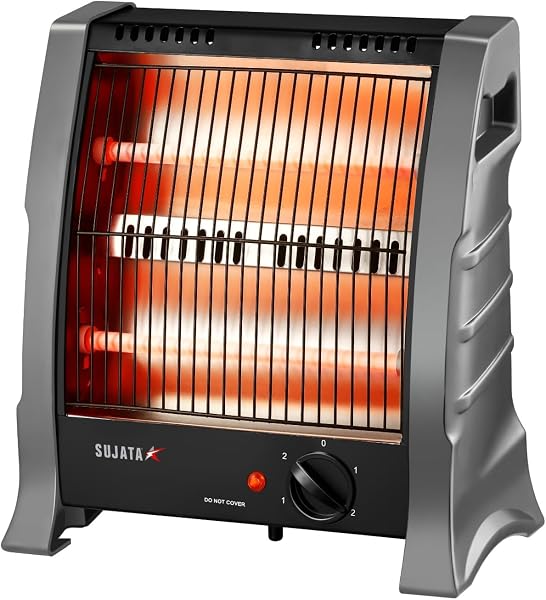
Sujata / regional-brand quartz heater (800–1,200 W), ₹1,100–₹1,900. If you find a Sujata quartz heater locally, this is the least expensive way to warm a small bedroom of 80–100 sq ft. Two quartz rods, a reflector, and a simple switch. It heats instantly and the running cost is low. The trade-offs are real: directional heat, a bright orange glow, and a hot front grill. Buy it only if your bedroom is small, your winters are short, and you need warmth for an hour before bed rather than all night.
Bajaj Flashy 1000 W / 2000 W radiant heater, ₹1,299–₹1,899. The most widely sold budget radiant heater in India and available in almost every appliance store. Same limitations as above, but you can walk into a Croma or a local dealer and get it serviced.
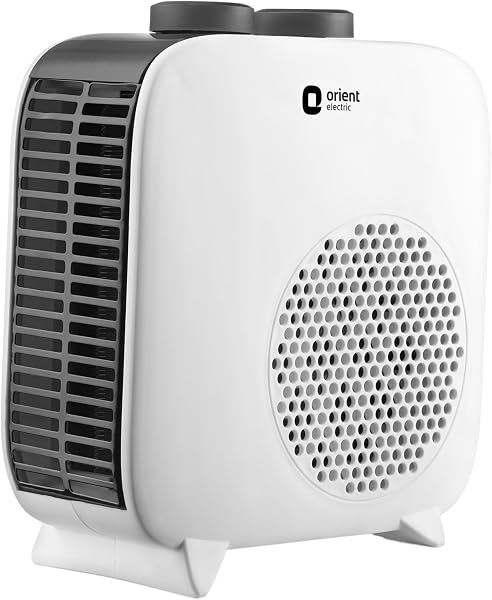
Orpat OEH-1220 2000 W fan heater, ₹1,499–₹1,999. A no-frills fan heater that heats a 120 sq ft room in about ten minutes. Louder than an OFR, but the price-to-performance ratio is hard to beat. Good for a guest room or a bedroom used for short periods.
₹2,500–₹5,500 — Mid tier (the sweet spot for most buyers)
Ceramic PTC fan heaters (1,500–2,000 W) from Havells, Usha or V-Guard, ₹2,499–₹3,999. Ceramic elements heat up faster than metal coils and hold temperature better, so the fan cycles less. Look for models with a thermostat dial, two heat settings and a tip-over switch. These are the best pick for Bengaluru, Pune, Hyderabad and Nagpur winters — quick warmth, moderate running cost, compact enough to store under the bed in March.
Oil-filled radiators, 7–9 fins, 1,500–2,000 W — Morphy Richards OFR, Bajaj OFR, V-Guard OFR, ₹4,499–₹6,999. This is where the best value for a bedroom lies. Silent operation, no dust burning smell, sealed fins that stay warm for 20 minutes after shut-off, and a thermostat that genuinely reduces consumption. A 9-fin, 2,000 W unit comfortably handles a 150 sq ft bedroom. Expect it to take 15–20 minutes to reach full warmth on the first switch-on — that is normal for oil-filled units, not a defect.
₹7,000–₹12,000 — Premium tier
11-fin oil-filled radiators with digital thermostat and timer — Havells OFR 11 Fin (2,900 W), Luminous OFR, ₹7,999–₹11,499. For a large master bedroom of 200+ sq ft, or a room with two exterior walls, the extra fins and higher wattage matter. A programmable timer is genuinely useful: set it to switch on 30 minutes before you enter the room and off at 5 a.m., and you cut both waste and electricity bills.
Convector heaters (2,000 W) from Usha or Havells, ₹5,999–₹8,999. Silent like an OFR but heats faster and is lighter to move. The trade-off is that it cools down almost immediately when switched off. Worth considering if you need warmth in a bedroom for two hours in the evening rather than all night.
Comparison Table: Sujata Room Heater for Bedroom vs Alternatives
| Type | Typical Wattage | Price Range (₹) | Noise | Heat-Up Time | Best For |
|---|---|---|---|---|---|
| Quartz / Halogen (incl. Sujata units) | 800–1,200 W | 1,100–1,900 | Silent | Instant | Very small rooms, short use, tight budget |
| Fan / Convection heater | 2,000 W | 1,499–2,999 | Audible (45–55 dB) | 8–10 minutes | Quick warm-up, guest rooms |
| Ceramic PTC fan heater | 1,500–2,000 W | 2,499–3,999 | Moderate | 3–5 minutes | Mild winters, 100–130 sq ft bedrooms |
| Oil-filled radiator (OFR) | 1,500–2,900 W | 4,499–11,499 | Silent | 15–20 minutes | Overnight bedroom use — best overall |
| Convector heater | 2,000 W | 5,999–8,999 | Silent | 8–12 minutes | Evening use, larger bedrooms |
Pros and Cons of the Top Recommendations
Oil-filled radiator (Morphy Richards / Bajaj / V-Guard, 9-fin)
Pros: Completely silent, so it suits light sleepers and shared bedrooms. Sealed fins mean no exposed hot element and no burnt-dust smell. Retains heat after switching off. Thermostat delivers measurable savings on the bill. Safe around children and pets.
Cons: Slow to heat a cold room — you cannot walk in at midnight and feel warm in five minutes. Heavy (12–16 kg) and awkward to move between rooms. The fins get hot enough to burn, so keep beds and curtains 1 metre away. Costs ₹1,500–₹2,500 more upfront than a fan heater.
Ceramic PTC fan heater (Havells / Usha / V-Guard)
Pros: Fast, compact, light enough to shift between bedroom and bathroom. Lower wattage option means a genuinely lower bill. Cheap to buy and easy to store.
Cons: The fan noise is noticeable at night. Dries the air out faster than an OFR, so you may need a bowl of water in the room. Fan motors are the usual point of failure after three or four seasons.
Budget quartz heater (including Sujata)
Pros: Lowest upfront cost, instant directional warmth, low running cost at 800–1,000 W.
Cons: Glowing element disrupts sleep. Heats one side of you only. Burns if touched. Not suitable for unattended overnight use. Brand service for Sujata units can be thin outside Eastern India.
Where and When to Buy for the Best Price
Online vs offline
For OFRs and ceramic heaters, Amazon India and Flipkart are usually 15–25% cheaper than offline MRP and offer easier returns if the unit arrives with a damaged fin or a faulty thermostat. Buy from the brand's official storefront on the marketplace, not a third-party seller with no rating — heater counterfeits and refurbished units do circulate. For Sujata specifically, offline is often the only realistic channel; check authorised dealers in your city, and Croma or Reliance Digital if you are in Kolkata or Bhubaneswar. If you need to physically inspect the
Affiliate Disclosure:
This post contains affiliate links. We may earn a commission when you purchase through our links, at no extra cost to you.
Share this: