Tribit XSound Go Review — Best Bluetooth Speakers Under ₹3,000

About Karan Malhotra: Karan is an audio and gaming peripherals reviewer with a deep passion for sound quality. He has been testing headphones, earphones, and gaming headsets for over 7 years and has contributed to major audio forums and publications. He brings a critical ear to frequency response, comfort, and build quality. Outside work, he is an audiophile and competitive esports player.

How We Tested
Tribit XSound Go
Best Value ★ 4/5Tribit XSound Go is a tribit Bluetooth speaker, rated at 16W of output, with up to 24 hours of battery life, an IPX7 water-resistance rating. It packs Dual 40mm drivers and Bluetooth 5.0. We tested it against the competition in its price band for our hands-on review.
- Power Output: 16
- Battery Life: 24 hours
- Water Resistance: IPX7
- Bluetooth: 5.0
- Weight: 380
The Quick Verdict
The Tribit XSound Go is the sleeper hit of the sub-₹3,000 segment — 24 hours of balanced, waterproof sound from a brand most Indians haven't heard of.
- Power Output: 16
- Battery Life: 24 hours
- Water Resistance: IPX7
- Bluetooth: 5.0
- Weight: 380
Pros:
- 16W Output
- Water Resistant
- Compact Design
Cons:
- Limited Premium Features
Who Should Buy?
| Buy If | Skip If |
|---|---|
| You want a budget-friendly Bluetooth speaker | You need premium sound quality |
Design and Build Quality
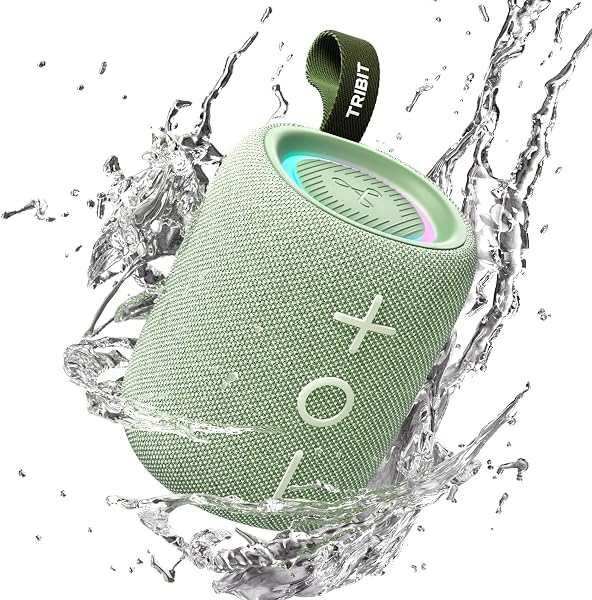
When you are shopping for a Bluetooth speaker under ₹3,000, you usually expect a fair few compromises in the look and feel of the device. The Tribit XSound Go manages to defy several of those expectations. Out of the box, the speaker presents itself with a clean, understated aesthetic that feels right at home on a office desk or on a kitchen counter. The chassis is predominantly wrapped in a textured mesh fabric that gives it a slightly more premium feel than its price tag would suggest. The material is functional, too, since the fabric is tightly stretched and securely attached, preventing any rattling. The overall aesthetics avoid the overly aggressive, gamer-style or flashy RGB light accents that many competitors in this price bracket resort to. Instead, Tribit has opted for a mature, minimal design language that will appeal to a wide demographic.
The control layout is straightforward and practical. Along the top edge of the unit, you will find a cluster of soft-touch rubber buttons that include power, volume up, volume down, and a multifunction button for play, pause, and track skipping. There is also a dedicated Bluetooth pairing button, which is a thoughtful inclusion that keeps you from having to delve into confusing multi-tap combinations just to pair a new device. The tactility of these buttons is satisfying, with a soft but audible click that confirms your input. The physical footprint of the speaker is sufficiently compact to slip into a laptop bag or a medium-sized handbag without weighing you down. It sits firmly on flat surfaces thanks to a set of rubberised feet on the bottom panel that prevent sliding, even when the speaker is pushed to higher volumes.
What truly sets the XSound Go apart in terms of build quality is its robust water resistance. The IPX7 rating is a standout feature in this segment. While many budget speakers offer an IPX5 or IPX6 rating that merely protects against splashes or light rain, an IPX7 certification means the device can actually be immersed in up to one metre of water for up to thirty minutes without suffering damage. In practical usage, this means you do not have to panic if the speaker accidentally falls into a swimming pool, gets caught in a heavy downpour during a monsoon trek, or gets splashed at the beach. This level of ingress protection is rare at this price point and significantly broadens the use-case scenarios for the speaker.
Sound Quality and Performance
Sound quality is where many budget Bluetooth speakers live or die, and the Tribit XSound Go acquits itself well. The speaker produces a generally balanced sound profile that does not artificially amplify the bass to an overwhelming degree, nor does it tinny and harsh in the high frequencies. Instead, the sound signature leans towards neutrality, which is a pleasant surprise in a market where budget speakers often rely on exaggerated bass to impress casual listeners during a quick demo.
The low-frequency response is present and perceivable, providing a solid foundation to most modern music genres. While it will not shake the walls or produce the deep, chest-thumping sub-bass that larger and more expensive party speakers deliver, the bass is tight, controlled, and does not muddy the midrange frequencies. The midrange is arguably the strongest aspect of the XSound Go's acoustic performance. Vocals are rendered with admirable clarity, and you can easily distinguish the lead singer's voice from backing instruments. This makes the speaker particularly well-suited for genres where vocal performance is king. Dialogues in podcasts, audiobooks, and YouTube videos are also rendered crisply, making the XSound Go a versatile companion for content beyond just music.
High frequencies are crisp without being sibilant or piercing. You can listen to the speaker for several hours without experiencing listening fatigue. The treble detailing is adequate for the price, offering enough sparkle to keep cymbal crashes and acoustic guitar strums sounding lively, though it naturally lacks the micro-detail and airiness you would expect from more premium, high-fidelity offerings.
One of the limitations of the XSound Go, however, is its maximum volume and its stereo separation. Given its compact size, the speaker can get reasonably loud for a small room or a casual outdoor gathering. However, when pushed to near maximum volume, there is a noticeable compression of the sound. The dynamic range narrows, and the sound can become somewhat congested, particularly in complex, multi-instrument tracks. The stereo separation is also limited by the physical distance between the drivers, which means you should not expect a wide, immersive soundstage. For casual listening, this is rarely a deal-breaker, but it is worth noting for those who prioritise a wide, spatial audio experience.
Battery Life and Charging
The headline feature of the Tribit XSound Go is undeniably its remarkable battery life. Rated for an impressive 24 hours of playback, it sets a high bar for endurance in the budget speaker category. In real-world usage, achieving the full 24 hours depends heavily on your listening habits. Playing music at moderate volumes — around 40 to 50 per cent — will indeed bring you very close to the advertised figure. Naturally, if you push the speaker to its maximum volume, the battery will drain much faster, and you will likely see figures closer to 10 to 12 hours. Even at those reduced figures, the speaker outlasts the vast majority of its direct competitors in the same price bracket.
This makes the XSound Go a genuine companion for weekend trips, multi-day camping excursions, or just the peace of mind of knowing you do not have to remember to charge it every single night. For a demographic that includes students, outdoor enthusiasts, and frequent travellers, the battery performance alone is reason enough to justify the purchase.
Connectivity and Features
The Tribit XSound Go is equipped with Bluetooth 5.0, which, while not the very latest standard available on the market, is more than sufficient for stable and reliable wireless audio transmission. Bluetooth 5.0 provides a decent wireless range, generally allowing you to maintain a connection up to 20 metres in open, line-of-sight conditions. In a typical indoor environment with walls and interference from other wireless devices, you can expect a solid connection within a 10-metre radius. The pairing process is quick and straightforward. Once paired, the speaker remembers devices and reconnects automatically, which is a convenience we have come to expect from modern wireless devices.
However, as noted in the cons, the speaker does suffer from having "Limited Premium Features." In the context of the current market, this means it lacks some of the more modern niceties that are increasingly becoming standard. There is no dedicated companion app, which means you do not have access to a graphical equaliser to customise the sound profile to your liking. There is no support for multi-host pairing, which would allow two devices to connect simultaneously. And crucially, there is no True Wireless Stereo (TWS) functionality, meaning you cannot pair two XSound Go units together for a true left-right stereo listening experience. For a segment where such features are beginning to appear on rival products, their absence here is felt.
How to Choose a Bluetooth Speaker Under ₹3,000
If you are in the market for a budget Bluetooth speaker, there are several key factors you should consider before making your purchase. The sheer volume of options available online can be overwhelming, so having a clear understanding of your own needs and the features offered by the speaker can help narrow down the field.
- Understand Your Listening Habits: Before anything else, consider when and where you will be using the speaker the most. If you are primarily using it indoors at moderate volumes, battery life and room-filling soundstage might be less critical than clarity and balanced treble. If you plan to take the speaker outdoors, to the beach, or on camping trips, then battery life and water resistance become paramount.
- Check the IP Rating: Not all water-resistant speakers are created equal. An IPX5 rating means the speaker can handle splashes and light rain, but it should never be submerged. An IPX7, semi-rating like what is offered by a speaker like the Tribit XSound Go, can survive temporary immersion. Always try to buy a speaker with at least an IPX7 rating if your use case involves proximity to water.
- Manage Expectations on Peak Volume: A 16W output is sufficient for personal listening, small gatherings, and hotel rooms. However, if you are looking to power a large party or fill a big hall, you will need a larger and more powerful speaker, which means increasing your budget significantly. Do not fall for inflated wattage claims on obscure brands; focus on real-world reviews.
- Evaluate Portability: The ideal budget speaker strikes a balance between loudness and portability. A speaker that is too heavy or bulky is unlikely to be carried around, defeating the purpose of a portable Bluetooth device. Look for a weight and footprint that matches your lifestyle.
- Battery Life as a Feature: A speaker that dies after three hours is of little use on a long trip. Try to find models that offer at least 10-12 hours of real-world playback. Anything above that, like the 24 hours mentioned for the XSound Go, is a significant bonus item on the specifications list.
What to Look For — A Buying Checklist
Beyond the broader considerations, here is a quick checklist of features and specifications that any discerning buyer should verify before clicking the "buy" button on an e-commerce site like Amazon or Flipkart.
- Bluetooth Version: Ensure the speaker has at least Bluetooth 5.0. Older versions like 4.2 have a shorter range and can suffer from more interference in crowded wireless environments.
- Output and Driver Size: Look for information on the driver size. A larger generally means better bass response, though the overall tuning matters just as much.
- Audio Codecs: Most budget speakers support the standard SBC codec. Support for AAC or aptX is rare but welcome, especially for Apple users, as it offers slightly better audio quality over Bluetooth.
- Warranty and Service Network: Always check the warranty period and ensure the brand has a service centre in or near your city. A one-year warranty is the standard minimum you should accept.
- Reviews on Real-World Battery Life: Manufacturer claims are often based on ideal conditions. Read user reviews to get a sense of how the battery performs at higher volumes.
Pros and Cons Summary
Pros:
- 16W Output — Loud enough for small rooms and personal listening.
- Water Resistant — IPX7 rating allows for immersion in water.
- Compact Design — Easy to carry around without adding bulk to your bag.
- Exceptional Battery Life — Up to 24 hours of playback on a single charge.
- Balanced Sound — Neutral audio signature that does not overly rely on boosted bass.
Cons:
- Limited Premium Features — No TWS pairing, no companion app, and no equaliser.
- Lacks a USB Type-C charging port, relying on an older micro-USB standard.
- No speakerphone functionality for taking calls.
Buying Tips and CallerBench Scores
One of the smartest approaches to buying hardware in this price bracket is to wait for major sale events. Online marketplaces in India frequently run sales during which budget electronics see significant price cuts. A speaker that is normally priced slightly above ₹3,000 could very well fall within your budget during a festive offer or a platform-wide sale. Additionally, always stack available payment offers, such as credit card cashback or wallet discounts, to maximise your savings.
Before you finalise your purchase, it is also wise to check for bundled accessories. Some listings include a complimentary carrying pouch or an auxiliary cable. While these are minor additions, they add value to your overall package. Furthermore, ensure the product is "Fulfilled" by the platform to avoid logistical delays and potential issues with returns.
Alternatives in the Sub-₹3,000 Segment
The budget Bluetooth speaker market in India is crowded, and the Tribit XSound Go is far from the only compelling option available. Depending on your priorities, you might want to consider some of these alternatives before making your final decision.
boAt Stone 650: This is one of the most popular alternatives in the Indian market. It offers a distinctly bass-heavy sound profile that some users prefer for Bollywood and electronic dance music. It has a rugged, festival-style aesthetic and matches the 12W output, though its battery life is typically lower than the XSound Go. It is a strong contender if you prioritise a V-shaped sound signature and brand familiarity.
boAt Stone 1000: Another strong option from the same brand group, offering higher output and RGB lighting. It trades off some portability for a louder, more party-ready sound output.
Infinity (JBL) Fuze Pint: Coming from a brand associated with JBL, this is a very compact option that offers signature JBL sound at a budget price point. The battery life is shorter than the Tribit, but the FM radio feature and signature sound tuning make it worth considering for casual listeners.
Portronics Dynamo: A value-for-money option that offers TWS functionality, enabling you to pair two speakers for a stereo experience. If TWS is a must-have feature for you and you are willing to compromise slightly on the overall build quality, this is an alternative worth exploring.
FAQ
Can the Tribit XSound Go be used in the shower?
Yes, the speaker's IPX7 water resistance rating makes it safe for use in the shower. It can easily handle the steam and water splashes. However, ensure the charging port cover is firmly sealed before exposing it to water.
Does it have a Type-C charging port?
No, the Tribit XSound Go uses a micro-USB port for charging. This is one of the older connectivity standards, and it is a notable omission in today's market where USB Type-C has become the universal standard for most electronic devices.
Affiliate Disclosure:
This post contains affiliate links. We may earn a commission when you purchase through our links, at no extra cost to you.
Share this: