V-Guard Divino DG Geyser 15 Litre Water Heater with Digital Display: Complete Buying Guide & Review

About Rahul Verma: Rahul is a tech enthusiast and gadget reviewer with over 8 years of experience testing consumer electronics. He specializes in audio gear, smartwatches, and mobile accessories. When he is not testing products, you will find him exploring the latest in AI and smart home technology.

If you've been comparing storage water heaters for a small family, the vguard divino dg geyser 15 litre water heater with digital display keeps popping up in your search results — and for good reason. It sits in that sweet spot where you get premium features (glass-lined tank, digital temperature readout, 8-bar pressure rating) without paying AO Smith or Ariston money.
But is it actually the right geyser for your bathroom? In this guide, I'll break down exactly what this model offers, how it compares with cheaper and more expensive alternatives, what it will realistically cost you to run every month, where to buy it at the best price in India, and the practical issues nobody mentions in the product listing. By the end, you'll know whether to click "Buy Now" or look at something else.
What Is the V-Guard Divino DG 15L Water Heater?
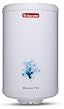
The Divino DG is a wall-mounted, storage-type electric water heater from V-Guard's mid-premium Divino range. The "DG" in the name refers to the digital display — a small LED/LCD panel on the front of the unit that shows the live water temperature inside the tank, usually along with a heating indicator. Instead of guessing whether your water is ready, you can glance at the display and know it's at 55°C or 65°C before you step in.
Underneath that display, this is a conventional tank geyser with a 15-litre inner tank, a copper heating element rated at around 2,000 watts, and a glass-lined (titanium enamel) interior designed to resist corrosion from hard water. It carries an 8-bar pressure rating, which matters a lot if you live in a high-rise apartment or run a pressure pump — many budget geysers are rated at only 6.5 bar and struggle in those conditions.
The 15-litre capacity is the most popular size in India for a reason. It's enough for two adults to bathe comfortably back-to-back, or for a family of three to four with a small gap between baths. It's not enough for four people to shower simultaneously — for that, you'd want 25 litres.
Key specifications at a glance
- Capacity: 15 litres (also sold in 10L, 25L and 35L variants)
- Heating element: Copper, ~2,000 W
- Inner tank: Glass-lined / titanium enamel coated steel
- Pressure rating: 8 bar
- Energy rating: 5-star BEE (verify the exact star rating on the current listing, as variants differ)
- Safety features: Thermal cut-out, multi-function safety valve, magnesium anode rod, capillary thermostat
- Body: Rust-free ABS outer casing
- Warranty: Typically 7 years on the inner tank, 3–4 years on the heating element, 2 years on the product (confirm on the invoice)
- Installation: Wall-mounted, vertical orientation
One important note: V-Guard has revised specs and warranty terms across batches and variants over the years, so always read the current Amazon or Flipkart listing rather than relying on an old review (including this one). The core proposition — digital display, glass-lined tank, 8-bar pressure — has remained consistent.
Who Should Buy the V-Guard Divino DG 15 Litre?
This geyser makes the most sense for a specific type of buyer. If you recognise yourself below, it's a strong fit:
- Small to mid-size families (2–4 people) with one or two bathrooms where baths happen sequentially, not simultaneously.
- Apartment dwellers on higher floors where inlet pressure can be inconsistent — the 8-bar rating and pressure-withstanding tank are genuinely useful here.
- People in hard-water cities like Delhi NCR, Chennai, Hyderabad, Jaipur or Ahmedabad — the glass lining and magnesium anode slow down scale build-up and corrosion considerably better than uncoated steel tanks.
- Anyone who wants temperature visibility — the digital display is a small convenience, but once you've used it, going back to a plain knob feels primitive.
It's not the right choice if you need instant hot water (look at instant geysers), if you have four or more people queuing up every morning (go 25L), or if your budget is strictly under ₹7,000 (the V-Guard Victo or Bajaj Popular Plus will serve you fine).
Key Factors to Consider Before Buying a 15L Storage Geyser
Before you commit to any model — including this one — run through these checks. They're the difference between a geyser that lasts 10 years and one that leaks in year three.
1. Tank material and coating
The inner tank is the single most important component. Glass-lined (titanium enamel) steel, which is what the Divino DG uses, offers good corrosion resistance at a mid-range price. Stainless steel tanks are more expensive but handle very hard water slightly better. Avoid uncoated mild steel tanks entirely, no matter how cheap they are.
2. Pressure rating versus your bathroom's actual pressure
If you're on the 8th floor of a building with a booster pump, your line pressure could easily hit 5–7 bar. A 6.5-bar geyser will work but will stress its welds over time. The 8-bar rating on the Divino DG gives you headroom — but do check that your building's pressure doesn't exceed 8 bar, in which case you need a pressure-reducing valve.
3. Star rating and actual electricity cost
A 5-star geyser uses better insulation and loses less heat between uses. For a family using hot water daily for six months of the year, the difference between 5-star and 3-star models works out to roughly ₹800–₹1,500 per year in most Indian cities. Worth paying for, but not worth obsessing over.
4. Warranty — read the fine print
V-Guard typically offers a long tank warranty (7 years), but this is usually a pro-rata warranty in later years, meaning you pay a percentage of the replacement cost. The element and product warranties are shorter. Always confirm the exact terms in writing at the time of purchase.
5. Installation cost and plumbing readiness
The geyser's price is not your total cost. Standard installation is often free or heavily subsidised during promotional periods, but you'll typically pay extra for plumbing fittings, extra pipe, an inlet/outlet valve set, and a 16-amp power point if you don't already have one. Budget ₹800–₹2,000 for installation and fittings.
Detailed Feature Breakdown: What You're Actually Paying For
Digital temperature display
The headline feature. The display shows the current tank temperature, which lets you decide whether to wait another five minutes or jump in now. It also helps you avoid overheating the water unnecessarily — if the display shows 60°C and you only need 45°C, you can switch off earlier and save power. The display generally runs off mains power, so it goes blank during a power cut; it does not have a battery backup.
Glass-lined inner tank with magnesium anode
The tank's steel shell is coated with a glass/enamel layer that resists rust. Because no coating is perfect, V-Guard also fits a magnesium anode rod that corrodes sacrificially, protecting the tank. This rod is a consumable — in hard-water areas it needs replacement every 2–3 years, and neglecting it is the number one reason geyser tanks fail prematurely. Ask your technician to check it during annual servicing.
8-bar pressure rating and multi-function safety valve
The safety valve releases pressure if it builds up beyond safe limits, preventing tank rupture. Combined with the 8-bar rating, this makes the unit suitable for pressurised systems.
2,000 W copper heating element
A 15-litre tank at 2 kW heats from room temperature (around 25°C) to 60°C in roughly 20–25 minutes. That's the realistic wait you should expect, not the "5 minutes" some listings imply.
5-star energy efficiency
Better polyurethane foam insulation means the water stays hot for several hours after the geyser switches off. In practice, you can heat water once in the morning and still have reasonably warm water for an evening wash during winter.
Comparison: V-Guard Divino DG 15L vs Alternatives
Here's how it stacks up against the models Indian buyers most often shortlist. Prices are indicative street prices at the time of writing — always verify live prices, as geyser pricing swings sharply during sale events.
| Model | Capacity | Tank Type | Pressure | Approx. Price | Best For |
|---|---|---|---|---|---|
| V-Guard Divino DG 15L | 15 L | Glass-lined | 8 bar | ₹9,500 – ₹11,500 | Digital display + solid build, mid budget |
| V-Guard Victo 15L | 15 L | Glass-lined | 8 bar | ₹7,000 – ₹8,500 | Budget pick, no digital display |
| V-Guard Divino DG 25L | 25 L | Glass-lined | 8 bar | ₹11,500 – ₹13,500 | Families of 4–5, two bathrooms |
| AO Smith HSE-VAS-X 15L | 15 L | Blue Diamond glass-lined | 8 bar | ₹11,000 – ₹13,500 | Premium build, long warranty |
| Havells Instanio 15L | 15 L | Glass-lined | 8 bar | ₹8,000 – ₹9,500 | Colour options, compact footprint |
| Bajaj Popular Plus 15L | 15 L | Coated steel | 6.5 bar | ₹6,000 – ₹7,500 | Tightest budget, low-rise homes |
Analysis of the alternatives
V-Guard Victo 15L: The obvious question is whether the Divino's digital display is worth ₹2,000–₹2,500 more. If you're price-sensitive and just want reliable hot water, the Victo is functionally very similar — same brand, similar tank, similar warranty. The Divino's advantage is the display and slightly more premium finish.
AO Smith HSE-VAS-X 15L: A genuinely better-built geyser with a stronger warranty reputation, but it costs 20–25% more. If your budget stretches, it's worth considering — especially in very hard-water areas where tank longevity matters most.
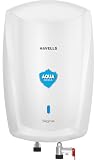
Havells Instanio 15L: Slightly cheaper than the Divino DG, with similar specs and a more modern look. A strong contender if aesthetics matter to you. Havells' service network is comparable to V-Guard's in most metros.
Bajaj Popular Plus 15L: Fine for a ground-floor home with normal water pressure and a tight budget. The lower pressure rating and basic tank coating make it a less durable long-term bet.
Pros and Cons of the V-Guard Divino DG 15L
What works well
- Genuinely useful digital display — not a gimmick; it changes how you use the geyser.
- 8-bar pressure rating makes it apartment-friendly and pump-compatible.
- Glass-lined tank with magnesium anode — the right combination for Indian water conditions.
- Strong service network — V-Guard has authorised service centres in most tier-2 and tier-3 cities, which matters more than most buyers realise.
- Good 5-star efficiency keeps monthly bills predictable.
- Long tank warranty relative to its price band.
Where it falls short
- Display has no battery backup — it blanks out during power cuts, which is when you'd sometimes want the reading most.
- Installation is not always truly free — plumbing and fittings add ₹800–₹2,000 in most homes.
- Price fluctuates a lot — the same unit can be ₹9,000 in a sale and ₹11,800 a month later. Patience pays.
- 15L runs out fast for four people bathing in sequence without a recharge gap.
- No Wi-Fi/smart control — if you want app-based scheduling, this isn't that product.
Buying Guide: Where and When to Buy for the Best Price
Where to buy
Amazon and Flipkart are usually the cheapest for this model, especially during sale events, and both offer easy returns and installation scheduling. Look for "sold by" listings that are Amazon-fulfilled or Flipkart-assured — third-party sellers with poor ratings can complicate warranty claims.
V-Guard authorised dealers and showrooms sometimes match online prices and include installation in the deal. The advantage here is a local contact for service, plus you can physically inspect the finish. Croma and Reliance Digital are good middle-ground options with reliable after-sales support but rarely the lowest price.
When to buy
Geyser demand in India peaks from October to February, when prices are highest and installation slots are booked out. The best deals historically appear during:
- Amazon Great Indian Festival and Flipkart Big Billion Days (usually September–October)
- Republic Day and End of Season sales (January–February)
- Amazon Prime Day (usually July)
- Off-season months (April–August), when retailers clear stock — you can often find the Divino DG at ₹9,000–₹9,800 here
Also watch for exchange offers (₹500–₹1,500 off on old geysers, working or not) and bank card discounts (typically 10% instant discount on HDFC, ICICI or SBI cards), which stack nicely with sale pricing.
What it costs to run
Heating 15 litres from 25°C to 60°C consumes roughly 0.7–0.8 units of electricity per full cycle, after accounting for losses. For a family of three using the geyser once daily for four months of the year, expect about 80–100 units annually — roughly ₹700–₹1,000 at typical urban tariffs. In winter, if you heat twice a day, double that. Insulation keeps standby losses low thanks to the 5-star rating.
Practical Usage Tips for Indian Households
- Set the thermostat to 60–65°C, not maximum. Higher settings accelerate scale formation and waste power. Mix with cold water at the tap instead.
- Heat water once, use it twice. Thanks to the insulation, water stays warm for 4–6 hours. There's little reason to keep the geyser on all day.
- Get the magnesium anode checked every two years. This ₹400–₹700 part is what protects a ₹10,000 tank.
- Descale annually in hard-water areas. Ask the technician to flush the tank during the service visit; scale on the element dramatically increases heating time and power consumption.
- Install a pressure-reducing valve if your building's line pressure exceeds 8 bar. Cheap insurance.
- Use a 16-amp power point with proper earthing. Most 2 kW geysers draw close to 9 amps, and a loose connection is a genuine fire risk.
- Drain the tank if you're leaving home for more than
Affiliate Disclosure:
This post contains affiliate links. We may earn a commission when you purchase through our links, at no extra cost to you.
Share this: