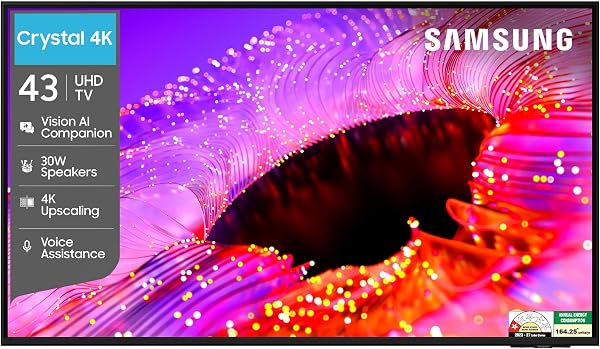
Xiaomi 80 cm (32 inches) A Pro QLED Series Smart TV L32MBAPIN: Price, Review & Buying Guide for India

About Rahul Verma: Rahul is a tech enthusiast and gadget reviewer with over 8 years of experience testing consumer electronics. He specializes in audio gear, smartwatches, and mobile accessories. When he is not testing products, you will find him exploring the latest in AI and smart home technology.

A 32-inch television is the workhorse of the Indian living room. It's the TV that goes into the bedroom, the one that ends up in the kitchen or the rental flat, the first screen a young family buys before upgrading to something bigger for the hall. But here's the problem: for years, 32-inch TVs have been treated as the bargain bin of the market — cheap panels, slow processors, and software that starts stuttering within eighteen months.
The Xiaomi 80 cm 32 inches A Pro QLED Series Smart TV L32MBAPIN is Xiaomi's attempt to break that pattern. It puts a Quantum Dot (QLED) panel, a proper smart TV platform, and 20W speakers into the most popular screen size in India — and does it at a price that sits just a notch above entry-level LEDs. Whether that notch is worth paying is exactly what this guide answers.
Over the next few sections you'll get the full specification breakdown in plain language, an honest look at where this TV punches above its weight (and where it doesn't), a live price picture across Amazon, Flipkart and offline stores, a comparison against the strongest 32-inch rivals at three different budgets, and a clear answer on when to buy so you don't overpay by ₹2,000.
Understanding the Xiaomi 80 cm 32 inches A Pro QLED Series Smart TV L32MBAPIN
Decoding the name
The model name is a mouthful, so let's break it down. "80 cm" is the metric diagonal measurement, which equals 32 inches — the same screen, described twice, because Indian listings legally show both. "A Pro" is Xiaomi's mid-tier smart TV line, sitting above the plain "A" series and below the premium "X Pro" and "Master" ranges. "QLED" refers to the backlight and colour layer, not a separate display technology — it's still an LCD panel, but with a Quantum Dot film that widens the colour gamut. And "L32MBAPIN" is the SKU, where the "IN" confirms it's the India-specific variant with local warranty and PatchWall integration.
What QLED actually means at 32 inches
In a QLED TV, a layer of quantum dot nanocrystals sits between the LED backlight and the LCD layer. These crystals convert blue backlight into very pure red and green, which means the panel can display more saturated, more accurate colours than a standard LED-LCD. On a 32-inch screen the benefit is subtler than on a 55-inch 4K set — you won't notice it in a brightly lit room showing news channels. But put on a nature documentary, a cricket match on a green outfield, or an animated film, and the difference in colour pop and skin tones is genuinely visible side by side with a budget LED. That is the single biggest reason to consider this model over a ₹11,000 32-inch LED.
Key specifications at a glance
Here's how the Xiaomi 80 cm 32 inches A Pro QLED Series Smart TV L32MBAPIN is specced, based on Xiaomi's India listing. Always cross-check the live product page before ordering, since Xiaomi has shipped more than one hardware revision on this chassis.
| Specification | Details |
|---|---|
| Screen size | 80 cm / 32 inches (diagonal) |
| Resolution | HD Ready — 1366 × 768 pixels |
| Panel type | QLED (Quantum Dot enhanced LED-LCD) |
| Refresh rate | 60 Hz |
| Audio | 20 W (2 × 10 W) box speakers, Dolby Audio |
| Smart platform | Google TV with PatchWall; Google Play Store, Netflix, Prime Video, YouTube, Disney+ Hotstar, JioCinema, SonyLIV, Zee5 |
| Processor / memory | Quad-core Cortex-A55, Mali-G31 GPU; 1.5 GB RAM, 8 GB storage |
| Voice assistant | Google Assistant via remote; Chromecast built-in |
| Connectivity | 2 × HDMI (1 with ARC), 2 × USB, Ethernet, Wi-Fi (2.4 GHz), Bluetooth, 3.5 mm / optical audio out |
| Wall mount | 200 × 200 mm VESA |
| Warranty | 1 year comprehensive on TV, 1 year on the panel (standard Xiaomi India terms) |
Who Should Actually Buy a 32-Inch QLED Smart TV in India?
Before you get excited about QLED, be honest about the resolution. 1366 × 768 on a 32-inch screen works out to roughly 49 pixels per inch. That is perfectly sharp from a 4–6 foot viewing distance, which is how most Indians watch a bedroom TV. But if you're sitting 8 feet away in a large hall, or you plan to use this as your primary movie screen, a Full HD or 4K model at 40–43 inches will serve you far better — and those start around ₹20,000.
This TV makes the most sense for:
- Bedroom and kitchen TVs where the viewing distance is short and the room is small.
- Rental flats and PG accommodation — light enough to move, cheap enough to not stress over.
- Second TV for the family so cricket and cartoons stop fighting for the main screen.
- Parents' rooms, where a simple remote, loud speakers and a familiar OTT app layout matter more than 4K.
- Small shops, clinics and salons that want a smart display for background content.
It makes less sense for a first-time home theatre buyer, a serious gamer, or anyone planning to watch 4K content from a PS5 or a high-end streaming plan.
Key Factors to Consider Before Buying a 32-Inch Smart TV
1. Resolution is the real decision, not the panel type
Most buyers walk into a store asking "LED or QLED?" The better question is "HD Ready or Full HD?" A well-tuned Full HD LED will look more detailed than an HD Ready QLED because there are simply more pixels. At 32 inches, though, Full HD models are increasingly rare in India — most brands have moved 32-inch buyers to HD Ready and pushed Full HD to 40 inches and above. If you specifically want Full HD at 32 inches, your shortlist shrinks to a handful of models. If you're happy with HD Ready, QLED gives you the better colour experience at that resolution.
2. The smart platform and app longevity
A TV's panel lasts a decade; its software doesn't. Google TV on the Xiaomi 80 cm 32 inches A Pro QLED Series Smart TV L32MBAPIN is a big advantage over budget rivals running generic Android forks or older Tizen builds, because Google keeps pushing security patches and app updates to certified devices. It also means Chromecast built-in, Google Assistant voice search in English and Hindi, and access to the full Play Store rather than a curated handful of apps.
3. Sound output — the most underrated spec
20W is generous for a 32-inch TV. Most rivals at ₹11,000–₹13,000 ship 16W or even 10W speakers that sound thin on dialogue. If you don't plan to add a soundbar, the speaker rating should be near the top of your checklist. This one clears the bar for a bedroom.
4. Connectivity you'll actually use
Two HDMI ports is the practical minimum — one for a set-top box, one for a streaming stick or console. Check specifically for HDMI ARC, because that's how you'll connect a soundbar later with a single cable. Also look at whether Wi-Fi is dual-band; many budget TVs are 2.4 GHz only, which matters if your router is in another room.
5. The hidden costs
Budget for the wall mount and installation (often ₹500–₹1,000 unless bundled free), a voltage stabiliser if your area has unstable supply (₹700–₹1,200), and possibly an extended warranty. A ₹13,500 TV can quietly become a ₹15,500 purchase.
How the L32MBAPIN Performs in the Real World
Picture quality
The QLED layer does its job. Colours are noticeably richer than on a standard LED — reds on a cricket jersey, greens on a football pitch, and the warm tones in Indian film grading all look more vibrant without tipping into cartoonish oversaturation. Xiaomi's picture engine does a reasonable job upscaling 720p content from JioCinema and Prime Video, which is what most of us actually watch. Full HD content downscales cleanly too. What you won't get is the deep black of a VA panel with local dimming — dark scenes in a dimly lit room show some grey wash. For a bedroom TV, that's an acceptable trade-off at this price.
One practical tip: switch the picture mode from the default "Vivid" to "Standard" or "Movie" in the first week. Vivid mode overcooks colours and brightness for showroom appeal, and it's the single most common reason people complain about eye strain after long viewing sessions.
Audio
The 20W box speakers are loud enough to fill a 12 × 12 foot bedroom at 40–50% volume, with clear dialogue — important if older family members watch serials. Bass is limited, as you'd expect, and the Dolby Audio processing helps with stereo separation but can't manufacture low-end. If you watch a lot of films, a ₹4,000–₹6,000 soundbar over HDMI ARC transforms the experience.
Software and everyday speed
Affiliate Disclosure:
This post contains affiliate links. We may earn a commission when you purchase through our links, at no extra cost to you.
Share this: