How to Choose Soundbars in India: A Practical, No-Nonsense Buying Guide

About Rahul Verma: Rahul is a tech enthusiast and gadget reviewer with over 8 years of experience testing consumer electronics. He specializes in audio gear, smartwatches, and mobile accessories. When he is not testing products, you will find him exploring the latest in AI and smart home technology.

You've just unboxed a 55-inch 4K TV. The picture is stunning — deep blacks, punchy colours, HDR that actually pops. Then you start a Netflix movie, and the disappointment hits: dialogue sounds thin and distant, background music overwhelms the voices, and the big explosion in the climax sounds like someone crushing a paper cup. You fiddle with the TV's sound settings, try the "Movie" preset, push the volume to 80% — and nothing really improves.
This is not a fault in your TV. It's physics. Modern televisions are built to be slim, and slim cabinets have no room for decent drivers, no bass enclosure, and barely any amplification headroom. A soundbar fixes that in one purchase, without the wiring nightmare of a full 5.1 home theatre. But the Indian soundbar market is now genuinely confusing — hundreds of models, wild wattage claims, "Atmos" badges on ₹8,000 bars, and brands you've never heard of selling 400W systems for the price of a dinner out.
This guide breaks down how to choose soundbars in India the way an informed friend would explain it: what actually matters, what's marketing noise, how much to spend for your room, and the India-specific practicalities — voltage fluctuations, ceiling fans, service networks, festive sales — that most generic buying guides completely ignore.
Understanding Soundbars: What You're Actually Buying
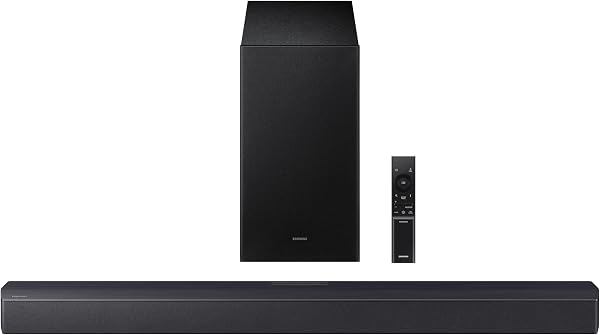
A soundbar is a single elongated speaker enclosure that packs multiple drivers, a digital signal processor (DSP), and an amplifier into one chassis. Instead of five separate speakers and a receiver, you get one bar you place under (or in front of) your TV, usually connected by a single HDMI or optical cable. Most models ship with a subwoofer for bass, and increasingly with wireless rear speakers for true surround.
How a soundbar actually produces better sound
Three things make the difference. First, driver size and cabinet volume: a soundbar can house 2-inch to 3-inch drivers and, in wider models, dedicated tweeters, whereas a slim TV squeezes in 1-inch drivers facing downward or sideways. Second, dedicated amplification: a soundbar has its own power supply and can push 60–300W RMS without straining, while TV audio chips are limited to a few watts. Third, digital processing: the DSP handles bass management, dialogue enhancement, virtual surround, and dynamic range control so quiet dialogue and loud explosions can coexist without you constantly riding the volume button.
Soundbars come in two broad architectures. Active soundbars have built-in amplification and simply need power plus an audio input — these are 95% of what's sold in India. Passive soundbars are just speaker enclosures that need an AV receiver to drive them; they're a niche, enthusiast option and usually not worth the complexity unless you already own a receiver.
Why TV sound fails in Indian living rooms specifically
Indian homes add their own challenges. Marble and tile flooring reflect sound sharply, large living rooms with high ceilings and open floor plans make it hard for small drivers to fill the space, and most of us sit 8–12 feet away — well beyond the sweet spot of a 10W TV speaker. Add ceiling fans, thick curtains, and sometimes a TV mounted inside a closed wooden unit, and the acoustic environment works against you. A soundbar with a proper subwoofer and at least 100W RMS is the minimum sensible upgrade for a typical Indian living room.
Why "How to Choose Soundbars in India" Is Different From Global Advice
Generic international buying guides assume you're streaming in Dolby Atmos from a console, sitting in a carpeted room, with stable power and easy returns. In India, several variables change the calculation:
- Content sources are OTT-first. Netflix, Prime Video, Disney+ Hotstar and JioCinema dominate. Their audio is mostly Dolby Digital Plus, with Atmos on premium tiers and select titles. Very few Indian households own Blu-ray players, so DTS:X support matters far less than Dolby support.
- Bass expectation is high. Bollywood and regional music are bass-forward, and most buyers want a system that thumps. A bar with a weak built-in "sub" will disappoint quickly.
- Power supply is imperfect. Voltage spikes and outages damage electronics; a surge protector or small UPS is a genuine part of the setup, not paranoia.
- Ceiling fans interfere with up-firing Atmos. Soundbars using ceiling-bounce drivers need a flat, unobstructed ceiling. A running ceiling fan directly above the listening position blurs those height effects.
- Service networks vary enormously. A great-sounding bar from a brand with three service centres in India is a liability. Sony, Samsung, LG, JBL (Harman), Bose and Yamaha have wide networks; smaller brands often route repairs through third parties with long turnaround times.
Key Factors to Consider Before Buying a Soundbar
1. Match the soundbar to your room size
This is the single most underrated factor. A 500W flagship system in a 100 sq ft bedroom is unpleasant — you'll never use half its output, and heavy bass in a small reflective room creates boomy, fatiguing sound. Conversely, a 40W bar in a 400 sq ft living room will run out of steam during action scenes.
| Room | Recommended configuration | Power (RMS) | Subwoofer |
|---|---|---|---|
| Bedroom, up to 120 sq ft | 2.0 or 2.1 | 40–100W | Built-in or small external |
| Living room, 150–250 sq ft | 2.1 or 3.1 | 100–200W | 6.5-inch external sub |
| Large living room, 250–350 sq ft | 5.1 or 5.1.2 with rears | 200–400W | 8-inch external sub |
| Dedicated media room, 350+ sq ft | 5.1.2 or 7.1.2 with rears | 400W+ | 10-inch sub or separates |
2. Understand channel configuration and what "Atmos" really means
The numbers tell you how the sound is distributed, not just how loud it gets:
- 2.0 — two channels (left and right) in one bar. The bare minimum; fine for a bedroom.
- 2.1 — two channels plus an external subwoofer. The sweet spot for most Indian homes.
- 3.1 — adds a dedicated centre channel, which noticeably improves dialogue clarity — a real benefit for OTT content mixed quietly.
- 5.1 — left, centre, right and two surround channels, usually via wireless rear speakers. Real envelopment for movies.
- 5.1.2 / 7.1.2 — the ".2" means two height channels, either up-firing drivers that bounce sound off your ceiling or, rarely, actual ceiling speakers. This is "real" Dolby Atmos.
Here's the catch that trips up most buyers: many budget and mid-range soundbars advertise Dolby Atmos but only have front-firing drivers and use virtualisation to simulate height. That's not dishonest — it can still sound wider and more immersive than plain stereo — but it is not the same as a bar with genuine up-firing drivers. If overhead effects matter to you, look explicitly for specifications listing "up-firing drivers" or "height channels".
3. Ignore "peak power" — look at RMS wattage
Indian e-commerce listings love big numbers. A ₹9,000 bar claiming "500W" is almost certainly quoting peak or PMPO output measured in microseconds with massive distortion. Look for RMS or "rated output" figures. Rough benchmarks: 40–60W RMS is adequate for a bedroom, 100–150W for a normal living room, and 200W+ for a large room or a bass-heavy preference.
Wattage alone doesn't determine quality, though. Driver size, cabinet tuning and DSP matter just as much — a well-designed 120W bar from a reputable brand will comfortably outperform a no-name 300W bar. Also check whether the quoted power is total system power or per-channel; some brands count the subwoofer's power into the headline figure to inflate it.
4. Connectivity: HDMI eARC is the one feature you shouldn't skip
Soundbar connectivity is where cheap models cut corners, and it directly affects daily usability:
- HDMI ARC (Audio Return Channel) — a single cable carries audio from TV to soundbar and lets your TV remote control the soundbar volume. Treat this as a must-have.
- HDMI eARC (enhanced ARC) — higher bandwidth, required for lossless Dolby Atmos (TrueHD) and DTS:X, and for Atmos passed through from a TV's own apps in some setups. If you're spending above ₹25,000, insist on eARC.
- Optical (TOSLINK) — the reliable fallback for older TVs. Supports Dolby Digital 5.1 and DTS, but not Atmos. Fine for a bedroom bar.
- Bluetooth 5.x — essential in India for streaming music from phones and for casual listening. Check for low-latency modes if you plan to game over Bluetooth (better still, don't).
- Wi-Fi — enables AirPlay 2, Chromecast, Spotify Connect and firmware updates. Genuinely useful above the ₹25,000 mark, since firmware fixes often improve buggy HDMI handshaking.
Share this: