Aavante Bar 610 Review (2025): Is This Budget Soundbar Worth Your ₹3,000?

About Rahul Verma: Rahul is a tech enthusiast and gadget reviewer with over 8 years of experience testing consumer electronics. He specializes in audio gear, smartwatches, and mobile accessories. When he is not testing products, you will find him exploring the latest in AI and smart home technology.

If you bought a 43- or 55-inch TV in the last couple of years, you already know the problem. The picture is gorgeous, but the sound is thin, boxy and often hard to follow at low volumes — especially when the ceiling fan is on and someone in the kitchen is running the mixer. Even televisions costing ₹55,000–₹70,000 ship with 10W or 20W down-firing speakers that simply cannot fill an Indian living room.
That's the exact gap the aavante bar 610 is built to fill. It's a compact, wall-mountable soundbar from boAt's Aavante range that sells in the sub-₹4,000 bracket — the price point where most Indian households start seriously considering a soundbar for the first time. But does a 2.0-channel bar at this price actually deliver a meaningful upgrade, or is it just a louder version of your TV's speakers?
In this guide, you'll find a full breakdown of the aavante bar 610 — what it offers, where it falls short, how it compares with rivals at ₹3,000, ₹6,000 and ₹10,000, current price expectations, the best time to buy in India, and practical setup tips for Indian homes. By the end, you'll know exactly whether this is the right soundbar for your room, or whether you should stretch your budget.
What Is the Aavante Bar 610?
The aavante bar 610 is a 2.0-channel soundbar from boAt's Aavante soundbar family, which also includes models like the Aavante Bar 1160, Bar 1500, Bar 2050 and the higher-end Dolby-equipped variants. The "Bar" naming is boAt's soundbar line; the numbers roughly track the model tier rather than the wattage.
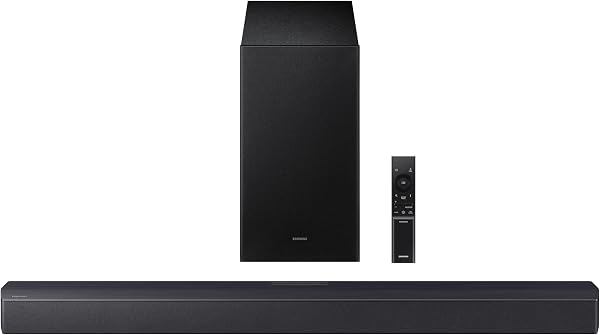
In practical terms, the aavante bar 610 is a single-piece soundbar that sits under your TV or mounts on the wall, adds a proper set of full-range drivers and a wider soundstage, and connects to your TV through HDMI ARC, optical, AUX, USB or Bluetooth. There is no separate subwoofer in the box — this is a 2.0 configuration, not a 2.1 system. That single fact is the most important thing to understand before buying, because it defines both the value and the limitations of this product.
boAt positions the Aavante range as affordable, lifestyle-friendly audio for Indian homes, and the aavante bar 610 sits near the entry point of that range. It's aimed at buyers who want better dialogue clarity for daily soap and news viewing, a bit more punch for cricket and OTT movies, and Bluetooth playback for music from a phone — without spending ₹10,000–₹20,000 on a full home theatre setup.
Aavante Bar 610 Specifications at a Glance
| Feature | Details |
|---|---|
| Configuration | 2.0 channel (no separate subwoofer) |
| Output | Around 60W RMS (boAt's listed figure — verify on the live product page) |
| Connectivity | Bluetooth, HDMI (ARC), Optical, AUX (3.5mm), USB |
| Controls | Top-panel buttons + bundled IR remote |
| Mounting | Tabletop or wall-mount (brackets included) |
| Typical street price | ₹2,999 – ₹3,999 (MRP is listed much higher) |
| Warranty | 1 year, standard boAt India warranty |
Note: boAt revises listings and firmware from time to time. Always confirm the wattage, port list and box contents on the Amazon or Flipkart product page on the day you buy.
Key Factors to Check Before Buying Any Budget Soundbar in India
Before you commit to the aavante bar 610 — or any soundbar under ₹5,000 — run through these five checks. They matter far more than flashy spec sheets.
1. What ports does your TV actually have?
This is the single most common mistake Indian buyers make. Older or entry-level TVs (especially 32- and 40-inch models) often have only optical-out and a 3.5mm headphone jack, with no HDMI ARC. Mid-range and premium TVs almost always have HDMI ARC or eARC. If your TV has HDMI ARC, you get one-cable connection plus the ability to control soundbar volume with your TV remote — a genuinely better everyday experience. If it's optical only, you'll be reaching for the soundbar remote more often. Check your TV's rear panel before ordering.
2. Room size and power output
For a typical Indian bedroom or a 150–200 sq ft living room, 40W–60W is more than adequate. The aavante bar 610 is rated in that ballpark, which means it will comfortably fill a normal flat. If you have a large, open-plan 300+ sq ft hall with high ceilings, you'll want 100W+ and ideally a subwoofer — a 60W 2.0 bar will run out of headroom during action sequences.
3. Do you actually need a subwoofer?
A 2.0 bar like the aavante bar 610 improves dialogue clarity, stereo separation and overall loudness dramatically. What it does not do is deliver deep, chest-thumping bass. If your viewing is 70% news, serials, cricket and YouTube, a 2.0 bar is the smarter buy — it's cheaper, cleaner in small rooms, and needs no extra floor space or power socket. If you watch a lot of movies and listen to EDM/Bollywood bass-heavy tracks, a 2.1 system (soundbar + wired or wireless subwoofer) is worth the extra ₹2,000–₹4,000.
4. Service network and warranty process
Soundbars rarely fail, but when they do, you want easy service. boAt has a reasonably wide service network in India with doorstep pickup in most tier-1 and tier-2 cities. Before buying, open the boAt support page, enter your PIN code and check whether pickup-and-drop service is available in your area. If you live in a smaller town, this five-minute check can save you weeks of frustration.
5. Placement and physical space
Measure the width of your TV's tabletop stand and the depth of your TV unit. A soundbar that's wider than the TV looks awkward, and one that's too deep may not sit on a shallow TV cabinet. Also check whether the wall behind your TV is load-bearing enough for drilling — many modern flats have gypsum partition walls that need proper anchors.
Aavante Bar 610: Detailed Breakdown
Sound Quality in Real Indian Rooms
The aavante bar 610 uses a pair of full-range drivers tuned for a bright, forward sound signature. That tuning is deliberate and works well for the most common Indian use case: improving dialogue intelligibility on news channels, serials and YouTube at moderate volumes. Voices come through noticeably clearer than on a typical 20W TV speaker, and the stereo width makes a real difference when watching cricket or movies.
Where it shows its price is in the low end. Without a subwoofer, bass is present but shallow — you'll hear a kick drum, but you won't feel it. At around 70–75% volume the bar holds together well; push past 85% during a loud action scene and you'll start hearing compression and a slightly harsh top end. That's normal for this price bracket and not a dealbreaker, but it's worth knowing if you like watching movies at reference-level loudness.
Connectivity and Ports
For the money, the aavante bar 610 covers the essentials well. HDMI ARC gives you a clean single-cable setup with CEC-based volume control on compatible TVs. Optical handles older TVs and set-top boxes. AUX is the universal fallback. USB lets you play MP3s from a pen drive — useful if you have a library of old Hindi film songs. Bluetooth is the everyday hero here: it's how most people will stream music from a phone, and it's reliable at normal room distances.
There's no Wi-Fi, no app-based control, no AirPlay or Chromecast built in, and no second HDMI input. If you have a gaming console and a set-top box, you'll need to route both through the TV and let HDMI ARC carry the audio back — which works fine, but means you rely on the TV's own switching.
Design, Build and Mounting
The bar has a clean, understated look — matte black with a fabric or metal mesh grille and small LED indicators for input and volume. It's light enough that wall mounting is a one-person job, and boAt includes the brackets and screws in the box. Build quality is plastic, as expected at this price, but it doesn't feel flimsy. Rubber feet on the base keep it stable on a TV unit and reduce rattling at higher volumes.
Remote, Controls and Everyday Use
You get a compact IR remote covering power, volume, input selection, track skip and mute. It's not backlit and the buttons are small, which is typical of the category. Basic top-panel buttons let you power on and change volume if the remote goes missing — a small but genuinely useful touch.
Where the Aavante Bar 610 Falls Short
Honest limitations you should know before buying:
- No subwoofer output — you cannot add a powered subwoofer later. This is the biggest long-term constraint.
- No Dolby/DTS decoding — it downmixes surround content to stereo, which is fine, but don't expect an Atmos-style experience.
- Limited EQ control — there are preset sound modes, but no fine-grained adjustment or companion app.
- No night mode or dialogue-boost toggle — features you'll find on slightly more expensive bars.
- No HDMI passthrough — single HDMI port only, ARC use only.
Aavante Bar 610 vs Key Rivals: Comparison Table
| Model | Config / Output | Subwoofer | Key Connectivity | Typical Street Price | Best For |
|---|---|---|---|---|---|
| Aavante Bar 610 | 2.0 / ~60W | No | BT, HDMI ARC, Optical, AUX, USB | ₹2,999 – ₹3,999 | Bedrooms, small living rooms, dialogue clarity |
| boAt Aavante Bar 1160 | 2.1 / ~100W | Wired | BT, HDMI ARC, Optical, AUX, USB | ₹4,999 – ₹6,999 | Movie watching with real bass |
| Zebronics Jukebar (9900 / 8000 series) | 2.0–2.1 / 40–80W |