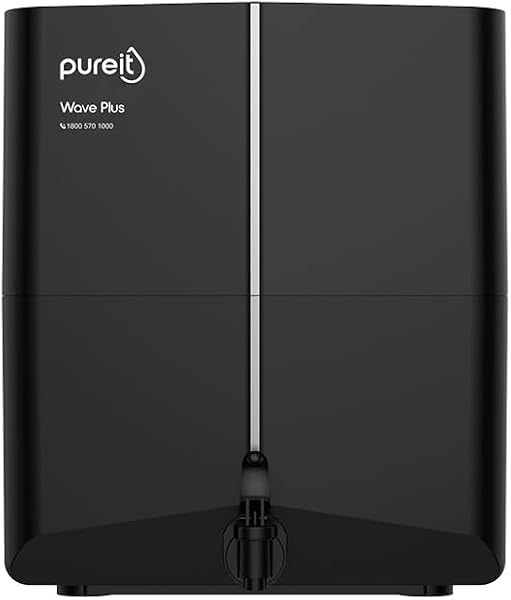
Addyz 8L RO UV UF Water Purifier with 7-Stage Filtration and TDS Control: Full Review, Price Guide and Buying Advice (2025)

About Rahul Verma: Rahul is a tech enthusiast and gadget reviewer with over 8 years of experience testing consumer electronics. He specializes in audio gear, smartwatches, and mobile accessories. When he is not testing products, you will find him exploring the latest in AI and smart home technology.

If you have been staring at a listing that reads addyz 8l ro uv uf water purifier with 7stage filtration and tds contro and wondering whether it is a genuine budget steal or just another generic appliance that will demand a new filter every three months, you are not alone. Budget water purifiers in the ₹4,000–₹7,000 band are the fastest-moving segment on Indian marketplaces, and the Addyz 8L model with 7-stage filtration sits right in the middle of that scrum — promising RO, UV, UF and TDS control in one cabinet at a price that big-brand purifiers simply cannot match.
This guide breaks the product down properly: what the seven stages actually do, why an 8-litre storage tank matters for an Indian kitchen, how TDS control changes the taste of your water, and what you give up when you buy a lesser-known brand instead of an Aquaguard, Kent or Pureit. We also line up six alternatives across price points, tell you exactly when to buy to save the most, and flag the three listing details you must verify before you hit "Place Order" on the addyz 8l ro uv uf water purifier with 7stage filtration and tds contro.
Understanding the Addyz 8L RO UV UF Water Purifier with 7-Stage Filtration
Addyz is a marketplace-first brand — you will find its purifiers listed on Amazon India and Flipkart rather than in a neighbourhood appliance showroom. That is not automatically a red flag, but it does mean your entire experience (installation, service, warranty claims) depends on the seller and the brand's service partner network. The 8L RO UV UF model is a wall-mounted, tank-storage purifier aimed squarely at middle-income households in Tier-1 and Tier-2 cities that are currently surviving on a rented RO or an ageing 10-year-old unit.
What the 7-stage filtration actually means
Seven stages sounds impressive on a spec sheet, but the sequence matters far more than the number. On a unit of this class, the typical stack runs like this:
- Sediment / pre-filter — traps sand, rust and suspended particles before they reach the expensive membranes.
- Pre-carbon filter — removes chlorine, odour and colour so the water does not taste metallic.
- Spun / PP filter — a finer second layer of physical filtration, usually 5 micron.
- RO membrane — the workhorse. Strips dissolved salts, heavy metals, fluoride, arsenic and most TDS down to 10–30 ppm.
- UF membrane — a hollow-fibre barrier that catches bacteria and cysts the RO might let through after a pressure drop.
- UV lamp — inactivates bacteria and viruses in the storage tank, which is why UV is essential on tank models (water sitting in a tank can re-contaminate).
- TDS controller / mineral cartridge — blends a controlled amount of the rejected water's minerals back in, so the final output is not tasteless.
The important thing is that the addyz 8l ro uv uf water purifier with 7stage filtration and tds contro gives you both membrane purification (RO+UF) and post-tank sterilisation (UV), plus a mineral adjuster. Many ₹3,500 purifiers skip the UV lamp or the UF membrane entirely. This one does not, and that is its single strongest argument.
Why an 8-litre tank is the right size
Storage capacity is the number Indian buyers underestimate most. An RO purifier produces water at roughly 10–15 litres per hour — far slower than you can drink it. The tank is your buffer. Eight litres comfortably covers a family of four for a morning rush: two litres of drinking water, a litre for the pressure cooker, three for cooking, and still leaves a reserve for guests. If you have power cuts (and most of us do), the tank is the reason you are not drinking tap water at 7 am. Anything smaller than 6L feels tight for a family of four; anything above 10L becomes a bulky cabinet that eats your kitchen wall.
What TDS control does — and who actually needs it
TDS (Total Dissolved Solids) is the measure of everything dissolved in your water: calcium, magnesium, sodium, chlorides, sulphates. RO water can drop to 15–25 ppm, which tastes flat and, over long use, is not ideal nutritionally. A TDS controller — sometimes labelled MTDS or "mineral guard" — lets you dial the mineral content back up to a pleasant 60–120 ppm.
Here is the honest caveat: TDS control is genuinely useful if your input water is slightly over the limit (say 500–1,000 ppm) and you dislike the bland taste of pure RO water. If your supply is already at 150–250 ppm — typical of Mumbai, Bengaluru municipal water — you barely need it, and if your input is above 1,500–2,000 ppm, the TDS controller should stay in the "off" or minimum position because you want maximum rejection, not maximum retention. Check your input TDS with a ₹200 meter pen before buying. It is the cheapest thing you will ever do to improve your purchase decision.
Key Factors to Consider Before Buying This Purifier
1. Your input water source
RO makes the most sense for borewell, tanker and hard water above 500 ppm. If you are on clean municipal supply below 300 ppm, a UF+UV purifier without RO is cheaper to run and wastes no water. The addyz 8l ro uv uf water purifier with 7stage filtration and tds contro is built for the harder end of that spectrum — it is a good fit for Bengaluru tanker water, Noida borewell water, or Chennai apartment supply.
2. Recurring filter cost, not just the sticker price
Every RO purifier costs ₹2,000–₹4,000 a year in consumables. The sediment and carbon filters need replacing every 6–9 months; the RO membrane lasts 18–24 months; the UV lamp about a year. Before buying any budget brand, ask the seller for the price of a full filter kit. If a seller cannot tell you what a replacement RO membrane costs, that is your answer on after-sales support.
3. Water wastage and recovery rate
Standard RO units reject 40–60% of input water. Look for a "recovery rate" or "purification rate" figure on the listing — anything claiming 50% or better recovery is worth a second look, and some units now recycle reject water back into the overhead tank. This matters in water-scarce societies and in apartments where the maintenance bill is shared.
4. Service network and warranty terms
Big brands win here, and it is the honest trade-off. A 1-year comprehensive warranty from an unknown brand is worth less than a 1-year warranty from a company with a service van in your pin code. Check whether the brand lists a toll-free number and a service partner in your city before buying, and always buy from a seller offering "brand warranty" rather than "seller warranty".
5. Installation included or extra
Most marketplace purifiers include free installation, but the tap fitting, extra tubing beyond three metres, and wall drilling charges can add ₹300–₹700. Confirm this in writing via the seller chat.
Addyz 8L RO UV UF — Detailed Breakdown and Verdict
Street price for this unit typically sits in the ₹4,000–₹6,500 range on Amazon India and Flipkart, swinging with seller, colour variant and festive offers. At the lower end of that band it is genuinely competitive; at the upper end you are within a few hundred rupees of a Kent or Livpure model with a service network behind it.
What works in its favour: the full RO+UV+UF+TDS combination (rare under ₹5,000), an 8L tank that suits a family of four, a claimed purification capacity of around 12–15 L/hr, wall-mount installation, and low power draw of roughly 40–60W. For a rental flat, a second home, or a first purifier on a tight budget, the addyz 8l ro uv uf water purifier with 7stage filtration and tds contro makes a defensible case.
Where it falls short: little to no public service network data, no verified customer review base to lean on, generic filter cartridges that may be hard to source locally, and a spec sheet that does not always disclose membrane brand, UV lamp wattage or recovery rate. It also lacks the smart features (filter-life indicators, app alerts, copper-impregnated tanks) that are now standard from ₹9,000 upward.
Verdict: buy it if your budget is genuinely capped under ₹6,500, you are comfortable ordering filters online, and you can live without a same-day service visit. Skip it if you are buying for ageing parents, if your water TDS is above 2,000 ppm, or if you want a purifier you will not have to think about for the next seven years.
Alternatives at Every Price Point
Under ₹7,000 — Livpure Pep Star / Livpure Bolt RO+UV+UF+TDS
Around ₹6,000–₹7,000, Livpure offers the same RO+UV+UF+TDS formula with a much wider service footprint (they claim coverage across 500+ cities) and a 7L–8L tank. Filter kits are easy to find on Amazon. If the Addyz listing is priced above ₹5,500, this is the safer buy.
₹6,000–₹8,000 — Kent Grace / Kent Aura
Kent's entry models bring the brand's strong service reputation and a genuinely well-documented filtration stack, though you often get RO+UF+TDS without UV at the bottom of the range — check the exact variant carefully. Kent's UV models start closer to ₹8,500.
₹9,000–₹12,000 — Aquaguard Aura / Aquaguard Nova
This is where the market genuinely improves. Aquaguard's Aura with RO+UV+MTDS and a 7L tank sells around ₹9,000–₹11,000 in sale periods, brings a nationwide service network, and includes mineral retention that is properly engineered rather than tacked on. If you can stretch the budget, this is the sweet spot for a family that wants to forget about the purifier.
₹12,000–₹15,000 — Pureit Copper+ / Havells Gracia
Copper-impregnated tanks (claimed antibacterial action) plus better build quality and app-based filter alerts. Pureit's Copper+ sits around ₹12,000–₹14,000; Havells Gracia is similar. Both offer genuinely better plastic quality and leak resistance than anything under ₹7,000.
₹15,000+ — Blue Star Aristo / A. O. Smith Z8
For hard water above 1,500 ppm, large families, or anyone who wants a low-maintenance unit, the A. O. Smith Z8 with its SCMT technology and Blue Star's Aristo range are the benchmarks. Expect ₹15,000–₹19,000 and dramatically better build, service and filter life.
Comparison Summary
| Model | Filtration | Storage | Indicative Price | Best For |
|---|---|---|---|---|
| Addyz 8L RO UV UF (7-stage, TDS control) | RO + UV + UF + TDS controller | 8 L | ₹4,000 – ₹6,500 | Tight budgets, rentals, second homes |
| Livpure Pep Star / Bolt | RO + UV + UF + TDS controller | 7–8 L | ₹6,000 – ₹7,500 | Better service network at a small premium |
| Kent Grace / Aura | RO + UF + TDS (UV on select variants) | 7–8 L | ₹6,000 – ₹8,500 | Brand trust and easy local servicing |
| Aquaguard Aura | RO + UV + MTDS | 7 L | ₹9,000 – ₹11,000 | Families wanting zero-hassle ownership |
| Pureit Copper+ / Havells Gracia | RO + UV + copper tank | 7–8 L | ₹12,000 – ₹15,000 | Build quality, app alerts, long-term use |
| Blue Star Aristo / A. O. Smith Z8 | RO + UV + UF + SCMT / mineral | 8–10 L | ₹15,000 – ₹19,000 | Hard water, large families, premium service |
Prices are indicative street prices as of early 2025 and move sharply during Amazon Prime Day, Flipkart Big Billion Days and the Amazon Great Indian Festival. Always confirm the live price on the listing.
Pros and Cons of the Addyz 8L RO UV UF Purifier
Pros
- Complete filtration stack at a budget price — RO, UV, UF and TDS control in one unit, which many rivals under ₹5,000 omit.
- 8L storage — the right capacity for a family of four, with enough reserve for cooking and power cuts.
- Low running cost on paper — 40–60W draw means roughly ₹150–₹250 of electricity a year at ₹8/unit.
- Wall-mount design — saves counter space in compact Indian kitchens.
- Simple controls — no app pairing, no firmware updates; anyone in the house can operate it.
Cons
- Thin service network — the biggest genuine risk with marketplace-only brands.
- Filter availability — you will likely need to order cartridges online rather than buy from the local hardware shop.
- Limited spec transparency — membrane brand, UV lamp wattage and recovery rate are often not disclosed.
- No filter-life indicator — you have to track replacement dates yourself.
- Resale and brand recall — near zero, if that matters to you.
Buying Guide: Where and When to Buy for the Best Price
The addyz 8l ro uv uf water purifier with 7stage filtration and tds contro is sold almost exclusively online, so your practical options are Amazon India and Flipkart. A few things worth doing before you check out:
- Compare both platforms on the same day. Budget appliances routinely differ by ₹400–₹900 between Amazon and Flipkart depending on which seller holds the buy box.
- Buy during a sale window. The biggest discounts land during Flipkart Big Billion Days and Amazon Great Indian Festival (typically September–October), Amazon Prime Day (July), and Republic Day sales (January). Bank offers — HDFC, ICICI, SBI card instant discounts — add another 10% off and are often the largest single saving.
- Check the seller rating, not just the product rating. A 4.2-star product sold by a 78%-rated seller is a worse bet than a 4.0-star product from a 95%-rated seller.
- Confirm "brand warranty" in the listing. If it says seller warranty, walk away — you will have no recourse beyond the return window.
- Buy the filter kit at the same time. Bundling a spare sediment+carbon set with the purifier often saves ₹300–₹500 versus buying separately later, and it means you are not stuck when the first filter clogs.
- Use the 10-day return window properly. Install the unit within a week, run a TDS test on the output, and check for tank leaks and unusual pump noise before the window closes.
Real-World Usage Tips for Indian Households
Test your water before you install
Buy a TDS meter pen (₹150–₹300 on Amazon) and test your kitchen tap. Under 300 ppm: you are overpaying for RO. 300–1,000 ppm: this purifier is well suited. Above 1,500 ppm: expect faster membrane clogging and shorter filter life, and consider a pre-filter sediment cartridge on the inlet line.
Run the TDS controller conservatively in summer
When municipal supply quality drops during monsoon — turbidity, chlorine spikes — set the TDS controller to minimum for a few weeks and rely on the RO's full rejection. You can restore the mineral blending once the supply settles.
Drain the tank if you travel
Stagnant water in an 8L tank for two weeks is a bacterial
Affiliate Disclosure:
This post contains affiliate links. We may earn a commission when you purchase through our links, at no extra cost to you.
Share this: