Aqua D Pure Alkaline RO Water Purifier 12L RO+UV+UF+TDS Control With Good Storage — Honest Buying Guide & Price Analysis

About Rahul Verma: Rahul is a tech enthusiast and gadget reviewer with over 8 years of experience testing consumer electronics. He specializes in audio gear, smartwatches, and mobile accessories. When he is not testing products, you will find him exploring the latest in AI and smart home technology.

If you have been searching for the aqua d pure alkaline ro water purifier 12l rouvuftds control with good storage capacity, you are probably in one of two situations: either you have shortlisted this model and want a straight answer before spending ₹8,000–₹12,000, or you have never heard of the brand and want to know whether it is worth the risk over a Kent or an Aquaguard. Both are fair questions, and this guide answers them without the usual marketing fluff.
Online-first water purifier brands have quietly taken over a big chunk of the sub-₹12,000 segment in India. They pack in RO + UV + UF + TDS controller + alkaline cartridge at a price where mainstream brands usually give you only RO + UV. But that price advantage comes with trade-offs — service network, spare part availability, and how honestly the "alkaline" claim is implemented. In the sections below, we break down exactly what you get with a 12-litre alkaline RO purifier of this type, how it compares with established alternatives at three price points, when to buy (and when to wait for a sale), and the practical things Indian households should check before the installation guy rings your doorbell.
Understanding the Aqua D Pure Alkaline RO Water Purifier 12L RO+UV+UF+TDS Control
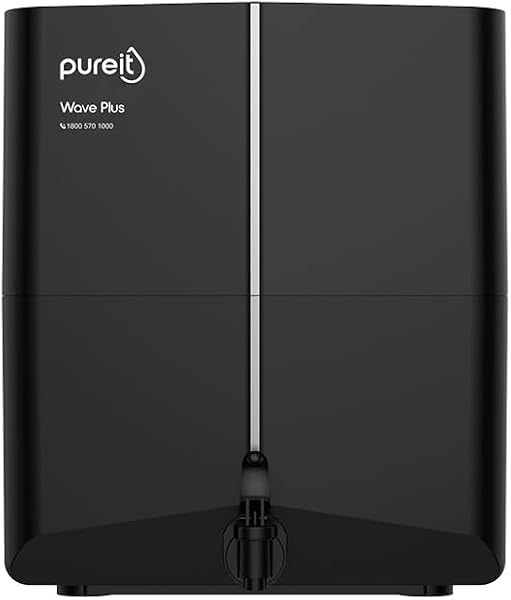
Let us first decode the product name itself, because it is doing a lot of work. This is a wall-mounted (or counter-top) domestic RO purifier with a 12-litre storage tank, a purification chain of RO + UV + UF, a TDS controller, and an alkaline mineral cartridge in the output path. Each of those elements matters differently depending on where you live and what your source water looks like.
What the 12-litre tank actually means for an Indian family
A 12L storage tank is genuinely generous for this price bracket — most budget purifiers give you 6L to 8L. In practice, a 12L tank comfortably covers a family of four to five for a full morning of cooking, drinking and tiffin-filling without waiting for a refill cycle. The larger tank also helps during power cuts and in apartment buildings where water pressure drops in the evenings: you draw from stored purified water instead of the incoming line. The trade-off is physical size — a 12L tank plus the filtration assembly typically needs roughly 30–35 cm of wall width and about 45–50 cm of height, so measure your kitchen wall before ordering rather than after.
RO + UV + UF + TDS controller: what each stage does
This multi-stage combination is the real reason people shortlist this product. Here is the plain-English version:
- RO (Reverse Osmosis): Removes dissolved salts, heavy metals, nitrates, fluoride and most dissolved impurities. Essential if your TDS is above 300–400 ppm, which is common across Delhi NCR, Rajasthan, Gujarat, Haryana and much of inland Maharashtra.
- UV (Ultraviolet): Kills bacteria and viruses. RO membranes physically block most microbes anyway, but UV acts as a safety net in case of membrane damage or post-filtration contamination in the tank.
- UF (Ultrafiltration): A fine hollow-fibre barrier that traps colloidal particles, cysts and suspended matter. It also makes the purifier somewhat useful even if the RO pump fails, since UF works on line pressure.
- TDS Controller: Blends a controlled portion of raw (but pre-filtered) water back into the purified output so the final TDS is not stripped down to 20–30 ppm. This keeps the taste from turning flat and preserves some natural minerals. It is a genuine benefit — pure RO water tastes metallic to many people.
The "alkaline" stage is the marketing-heavy part. An alkaline cartridge — usually a small inline unit containing mineral media — raises output pH slightly (typically to around 7.5–8.5) and adds back trace minerals like calcium and magnesium. It does not "cure" anything, and no credible Indian regulator endorses alkaline water as a health treatment. What it does legitimately is improve taste and reduce the sour/flat sensation of over-purified RO water. Treat it as a taste feature, not a medical one, and you will be satisfied with what you get.
Key Factors to Consider Before Buying This Alkaline RO Purifier
Before you hit "Buy Now" on the aqua d pure alkaline ro water purifier 12l rouvuftds control with good storage model, run through these checks. They separate a happy purchase from a frustrating one.
1. Your source water TDS and hardness
Get a TDS meter (₹200–₹400 on Amazon) and test your tap water. Below 200 ppm, RO is arguably overkill and you would be better off with a UV + UF purifier. Between 200 and 500 ppm, this class of RO purifier is well matched. Above 800–1,000 ppm — common in parts of Rajasthan and Gujarat — you need to confirm the model's maximum rated input TDS (look for 1,500–2,000 ppm ratings) and be prepared for faster membrane replacement.
2. BIS certification and the model number on the label
Since 2021, domestic electric water purifiers sold in India require BIS registration under IS 16240. Check the product listing for the ISI mark and a licence number. Lesser-known online brands sometimes sell non-certified units through marketplace sellers, so verify this before payment — it is the single most important quality check for an unfamiliar brand.
3. Service network and warranty terms
This is where budget online brands genuinely differ from Kent and Aquaguard. Ask two questions: how many service partners cover your pin code, and is the warranty comprehensive or only on the pump and membrane? A one-year comprehensive warranty with local technician availability is worth more than a three-year warranty that requires couriering the unit to another state.
4. Consumable costs over five years
Water purifiers are cheap to buy and expensive to maintain. Typical annual consumable costs: sediment and carbon pre-filters ₹600–₹1,000, RO membrane ₹1,200–₹2,500 every 18–24 months, UV lamp ₹600–₹1,000 every 12 months, alkaline cartridge ₹700–₹1,500 every 12–18 months. Over five years, expect to spend roughly ₹8,000–₹12,000 on a purifier in this class. Factor that in before comparing sticker prices.
Product Breakdowns at Three Price Points
Here is the honest comparison you actually need. Prices below are indicative as of mid-2025 and fluctuate during sales — always confirm on the live listing.
Option 1: Aqua D Pure Alkaline RO Water Purifier 12L RO+UV+UF+TDS Control — ₹8,500 to ₹11,500
This is the value pick and the one this guide is centred on. For under ₹12,000 you get a 12L tank, the full RO + UV + UF chain, an active TDS controller and an alkaline mineral cartridge — a feature stack that mainstream brands charge ₹17,000–₹20,000 for. It is typically sold on Amazon and Flipkart through marketplace sellers, with installation booked after delivery.
Best for: Families of four to five in mid-TDS cities (Bengaluru, Pune, Hyderabad, Chennai suburbs) who want maximum features per rupee and are comfortable doing a bit of coordination themselves.
Watch out for: Verify BIS marking on the unit when it arrives, confirm the seller's warranty process in writing before installation, and check the pin-code coverage for service. Buy from a seller with a high rating and a clear return window.
Option 2: Mid-range mainstream — Kent Grand Plus / Aquaguard Value Ro+UV+UF — ₹13,500 to ₹17,500
If the brand name and doorstep service matter more than the alkaline cartridge, Kent Grand Plus (8L, RO+UV+UF+TDS control, 20LPH) or Aquaguard's mid-tier RO+UV+UF models are the safe, proven choices. You get a nationwide technician network, genuine spares, and predictable resale. You lose the 12L tank size and usually the alkaline stage.
Best for: Households where nobody wants to chase a seller for service — especially in smaller towns where local service coverage is the deciding factor.
Option 3: Premium — Aquaguard Geneus / Kent Grand Star / Havells Pro Alkaline — ₹19,000 to ₹27,000
At this level you get genuinely better build quality, copper or alkaline mineral cartridges from established brands, app connectivity, filter-life indicators and, in some cases, hot water dispensing. The alkaline claim is at least backed by a documented mineral cartridge rather than an unnamed inline unit.
Best for: Buyers who intend to stay in the same home for 7–10 years and want low maintenance friction.
Comparison Table: Feature Summary
| Feature | Aqua D Pure 12L Alkaline RO (Option 1) | Kent / Aquaguard Mid-range (Option 2) | Premium Alkaline RO (Option 3) |
|---|---|---|---|
| Indicative price | ₹8,500–₹11,500 | ₹13,500–₹17,500 | ₹19,000–₹27,000 |
| Storage capacity | 12 litres | 7–8 litres | 8–10 litres |
| Purification stages | RO + UV + UF + TDS control + alkaline | RO + UV + UF + TDS control | RO + UV + UF + TDS + copper/alkaline |
| Max input TDS (typ.) | 1,500–2,000 ppm (confirm on listing) | 1,500–2,000 ppm | 2,000 ppm+ |
| Service network | Marketplace-dependent | Nationwide, strong | Nationwide, strongest |
| Filter change indicator | Often present | Present | Present, with app alerts |
| Warranty (typical) | 1 year comprehensive | 1 year + extended on membrane | 1–2 years + membrane cover |
| Best suited for | Value hunters, mid-TDS cities | Buyers prioritising service | Long-term, low-hassle owners |
Pros and Cons of the Aqua D Pure 12L Alkaline RO Model
What works well
- Feature-to-price ratio is genuinely strong. Getting 12L storage plus alkaline and TDS control under ₹12,000 is difficult to find from mainstream brands.
- The 12L tank solves a real daily problem. No queue for water during peak morning hours, and comfortable backup during power cuts.
- UF as a fallback is underrated. If the pump or power fails, UF still delivers microbe-filtered water at low flow — a practical safety net.
- Alkaline cartridge improves palatability. Families switching from a stripped-down RO often report the water tastes noticeably better.
What to be careful about
- Brand recall and resale value are low. If you sell the unit or move cities, expect little to no resale support.
- Service responsiveness varies by city. Metro buyers in Delhi, Mumbai, Bengaluru and Hyderabad generally have a smoother experience than tier-3 buyers.
- Installation is usually third-party. Book it early and insist on the technician checking input TDS before connection — a pre-filter is often added at your cost.
- The "alkaline" claim is modest. Expect pH in the 7.5–8.5 range, not the exaggerated numbers some listings advertise.
Buying Guide: What to Look For Before You Order
Use this as a checklist. It takes ten minutes and saves months of regret.
- Confirm the exact model and stage list in the listing images, not just the title. Sellers sometimes use generic titles for multiple variants.
- Check BIS/ISI marking and the licence number. Ask the seller in writing if it is not visible in the images.
- Verify the input TDS rating. If your water is above 1,000 ppm, confirm the unit's maximum rated input, otherwise your membrane will fail within a year.
- Look for a pressure gauge or at least a pump protection switch. Low inlet pressure below 0.3 kg/cm² needs a booster pump — ask whether one is required for your floor.
- Read the warranty document, not the listing bullet. Know whether the RO membrane and UV lamp are covered.
- Ask about consumable pricing upfront. A seller who can quote pre-filter and membrane prices has a real spare-parts supply chain.
- Prefer sellers with a 10-day replacement window and a rating above 4.0 with at least 100 reviews. On Amazon and Flipkart, check the "sold by" name — manufacturer listings offer better after-sales handling than anonymous resellers.
Where and When to Buy for the Best Value
For the aqua d pure alkaline ro water purifier 12l rouvuftds control with good storage configuration, Amazon India and Flipkart are the primary channels — you will rarely find this brand in a Croma or Reliance Digital showroom. Amazon usually has better seller documentation and a clearer return process; Flipkart occasionally undercuts by ₹500–₹1,000 during its own sales. Compare both before checkout, and check whether bank offers (HDFC, ICICI, SBI credit cards) stack on top.
On timing: the deepest discounts in India appear during the Great Indian Festival (Amazon, late September–October), Big Billion Days (Flipkart, same window), Republic Day sales (January) and Prime Day (July). Outside these windows, expect 5–10% off MRP at most. If you are not in a hurry and it is August, waiting six weeks can save ₹1,000–₹2,000. If your current purifier has already failed, buy now — the difference rarely justifies a month of boiling water.
Real-World Usage Tips for Indian Households
These are the things installation technicians rarely explain properly.
- Add a pre-filter housing if you do not have one. A ₹400–₹700 inline sediment pre-filter outside the unit dramatically extends the life of the internal filters, especially with municipal supply that carries rust particles.
- Flush the tank after long absences. If the purifier has been idle for more than a week, drain and refill once before drinking.
- Do not ignore the low-pressure warning. In upper-floor flats and older buildings, running the unit below rated pressure burns out the pump — a ₹1,500–₹2,500 repair.
- Change pre-filters every 6–9 months in hard-water areas. In Bengaluru, Jaipur or Ahmedabad, do not wait for the 12-month mark.
- Clean the tank every quarter with the manufacturer's recommended method — a mild food-grade cleaning, never soap.
- Keep the unit out of direct sunlight to prevent algae growth in the storage tank, which is a surprisingly common complaint in coastal cities.
- Store the purchase invoice and warranty card digitally. Marketplace sellers often ask for the invoice number to process a service ticket.
Frequently Asked Questions
Is the Aqua D Pure alkaline RO water purifier 12L RO+UV+UF+TDS control model safe to buy from an online marketplace?
Yes, provided you verify three things: BIS/ISI certification, a warranty document with a serviceable contact, and a seller rating above 4.0 with a healthy review count. Buy on Amazon or Flipkart rather than unknown websites so you retain the return window and buyer protection. Check the unit for the ISI mark on delivery — before the technician installs it, not after.
Is alkaline water actually healthier than normal RO water?
The evidence is thin. What alkaline cartridges reliably do is raise pH mildly (usually to 7.5–8.5) and add back trace minerals, which improves taste compared with over-purified RO water at 20–30 ppm TDS. There is no strong clinical evidence that alkaline water treats acidity or prevents disease. Buy it for taste and mineral balance, not for health claims.
Can I use this 12L purifier if my tap water TDS is above 1,000 ppm?
Check the maximum rated input TDS on the specific listing — most units in this class handle 1,500–2,000 ppm, which covers most Indian hard-water areas. Above that, you should look at higher-rated models and budget for annual membrane replacement. Also add an external pre-filter, since high TDS usually comes with high sediment load.
How often do filters and membranes need replacing?
Sediment and carbon pre-filters: every 6–12 months depending on water quality. UV lamp: every 12 months. RO membrane: every 18–24 months. Alkaline cartridge: every 12–18 months. TDS controller: typically serviced annually. Most units show a filter-change indicator, but treat it as a hint, not gospel — taste and flow rate are better indicators.
Does the 12L tank make the purifier too big for a small kitchen?
Plan for roughly 30–35 cm of width and 45–50 cm of height on the wall, with about 15 cm clearance below the tap for filling a 20L can. If your kitchen wall is tight, consider a counter-top placement instead, but keep it away from the gas stove — heat degrades the plastic and the filters.
Is a booster pump required for this purifier?
Only if your inlet pressure is below roughly 0.3 kg/cm². This is common in upper-floor flats, older buildings with overhead tanks at low head, and areas with erratic municipal supply. Ask the installation technician to measure inlet pressure with a gauge on day one — if it is low, an external booster pump (₹1,800–₹3,000) is far cheaper than replacing a burnt-out internal pump later.
Affiliate Disclosure:
This post contains affiliate links. We may earn a commission when you purchase through our links, at no extra cost to you.
Share this: