Ambrane PP30 Review: The 20,000mAh Power Bank Worth Buying Under ₹1,500?

About Rahul Verma: Rahul is a tech enthusiast and gadget reviewer with over 8 years of experience testing consumer electronics. He specializes in audio gear, smartwatches, and mobile accessories. When he is not testing products, you will find him exploring the latest in AI and smart home technology.

If you have ever watched your phone drop to 8% battery on a Mumbai local, mid-way through a Zoom call from a Bengaluru co-working space, or halfway through a road trip on the Delhi–Jaipur highway, you already know why a power bank is not an accessory in India — it is survival gear. And when you are shopping in the sub-₹1,500 bracket, one name keeps surfacing again and again: the Ambrane PP30.
The ambrane pp30 is a 20,000mAh power bank from an Indian brand that has been quietly building a solid reputation in the budget charging space for over a decade. But does it actually deliver, or is it just another spec-sheet hero? In this detailed buying guide, we break down exactly what the Ambrane PP30 offers, how it performs in real Indian conditions, who it is right for, who should skip it, and what your alternatives are at ₹899, ₹1,199 and ₹1,499. We have also included current price ranges, the best times of year to buy, and a few practical tips that most reviews conveniently forget.
By the end of this piece, you will know whether to hit "Buy Now" or keep scrolling.
Understanding the Ambrane PP30: What Exactly Are You Buying?
Before we get into verdicts, let us be clear about what this product is. The Ambrane PP30 is a high-capacity, 20,000mAh lithium-polymer power bank aimed squarely at people who need multiple full phone charges without hunting for a wall socket. It sits in Ambrane's mainstream "PP" series, which is the company's volume-selling line, as opposed to the more premium Powerlit or Powerbank Pro ranges.
The marketing pitch is straightforward: big battery, fast charging support, multiple ports, and a price that undercuts the Xiaomis and Realmes of the world. For a large section of Indian buyers — college students, delivery partners, sales executives on the move, families on long train journeys — that combination is very hard to argue with.
Ambrane PP30 Key Specifications at a Glance
| Feature | Details |
|---|---|
| Capacity | 20,000mAh (74Wh) lithium-polymer |
| Max Output | Up to 20W (USB-C Power Delivery) / fast charging on USB-A |
| Output Ports | 2 × USB-A + 1 × USB-C (3 devices simultaneously) |
| Input Ports | USB-C + Micro-USB (dual input) |
| Display | LED battery-level indicators |
| Weight | Approximately 400–450 g |
| Typical Street Price | ₹1,099 – ₹1,499 (MRP is significantly higher) |
| Warranty | 1 year (verify on the product listing at purchase) |
One important number that most buyers never look at is the rated capacity. A 20,000mAh power bank does not give you 20,000mAh of usable charge. Due to voltage conversion and heat loss, you realistically get somewhere between 12,000 and 13,500mAh at 5V. That is still roughly 3 to 4 full charges of a typical 5,000mAh Android phone, or about 3 charges of an iPhone. Keep that expectation in your head and you will not be disappointed.
Why a 20,000mAh Power Bank Makes Sense for Indian Buyers
India has a peculiar set of charging realities that make capacity more important than it is in, say, Western Europe. Power cuts in tier-2 and tier-3 cities can stretch for hours. Train journeys between metro cities routinely run 18–30 hours. And many of us use our phones as our primary camera, navigation device, wallet, and entertainment screen — all at once, all day.
A 10,000mAh power bank is fine for a commute. A 20,000mAh unit like the ambrane pp30 is what you want when you are away from a plug for two days. That is the core use case, and it is why this category sells so well in the ₹1,000–₹1,500 band.
Key Factors to Consider Before Buying a Power Bank Under ₹1,500
Before you compare models, understand what actually matters. Most budget power bank listings are designed to distract you with big numbers while hiding the details that affect daily use.
1. Rated Capacity, Not Just Advertised Capacity
Look for the rated capacity printed on the box (usually around 60–65% of the advertised figure). A "20,000mAh" unit with a rated capacity of 12,000mAh is normal and honest. If a listing claims 100% efficiency, be suspicious.
2. Fast Charging Support — Both Ways
Output fast charging is what most people check. Input fast charging is what they forget, and it matters just as much. A 20,000mAh power bank charged at 10W takes roughly 9–10 hours to fill; at 18–20W, that drops to around 5–6 hours. If you are charging overnight anyway, it matters less. If you are topping up between shifts, it matters a lot.
3. Number and Type of Ports
Two USB-A outputs plus one USB-C output is the practical minimum for a family or a shared device setup. Dual input (Micro-USB and USB-C) is a genuine convenience in India because so many older devices and cables use micro-USB.
4. Safety Certifications
Check for BIS certification — mandatory for power banks sold in India — and mention of multi-layer protection against overcharge, over-discharge, short circuit, and overheating. Do not buy unbranded power banks from roadside shops regardless of how cheap they are.
5. Weight and Portability
Anything above 400 g will be noticeable in a pocket or a slim laptop bag. For a 20,000mAh unit, that is the trade-off you accept. If you want something pocketable, drop down to 10,000mAh.
Ambrane PP30 In-Depth: Design, Performance and Real-World Use
Now to the product itself. Here is how the ambrane pp30 actually behaves in day-to-day use.
Build Quality and Design
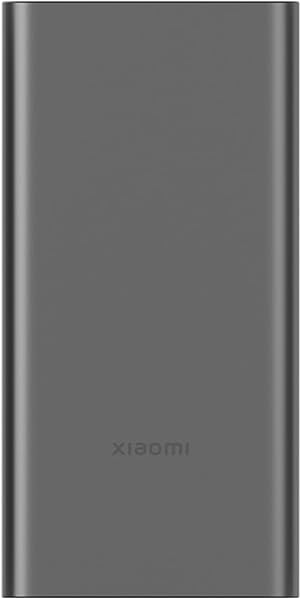
The PP30 follows a straightforward, functional design language: a matte-finished plastic body with rounded corners and a slightly textured surface that resists fingerprints and minor scratches. It is not a premium-feeling object, and it does not pretend to be. It is the kind of device you toss into a bag without worrying about it. The LED indicator strip on the top edge shows remaining charge in discrete steps — basic, but reliable, and far less likely to fail than a small LCD over time.
Importantly, the casing does get slightly warm during simultaneous multi-device charging, which is normal for any 20W-class power bank. It does not get uncomfortably hot, and it cools quickly once the load drops.
Charging Performance
With USB-C Power Delivery, the ambrane pp30 will fast-charge most modern Android phones and iPhones that support PD. In practice, expect roughly 40–60% charge on a 5,000mAh phone in about 30 minutes, assuming the phone supports 18W or higher. Older phones and budget handsets that cap at 10W will simply charge at 10W — the power bank negotiates downward automatically, which is the correct and safe behaviour.
When you connect three devices at once, total output is shared across the ports. This means fast charging stops working the moment you plug in a second and third device. That is standard across the industry, not an Ambrane flaw, but worth knowing if you plan to charge a phone and earbuds together.
Recharging the Power Bank
This is where the dual-input design earns its keep. Using the USB-C port with a 20W PD charger, the ambrane pp30 refills in roughly 5–6 hours. Using an older 5V/2A charger over micro-USB stretches this to 8–10 hours. If you are buying this power bank, budget for a decent 20W wall charger too — it is the difference between a device that feels convenient and one that feels like a chore.
Compatibility
The PP30 works with essentially everything: Android phones from Samsung, Xiaomi, Realme, OnePlus and Vivo; iPhones using a USB-C to Lightning cable; TWS earbuds; smartwatches (though very low-draw devices may occasionally fail to trigger charging — a common quirk across brands); and even low-power devices like Bluetooth speakers. It does not support the proprietary high-wattage SuperVOOC or Warp Charge speeds that OnePlus and Realme advertise — those require brand-specific chargers. You will get standard PD speeds instead.
Pros and Cons of the Ambrane PP30
What Works Well
- Genuine value at the price: At ₹1,099–₹1,299, a 20,000mAh power bank with 20W PD output from a BIS-compliant Indian brand is a strong deal.
- Three outputs plus dual input: Rare at this price and genuinely useful for families and shared use.
- Indian brand, India-wide service: Warranty claims through Ambrane's support network are far easier to handle than those for grey-market imports.
- Solid capacity for travel: Enough for multi-day trips, long train journeys, and power-cut-prone areas.
- Airline-compliant: At 74Wh, it sits comfortably under the 100Wh cabin-baggage limit on Indian carriers.
Where It Falls Short
- Heavy: Around 400–450 g means it lives in your bag, not your pocket.
- No digital display: LED dots are less precise than a percentage readout, which some rivals now offer under ₹1,500.
- No pass-through fast charging: Using it while it charges drops speeds significantly.
- Build is functional, not premium: Do not expect metal bodies or glass finishes.
- Price fluctuates sharply: During sale events it can drop well below ₹1,100 — buying at the wrong time costs you ₹300–₹400.
Alternatives Worth Comparing at Different Price Points
The ambrane pp30 does not exist in a vacuum. Here is how the competition stacks up, based on typical pricing (note that power bank prices on Amazon and Flipkart move constantly — always verify before checkout).
Under ₹1,000: Ambrane Powerlit 10,000mAh
If you commute rather than travel, a 10,000mAh unit at roughly ₹799–₹949 is lighter, cheaper, and perfectly adequate. You lose about half the capacity and possibly some output speed, but you gain a device you can actually slip into a messenger bag's front pocket. For students and daily commuters, this is often the smarter buy.
₹1,000–₹1,300: Ambrane PP20
The PP20 sits just below the PP30 in Ambrane's lineup, typically with slightly lower output wattage. If you spot the PP20 at ₹899 against a PP30 at ₹1,349, and you only charge one phone at a time, the older model is the better value. The gap between them is mostly about port count and peak output, not capacity.
₹1,300–₹1,500: boAt Energyshroom PB200 and Realme 20,000mAh 20W
Both offer 20,000mAh with 20W fast charging at roughly ₹1,399–₹1,599. The boAt model has better shelf appeal and a more modern design; Realme's unit benefits from the brand's wide service network. Neither dramatically outperforms the Ambrane PP30 in testing — you are largely paying for design and brand familiarity. If the PP30 is more than ₹300 cheaper on the day you buy, take the Ambrane.
Slightly Above Budget: Mi Power Bank 3i 20000mAh
Xiaomi's 3i is the default recommendation for many buyers and remains a well-built, reliable unit. It usually sits at ₹1,599–₹1,899, though sale prices occasionally dip closer to ₹1,499. If you can stretch your budget or catch a drop, it is worth considering for the build quality alone. But strictly under ₹1,500, the ambrane pp30 is the more consistent value.
Quick Comparison Table
| Model | Capacity | Max Output | Approx. Price | Best For |
|---|---|---|---|---|
| Ambrane PP30 | 20,000mAh | 20W PD | ₹1,099–₹1,499 | Best overall value under ₹1,500 |
| Ambrane Powerlit 10K | 10,000mAh | ~18W | ₹799–₹949 | Daily commuters, light users |
| Ambrane PP20 | 20,000mAh | ~18W | ₹899–₹1,199 | Budget-first single-device users |
| boAt Energyshroom PB200 | 20,000mAh | 20W | ₹1,399–₹1,599 | Design-conscious buyers |
| Mi Power Bank 3i 20K | 20,000mAh | 18W | ₹1,599–₹1,899 | Build quality, brand trust |
Buying Guide: How to Get the Best Deal on the Ambrane PP30
Where to Buy
Amazon India and Flipkart are the two reliable channels for the ambrane pp30. Both list the product from Ambrane's official storefront or authorised sellers, which matters for warranty. Avoid third-party marketplace sellers with suspiciously low prices and no return policy — counterfeit 20,000mAh power banks are a real problem in India, and a fake unit can be genuinely unsafe.
Ambrane's own website occasionally runs direct promotions, but shipping times are usually longer and return windows shorter than Amazon's standard 7–10 day replacement policy.
When to Buy
Power banks are among the most discount-sensitive products in Indian e-commerce. The best windows are:
- Amazon Great Indian Festival (usually September–October)
- Flipkart Big Billion Days (same window)
- Republic Day and Holi sales (January and March)
- Prime Day (July)
Outside these events, the price typically hovers around ₹1,299–₹1,399. During sales, it frequently drops to ₹1,099 or occasionally below ₹1,000 with bank offers. Setting a price alert on a tracking tool like Keepa or the Flipkart price tracker is worth ten minutes of your time — it can save you ₹300.
Stack Offers Carefully
Bank card offers, exchange offers, and coupon stacking can shave another ₹100–₹200. But read the fine print: some bank offers require a minimum cart value, and exchange offers on power banks are rarely worth the hassle. A straightforward bank discount is usually the cleanest saving.
Real-World Usage Tips for Indian Consumers
- Carry it in cabin baggage only. At 74Wh, the PP30 is well within the 100Wh limit for Indian carriers and most international airlines. It must go in hand baggage — never in checked-in luggage. Security will confiscate it otherwise.
- Do not leave it in a parked car. Indian summer temperatures can push the interior of a car past 60°C. Lithium-polymer cells degrade fast at that heat, and there is a genuine swelling risk.
- Charge it to about 60–70% for storage. If you will not use it for weeks, do not leave it fully charged or fully drained. Both extremes reduce lifespan.
- Use a 20W PD charger for refills. The ₹500 you spend on a good wall charger pays back in time saved every single week.
- Use short, good-quality cables. Most "slow charging" complaints trace back to a cheap cable rather than the power bank. Look for cables rated for 3A.
- Protect it during monsoon travel. The PP30 is not water-resistant. A simple zip pouch prevents the accidental rain exposure that kills budget power banks in coastal cities.
Frequently Asked Questions About the Ambrane PP30
Is the Ambrane PP30 worth buying in 2025?
Yes, if
Affiliate Disclosure:
This post contains affiliate links. We may earn a commission when you purchase through our links, at no extra cost to you.
Share this: