Aqua Libra With Device Water Purifier: Prices, Best Picks and a Practical Buying Guide

About Rahul Verma: Rahul is a tech enthusiast and gadget reviewer with over 8 years of experience testing consumer electronics. He specializes in audio gear, smartwatches, and mobile accessories. When he is not testing products, you will find him exploring the latest in AI and smart home technology.
If you have spent the last hour scrolling through purifier listings on Amazon and Flipkart, you have probably noticed something confusing: models with almost identical specifications are priced anywhere between ₹4,500 and ₹17,000, and the phrase aqua libra with device water purifier keeps appearing on listings that look very different from one another. That gap is not random. It usually comes down to what the bundled "device" actually is, what cartridges are inside the cabinet, and how much service support you can realistically expect after year one.
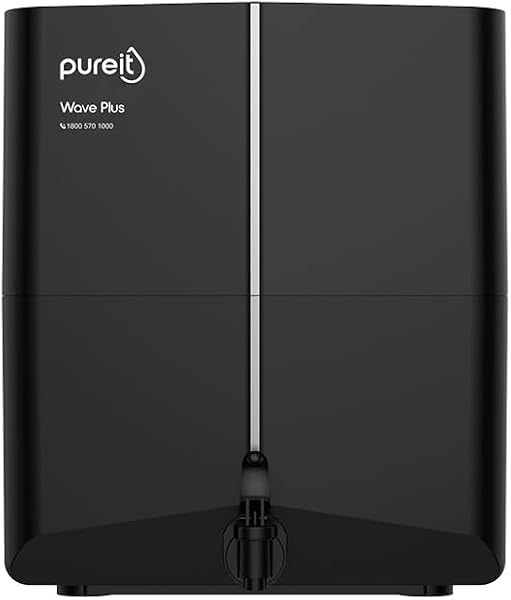
This guide cuts through that. You will learn what the "with device" tag typically means in these listings, which Aqua Libra configuration suits which kind of Indian water supply, how much you should expect to pay at each tier, where to buy for the best value, and what to check on the box before you accept delivery. We also compare the range against established alternatives such as Aquaguard, Kent, Livpure and Pureit, so you can judge whether an aqua libra with device water purifier is genuinely the right purchase for your home or just the cheapest listing on page one.
One honest note before we begin: purifier model names, cartridge bundles and prices in this category change every few months, and marketplace listings are frequently revised. Use the price bands below as a benchmark, and always confirm the current box contents and specification sheet on the product page before you pay.
Quick Verdict: Who Should Buy One
The aqua libra with device water purifier range is best suited to buyers who want RO + UV + UF purification with a TDS controller at a genuinely budget price, are comfortable buying online, and live in a city where municipal supply is decent but not perfect. If your TDS sits between 200 and 700 ppm, these units do the job without the brand premium you pay for an Aquaguard or Kent badge.
If your raw water TDS crosses 1,000 ppm, has visible iron staining, or you live in an area with frequent voltage fluctuation and long power cuts, spend more on a branded unit with a stronger service network — or add a voltage stabiliser and an iron removal pre-filter to the Aqua Libra setup. Budget purifiers are perfectly capable machines; they simply have less margin for neglect.
Understanding the Aqua Libra With Device Water Purifier
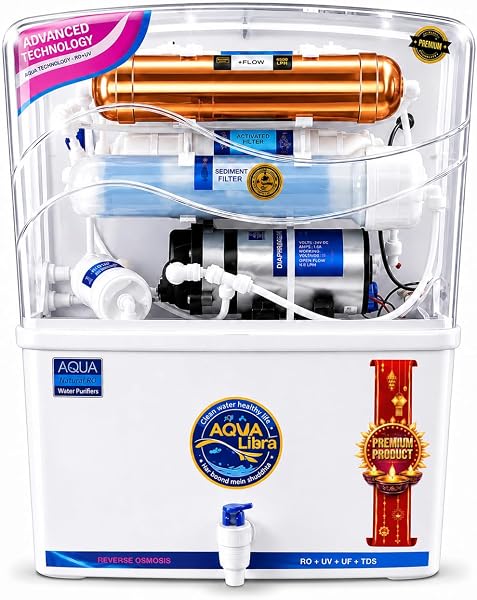
Aqua Libra water purifiers are sold largely through online marketplaces in India and typically bundle multiple purification stages — reverse osmosis (RO), ultraviolet (UV) and ultrafiltration (UF) — along with an active carbon filter and a TDS controller. The units are wall-mountable, come with a storage tank (usually 7 to 12 litres), and are aimed squarely at households that want RO purification without paying ₹15,000 for it.
So what does "with device" actually mean?
This is where most buyers get stuck, and it is worth spelling out because the phrase is used loosely across listings. In practice, "with device" in an aqua libra with device water purifier listing refers to one of three things:
- A bundled external pre-filter device — a transparent housing that screws onto your inlet line and traps mud, sediment and rust before water enters the purifier. This is the most common meaning and the most useful one, because it measurably extends the life of the internal cartridges in Indian conditions.
- An add-on purification device — a copper, alkaline or mineral cartridge attachment that sits in the final stage. These are marketed heavily, but the actual copper or mineral dosing is in trace amounts. Treat them as a mild bonus, not a health solution.
- The dispensing device or tap assembly — less common, but some sellers use the phrase to describe the faucet and mounting kit included in the box.
Before ordering, open the "Box Contents" or "What's in the box" section of the listing and read it line by line. If the pre-filter is not listed, ask the seller in writing through the marketplace chat. A ₹600 pre-filter bought separately protects a ₹2,500 membrane — it is worth the two minutes it takes to confirm.
How the purification stages work together
Sediment filtration removes sand and particulate matter. The carbon block tackles chlorine, odour and colour. RO pushes water through a semi-permeable membrane at pressure, removing dissolved salts, heavy metals and most contaminants — this is the stage that matters for borewell and hard water. UV then handles any bacteria and viruses that survive, and UF acts as a final physical barrier. The TDS controller blends back a small proportion of minerals so the output does not taste flat.
The practical takeaway: an RO purifier without a TDS controller tends to produce water that tastes metallic or "empty," and an RO purifier without a pre-filter clogs fast in Indian conditions. An aqua libra with device water purifier that includes both is a meaningfully better purchase than one that includes neither.
Key Factors to Consider Before You Buy
1. Your raw water TDS
Buy a ₹250 TDS meter before you buy a purifier — this single step prevents most bad purchases. Rough reference bands for Indian cities:
- Below 200 ppm (parts of Mumbai, Bengaluru municipal supply, some Delhi pockets): RO is overkill. A UV + UF purifier is cheaper to run and wastes no water.
- 200–500 ppm (Delhi NCR, Pune, Kolkata, most apartment supplies): RO + UV + UF with a TDS controller is the right choice.
- 500–1,000 ppm (Chennai, Hyderabad, Gurugram borewell mixes, Noida sectors): RO is essential; insist on a membrane rated for higher TDS and budget for faster cartridge replacement.
- Above 1,000 ppm: RO alone will struggle. Look at a unit with a higher-capacity membrane, or a commercial-grade pre-treatment stage.
2. Storage capacity versus family size
A 7–8 litre tank comfortably serves a family of two to three. Four to five members, or a household where everyone leaves at the same time in the morning, needs 10–12 litres. Do not undervalue this — the most common complaint about budget RO purifiers is not water quality but running dry at 8 a.m.
3. The "device" bundle and what it costs you later
Bundled devices are only worth paying extra for if you will actually maintain them. A copper cartridge that costs ₹900 to replace every year adds up quietly. Ask the seller for the price of each consumable — sediment filter, carbon filter, membrane, UV lamp — before you commit. A machine with a cheap sticker price and ₹3,500 annual running cost is more expensive than one at ₹9,000 with ₹1,800 running cost over five years.
4. Service network — the factor nobody checks
Online-first brands handle service through third-party partners or city-level technicians. Before buying, search "[your city] + [brand] + service centre" and check recent reviews. In metros like Delhi, Mumbai, Bengaluru, Hyderabad and Chennai, response times are usually acceptable. In tier-2 and tier-3 towns, verify that a technician exists in your district at all — a purifier that cannot be repaired for two weeks is not a bargain.
5. Certifications and warranty terms
Look for BIS certification and confirmation that the RO unit conforms to IS 16240. Check whether the warranty covers the membrane (usually excluded, or covered for only 6–12 months) and whether it is on-site or carry-in. Carry-in warranty means you transport the unit to a service centre yourself — a real cost in a 10 kg appliance.
6. Power and installation requirements
RO purifiers need a working electrical point and a water inlet with reasonable pressure (typically 0.3–3 kg/cm²). If your building has low inlet pressure, you will need a booster pump — confirm whether the aqua libra with device water purifier you are considering includes one. Also budget for a plumber if the installation is not free in your pin code.
Aqua Libra With Device Water Purifier Options at Different Price Points
Below is how the range breaks down in practice on Indian marketplaces. Prices move with sale events, so treat these as bands rather than fixed figures.
Budget tier: ₹4,500–₹7,000 — 7–8 litre RO + UV + UF with TDS controller
This is the volume-selling tier and where the aqua libra with device water purifier name appears most often. Typical specifications: a 7 or 8 litre food-grade tank, 6–8 stage purification, a 75–100 GPD membrane, an external pre-filter device in the box, and a 1-year comprehensive warranty with 6 months on the membrane.
Who it suits: Two to three member households with TDS in the 200–600 ppm range, in cities with decent service coverage. Renters who do not want to sink ₹15,000 into an appliance they may have to uninstall.
What you give up: Plastic build quality, quieter operation, smart indicators (many budget units have basic LED alerts only), and the reassurance of a large service fleet. Water wastage is often higher — some budget RO units recover as little as 30–40% of inlet water.
Mid tier: ₹8,000–₹12,000 — 10–12 litre tank, copper/mineral device, better build
Step up and you get a larger tank, a sturdier ABS body, a front access panel for easier cartridge changes, and usually an additional device — copper or alkaline cartridge, or a double pre-filter setup. Recovery ratios improve, and you start seeing smart features like filter-life indicators and tank-full sensors.
Who it suits: Families of four to five, households with high morning demand, and buyers who plan to keep the unit for 5+ years. This tier is also where the aqua libra with device water purifier range competes most directly with entry-level Kent and Livpure models, and the specification sheets are often very close.
What you give up: At this price you can usually get a well-known brand with a stronger service network. If you live outside a metro, that trade-off deserves serious thought.
Premium tier: ₹13,000–₹18,000 — hot water, alkaline, smart monitoring
At the top of the range you find features like instant hot water dispensing (popular with families making formula or drinking warm water in winter), alkaline cartridges, app-based TDS monitoring, and higher-capacity membranes. Some units in this tier deliver recovery ratios above 50%.
Who it suits: Buyers with specific needs — hot water dispensing genuinely changes daily usage — or homes with consistently high TDS that need a stronger membrane. If you are simply comparing tank sizes, the mid tier is better value; the premium tier only justifies itself when you will use the extra features every day.
Feature Comparison at a Glance
| Tier | Purification | Storage | Extra device in box | Typical price | Best for |
|---|---|---|---|---|---|
| Budget | RO + UV + UF + TDS controller | 7–8 L | External pre-filter | ₹4,500–₹7,000 | 2–3 members, TDS up to 600 ppm |
| Mid | RO + UV + UF + TDS + copper/mineral | 10–12 L | Copper or mineral cartridge | ₹8,000–₹12,000 | 4–5 members, long-term use |
| Premium | RO + UV + UF + TDS + alkaline, hot water | 10–12 L | Alkaline cartridge + pre-filter | ₹13,000–₹18,000 | High TDS, hot water requirement |
Pros and Cons of the Aqua Libra With Device Water Purifier
What works well
- Price-to-specification ratio is genuinely strong. A full RO + UV + UF + TDS setup at ₹6,000 undercuts comparable branded units by ₹3,000–₹5,000.
- Bundled pre-filter is a real benefit, not a gimmick. In Indian water conditions it can extend membrane life appreciably.
- Straightforward installation. Wall-mount design with standard inlet sizing; most units can be plumbed by any local technician.
- Consumables are cheap and widely available in the online aftermarket, which keeps long-run costs low.
- Good fit for renters, PG owners and small families who need reliable purification without a large outlay.
What to watch out for
- Service depth varies by pin code. This is the single biggest risk and the one thing you cannot fix after purchase.
- Membrane quality is inconsistent at the budget end. Some units ship with lower-grade membranes that degrade faster in high-TDS water.
- Water recovery can be low — in water-scarce cities like Chennai and Bengaluru, a 40% recovery rate means substantial wastewater.
- Documentation and warranty claims can be slower online than with a brand that has a local dealer on your street.
- The "copper" claim is overstated across the category. Trace copper in a cartridge is not a substitute for a balanced diet; do not pay a large premium for it.
Where and When to Buy for the Best Price
Buy from Amazon or Flipkart directly — avoid third-party sellers with no return policy, and prefer listings marked as fulfilled by the platform. Genuine savings come from timing rather than bargaining:
- Amazon Great Indian Festival (September–October) and Flipkart Big Billion Days deliver the deepest cuts on water purifiers, often ₹1,500–₹3,000 below the standard listing price.
- Republic Day and End of Season sales (January) are the second-best window, particularly for post-holiday inventory clearing.
- Stack bank card offers. A 10% instant discount on HDFC, ICICI or SBI cards frequently beats the headline discount on smaller appliances.
- Check exchange offers — Amazon and Flipkart both accept old purifiers, and ₹800–₹1,500 off is common.
- Compare the "with device" bundle price against buying the device separately. Sometimes the
Affiliate Disclosure:
This post contains affiliate links. We may earn a commission when you purchase through our links, at no extra cost to you.
Share this: