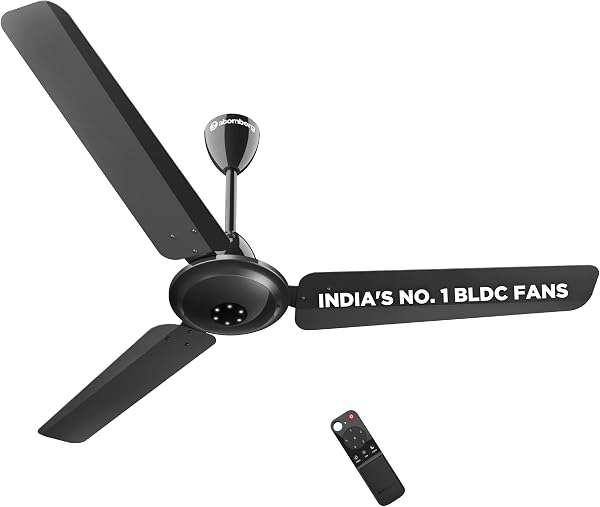
Atomberg Renesa Halo Smart Alexa Enabled 1200mm BLDC Ceiling Fan With Remote: The Complete 2025 Buying Guide

About Rahul Verma: Rahul is a tech enthusiast and gadget reviewer with over 8 years of experience testing consumer electronics. He specializes in audio gear, smartwatches, and mobile accessories. When he is not testing products, you will find him exploring the latest in AI and smart home technology.

If you've been comparing ceiling fans online, you've probably noticed that the atomberg renesa halo smart alexa enabled 1200mm bldc ceiling fan with — shoppers usually finish that search with "remote", "Alexa" or "LED light" depending on which listing they land on — sits at the exact intersection of two things Indian households care about right now: a lower electricity bill and a home that answers to your voice. A decade ago, a ceiling fan was a ₹1,800 purchase you made once in fifteen years. Today, it's a connected appliance that can shave ₹1,000–₹1,500 off your annual electricity spend, respond to an Alexa command from the kitchen, and still run comfortably on an inverter during a power cut.
This guide is written for the buyer who has already shortlisted this fan and wants to know whether it's genuinely worth the premium, what the "smart" and "Halo" parts actually add in daily use, how it compares with Atomberg's own cheaper Renesa models, and exactly where and when to buy it in India for the best price. We'll cover real specifications, a worked-out electricity saving calculation, the practical irritations nobody mentions in product videos, and the buying windows on Amazon and Flipkart that consistently offer the lowest price.
Understanding What You're Actually Buying
The Renesa Halo Smart is not a completely different machine from the rest of Atomberg's Renesa family — it is the same 1200mm BLDC platform that made the brand famous, dressed up with a more premium hub and finish, and fitted with the full smart-control stack: Wi-Fi, app control, and Alexa/Google voice commands. Before you spend ₹4,500+ on any fan, it helps to understand what each of those labels really means in day-to-day use.
What "BLDC" changes for your electricity bill
A conventional induction motor ceiling fan draws roughly 70–80 watts at top speed because it wastes a large chunk of energy as heat in the windings. A brushless DC (BLDC) motor uses permanent magnets and an electronic controller instead of carbon brushes and a capacitive circuit, so it delivers comparable air at far lower input power — Atomberg's Renesa range is rated at around 28 watts at maximum speed. That's not a marketing rounding; it's the single biggest reason BLDC fans have gone from niche to mainstream in India in under five years. Lower current draw also means the fan runs happily on an inverter or UPS for hours, which matters in towns where summer outages are a daily ritual.
What "smart" and "Alexa-enabled" add in practice
The smart layer is built around a 2.4GHz Wi-Fi module inside the fan's hub. Once paired with Atomberg's companion app, the fan exposes on/off, speed (typically 1–5 plus a boost mode), timer and sleep-mode controls to your phone, and the same controls surface as voice commands through the Alexa app after you enable the Atomberg skill. In real use, the most common commands are variations of "Alexa, turn on the fan", "set the bedroom fan to speed 3" and "Alexa, set a timer for two hours." The genuinely useful part is not the novelty of voice — it's that you can kill the fan from bed, or check whether you left it running when you stepped out, without walking across the room. The remote still works independently of Wi-Fi, so a router restart or a broadband outage never leaves you stuck at full speed.
The "Halo" part of the name
Atomberg uses the Halo badge for the trim and hub treatment on this variant, and depending on the exact listing you buy, the suffix after "with" in your search term may refer to the remote, the Alexa integration, or an integrated hub light. This matters practically: always confirm the model number, wattage, colour and what's in the box on the live product page before you pay, because Indian e-commerce listings for fan variants change frequently and two visually similar models can differ by ₹800 and by whether a light kit is included.
Atomberg Renesa Halo Smart: Key Specifications at a Glance
| Parameter | Typical Spec (verify on listing) |
|---|---|
| Sweep size | 1200 mm (48 inches) |
| Motor type | BLDC, 5-star rated |
| Power consumption | ~28–32 W at top speed |
| Speed | ~370–400 RPM |
| Air delivery | ~210–225 CMM |
| Controls | IR remote, mobile app, Alexa & Google voice |
| Connectivity | Wi-Fi 2.4 GHz only |
| Recommended room size | Up to ~120–140 sq ft |
| Typical street price | ₹4,400 – ₹5,600 |
| Warranty | Around 3 years on-site (confirm current terms) |
Key Factors to Consider Before You Buy This Fan
1. Room size versus sweep
1200mm is the Indian standard for a reason — it is the right size for a typical 10×12 ft bedroom, a small living room, or a home office, which covers most apartments. If your room is above roughly 150 sq ft, an open-plan hall, or a double-height space, a 1200mm fan will feel underpowered no matter how good the motor is, and you should look at a 1400mm model instead. Conversely, putting a 1400mm fan in a 9×10 ft room creates uncomfortable high-velocity airflow directly under the blades and often leads to wobble complaints that are really sizing mistakes.
2. Air delivery (CMM), not just wattage
The efficiency story only works if the fan actually moves air. Look at the cubic metres per minute figure: anything around 210–230 CMM at 1200mm is competitive, and Atomberg's Renesa range sits comfortably in that band. A fan that draws 28W but delivers weak thrust is a false economy — you'll end up running it at speed 5 all night, which cancels the savings you were chasing.
3. Which smart ecosystem you actually live in
Alexa support is only valuable if there's an Echo device in your home. If your household runs on Google, the same fan works with Google Assistant; if you're an Apple household, do not assume HomeKit support — check before buying. Also confirm your Wi-Fi broadcasts on 2.4GHz. Most Indian dual-band routers do, but if you've disabled the 2.4GHz band or run a mesh setup that forces 5GHz, the fan simply won't pair, and no amount of app reinstalling fixes it.
4. What happens when the remote dies or the internet is down
BLDC fans with smart controls are designed to sit on a direct switch and be speed-controlled electronically. If you lose the remote, you're effectively limited to full speed until a replacement arrives, and voice control dies the moment your broadband does. Budget for a spare remote (₹400–₹700) or at least know how to order one from Atomberg's support page. This is the single most common complaint from first-time smart-fan owners.
5. Warranty and service reach
Atomberg has built a genuinely strong on-site service network in metros and Tier-1 cities, with authorised partners handling installation and repairs. If you live in a smaller town, call the local service number before purchase and ask about turnaround time. A three-year warranty is only as good as the technician's travel distance.
Product Breakdown: Which Renesa Variant Should You Actually Buy?
The Renesa family spans roughly ₹2,900 to ₹5,600, and the differences aren't just cosmetic. Here's how the options stack up for Indian buyers.
Best overall: Atomberg Renesa Halo Smart (Alexa-enabled, 1200mm)
This is the variant most people land on when they search for the atomberg renesa halo smart alexa enabled 1200mm bldc ceiling fan with remote and voice control. You get the full smart stack — app, Alexa, Google, timer, sleep mode, boost mode — plus the more refined hub and finish that the Halo badge denotes. At a street price of roughly ₹4,400–₹5,600 (MRP is usually quoted around ₹6,
Affiliate Disclosure:
This post contains affiliate links. We may earn a commission when you purchase through our links, at no extra cost to you.
Share this: