Colorbot Stella BLDC Ceiling Fans 1200mm: Price, Features, Performance & Where to Buy in 2025

About Rahul Verma: Rahul is a tech enthusiast and gadget reviewer with over 8 years of experience testing consumer electronics. He specializes in audio gear, smartwatches, and mobile accessories. When he is not testing products, you will find him exploring the latest in AI and smart home technology.

If you have been hunting for a ceiling fan that actually cuts your electricity bill rather than just looking pretty, there is a good chance the colorbot stella bldc ceiling fans 1200mm has landed in your search results. It sits in that sweet spot that Indian buyers love — BLDC efficiency at a price that does not feel like a luxury purchase. But online listings for budget BLDC fans are notoriously light on real detail: what the motor actually delivers, how the remote behaves after six months, whether the 5-star rating is genuine, and whether the brand will still be around when you need service.
This guide answers those questions. We break down what makes the Colorbot Stella BLDC 1200mm tick, compare it against the more established competition (Atomberg, Crompton, Orient, Polycab), run the actual electricity-cost math for a typical Indian household, and tell you exactly when and where to buy so you are not paying ₹400 more than you need to. By the end, you will know whether this fan is right for your bedroom or hall — and whether you should buy one, or two.
Understanding BLDC Technology and What Colorbot Stella Brings to the Table
BLDC stands for Brushless Direct Current. The traditional induction motor in your old fan has a rotor that spins inside a magnetic field created by coils, and it keeps drawing power whether you're on speed 1 or speed 5 — roughly 70–80 watts on a standard 1200mm fan. A BLDC motor replaces the mechanical brush assembly with an electronic controller that switches the coils on and off at exactly the right moment, so much less energy is wasted as heat. The result: the same air delivery for roughly 28–35 watts.
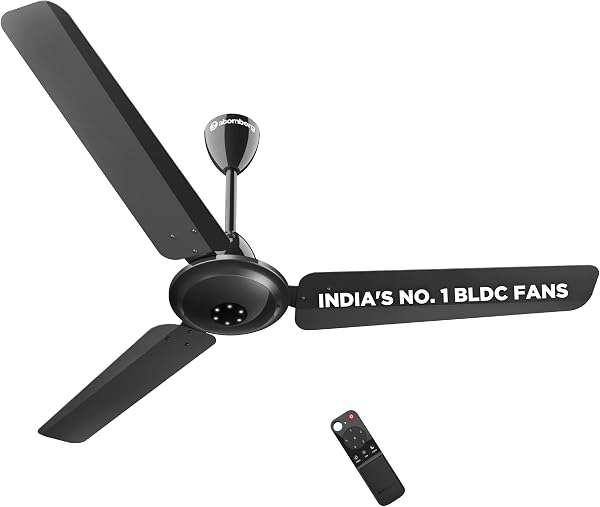
The colorbot stella bldc ceiling fans 1200mm follows this architecture. It pairs a 1200mm sweep (that's the diameter of the circle the blades cover) with a remote-controlled six-speed motor, a timer function, and a sleep mode that steps down the speed gradually through the night. Colorbot's positioning is clearly value-first — it undercuts the market leader Atomberg by a meaningful margin while keeping the core BLDC feature set intact.
What does that trade-off actually cost you? Typically three things: brand pedigree in after-sales service, the depth of the service network (Colorbot operates largely through online sellers and third-party service partners rather than a nationwide company-owned network), and occasionally build polish — plastics, remote finish, blade balancing out of the box. None of these are dealbreakers at this price, but you should know about them before you click buy.
What "1200mm" Means for Your Room
A 1200mm fan is the Indian standard for a reason — it is the correct choice for rooms up to about 120–150 sq ft, covering most master bedrooms, second bedrooms, and small living rooms in a typical 2BHK or 3BHK flat. If your room is bigger than 150 sq ft, or your ceiling is above 3.2 metres, you should be looking at a 1400mm fan instead. Conversely, a 900mm fan in a 12×12 bedroom will leave corners stuffy. If you're replacing an existing 1200mm fan, you can swap it out without changing the downrod length or hook position.
Key Factors to Consider Before Buying the Colorbot Stella BLDC 1200mm
1. Air delivery and RPM, not just wattage
Every BLDC fan claims to save power; that is the easy part. The harder question is whether it moves enough air. Look for air delivery of roughly 210–230 cubic metres per minute (CMM) at top speed and an RPM figure around 350–420. If a listing doesn't disclose air delivery at all, that is a signal the motor was optimised entirely for low wattage and not for actual comfort on a 42°C May afternoon in Nagpur. Colorbot's Stella is broadly in line with category norms here — it is not the strongest blower in the segment, but it is entirely adequate for a bedroom.
2. Remote-only operation
BLDC fans run on an electronic controller, which means a conventional wall regulator (the resistance-type dimmer) will not work with them — you either bypass it or leave it at maximum. Some BLDC fans offer a pull-cord or wall-switch-based speed control for people who hate remotes. The Colorbot Stella is primarily remote-driven. If you have elderly parents at home or you're installing in a guest room where the remote will predictably vanish, factor in the cost of a replacement remote (typically ₹300–₹600 from the brand) or consider keeping the remote mounted in a wall holder.
3. Voltage range and inverter compatibility
This is the single most underrated spec for Indian buyers. Look for an operating voltage range of 100–290V or wider. In a power-cut-prone area with a home inverter, a BLDC fan with a wide input range will keep running smoothly on inverter output and will not strain the backup. Narrow-range electronics tend to misbehave or reset during voltage dips.
4. BEE star rating and warranty
A genuine BEE 5-star rating for ceiling fans requires the service value (air delivery per watt) to cross a specific threshold. Check that the star rating appears on the actual product label, not just in the listing title. On warranty, Colorbot typically advertises a limited motor warranty — worth confirming on the product page, because a budget fan's warranty is only as good as the service partner in your city. Before ordering, do a quick search for "Colorbot service centre [your city]" to check coverage.
5. Build quality and finish options
Budget fans often use thinner aluminium blades and lighter-grade powder coating. In coastal cities like Chennai, Kochi, or Mumbai, that matters — cheap coating chalks and peels within two summers. Check recent buyer photos in the review section for signs of rust at the blade hub. The Stella is offered in a limited set of finishes (typically brown, white, and ivory variants), so match it to your room's ceiling colour before ordering rather than after.
Colorbot Stella BLDC 1200mm: Detailed Breakdown of What You Get
Motor and performance
The Stella uses a BLDC motor rated in the region of 28–32 watts at maximum speed, which is a genuine 60–65% reduction over a conventional 75W fan. Six speed steps via remote give you finer control than the three-step regulator you're used to — speed 3 on a BLDC fan typically feels like speed 2 on an old fan, so in practice you'll spend most evenings on speed 2 or 3, which is where the wattage drops into the low teens. That is where the real savings live.
Remote features
The remote bundles the essentials: speed up/down, timer (commonly 1/2/3/4/6-hour options), and a sleep mode that reduces speed over time so you don't wake up cold at 3 a.m. Some variants include a "boost" or high-speed mode. The remote is RF-based, which is good — it works without line-of-sight, so you can operate the fan from the doorway. Most units ship with the remote and a cell battery in the box; verify this in the listing because some sellers list the remote as a separate accessory.
Installation and blade balancing
Box contents typically include the motor assembly, three blades, downrod, shackle, canopy, and a hardware kit. Installation is straightforward and most buyers use the seller's installation add-on or a local electrician (₹150–₹300 in most cities). One thing to watch: if the fan wobbles after installation, check that the blade screws are evenly torqued before blaming the motor — uneven torque is the cause nine times out of ten. Also confirm the downrod gives you at least 2.3 metres of clearance from the floor and 30cm from the nearest wall.
Comparison: Colorbot Stella vs Popular 1200mm BLDC Fans
Here is how the colorbot stella bldc ceiling fans 1200mm stacks up against the names you'll see side by side on Amazon. Prices are indicative street prices and move constantly during sale events — always check the live listing.
| Model | Approx. Price | Power (Top Speed) | Speeds / Control | Best For |
|---|---|---|---|---|
| Colorbot Stella BLDC 1200mm | ₹2,600 – ₹3,300 | ~28–32W | 6 speeds, RF remote | Budget-conscious buyers replacing 2–3 fans at once |
| Atomberg Renesa 1200mm | ₹3,300 – ₹4,200 | ~28W | 5 speeds, remote + app (select models) | Best service network, proven reliability |
| Crompton Energion Hillview 1200mm | ₹3,200 – ₹3,900 | ~35W | 5 speeds, remote | Strong brand service, good air delivery |
| Orient Electric Aeroslim 1200mm | ₹3,500 – ₹4,500 | ~32W | 5 speeds, remote | Premium finish, IoT variants available |
| Polycab Silencio BLDC 1200mm | ₹3,000 – ₹3,800 | ~30W | 5 speeds, remote | Quiet operation |
| Standard 1200mm induction fan (any brand) | ₹1,400 – ₹2,200 | ~75W | 3 steps, wall regulator | Lowest upfront cost, zero electronics to fail |
Where Colorbot wins
Price, plainly. If you are outfitting three bedrooms in a new flat, the difference between the Stella and a comparable Atomberg unit is roughly ₹2,500–₹3,000 across the purchase — money that can go towards installation, a stabiliser, or just stay in your account. The six-speed control is also one step finer than most rivals at this price, and the feature set (timer, sleep mode, RF remote) is not stripped down.
Where Colorbot loses
After-sales certainty. Atomberg, Crompton, and Orient have deeper, more predictable service networks in tier-2 and tier-3 cities. Colorbot's support runs through online seller channels and authorised partners, which can mean longer resolution times if something fails in year two. If you live in a metro, this is a minor concern. If you're in a smaller town, weigh it seriously.
Pros and Cons of the Colorbot Stella BLDC 1200mm
Pros
- Genuine bill savings: At ~30W versus ~75W for eight hours a night, you save roughly ₹1,000–₹1,100 per fan per year at ₹8/unit tariff. Payback on the BLDC premium is typically 18–24 months.
- Lowest entry price in the BLDC segment: Among the cheapest five-star BLDC 1200mm fans from a recognisable Indian brand.
- Six speed steps with sleep and timer modes — practical features you'll actually use, not spec-sheet filler.
- RF remote works without pointing, which matters more than people expect in a dark bedroom.
- Wide voltage tolerance on most units means it copes with Indian supply fluctuations and inverter backup better than older BLDC designs.
Cons
- Remote dependency: lose the remote and you're stuck on the default speed until a replacement arrives.
- No wall-regulator support: you must bypass or cap your existing regulator, which some electricians handle clumsily.
- Thinner service network than legacy brands — check your pin code before buying.
- Air delivery is adequate, not exceptional. For very large halls or high ceilings, a 1400mm or a higher-CMM model is the better call.
- Finish options are limited and may not match every interior palette.
Buying Guide: Where to Buy and When to Get the Best Price
Amazon vs Flipkart — which is better for this fan?
Both platforms list Colorbot fans, and pricing swings between them week to week. In practice, Amazon tends to have the deeper review base for this brand (more buyer photos, more installation feedback), which is worth a lot when you're evaluating a less-established name. Flipkart sometimes undercuts during its Big Billion Days and Big Saving Days events. Do not assume loyalty — open both apps, check the seller rating (avoid anything below 4.0), and confirm the seller is a brand-authorised or high-volume seller rather than a marketplace reseller.
The best times to buy in India
- Amazon Great Indian Festival (Sept–Oct) and Prime Day (July): typically the deepest discounts on fans, often ₹500–₹900 below regular price, plus bank card instant discounts of 10%.
- Flipkart Big Billion Days (Sept–Oct): comparable pricing, occasionally better with exchange offers.
- Republic Day and Holi sales (Jan–Mar): the second-best window, and conveniently timed right before summer.
- Avoid April–June: peak fan season means sellers hold price. If you must buy then, buy a multi-pack.
Buying multi-packs saves real money
Colorbot and most competitors offer 2-fan and 3-fan combo packs on Amazon. The per-unit price typically drops ₹200–₹400, and you save on shipping. If you're replacing all the fans in a 2BHK, this is the single easiest saving available. Do check that all units in the pack carry the remote — a few budget combos ship a single remote for multiple fans.
Stack the discounts
Beyond the listed price, stack these where available: bank instant discounts (HDFC, ICICI, SBI cards regularly feature 10% offers capped at ₹1,000–₹1,500), no-cost EMI on higher-value carts, Amazon Pay or Flipkart SuperCoins cashback, and exchange offers if you're trading in an old fan. A ₹2,900 fan frequently lands at ₹2,300 effective price at the right time of year.
Installation costs to budget for
Amazon and Flipkart both sell installation add-ons for roughly ₹200–₹400 per fan. A local electrician will charge ₹150–₹300, or often ₹500–₹700 for three fans in one visit. Do not skip a proper install — a badly hung fan wobbles, and wobble is the number one cause of bearing noise complaints and negative reviews.
Real-World Usage Tips for Indian Homes
Run it on lower speeds
The biggest mistake new BLDC owners make is running the fan on speed 5 all night. Speed 2–3 on a BLDC fan delivers airflow comparable to speed 3–4 on an old induction fan, at 12–18 watts. That's where your bill savings actually materialise. Use sleep mode and let the fan step down automatically.
Handle summer voltage dips
If your area sees frequent voltage drops in May–June, add a small voltage stabiliser for the fan circuit, or at least confirm your inverter's output waveform is pure sine wave — modified sine wave inverters can cause BLDC controllers to hum or drop speeds. This applies to any BLDC fan, not just Colorbot.
Maintenance that actually matters
Dust on the blades unbalances the fan and reduces air delivery. Wipe the blades every three to four weeks during summer with a damp cloth. Do not oil the motor — BLDC motors are sealed and lubrication is not a user task. If you hear a rhythmic clicking, check the blade screws before assuming the bearing has failed, and record a short video of the noise for the warranty claim.
Keep the remote alive
Remote cells typically last 12–24 months. Store the remote in a fixed wall holder rather than loose on a bedside table, and register the fan's model number somewhere you can find it — replacement remotes need the exact model, and pairing a mismatched remote is a frustrating dead end.
Frequently Asked Questions
Does the Colorbot Stella BLDC 1200mm work with a traditional wall regulator?
No. BLDC fans use an electronic controller inside the motor housing and are not designed to be dimmed by a resistance-type regulator. You should have the regulator bypassed or left permanently at maximum, then control speed entirely through the remote. Tell your electrician this before installation — it takes two minutes to do correctly and avoids a call-back.
Will it run on an inverter during a power cut?
Yes, and this is one of the strongest arguments for buying it. At roughly 30W, a BLDC fan draws a fraction of what a 75W fan does, so your inverter backup lasts considerably longer — often two to three times as long on the same battery. Confirm the fan's input voltage range covers your inverter's output before you rely on this.
Is the Colorbot Stella genuinely a BEE 5-star rated fan?
BLDC ceiling fans in this performance class generally qualify for a high BEE star rating because service value (air delivery per watt) is what the rating measures, and BLDC motors excel there. That said, always verify the star rating on the physical label and the official BEE database rather than trusting a marketplace listing title — several sellers inflate ratings in their keywords.
How much can I actually save on my electricity bill?
Run the math: an old 75W fan used eight hours a day, 365 days, consumes about 219 units a year. At ₹8 per unit that's roughly ₹1,750. A 30W BLDC fan on the same schedule uses about 88 units — around ₹700. So the saving is roughly ₹1,050 per fan per year. Three fans, ₹3,150 a year. The higher your tariff slab, the faster the payback.
Is the Colorbot Stella noisy?
At speeds 1–3 it is very quiet — that is inherent to BLDC motors, which lack the brush hum of conventional designs. At speeds 5–6 you will hear blade noise, as with any 1200mm fan moving that much air. If you hear a rattle or clunk rather than airflow noise, it is almost always blade imbalance or a loose canopy, not the motor.
What warranty do I get, and who honours it?
Colorbot typically advertises a limited warranty on the motor, with the exact duration stated on the product page. Claims are handled through the seller or the brand's service partner. Before buying, search for Colorbot's authorised service partner in your city and save the invoice PDF — Amazon order history is not always accepted as proof of purchase for warranty claims.
Should I buy the Colorbot Stella or pay more for an Atomberg?
If you are buying one fan for a room you use every night and you want zero hassle, paying ₹700–₹900 more for an Atomberg gets you a proven motor, a genuinely nationwide service network, and a well-tested remote. If you are buying three or four fans for a new flat and budget is tight, the Colorbot Stella BLDC delivers most of the efficiency benefit at meaningfully lower cost — just verify local service support first.
Final Verdict: Is the Colorbot Stella BLDC 1200mm Worth Buying?
Yes — with eyes open. The colorbot stella bldc ceiling fans 1200mm is one of the better value propositions in the Indian BLDC ceiling fan market right now. It delivers the core benefit buyers actually care about — roughly 60% lower power consumption than a conventional fan, with real, calculable savings of about ₹1,000 per fan
Affiliate Disclosure:
This post contains affiliate links. We may earn a commission when you purchase through our links, at no extra cost to you.
Share this: