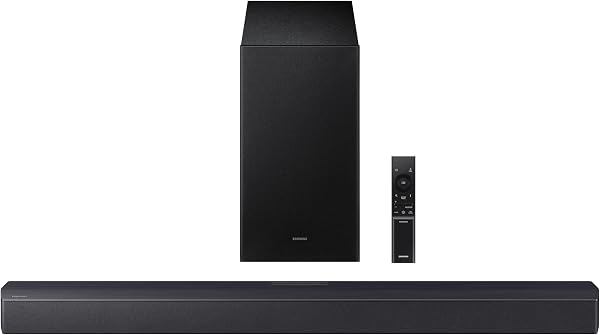
Audio Array Sound Bar for Smart TV: The Complete Buying Guide for Indian Homes

About Rahul Verma: Rahul is a tech enthusiast and gadget reviewer with over 8 years of experience testing consumer electronics. He specializes in audio gear, smartwatches, and mobile accessories. When he is not testing products, you will find him exploring the latest in AI and smart home technology.
You spent ₹65,000 on a 55-inch 4K smart TV, mounted it beautifully on the wall, and then discovered the dirty secret of modern televisions: the sound is thin, boxy, and almost insulting. Dialogue in Mirzapur sounds like it's coming from a phone speaker, and the "bass" in a festival song is more of a polite suggestion than an actual low end. You are not imagining it — slim panels physically cannot house decent drivers.
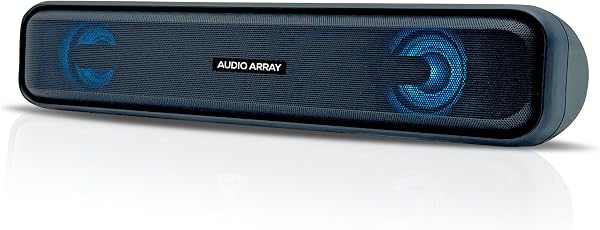
This is exactly why an audio array sound bar for smart tv has become the single most sensible upgrade for Indian living rooms. Instead of two tiny speakers firing downwards, an array-based bar packs five, seven, or even fifteen drivers in a row and uses digital processing to steer sound across your room. Done right, it delivers clearer dialogue, real stereo width, and a sense of height that makes OTT content feel cinematic.
In this guide, we will break down what an audio array sound bar for smart tv actually does, which specifications genuinely matter (and which are marketing noise), specific recommendations across price bands from ₹5,000 to ₹1,00,000, current indicative street prices in India, and — importantly — when and where to buy so you don't overpay. Let's get into it.
Understanding What an Audio Array Sound Bar for Smart TV Really Means
An "array" soundbar is one that uses multiple small drivers placed in a line, with a digital signal processor (DSP) controlling the timing and volume of each driver individually. By introducing tiny delays and phase shifts, the bar can create "beams" of sound that arrive at your ears from directions where there are no physical speakers. This is the technology behind virtual surround, dialogue enhancement, and the "sound from the ceiling" effect in Dolby Atmos content.
A basic single-driver or two-driver bar simply fires sound forward. An audio array sound bar for smart tv actively shapes it. That difference matters enormously in Indian living rooms, which are typically 12×16 feet open-plan spaces with hard floors, a TV against one wall, and seating that is often off-centre. A good array compensates for that asymmetry.
Array vs conventional soundbar: what changes in practice
- Dialogue clarity: Arrays use centre-channel beamforming so speech is anchored to the screen. This is the number one reason people buy a bar, especially for watching news and serials.
- Wider sweet spot: A conventional 2.0 bar sounds its best dead-centre. An array spreads the stereo image so the person sitting on the sofa's edge still hears a balanced mix.
- Virtual height: Bars with up-firing drivers plus array processing bounce sound off your ceiling, giving an Atmos-like effect without in-ceiling speakers.
- Room correction: Mid-range and premium arrays (Samsung's SpaceFit, Sony's room calibration, JBL's auto-calibration) measure your room acoustics using a microphone and adjust beam angles accordingly.
The flip side is complexity. Array bars need a proper HDMI eARC connection, more power, and often an app for calibration. A ₹6,000 bar from a budget brand will not do all of this — which is why knowing where the value tier sits matters before you spend.
Why Your Smart TV's Built-In Speakers Fall Short
Modern LED and OLED panels are 2-3 cm thick at best. That limits speaker drivers to roughly 10-20W total output, typically firing downwards or backwards. Manufacturers compensate with heavy processing, but physics wins: you get compressed dynamics and no low-frequency extension below about 150 Hz. Anything below that — bass drums, explosions, the rumble in a thriller — simply isn't there.
There's a second issue specific to Indian homes. Most TV setups place the panel against a bare wall with a tiled or vitrified floor, both of which reflect high frequencies harshly. Built-in speakers already sound thin, and the room makes it worse. An audio array sound bar for smart tv placed on a TV unit or wall-mounted beneath the panel addresses both problems at once by putting drivers closer to ear height and closer to the listener.
If you mainly watch YouTube at low volume, a basic 2.1 bar is fine. If you subscribe to Netflix, Prime Video, JioHotstar, or Apple TV+ and care about the experience, spend for the array.
Key Factors to Consider Before Buying
1. Channel configuration and driver count
You will see configurations like 2.1, 3.1, 5.1.2, and 11.1.4. The first digit is the number of ear-level channels, the second is the subwoofer, and the third is the height/up-firing channels. For stereo content (songs, YouTube, most news), a 2.1 or 3.1 layout is honestly sufficient. For OTT Atmos content, 5.1.2 is the sweet spot. Anything above 7.1.4 is diminishing returns unless you have a dedicated media room.
Equally important is raw driver count. A 5.0-channel all-in-one bar with seven drivers can produce a more convincing virtual surround effect than a 5.1-channel bar with only three physical drivers and a subwoofer. Look at the physical speaker count, not just the channel number on the box.
2. HDMI eARC — non-negotiable in 2025
If your smart TV was made after roughly 2019, it has an HDMI ARC or eARC port. Use it. Optical cables cannot carry Dolby Atmos, Dolby TrueHD, or DTS:X — they are limited to compressed 5.1. Many buyers in India buy a capable bar and connect it over Bluetooth, then wonder why the surround effect never appears. Bluetooth also introduces 100-200 ms of audio lag, which is visible while watching dialogue.
Check that your TV has eARC (Enhanced Audio Return Channel) specifically, not just ARC. Almost all 2022-and-later mid-range and premium TVs do. If yours only has ARC, you still get compressed Dolby Digital Plus, which is what most Indian OTT apps actually stream — that's fine.
3. Codec support: match it to what Indian OTT actually streams
This is where buyers overthink. Netflix India, Prime Video, and JioHotstar predominantly stream in Dolby Digital Plus (E-AC-3), sometimes with Atmos metadata. Very few titles use DTS. So a bar with excellent Dolby Atmos and Dolby Digital Plus handling will serve you well; DTS:X support is nice-to-have but rarely exercised.
Also check for Dolby Atmos over Dolby Digital Plus specifically. Some budget bars advertise "Dolby Atmos" but only decode it from a raw source and cannot process it over HDMI ARC from a TV app.
4. Room size and power output
For a 10×12 ft bedroom, 100-200W total system power is plenty. For a 15×20 ft living room with an open kitchen, aim for 300W and above, ideally with a 6.5-inch or 8-inch wireless subwoofer rather than a 5-inch one. Wattage figures are manufacturer-claimed and not standardised, so treat them as a rough ranking rather than a spec sheet to compare strictly.
5. Wireless subwoofer and optional rear speakers
A wireless subwoofer is the single biggest quality jump you can buy in the sub-₹30,000 range. It takes the low-frequency burden off the bar's small drivers, which instantly cleans up dialogue. Detachable or add-on rear speakers (JBL Bar 800 and above, Samsung Q990 series, LG S95QR) transform the experience for films but require power sockets behind your seating — plan for that before purchase.
6. Smart features and multi-room
Wi-Fi, AirPlay 2, Chromecast, Spotify Connect, and built-in Alexa or Google Assistant matter if you plan to use the bar for music without turning on the TV. For a pure TV-first buyer, these are secondary. Do check for Bluetooth 5.0 or higher and a working companion app — calibration features are often app-only.
7. Warranty and service network
In India, this is often the deciding factor. Samsung, LG, and Sony have service centres in most tier-2 cities; niche imports may require shipping the unit to a metro. JBL/Harman has decent coverage. Budget online-first brands typically offer pickup-and-drop service through courier partners. Confirm the warranty period — one year is standard, and extended warranty via the retailer is usually worth ₹1,500-₹3,000 on a bar above ₹30,000.
Best Audio Array Sound Bar for Smart TV: Top Picks by Budget
Prices below are indicative street prices in India as observed across Amazon, Flipkart, Croma, and Reliance Digital. Soundbar pricing in India swings 20-35% during festive sales, so treat these as reference points, not fixed rates.
Under ₹10,000 — entry-level, but not embarrassing
boAt Aavante Bar 1500 (~₹5,000-₹6,500) and Zebronics Zeb-Juke Bar 9400 (~₹6,000-₹7,000) are the two most reliable budget picks. Both are 2.1-channel units with a wired or semi-wireless subwoofer, HDMI ARC, optical, and Bluetooth. They will not give you Atmos or beamforming, but they will give you a genuine low end and louder, clearer dialogue than the TV. For a bedroom TV or a secondary setup, this is where the value lies.
Reality check: at this price, "array" is mostly marketing. You get multiple drivers, not beamforming. If genuine spatial audio matters to you, save for the next tier.
₹10,000-₹20,000 — the practical sweet spot for most homes
JBL Cinema SB271 (~₹10,500-₹13,000) is the standout here. It is a 2.1-channel, 220W system with a wireless subwoofer, four drivers, HDMI ARC, optical input, and Bluetooth. The subwoofer genuinely performs — it reaches low enough for film soundtracks without turning muddy. Build quality is above what the price suggests, and JBL's service network in India is solid.
Sony HT-S400 (~₹18,000-₹21,000) is the alternative if you want Sony's processing and a slightly more refined midrange, though it lacks height channels. Samsung HW-B450 (~₹16,000-₹19,000) is worth a look if you own a Samsung TV, since it integrates with the TV's sound menu and can use the TV speakers as an additional centre channel.
₹20,000-₹35,000 — where true arrays begin
Sony HT-S2000 (~₹27,000-₹32,000) is one of the best-value genuine audio array sound bars for smart TV buyers in India. It uses a five-driver array with a built-in subwoofer (no separate box), supports Dolby Atmos and DTS:X, and applies Sony's vertical surround processing to create height without up-firing drivers. If your TV unit is shallow and you cannot accommodate a separate subwoofer box, this is the smart pick. Bass is respectable for its size but will not shake a large room.
Samsung HW-S60D (~₹22,000-₹27,000) is a 5.0-channel all-in-one with a seven-speaker array. No subwoofer, but side-firing drivers create real width. It is slim, wall-mount friendly, and pairs neatly with Samsung TVs via Q-Symphony. Great for apartments where a subwoofer would annoy neighbours.
₹35,000-₹60,000 — the best all-round performance bracket
Samsung HW-Q800D (~₹40,000-₹46,000) is, for most Indian living rooms, the most sensible premium purchase. It is a 5.1.2-channel system with a wireless subwoofer, up-firing height drivers, Dolby Atmos and DTS:X, HDMI eARC, and SpaceFit Sound room calibration. The array processing genuinely creates overhead effects in Atmos films, and the subwoofer is substantial enough for a 300 sq ft room. It also supports Q-Symphony, using your Samsung TV's speakers alongside the bar.
Bose Smart Soundbar 600 (~₹45,000-₹55,000) is the pick if music matters as much as films. It uses a phased array of drivers plus up-firing units to produce convincing virtual Atmos from a single
Affiliate Disclosure:
This post contains affiliate links. We may earn a commission when you purchase through our links, at no extra cost to you.
Share this: