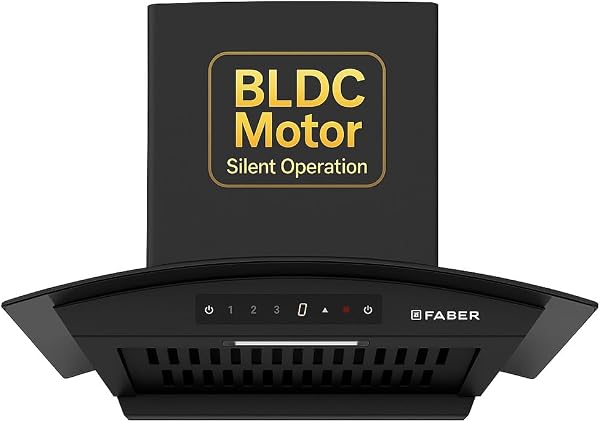
Bosch Chimney 60 cm: The Complete Buying Guide for Indian Kitchens

About Rahul Verma: Rahul is a tech enthusiast and gadget reviewer with over 8 years of experience testing consumer electronics. He specializes in audio gear, smartwatches, and mobile accessories. When he is not testing products, you will find him exploring the latest in AI and smart home technology.

If you have a standard Indian kitchen with a 60 cm hob, a 60 cm chimney is the size you should be looking at — and Bosch is one of the few brands that gets the combination of suction power, build quality and low noise genuinely right. But here's the problem: Bosch's India lineup is confusing. Model numbers like DWK68H60I and DWKA68H60I look almost identical, prices swing by ₹8,000–₹10,000 between Amazon and Flipkart depending on the sale, and listings rarely tell you whether you're getting a baffle filter or a filterless design.
This guide cuts through that. We'll walk through what actually matters in a Bosch chimney 60 cm, break down the models worth buying at three price points, compare them side by side, and explain exactly when to buy so you don't overpay. By the end, you'll know precisely which Bosch chimney fits your kitchen, your cooking style and your budget.
A quick note on pricing: all prices below are indicative street prices in India at the time of writing and fluctuate with sales, seller and pin code. Always confirm the current price, warranty terms and included accessories on the retailer's product page before ordering.
Why 60 cm Is the Right Size for Most Indian Kitchens
A 60 cm chimney is designed to sit directly above a 60 cm cooktop. The chimney's capture area should be at least as wide as your hob — ideally a few centimetres wider — so that smoke and oil particles rising from the outermost burner are sucked in rather than drifting into the kitchen. In India, the overwhelming majority of modular kitchen hobs are 60 cm wide, whether they're 3-burner or 4-burner units. That makes the Bosch chimney 60 cm the default choice for apartments in Mumbai, Pune, Bengaluru and the NCR.
Go smaller and you'll lose capture efficiency at the edges. Go for a 90 cm chimney over a 60 cm hob and you're paying for extra steel, extra suction capacity and extra installation complexity without a proportional gain — unless you plan to upgrade to a 5-burner hob later. For a standard 2BHK or 3BHK kitchen with a 60 cm hob, the Bosch chimney 60 cm range is exactly the sweet spot of price and performance.
One more thing Indian buyers should know: 60 cm chimneys are usually easier to fit into tight kitchens with overhead cabinets. Bosch's 60 cm wall-mounted units have a relatively slim hood depth, which means you don't lose as much headroom or cabinet space as you would with a bulkier 90 cm model.
Understanding Bosch Chimneys: What You're Actually Paying For
Bosch enters the Indian chimney market through BSH Home Appliances, the same company that sells Bosch washing machines and dishwashers here. That matters because Bosch's reputation in India is built on German-engineered reliability and service depth rather than aggressive pricing. When you buy a Bosch chimney 60 cm, you're paying a premium over a comparable Faber or Elica — typically 20–35% more — for better build tolerances, quieter operation and a service network that's generally more responsive in metro cities.
Bosch's India Lineup, Simplified
Bosch doesn't segment its Indian chimneys with a loud marketing hierarchy the way some competitors do, but in practice the range splits into three broad bands:
- Entry-level 60 cm models — typically baffle or cassette filter designs with around 1,100–1,200 m³/hr suction, push-button or basic touch controls, and prices in the ₹15,000–₹20,000 range on a good day.
- Mid-range filterless 60 cm models — these are the ones most Indian buyers should be looking at. Higher suction (1,200–1,250 m³/hr), oil collector designs that skip traditional mesh filters, touch controls, and street prices around ₹21,000–₹26,000.
- Premium Serie 6 / Serie 8 60 cm models — auto-clean or heat-based cleaning cycles, gesture or advanced touch panels, lower noise figures, and prices climbing past ₹30,000 into the ₹40,000s.
Filterless vs Baffle Filter: The Decision That Matters Most
In an Indian kitchen, filters are where chimneys go to die. Mesh filters clog with masala-laden oil within weeks and become a scrubbing nightmare. Baffle filters (stainless steel V-shaped channels) are dishwasher-safe and last longer, but they're noisier and slightly less efficient at trapping fine grease.
Filterless designs — which Bosch sells under the DWKA series — use a combination of centrifugal separation and an oil collector tray. There's no mesh to scrub; you simply wipe the tray and the inner surface every few weeks. For anyone doing regular tadka, deep-frying or heavy North Indian cooking, this is the single most important feature to prioritise. If you're a light cook who mostly steams and sautés, a baffle filter is perfectly fine and saves you money.
Key Factors to Consider Before Buying a Bosch Chimney 60 cm
1. Suction Capacity: Match It to Your Cooking
Suction is measured in m³/hr, and the numbers advertised are almost always maximum figures measured at the motor's free-run point — real-world performance at the hood opening is lower. For a 60 cm chimney in an Indian home:
- Under 1,000 m³/hr — only suitable for light cooking, boiling and steaming. Avoid if you fry regularly.
- 1,100–1,250 m³/hr — the practical sweet spot for most families. Bosch's 60 cm range sits here.
- 1,300 m³/hr and above — worth it only if you have an open-plan kitchen or fry daily at high heat.
Also check the static pressure figure. If your kitchen requires a long duct run or multiple bends to reach an external wall, a higher-pressure chimney will keep performing when a cheaper one chokes. Bosch units generally hold up well here, which is one reason they're popular in apartments where the exhaust shaft is far from the hob.
2. Mounting Type
Bosch's 60 cm chimneys in India are predominantly wall-mounted, hood-style units — the classic pyramid or T-shape that bolts to the wall above the hob. Built-in and island variants exist but are harder to source and install in Indian kitchens. For most buyers, wall-mounted is the right and only practical answer.
3. Noise Level
This is where Bosch genuinely earns its premium. Many Indian chimneys sound like a small aircraft at maximum speed; Bosch's acoustic engineering keeps things noticeably more civilised, typically in the high 50s to mid 60s decibel range at full tilt. In an apartment where the kitchen is next to the living room, that difference is the difference between a usable space and a headache.
4. Controls and Convenience Features
Touch panels look great but can fail in humid, oily kitchens — Bosch's are generally well-sealed. More useful than a fancy display are: a delay-off timer (runs the fan for a few minutes after you finish cooking), a filter-clean indicator, and adequate LED lighting that actually illuminates the burners rather than casting a decorative glow.
5. Ducting and Installation Realities
Bosch chimneys are designed for ducted (external exhaust) operation with a 150 mm duct. If your building has a common exhaust shaft, great. If you have no duct route at all, you'll need to run it in recirculation mode with a charcoal filter — possible, but noticeably less effective, and you'll replace the charcoal every 3–4 months. Budget ₹800–₹1,800 for ducting and clamps if installation is not bundled.
Best Bosch Chimney 60 cm Models in India — Detailed Breakdown
Below are the three tiers worth considering, with what each gets you and who it suits.
1. Bosch DWK68H60I — The Sensible Entry Point (Approx. ₹17,000–₹20,000)
This is the Bosch chimney 60 cm that most buyers encounter first. It's a wall-mounted unit with roughly 1,200 m³/hr suction, a baffle filter design and touch controls. The build is reassuringly solid — thick stainless steel, tight panel gaps, a proper motor housing rather than a tin shell.
Pros:
- Genuine Bosch build quality at a price that isn't wildly above Faber/Elica equivalents
- Baffle filter is dishwasher-safe, so maintenance is manageable
- Quieter than most rivals at this price
- Suction is more than adequate for a 4-burner hob in a standard kitchen
Cons:
- Baffle filters still need periodic degreasing if you fry heavily
- Basic feature set — no auto-clean, no gesture control
- Ducting and installation are sometimes charged separately
Best for: First-time chimney buyers, light-to-moderate cooks, and anyone who wants Bosch reliability without stretching the budget.
2. Bosch DWKA68H60I — The Filterless Sweet Spot (Approx. ₹22,000–₹26,000)
This is the model we'd recommend to most Indian households. The "A" in the model name signals Bosch's filterless architecture — no mesh, no baffle plates, just centrifugal separation and a removable oil collector tray. Suction is around 1,250 m³/hr, which comfortably handles daily Indian cooking.
Pros:
- Filterless design means no scrubbing mesh filters ever again — a genuine quality-of-life upgrade
- Higher suction than the entry model, better suited to deep-frying and high-heat cooking
- Touch controls with a cleaner, more modern face
- Excellent match for open kitchens where noise and appearance both matter
Cons:
- ₹5,000–₹6,000 more than the baffle-filter model for a feature you may not need if you cook light
- Oil tray needs wiping every 2–3 weeks to stay effective
- Occasionally out of stock on one platform — check both Amazon and Flipkart
Best for: Families cooking Indian food daily, anyone tired of cleaning mesh filters, and buyers who plan to keep the chimney for 7–10 years.
3. Bosch Serie 6 / Serie 8 60 cm Models — The Premium Pick (Approx. ₹30,000–₹42,000)
At the top of the range, Bosch's premium 60 cm wall-mounted chimneys add features like auto-clean or heat-based cleaning cycles, higher suction in the 1,300+ m³/hr zone, gesture or advanced touch control, and further noise reduction. Availability shifts through the year, and model numbers in this band change more frequently than the entry and mid tiers.
Pros:
- Auto-clean cycles genuinely reduce long-term maintenance effort
- Best-in-class noise figures for a 60 cm unit
- Premium finishes that hold up better against oil staining over years
Cons:
- You're paying a significant premium for convenience rather than core suction
- Diminishing returns unless your kitchen is open-plan or you cook very heavily
Best for: Open kitchens, premium modular setups, and buyers who want the least possible maintenance.
Bosch Chimney 60 cm Comparison Table
| Model | Filter Type | Suction (approx.) | Controls | Approx. Price | Best For |
|---|---|---|---|---|---|
| Bosch DWK68H60I | Baffle | 1,200 m³/hr | Touch | ₹17,000–₹20,000 | Budget-conscious, moderate cooking |
| Bosch DWKA68H60I | Filterless | 1,250 m³/hr | Touch | ₹22,000–₹26,000 | Daily Indian cooking, low maintenance |
| Bosch Serie 6 / Serie 8 (60 cm) | Filterless / auto-clean | 1,300+ m³/hr | Touch / gesture | ₹30,000–₹42,000 | Open kitchens, premium setups |
Bosch vs the Competition: Is the Premium Worth It?
Faber and Elica dominate Indian chimney sales, and at any given price point they usually offer higher headline suction figures than Bosch. A ₹20,000 Faber may claim 1,500 m³/hr where a similarly priced Bosch chimney 60 cm claims 1,200. On paper, Bosch loses.
In practice, the comparison is closer than the spec sheets suggest. Bosch's numbers tend to be measured more conservatively, its noise levels are lower, its build quality is more consistent, and its filterless designs are genuinely easier to live with over five years. Where Bosch falls short is service reach in smaller towns — in Tier-2 and Tier-3 cities, Faber and Elica have deeper networks. If you're in a metro, Bosch is a strong buy; if you're in a smaller city, check local service availability first.
Where and When to Buy for the Best Price
Bosch chimneys in India sell primarily through Amazon and Flipkart, with offline presence
Affiliate Disclosure:
This post contains affiliate links. We may earn a commission when you purchase through our links, at no extra cost to you.
Share this: