Havells Aquas Lite Water Purifier: Complete Buying Guide, Price, Features and Best Deals

About Rahul Verma: Rahul is a tech enthusiast and gadget reviewer with over 8 years of experience testing consumer electronics. He specializes in audio gear, smartwatches, and mobile accessories. When he is not testing products, you will find him exploring the latest in AI and smart home technology.
If you have spent even twenty minutes scrolling through water purifier listings on Amazon or Flipkart, you already know the problem: almost every model claims "7-stage purification", "alkaline water" and "copper infusion", and the price tags swing wildly from ₹5,999 to ₹25,000. For a family that simply wants safe, good-tasting drinking water without overpaying, that noise is exhausting. The havells aquas lite water purifier sits in that crowded but genuinely important entry-to-mid segment, and it is one of the more sensible options if your water source is borewell or municipal supply with moderate to high TDS.
In this guide, we break down exactly what the Havells Aquas Lite water purifier offers, who it suits and who should look elsewhere. You will find indicative pricing across variants, a side-by-side comparison with Havells' own higher models and key competitors, a clear pros-and-cons breakdown, practical tips for Indian households dealing with hard water and low pressure, and honest advice on when to buy to get the best deal. By the end, you should be able to decide in under five minutes whether this purifier belongs in your kitchen.
What is the Havells Aquas Lite Water Purifier?
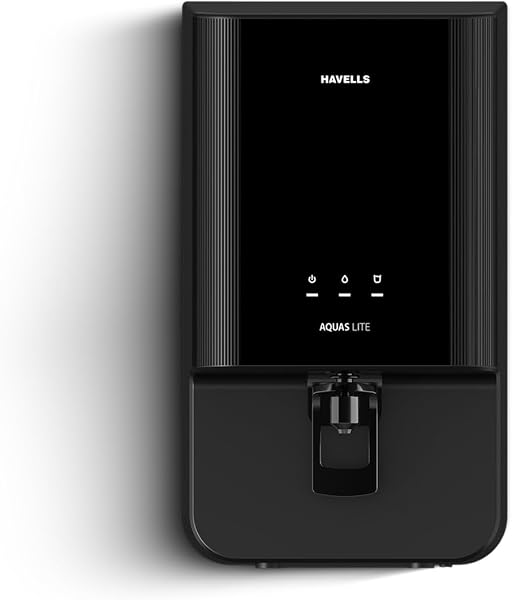
The Havells Aquas Lite is positioned as an affordable RO + UV water purifier in Havells' Aqua series, aimed at small-to-mid-size families (roughly three to five members) who want a branded, service-backed purifier without spending upwards of ₹12,000. It is a wall-mountable, storage-tank model — which matters a great deal in India, because a tank means you still get purified water during power cuts and low-pressure hours.
Havells has been steadily expanding its water purification business, and the Aqua range is built around the standard Indian requirement: multi-stage purification that combines a sediment filter, activated carbon, an RO membrane, UV treatment and, in some variants, an additional copper or alkaline cartridge. The havells aquas lite water purifier follows this formula in a compact body, typically with a tank in the 6–8 litre range and a purification capacity of around 10–12 litres per hour, which is adequate for drinking and cooking needs of a four-member household.
One important caveat before you read further: Havells periodically refreshes its lineup, renames SKUs and bundles different cartridges under similar model names. The exact stage count, tank size and included cartridges can differ between the "Aquas Lite" variant sold on Amazon, the one listed on Flipkart, and the one your local dealer stocks. Always open the specification tab on the product page and confirm tank capacity, stage count and warranty before paying — the advice below tells you exactly which specs to check and what minimum values are acceptable.
Why a Budget RO Purifier Still Makes Sense in India
India's water quality is not uniform, and that is the single biggest reason a generic "one purifier fits all" recommendation fails. In Delhi NCR, parts of Rajasthan, Gujarat, Haryana and Tamil Nadu, borewell water routinely crosses 800–1,500 ppm TDS, with hardness that destroys ordinary UV or UF purifiers within months. In contrast, Mumbai's municipal supply often sits below 250 ppm, where an RO is arguably overkill but still widely purchased because of inconsistency in building storage tanks.
A model like the havells aquas lite water purifier is designed for the first scenario. RO handles high TDS and hardness, UV provides a final disinfection layer against bacteria and viruses, and the storage tank decouples purification from consumption. That combination — RO + UV + storage — is genuinely the practical minimum for most Indian homes, and it is precisely the configuration Havells has built here.
What you should not expect at this price point is genuine alkaline water output, mineral retention at laboratory-grade levels, or app connectivity. Those features exist further up Havells' range and in competitor models. If your water TDS is under 200 ppm and you mainly worry about microbial contamination, a UV-only purifier will do the job for less money.
Key Factors to Consider Before Buying Any Water Purifier
1. Test your water TDS first — it decides everything
Buy a ₹200 TDS meter from Amazon before you buy the purifier. If your reading is below 200 ppm, RO is optional and a UV/UF purifier will save you water, money and maintenance. Between 200 and 800 ppm, a standard RO is appropriate. Between 800 and 2,000 ppm, you need an RO rated for high TDS input with a good membrane — this is where the havells aquas lite water purifier is most relevant. Above 2,000 ppm, look at commercial-grade or high-TDS-specific models, and consider a whole-house softener upstream.
2. Purification technology and stage count
Stage count is a marketing number, but the underlying components matter. A useful minimum is: pre-filter (sediment), activated carbon, RO membrane, UV lamp, and a post-carbon taste polisher. Copper and alkaline cartridges are nice-to-have, not essential. Do not pay a ₹3,000 premium purely for "alkaline" claims unless you have verified the specification sheet mentions an actual alkaline cartridge.
3. Storage capacity versus family size
A 6–7 litre tank comfortably serves a family of three to four for a day of drinking and cooking, refilling between draws. Families of five or more, or households that host guests regularly, should look at 8–9 litre tanks. Tank capacity also determines how much water you have during a power cut — a very real consideration in tier-2 and tier-3 cities.
4. Recovery rate and water wastage
Older RO systems waste three to four litres for every litre purified. Modern units claim 50–60% recovery, meaning roughly one litre rejected per litre purified. Ask specifically about recovery rate; over a year, the difference between 25% and 60% recovery is thousands of litres of water. The Havells Aqua series generally advertises improved recovery over its earlier generations, but confirm the figure on the current listing.
5. Installation, service network and running cost
A purifier is a subscription-like purchase: membranes, sediment filters and UV lamps need periodic replacement. Check the local service coverage in your pin code before buying, and ask for the approximate annual filter replacement cost in writing. Havells has a broad service network across India, which is a genuine advantage over lesser-known online-only brands.
6. Warranty structure
Standard Havells purifiers typically carry a one-year comprehensive warranty, with extended warranty on the RO membrane and sometimes on the storage tank in higher models. Read the fine print: "comprehensive" usually excludes consumables like sediment and carbon filters.
Havells Aquas Lite Water Purifier: Detailed Feature Breakdown
Purification stages
The Aquas Lite typically runs a multi-stage RO + UV configuration: a sediment/pre-filter to trap physical impurities, an activated carbon filter for chlorine, odour and organic compounds, a micron filter, the RO membrane for dissolved salts and heavy metals, UV disinfection for microbial safety, and a post-carbon polisher for taste. Some variants add a copper-impregnated cartridge, which Havells markets for its purported antibacterial properties — treat that as a value-add rather than a medical benefit.
Capacity, flow rate and tank
Expect a purification capacity in the region of 10–12 litres per hour and a storage tank in the 6–8 litre band. For a family of four, that translates to refilling roughly twice a day during peak summer usage. If someone in the house works night shifts or you frequently fill large bottles for office or travel, check the tank size carefully — this is where budget models get squeezed.
Build, design and installation
The Aquas Lite is a compact wall-mount unit with the option to keep it on the counter where plumbing permits. The body is typically ABS plastic in white-and-blue or white-and-grey combinations. Installation is usually free with purchase from Amazon or Flipkart, though some listings charge ₹300–₹500 for plumbing fittings or extra tubing — verify before checkout.
Indicators and usability
You get the standard set of indicators: power on, purification active, tank full, and a filter-change alert. There is no app connectivity or digital TDS display at this price, which is fine — those features add cost without materially improving water safety.
Warranty and service
One year comprehensive warranty is standard, with Havells' service network handling installation and repairs. Register the product on the Havells app or website immediately after installation to activate warranty; dealers and delivery partners rarely do this for you.
Options at Different Price Points
Rather than treating the havells aquas lite water purifier in isolation, it helps to see where it sits in the overall market. Below are indicative price bands — these move constantly with sales, exchange offers and bank discounts, so treat them as guidance, not quotes.
Under ₹9,000: Entry-level RO + UV
This is the Havells Aquas Lite's home turf, along with models like the Kent Aura and Aquaguard's basic RO range. Indicative pricing for the havells aquas lite water purifier typically lands between ₹6,999 and ₹8,999 depending on the variant and platform, and exchange offers can push the effective price closer to ₹6,000. At this level, prioritise RO + UV + a 7-litre-plus tank over cosmetic features. Skip anything that offers only UV at this price; it is not sufficient for hard water.
₹9,000–₹12,000: Mid-range with copper or alkaline
Havells' own Aqua Plus and Gracia series, along with Kent Grand and Pureit's Marvella range, sit here. You gain better build quality, sometimes a larger tank, mineral retention technology, and copper or alkaline cartridges. The havells aquas lite water purifier is the smarter buy if your water TDS is genuinely high and your budget is fixed; the mid-range is worth the step up if you want a bigger tank or a longer warranty on the membrane.
₹12,000–₹18,000: Alkaline and high-capacity models
Havells Max Alkaline and Pro Alkaline sit in this band, as do Aquaguard's premium RO models. You get 8–9 litre tanks, higher recovery rates, alkaline cartridges with measurable pH shifts, and better aesthetics. Worth considering for larger families or if the purifier will be visible in a modular kitchen.
Above ₹18,000: Smart purifiers with app control
Connected purifiers with TDS displays, app-based filter tracking and hot-water dispensing. Genuinely convenient, but the marginal health benefit over a well-maintained ₹8,000 RO is close to zero. Buy here for convenience, not safety.
Comparison Table: How the Havells Aquas Lite Stacks Up
| Model | Purification | Approx. Tank | Best Suited For | Indicative Price |
|---|---|---|---|---|
| Havells Aquas Lite Water Purifier | RO + UV + multi-stage | 6–8 L | Families of 3–4, TDS 200–2,000 ppm | ₹6,999 – ₹8,999 |
| Havells Aqua Plus RO + UV | RO + UV + mineral retention | 7–8 L | Small families wanting brand service | ₹8,499 – ₹10,999 |
| Havells Gracia / Delight series | RO + UV + copper | 7 L | Modular kitchens, design-conscious buyers | ₹9,999 – ₹12,499 |
| Havells Max Alkaline | RO + UV + alkaline + copper | 8 L | Larger families, high TDS input | ₹13,999 – ₹17,999 |
| Kent Grand Plus (competitor) | RO + UV + UF + TDS control | 8 L | Hard water, large families | ₹13,000 – ₹16,000 |
| Aquaguard Value RO (competitor) | RO + UV + MTDS | 6–7 L | Budget buyers wanting service reach | ₹7,499 – ₹9,499 |
Prices are indicative and fluctuate with platform offers, bank cashback and festive sales. Verify the current listing before purchase.
Pros and Cons of the Havells Aquas Lite Water Purifier
What works well
- Genuine value pricing: At under ₹9,000 for a branded RO + UV unit with a storage tank, it undercuts most equivalent Kent and Aquaguard models. For buyers whose primary constraint is budget, this is a real advantage.
- Wide service network: Havells has service centres across most Indian cities and many tier-2 towns, which matters more than most spec-sheet numbers when the membrane clogs in year two.
- Power-cut resilience: The storage tank means you are not dependent on electricity at the exact moment you want water — a practical point often ignored in reviews.
- Straightforward installation: Free installation with major platforms, and standard plumbing fittings mean most local plumbers can handle it.
- Handles high TDS: Rated for borewell water input up to roughly 2,000 ppm, which covers the majority of Indian hard-water households.
Where it falls short
- No TDS controller or mineral retention on some variants: RO strips beneficial minerals, and lower-priced SKUs may not include a mineral-boosting cartridge. If that matters to you, step up to the Aqua Plus.
- Small tank for larger families: A 6–7 litre tank means frequent refills for families of five or more. This is the most common real-world complaint about entry-level models across all brands.
- Basic aesthetics: Functional plastic body; not the unit you buy to impress guests.
- Variant confusion: The same "Aquas Lite" name can carry different stage counts and tank sizes across platforms. This is genuinely annoying and requires careful reading of the spec sheet.
- No smart features: No app, no digital TDS display. Fine for most, but worth noting if you like tracking filter life digitally.
Where to Buy and How to Get the Best Price
Amazon vs Flipkart vs offline dealer
For the havells aquas lite water purifier, Amazon and Flipkart are usually ₹1,000–₹2,500 cheaper than offline dealer pricing, and both include free installation. Flipkart tends to run deeper exchange offers during its Big Billion Days, while Amazon's Great Indian Festival usually bundles bank cashback and no-cost EMI. Compare the final checkout price — after exchange, bank offer and delivery — rather than the listed MRP. Offline dealers are worth visiting if you need immediate installation or want to physically inspect tank size and build quality, and they sometimes throw in free filter replacements for the first year.
Best time to buy
Festive sale windows — typically late September through November (Amazon Great Indian Festival, Flipkart Big Billion Days) and again in January and July — deliver the largest discounts. If you can wait, the difference can be ₹2,000–₹3,000 on a mid-range model. Exchange offers for old purifiers are common and can knock off another ₹1,000–₹2,000 even if the old unit is non-functional.
Watch the hidden costs
Check whether installation is genuinely free or only "free basic installation" with charges for extra tubing, wall drilling or a pressure pump. If your input water pressure is below 0.5 bar, you may need a booster pump, which costs ₹1,500–₹2,500 extra. Confirm this with the installer on day one rather than discovering it in month three.
Real-World Usage Tips for Indian Households
- Test TDS monthly in monsoon. Rainwater runoff and municipal supply changes can shift TDS significantly between June and September. A ₹200 meter and thirty seconds a month is the cheapest maintenance you can do.
- Clean or replace the pre-filter every 3–4 months. This single habit extends RO membrane life by a year or more in hard-water areas. The pre-filter is inexpensive; the membrane is not.
- Flush the tank if you leave town. If the purifier sits unused for more than two weeks, drain the tank and let it refill before drinking.
- Do not skip the UV lamp replacement. UV lamps lose intensity well before they fail completely — typically after 8,000–9,000 hours of use. Replace annually as a rule.
- Check input water pressure. If the purifier runs continuously without filling the tank, low pressure is usually the culprit, not a faulty unit.
- Keep the unit out of direct sunlight and away from the stove. Heat degrades plastic tanks and encourages algal growth in stored water.
- Register warranty online within 7 days of installation, and keep the invoice PDF saved in your email. Service centres ask for it during claims.
Maintenance and Running Costs
Budget roughly ₹2,000–₹3,500
Affiliate Disclosure:
This post contains affiliate links. We may earn a commission when you purchase through our links, at no extra cost to you.
Share this: