iBall Cinebar 100 220W Soundbar: Complete Review, Price Guide & Buying Advice for Indian Homes

About Rahul Verma: Rahul is a tech enthusiast and gadget reviewer with over 8 years of experience testing consumer electronics. He specializes in audio gear, smartwatches, and mobile accessories. When he is not testing products, you will find him exploring the latest in AI and smart home technology.

If you have been living with flat, tinny TV speakers for years, a soundbar is the single biggest upgrade you can make to your home entertainment setup — and the iBall Cinebar 100 220W soundbar sits right in that sweet spot where the price is approachable and the output is genuinely loud. At a time when most branded soundbars under ₹6,000 struggle to cross 80W, iBall is promising 220W of peak output with a dedicated subwoofer in the box. That's a big claim for the money, and it deserves a closer look.
In this guide, we break down exactly what the iBall Cinebar 100 220W soundbar offers, how its "220W" figure should actually be read, which connectivity options matter for Indian TVs and set-top boxes, and how it stacks up against alternatives from boAt, JBL, Sony and Zebronics at different budgets. We also cover real-world pricing across Amazon and Flipkart, the best times of year to buy, and practical setup tips for Indian living rooms — including the small details like HDMI ARC handshake issues and voltage stabilisation that most reviews skip.
By the end, you should know with confidence whether the iBall Cinebar 100 220W soundbar is the right buy for your room, your TV, and your budget.
What Is the iBall Cinebar 100 220W Soundbar?
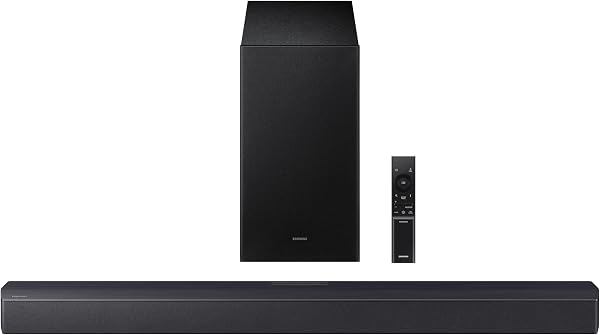
The iBall Cinebar 100 is a 2.1-channel home theatre soundbar from iBall, an Indian brand that has spent over two decades in the country's affordable peripherals and audio market. The "2.1" designation matters: it means the package includes the soundbar itself plus a separate subwoofer for low-end punch, rather than relying on small drivers inside a single slim bar to fake bass.
The headline specification is the 220W output rating. In the soundbar world, this figure is almost always peak music power rather than continuous RMS power. In practice, a 220W peak rating usually corresponds to somewhere in the 80–120W RMS range. That is still plenty — genuinely enough to fill a 250–350 sq ft living room at comfortable listening levels — but it is worth understanding so you do not expect cinema-hall SPL from a sub-₹7,000 product.
The iBall Cinebar 100 220W soundbar is aimed squarely at the value-conscious Indian buyer: someone upgrading from TV speakers, watching a mix of OTT content, cricket, and YouTube, and wanting Bluetooth music playback from a phone without adding an AV receiver and five speakers to the living room. iBall's distribution reach across tier-2 and tier-3 cities, plus its service network, is a real advantage here compared to imported brands with thin after-sales presence.
Note on specifications: iBall has revised Cinebar variants over time. Always cross-check the exact connectivity list, subwoofer type (wired vs wireless) and box contents on the live Amazon or Flipkart listing before ordering, since retailers occasionally bundle different cable sets.
iBall Cinebar 100 220W Soundbar Specifications at a Glance
| Feature | Typical Specification |
|---|---|
| Configuration | 2.1 channel (soundbar + subwoofer) |
| Total Output | 220W peak music power |
| Bluetooth | Yes (v5.x class, ~10m range) |
| Wired Inputs | HDMI (ARC), Optical, AUX 3.5mm, USB, Coaxial |
| Remote Control | Included |
| Wall Mountable | Yes (keyhole slots) |
| EQ Modes | Music / Movie / News presets |
| Warranty | 1 year standard |
| Typical Street Price | ₹4,499 – ₹6,999 |
Key Factors to Consider Before Buying This Soundbar
1. Match the Output to Your Room, Not to the Box
A 220W soundbar in a 100 sq ft bedroom is overkill, and you will never push past 25% volume. In a 300+ sq ft living room with high ceilings and hard floors, though, that headroom is exactly what you want — the system stays clean and undistorted at movie-night levels. Before buying the iBall Cinebar 100 220W soundbar, measure your room and be honest about how loud you actually listen.
2. Check Your TV's Audio Output Ports
This is the single most common cause of post-purchase frustration. If your TV has HDMI ARC, use it — one cable, and the TV remote can control the soundbar volume. If your TV is older or a budget model, you will likely fall back on optical or the 3.5mm headphone jack. Very old TVs may only have RCA red-white outputs, in which case you will need an RCA-to-3.5mm cable (often not in the box). Check your TV's back panel before ordering.
3. Wired vs Wireless Subwoofer
A wired subwoofer limits where you can place the bass unit — it must sit within cable reach of the bar. Wireless subwoofers are more flexible but cost more and need their own power socket. Most sub-₹7,000 soundbars, including this one, use a wired sub, which is fine as long as you plan placement in advance.
4. Service Network Matters in India
Soundbars are electronics; they fail occasionally. iBall's advantage is a wide service centre footprint in smaller cities. If you are buying for a home in a metro, this matters less; if you are buying for family in a tier-3 town, a brand with local service access is genuinely worth paying a small premium for.
5. Codec Support and "Cinema" Claims
At this price, do not expect true Dolby Atmos decoding or DTS:X. What you will get is stereo downmixed and processed with bass enhancement. That is fine — it still sounds dramatically better than TV speakers — but do not buy expecting object-based surround.
Detailed Feature Breakdown
Sound Quality and the 220W Claim
The iBall Cinebar 100 220W soundbar uses a multi-driver array in the bar with the subwoofer handling frequencies roughly below 150Hz. The practical result is a V-shaped sound signature — boosted bass and treble, slightly recessed mids — which is the standard tuning for this segment because it makes demos sound impressive. For movies, explosions and background scores land with real weight. For dialogue-heavy content like news or sitcoms, switching to the News/Voice preset helps considerably by lifting the midrange.
For music, expect it to handle Bollywood, Punjabi pop and EDM well. Vocals in classical or acoustic tracks can sound a touch recessed compared to a good 2.0 bookshelf setup, but that is an unfair comparison at this price.
Connectivity Options
The iBall Cinebar 100 220W soundbar covers the essentials well. HDMI ARC gives you the cleanest single-cable setup with CEC volume control. Optical is the most reliable fallback when ARC misbehaves — and it does misbehave on some budget TVs. AUX handles laptops and older set-top boxes. USB lets you play MP3 files from a pen drive directly, which is still surprisingly popular in Indian households. Bluetooth handles phone and tablet streaming.
One practical tip: set your TV's digital audio output to PCM rather than "Auto" or "Dolby Digital" if you hear crackling or dropouts over optical. Many budget soundbars handle only stereo PCM cleanly.
Design, Build and Placement
The bar is slim enough to sit under most 43–55 inch TVs on a standard entertainment unit, and it includes keyhole slots for wall mounting. The finish is matte plastic — acceptable at the price, not premium. The subwoofer is a compact ported box that can be tucked beside the TV unit or behind a sofa if the cable allows.
Remote and Controls
You get a small IR remote with volume, input selection, playback controls and EQ presets. Keep it safe — replacement remotes for budget soundbars are hard to source. Volume and input buttons on the bar itself are a useful backup.
Pros and Cons of the iBall Cinebar 100 220W Soundbar
Pros
- Genuinely loud for the price — 220W peak with a dedicated subwoofer is more headroom than most rivals at this budget.
- Full connectivity suite — HDMI ARC, optical, AUX, USB and Bluetooth covers virtually every Indian TV and set-top box combination.
- Strong value pricing — regularly discounted below ₹5,500 during Amazon and Flipkart sales.
- Wide service network — iBall's presence in smaller cities is a genuine advantage over imported budget brands.
- Wall-mountable design — saves space in compact Indian living rooms.
- USB playback — handy for offline music and family gatherings.
Cons
- "220W" is peak, not RMS — the real continuous output is considerably lower, as with all budget soundbars.
- No Dolby Atmos or DTS decoding — you get processed stereo, not true surround.
- Wired subwoofer — placement is restricted by cable length.
- Dialogue clarity needs EQ tuning — the default bass-forward tuning can bury speech in quiet scenes.
- No HDMI passthrough — the HDMI port is ARC-only, so you cannot route a console or streaming stick through the bar.
Price in India: What You Should Actually Pay
The iBall Cinebar 100 220W soundbar does not have a fixed street price — it swings based on the retailer, the sale cycle and the seller. Broadly:
- Everyday listing price: ₹5,499 – ₹6,999 on Amazon and Flipkart
- Sale price during major events: ₹4,299 – ₹5,299
- Best-case scenario (festive sale + bank offer + exchange): under ₹4,500
Anything above ₹7,000 is poor value — at that point you are within striking distance of a JBL Cinema SB110 or a Sony HT-S20R on discount, both of which bring better tuning and brand backing.
When to Buy for the Best Price
Timing matters more than which platform you choose. The deepest discounts in India land during:
- Amazon Great Indian Festival and Flipkart Big Billion Days (typically late September to October) — historically the lowest prices of the year on audio.
- Republic Day and Holi sales (January and March) — good secondary windows.
- Prime Day and Flipkart's mid-year sales (July).
Outside these windows, watch for bank offers — ₹500–₹1,500 instant discounts on HDFC, ICICI, SBI and Axis cards are routine on both platforms and effectively function as a permanent sale.
Amazon vs Flipkart for This Purchase
Compare both on the day you buy. Amazon tends to have more detailed spec sheets and better return handling; Flipkart often undercuts on iBall products and runs aggressive exchange offers on old electronics. Check the seller rating on both — for iBall products, sold-by and fulfilled-by matters, since grey-market or refurbished units sometimes appear under third-party listings.
How the iBall Cinebar 100 220W Soundbar Compares to Alternatives
| Model | Approx. Price | Output | Subwoofer | Key Strength |
|---|---|---|---|---|
| iBall Cinebar 100 220W Soundbar | ₹4,499 – ₹6,999 | 220W peak | Wired | Max volume & connectivity per rupee |
| boAt Aavante Bar 1198 | ₹3,999 – ₹5,499 | 80W RMS | Wired | Better tuned, stronger brand recall |
| Zebronics Juke Bar 9500 | ₹4,999 – ₹6,499 | 200W peak | Wired | Feature-heavy, aggressive pricing |
| JBL Cinema SB110 | ₹7,999 – ₹9,999 | 110W | Built-in | Cleaner sound, superior build |
| Sony HT-S20R | ₹12,999 – ₹16,999 | 400W | Wired | True 5.1, Dolby Digital |
Under ₹5,000: The Budget Tier
If your hard ceiling is ₹5,000, the iBall Cinebar 100 220W soundbar is a strong contender simply because of output and input variety. The boAt Aavante Bar 1198 is the alternative if you prioritise tuning quality and app support over raw volume. Zebronics offers similar specs to iBall with even more aggressive pricing — but service quality is less consistent.
₹5,000 – ₹8,000: The Value Sweet Spot
This is where the iBall sits, and where most Indian buyers should be shopping. At the lower end of this band, the iBall Cinebar 100 220W soundbar is hard to beat on paper. If you can stretch to ₹8,000–₹9,000 during a sale, the JBL Cinema SB110 offers noticeably cleaner midrange and dialogue handling, though with less bass impact since it has no separate subwoofer.
Above ₹10,000: The Next Tier Up
If your budget reaches ₹13,000+, the Sony HT-S20R with its true 5.1 configuration and Dolby Digital decoding is a meaningful step up for anyone serious about movie audio. But for a first soundbar in a normal Indian living room, spending double rarely delivers double the perceived improvement.
Real-World Usage Tips for Indian Buyers
Set Up HDMI ARC Properly
Use a good-quality HDMI 2.0 cable, enable HDMI-CEC (sometimes labelled "Bravia Sync," "Anynet+" or "SimpLink") in your TV settings, and select the correct audio output device. If volume control misbehaves, try disabling the TV's internal speakers entirely rather than running both.
Handle Power Fluctuations
Indian power supply is not always clean. A basic spike guard or small UPS for your TV and soundbar is cheap insurance — voltage spikes are a leading cause of amplifier failure in budget audio gear, and warranty claims for "burnt board" are rarely honoured.
Place the Subwoofer Carefully
Do not shove the subwoofer into an enclosed cabinet — it will sound boomy and muddy. Place it on the floor, ideally in a corner or near a wall for reinforcement, and at least a few inches from any surface. In apartments, sitting it on a small rubber mat reduces complaints from neighbours downstairs.
Tune the Bass for Your Content
For late-night viewing in a flat, drop the bass a couple of notches and switch to a voice-forward preset. For cricket and news, the bass-heavy default tuning actually hurts clarity — a quick EQ change makes commentary much easier to follow.
Bluetooth Latency
Bluetooth audio on budget soundbars carries 100–200ms of latency. That is fine for music but noticeable when watching video from a phone. Use HDMI or optical for video, and reserve Bluetooth for music playback.
Who Should Buy the iBall Cinebar 100 220W Soundbar?
Buy it if: you want a dramatic upgrade from TV speakers for under ₹6,000, you watch a lot of OTT movies and sport, you want Bluetooth music playback for family gatherings, and you value a brand with service reach in smaller cities.
Skip it if: you need genuine surround sound and Dolby Atmos, you have a small bedroom where 220W is wasted, you insist on premium build and finish, or your budget comfortably exceeds ₹12,000.
Frequently Asked Questions
Does the iBall Cinebar 100 220W soundbar include a subwoofer in the box?
Yes — the Cinebar 100 is a 2.1-channel system, so a separate subwoofer is part of the package. Confirm the subwoofer type (wired or wireless) on the specific listing, since iBall has shipped both configurations under similar model naming across revisions. Wired is far more common at this price point.
Is 220W enough for a living room?
More than enough for a typical Indian living room of 200–350 sq ft. Remember that 220W is a peak rating; continuous RMS output will be roughly half that. Even so, you will rarely need to push past 60% volume for movies, which means the system stays clean and distortion-free.
Can I connect it
Affiliate Disclosure:
This post contains affiliate links. We may earn a commission when you purchase through our links, at no extra cost to you.
Share this: