Juke Bar 9510WS Pro Dolby 5.1 Soundbar: Price, Specs, Real-World Review and Where to Buy in India

About Rahul Verma: Rahul is a tech enthusiast and gadget reviewer with over 8 years of experience testing consumer electronics. He specializes in audio gear, smartwatches, and mobile accessories. When he is not testing products, you will find him exploring the latest in AI and smart home technology.

If you've just spent ₹40,000–₹80,000 on a 55- or 65-inch TV, the single most disappointing part of the experience is usually the sound. Flat-panel TVs have almost no cabinet depth left for speakers, so dialogue sounds thin, explosions have no weight, and OTT content mixed in 5.1 collapses into a muddy stereo mess. The fix most Indian buyers land on is a soundbar with a wireless subwoofer — and if you want actual surround sound rather than a wider stereo image, a 5.1 package is the sweet spot.
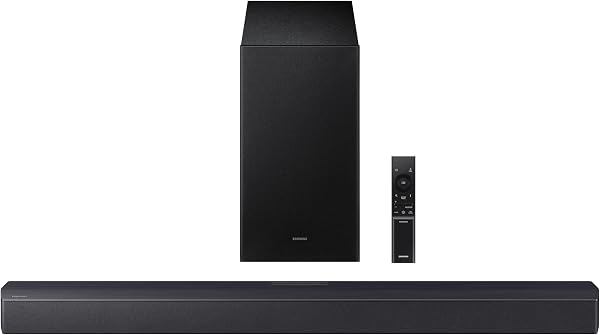
The Juke Bar 9510WS Pro Dolby 5.1 soundbar from Zebronics sits right in that value bracket: a soundbar, a wireless subwoofer and two rear satellite speakers, positioned well below what Sony, Samsung or JBL charge for a comparable channel count. In this guide, we'll break down what you actually get, how it performs in a typical Indian living room, what it costs today, how it compares with three or four credible alternatives, and — most importantly — when and where to buy it so you don't overpay.
What Is the Juke Bar 9510WS Pro Dolby 5.1 Soundbar?
The Juke Bar 9510WS Pro Dolby 5.1 soundbar is a home theatre audio system built around a three-part setup: a wide soundbar that sits under or in front of your TV, a wireless subwoofer that handles the low end, and two wired rear satellite speakers that create the surround effect behind your seating position. Total rated output is in the ballpark of 500W peak, which is loud enough for a 300–350 sq ft living room without straining.
The "WS" in the model name stands for Wireless Subwoofer, and the "Pro" tag distinguishes it from the standard Juke Bar 9510 variants — usually through a slightly higher power rating, additional EQ presets, and a more complete input set. Dolby Digital decoding is on board, which means the bar can take a genuine 5.1 bitstream from your TV or streaming box and distribute it across the five channels plus subwoofer, rather than up-mixing stereo artificially.
What makes this particular model interesting for Indian buyers is the price-per-channel math. A branded 5.1 system from a mainstream Japanese or Korean brand typically starts around ₹16,000–₹20,000. The Juke Bar 9510WS Pro Dolby 5.1 soundbar lands considerably below that, which is exactly why it shows up so often in "best soundbar under ₹10,000" lists — even though its actual selling price drifts above that bracket during non-sale periods.
What's in the box
- 1 × soundbar unit with wall-mount brackets
- 1 × wireless subwoofer (needs a power socket only)
- 2 × rear satellite speakers with speaker cable
- Remote control with battery
- Power adapter, AUX cable, and user manual
One practical note: the rear speakers are not fully wireless. They connect to the subwoofer or the bar via speaker cable, which means you'll be running wire along your skirting board or under a rug. Plan for 8–10 metres of cable run if your sofa sits at the far end of the room.
Key Specifications at a Glance
Specifications below reflect the brand's published listing at the time of writing. Zebronics revises SKUs and ratings frequently, so confirm on the Amazon or Flipkart product page before ordering.
| Feature | Details |
|---|---|
| Channel configuration | 5.1 (soundbar + wireless subwoofer + 2 rear satellites) |
| Total output | ~500W peak (advertised) |
| Audio decoding | Dolby Digital |
| Connectivity | Bluetooth, HDMI (ARC), Optical, Coaxial, AUX, USB |
| EQ modes | Movie / Music / News / 3D presets via remote |
| Subwoofer | Wireless, dedicated power input |
| Wall mounting | Yes, brackets included for the bar |
| Warranty | 1 year standard (check seller terms) |
Why a 5.1 Setup Makes Sense for Indian Homes
Most soundbars under ₹15,000 are 2.1 systems. They add bass and volume, but they can't place a bullet whizzing past your left shoulder. A 5.1 layout does: the centre channel anchors dialogue to the screen, the fronts carry music and effects, and the two rear satellites handle the ambient layer — crowd noise in cricket broadcasts, rain in a thriller, footsteps in a horror film.
For Indian living rooms specifically, though, 5.1 comes with a trade-off. Rooms tend to be rectangular and multi-purpose, with the sofa pushed against a wall. If your sofa is flush against the rear wall, the surround speakers have nowhere to go behind you — they end up beside your ears, which sounds aggressive rather than immersive. The fix is to place them slightly above ear level, angled inward, roughly 1–1.5 feet behind and 2 feet to either side of the main listening position. If that's not physically possible, mount them at the rear corners firing diagonally across the room at low volume.
Room size and power
A system with this much rated power is comfortable in rooms up to about 350 sq ft. In a smaller 120–180 sq ft bedroom, you'll rarely push past 40% volume, so the extra headroom mostly buys you cleaner, undistorted dialogue — which is a genuinely useful benefit. In a large open-plan hall with hard floors and glass, expect reflections to smear the surround effect; a rug and curtains do more for your audio than any EQ preset.
Design, Build and Setup Experience
The soundbar itself is a wide, low-profile bar finished in matte black with a metal grille — understated enough to disappear under a 55-inch TV. At roughly 90cm wide, it's broader than most 43-inch TVs, so measure your TV stand before ordering. Wall mounting is straightforward with the included brackets, and the keyhole slots are positioned so the bar sits flush beneath the panel.
The subwoofer is a boxy wooden enclosure — typically ported — which is the single biggest contributor to how "cinematic" this system sounds. It pairs automatically with the bar over a 2.4GHz link; you plug it into power and it finds the bar within a few seconds. The rear satellites are compact and light, with keyhole mounts for wall fixing.
Setup genuinely takes 15–20 minutes. The recommended path:
- Connect the bar to your TV via HDMI ARC if available (single cable, one remote for volume).
- If your TV lacks ARC, use the optical cable and set the TV's audio output to "Dolby Digital" or "Auto" rather than PCM.
- Place the subwoofer on the floor, 30–60cm from a wall, not inside a cabinet.
- Run the satellite cables to the rear, pair the sub, then run a 5.1 test tone to confirm all channels are firing.
One honest caveat about ARC on budget soundbars: HDMI-CEC handshakes can be flaky. If your TV and bar refuse to talk over ARC, or the volume drifts back to the TV's own speakers, fall back to optical — it's more reliable and supports the same Dolby Digital bitstream. You'll just use two remotes.
Sound Quality: What to Actually Expect
Movies and OTT content
This is where the Juke Bar 9510WS Pro Dolby 5.1 soundbar earns its keep. With a genuine Dolby Digital 5.1 source — Netflix, Prime Video and Disney+ Hotstar all deliver it on their higher tiers — dialogue gets locked to the centre channel and stops getting buried under background score. The subwoofer delivers satisfying thump in the 40–100Hz range, though it's a one-note, home-theatre-style bass rather than a tight musical one. Set the sub level to roughly the halfway mark; Indian living rooms with tiled floors tend to make bass boomier than the demo room suggests.
Music
For Spotify and YouTube Music, switch to the Music EQ. The bar handles Bollywood and pop comfortably, but the rear satellites add an artificial spaciousness that some listeners find odd — many owners simply disconnect or mute the rears for music. Bass-heavy Punjabi and EDM tracks can overwhelm the midrange at high volume. If music is 70% of your usage, a good 2.1 bar like the JBL Cinema SB271 will sound more cohesive.
Gaming
Bluetooth introduces 100–200ms of latency — fine for streaming, bad for gaming. Use HDMI ARC or optical for consoles. The surround placement works well for racing and open-world titles, though the bar lacks a dedicated "Game" mode with low-latency tuning.
Volume headroom
Distortion creeps in above roughly 80% volume on bass-heavy content. Below 70%, it's clean and much louder than a ₹1,00,000 TV's built-in speakers. Most users will live in the 25–50% band, where it sounds genuinely good.
Connectivity and Inputs
- HDMI ARC — the best option; one cable, TV remote controls volume.
- Optical (TOSLINK) — reliable fallback, carries Dolby Digital 5.1.
- Coaxial — useful for older set-top boxes and DVD players.
- AUX 3.5mm — for laptops and older TVs.
- USB — MP3/WAV playback from a pen drive; no video pass-through.
- Bluetooth — for phones; fine for casual listening, not for critical viewing.
Notably absent: Wi-Fi streaming, AirPlay, Chromecast and an HDMI passthrough port. If you want to cast audio from your phone without Bluetooth compression, budget for a Chromecast or Fire TV Stick and route audio through the TV.
How It Compares: Alternatives at Different Price Points
| Model | Config / Power | Subwoofer | Approx. Price | Best for |
|---|---|---|---|---|
| Zebronics Juke Bar 9510WS Pro | 5.1 / ~500W | Wireless | ₹9,000–₹11,500 | Maximum surround for minimum spend |
| Zebronics Juke Bar 9700 Pro | 5.1 / ~450W | Wired | ₹6,500–₹8,000 | Tightest budget 5.1 |
| boAt Aavante Bar 5500DA | 5.1 / ~500W | Wireless | ₹9,000–₹12,000 | Better brand support and finish |
| Sony HT-S20R | 5.1 / 400W | Wired | ₹15,000–₹18,000 | Cleaner sound, better after-sales |
| JBL Cinema SB271 | 2.1 / 220W | Wireless | ₹11,000–₹13,500 | Music-first listeners |
Prices fluctuate with sales and platform discounts — treat these as indicative ranges, not fixed MRPs.
Juke Bar 9510WS Pro vs Sony HT-S20R
The Sony is the more refined system: tighter bass, better midrange clarity, and after-sales service in virtually every Indian city. It costs ₹5,000–₹7,000 more and its subwoofer is wired, which is a real inconvenience if your TV wall has no spare socket. If budget is hard-capped and you want maximum volume per rupee, the Zebronics wins; if you're keeping the system five years and care about finesse, stretch to the Sony.
Juke Bar 9510WS Pro vs boAt Aavante Bar 5500DA
This is the closest fight. The boAt has a slightly premium finish and a stronger brand presence in India, while the Zebronics typically undercuts it by ₹1,000–₹2,000 during sales. Sound signatures are similar — both are bass-forward and both struggle with fine detail at high volume. Buy whichever is cheaper on the day you purchase.
Pros and Cons
What we like
- Real 5.1 with rear satellites at a price where most rivals sell 2.1
- Wireless subwoofer simplifies placement — only needs a power point
- HDMI ARC, optical and coaxial cover almost every Indian TV and set-top box
- Loud enough for a well-sized living room with clear dialogue
- Frequent discounts during festive sales push it into genuine value territory
What to watch out for
- Rear satellite cables aren't wireless — plan the wire run before you buy
- Bass is boomy rather than tight; needs manual tuning via the sub volume dial
- No Dolby
Affiliate Disclosure:
This post contains affiliate links. We may earn a commission when you purchase through our links, at no extra cost to you.
Share this: