Kent Grand RO Water Purifier: Price, Review & Complete Buying Guide (2025)

About Rahul Verma: Rahul is a tech enthusiast and gadget reviewer with over 8 years of experience testing consumer electronics. He specializes in audio gear, smartwatches, and mobile accessories. When he is not testing products, you will find him exploring the latest in AI and smart home technology.
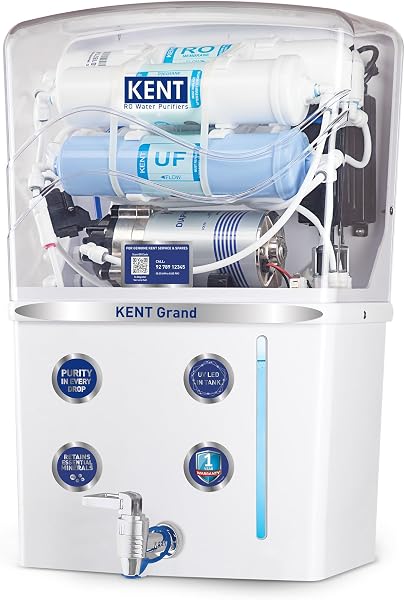
If you have spent any time comparing water purifiers in India, the name Kent keeps coming up — and for good reason. Kent has been selling RO purifiers in the country for over two decades, and the Kent Grand RO water purifier is one of its most popular mid-range models. It sits in that sweet spot where you get a large 8-litre tank, multi-stage purification, mineral retention and a brand with a service network that actually reaches smaller cities.
But popularity alone is not a reason to buy. In this guide, we break down what the Kent Grand RO water purifier actually does, how it performs in real Indian homes, what the current street prices look like across Amazon and Flipkart, how it compares with the Grand Plus and Grand Star variants, and the specific situations where it makes sense — and where it doesn't. By the end, you should be able to decide confidently whether to buy it, which variant to pick, and when to time your purchase for the best deal.
What Is the Kent Grand RO Water Purifier?
The Kent Grand is a wall-mounted, electrically operated water purifier that combines reverse osmosis (RO), ultraviolet (UV) and ultrafiltration (UF) with an 8-litre food-grade storage tank. It is designed for Indian homes where the input water is a mix of borewell, tanker and municipal supply — the kind of water that carries dissolved salts, hardness, iron and occasional microbial contamination.
Unlike basic UV purifiers that only kill microorganisms, the Kent Grand RO water purifier physically removes dissolved impurities through its RO membrane, which is why it is recommended for water with TDS (total dissolved solids) above roughly 200 ppm. The UV stage handles any microbial load, the UF stage filters out fine suspended particles and cysts, and Kent's TDS controller lets you retain a portion of the natural minerals instead of ending up with completely demineralised water.
How the purification stages work
- Sediment filter: Traps dust, rust, sand and larger suspended particles before they reach the inner filters.
- Pre-carbon filter: Absorbs chlorine, colour, odour and organic compounds that give water an unpleasant taste.
- RO membrane: The core stage — pushes water at pressure through a semi-permeable membrane to remove dissolved salts, heavy metals, nitrates, fluorides and pesticides.
- UF membrane: A secondary physical barrier that catches fine particles and microorganisms that slip past the RO stage.
- UV lamp: Inactivates bacteria and viruses in the stored water, and typically re-circulates water in the tank periodically to keep it safe.
- TDS controller: A Kent-specific adjustable valve that blends a controlled amount of filtered water back in, so the final water retains essential minerals and doesn't taste flat.
Kent rates the unit at roughly 20 litres per hour of purification capacity and around 60W of power consumption. In practical terms, that means the 8-litre tank refills in well under half an hour, which is comfortably enough for a family of four to five.
Who is it best suited for?
The Kent Grand RO water purifier is a strong fit for families of 3–5 living in apartments or independent homes where the water supply is hard, brackish, or high in TDS. It is also a sensible choice for homes that experience frequent power cuts, because the 8-litre storage means you still have drinking water when the motor isn't running. It is not the ideal pick if your input water is already below 150 ppm TDS and low in hardness — in that case an RO unit is overkill and a UV or UF purifier will serve you just as well for less money and zero water wastage.
Kent Grand RO Water Purifier Price in India (2025)
Prices for Kent water purifiers fluctuate constantly because of bank offers, exchange deals and festive season discounts. The MRP printed on the box is rarely what you pay. Here is an indicative picture of what the Kent Grand family typically sells for online. Treat these as ballpark figures and always check the live price before you buy.
| Model | Storage | Purification | Indicative MRP | Typical online street price |
|---|---|---|---|---|
| Kent Grand (RO+UV+UF+TDS Control) | 8 L | 6-stage | ₹17,000 – ₹18,000 | ₹12,500 – ₹14,500 |
| Kent Grand Plus | 8 L | RO+UV+UF+TDS Control + mineral addition | ₹18,500 – ₹19,500 | ₹13,500 – ₹15,500 |
| Kent Grand Plus ZWW (Zero Water Waste) | 8 L | RO+UV+UF+TDS Control, reduced reject water | ₹20,000 – ₹21,000 | ₹15,500 – ₹17,500 |
| Kent Grand Star | 8 L | RO+UV+UF+TDS Control | ₹16,000 – ₹17,000 | ₹11,500 – ₹13,000 |
A quick reality check: the difference between the base Grand and the Grand Plus is usually ₹1,000–₹1,500, which is small enough that most buyers simply go for the Plus. The ZWW variant costs noticeably more, and it only pays for itself if you are genuinely bothered by reject water — a real concern in apartment complexes where the plumber has charged you for a dedicated drain line.
Where to buy the Kent Grand RO water purifier
Amazon India and Flipkart are the two most reliable channels for price and delivery. Both list the full Kent Grand range, and both offer installation bundled free with the purchase. Amazon tends to have slightly better exchange offers if you are trading in an old purifier, while Flipkart often bundles extra filters or extended warranty at the same price during sales.
For those who prefer offline buying, Kent has authorised dealers and showrooms in most Tier-1 and Tier-2 cities, and large-format retail chains like Croma, Reliance Digital and Vijay Sales stock the Grand range. Offline gives you a physical demo and a local dealer to chase for service, but you will usually pay ₹1,000–₹2,000 more than the best online price. Avoid unbranded "Kent-compatible" sellers on marketplaces — grey-market units often have void warranties.
When to buy for the best price
Water purifier prices drop sharply during Amazon Great Indian Festival (usually late September–October) and Flipkart Big Billion Days, and again during Republic Day and Prime Day sales. If you can wait a few weeks, do so. Beyond sale events, watch for two things: bank instant discounts (₹1,000–₹1,500 off on HDFC, ICICI, SBI credit cards is common) and no-cost EMI on 6- and 9-month tenures. Stacking an exchange offer with a bank discount can bring the effective price of a Kent Grand down by ₹2,500 or more.
Kent Grand vs Grand Plus vs Grand Star: Which Variant Should You Pick?
Kent Grand (base)
The base Kent Grand RO water purifier is the value pick. You get the full 6-stage RO+UV+UF purification with TDS control, the 8-litre transparent tank, and Kent's standard 1-year product warranty with extended free service support. If your budget is tight and you mainly need reliable RO filtration, there is no functional reason to spend more.
Kent Grand Plus
The Grand Plus adds mineral enrichment to the post-purification stage, which is genuinely useful if your source water is very low in TDS or heavily treated. People often describe the taste of straight RO water as "flat" — the mineral addition is designed to fix that. It is the variant most buyers end up choosing, and for good reason: it sits only marginally above the base model in price while addressing the single most common complaint about RO water.
Kent Grand Plus ZWW
Zero Water Waste technology recirculates the reject stream back into the input, cutting down the volume of water drained out during purification. Conventional RO units in this segment send a substantial share of input water down the drain, so in a household that purifies 15–20 litres a day, the savings add up over a year. This variant makes the most sense for apartments with metered water, or for anyone in a water-scarce locality.
Kent Grand Star
The Grand Star is the entry point into the Grand family. It retains the 8-litre tank and the core RO+UV+UF stack but trims some of the extras. If the base Grand is out of budget, this is a reasonable compromise — but check the exact filter configuration on the listing, because Kent has revised specifications on this line more than once.
Kent Grand RO Water Purifier: Pros and Cons
What works well
- Large 8-litre storage: Genuinely useful during power cuts and for large families. Many competitors at this price offer 6–7 litres.
- Genuine multi-stage purification: RO with UV and UF together covers dissolved salts, microbes and fine particulate matter — important when the source water quality varies through the year.
- TDS controller: Adjustable mineral retention is a real advantage over fixed-blend competitors, especially in coastal and hard-water belts.
- Service reach: Kent's service network is one of the widest among Indian purifier brands, and genuine spares are easy to source.
- Transparent tank: Lets you see the water level at a glance without opening anything — a small thing that matters daily.
Where it falls short
- Water wastage: The standard Grand rejects a meaningful proportion of input water. Only the ZWW variant meaningfully addresses this.
- Wall space and plumbing: It needs a wall mount near a tap and a drain point. Renters should check with their landlord before drilling.
- Recurring filter cost: Sediment and carbon filters need replacing roughly every 6–12 months depending on input water quality, and the RO membrane every 18–24 months. Budget ₹2,500–₹4,500 a year for consumables.
- No real-time TDS display on the standard models — you have to test manually or rely on the filter-change indicator.
- Electricity dependence: It needs a working power point; the storage tank mitigates this but doesn't eliminate it.
Key Factors to Consider Before Buying
Test your water TDS first
This is the single most important step, and most buyers skip it. Buy a ₹200 TDS meter or ask your building maintenance to test a sample. If your input water is under 150 ppm and low in hardness, an RO purifier is unnecessary — a UV+UF unit will do the job with zero water wastage. Between 200 and 1,000 ppm, the Kent Grand RO water purifier is well within its comfort zone. Above 1,500 ppm, you should be looking at higher-capacity commercial-grade or specifically rated units.
Match tank size to family size
An 8-litre tank comfortably covers a family of four to five for a full day, including cooking. If you routinely host guests or run a small office from home, consider that the tank refills at roughly 20 litres per hour, so recovery is quick — but it still needs power.
Check your inlet water pressure
RO membranes need a minimum inlet pressure to function efficiently. If your building's supply pressure is weak (common on upper floors of older buildings), you may need a booster pump, which Kent sells separately. Confirm this during the pre-installation inspection — otherwise you will end up with slow filling and premature membrane failure.
Verify local service support
Before ordering, enter your pincode on Kent's website or ask the marketplace seller to confirm installation coverage. Metro and Tier-1 cities are almost always covered. For smaller towns and rural addresses, confirm in writing — a purifier without service access becomes an expensive paperweight within a year.
Understand the warranty and AMC structure
Kent typically offers a 1-year product warranty along with extended free service support, with consumables like filters and membranes excluded. Always confirm the exact terms on the listing or invoice at the time of purchase, since Kent revises these periodically. An Annual Maintenance Contract (AMC) usually costs ₹3,000–₹5,000 a year and covers filter replacements plus service visits — worth considering from year two onwards.
Practical Usage Tips for Indian Homes
Installation
Book installation through the brand or the marketplace immediately after delivery — Kent generally provides it free, and having an authorised technician do the plumbing protects your warranty. Ask them to show you where the reject water drain goes, and get the TDS controller set correctly for your source water on day one rather than leaving it at the factory default.
Maintenance that actually extends life
- Replace sediment and pre-carbon filters on schedule — a clogged sediment filter puts extra load on the RO membrane and can halve its life.
- Run the purifier regularly. Units that sit idle for weeks develop microbial growth in the tank and lines.
- During monsoon, when municipal supply is often turbid, check the sediment filter more frequently.
- If you have hard borewell water, consider a pre-filtration setup at the inlet to protect the purifier's first-stage filters.
- Clean the external tank and body with a damp cloth — avoid harsh chemical cleaners near the dispensing tap.
Managing reject water
Route the reject water line to a storage bucket rather than straight into the drain. In most Indian homes, that water is perfectly fine for mopping, watering plants, or flushing — and it offsets a good part of the wastage concern without paying the ZWW premium.
Frequently Asked Questions
Is the Kent Grand RO water purifier suitable for borewell water?
Yes, provided the TDS is within RO's operating range — roughly up to 1,000–1,500 ppm depending on the variant. Borewell water is exactly the scenario RO was designed for. However, if your water has very high hardness or iron content, get it tested first, because iron can foul the membrane quickly and hardness scales it up. In such cases, a pre-filter or softener at the inlet is a worthwhile addition.
How much water does the Kent Grand RO water purifier waste?
Conventional RO purifiers in this segment reject a significant share of the input water to flush out concentrated impurities. The exact ratio depends on inlet TDS and pressure. The Grand Plus ZWW variant recirculates the reject stream to substantially reduce this. Practically, collecting the reject water for non-drinking use is the simplest way to neutralise the concern.
Does it require electricity to work?
Yes. The pump, UV lamp and electronics all need mains power. The 8-litre storage tank means you still have drinking water during outages, but once the tank empties, purification stops until power returns. If outages in your area are long and frequent, plan your filling routine around them.
What is the annual maintenance cost?
Expect roughly ₹2,500–₹4,500 per year for filter and membrane replacements, plus ₹3,000–₹5,000 if you take an AMC. Costs rise with input water hardness and TDS. The single best way to keep this low is to replace the cheap sediment filter on time — it protects the expensive RO membrane.
Can I install the Kent Grand RO water purifier myself?
Technically possible, but not advisable. Installation involves tapping into the water line, mounting on the wall, routing the drain, and commissioning the unit. More importantly, self-installation can complicate warranty claims. Since installation is typically bundled free with online purchases, use the authorised technician.
Is the Kent Grand RO water purifier good for health? Does RO remove essential minerals?
RO does remove dissolved minerals along with contaminants, which is why Kent includes a TDS controller to blend back a controlled proportion of minerals. The Grand Plus goes further with added mineral enrichment. For most households eating a normal Indian diet, the mineral contribution from drinking water is a small fraction of total intake, so this is not a serious health concern — but the taste difference is real.
Which is better: Kent Grand or a competing 8-litre RO purifier?
It depends on your priorities. Kent's advantages are service reach, the TDS controller's adjustability and the large transparent tank. Competitors often beat it on water recovery ratio, digital TDS display, or copper-enrichment features. If service access in your city is strong for Kent, the Grand is a safe, low-risk choice. If you are in a metro with multiple good service networks, compare the water recovery figures before deciding.
Final Verdict: Should You Buy the Kent Grand RO Water Purifier?
The Kent Grand RO water purifier is a dependable, unfussy choice for the majority of Indian households dealing with hard or high-TDS water. The 8-litre tank is genuinely generous for the price band, the six-stage purification covers dissolved salts, microbes and particulate matter in one unit, and Kent's service network reduces the biggest hidden risk in any purifier purchase — what happens when something breaks.
Our recommendation: For most buyers, the Kent Grand Plus is the pick. The small premium over the base Grand buys mineral enrichment that fixes the flat-taste problem, and it is the variant with the widest availability and the deepest discount during sales. Choose the base Kent Grand if you are strictly budget-driven, and the Grand Plus ZWW if water conservation matters to
Affiliate Disclosure:
This post contains affiliate links. We may earn a commission when you purchase through our links, at no extra cost to you.
Share this: