Kent Supreme Plus Neo RO Water Purifier: Price, Features and Honest Buying Guide

About Rahul Verma: Rahul is a tech enthusiast and gadget reviewer with over 8 years of experience testing consumer electronics. He specializes in audio gear, smartwatches, and mobile accessories. When he is not testing products, you will find him exploring the latest in AI and smart home technology.
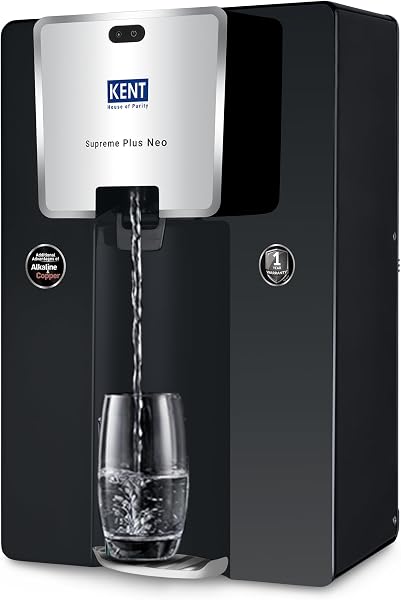
If you have spent any time scrolling through purifier listings on Amazon or Flipkart, you have probably noticed how crowded Kent's own lineup is. Between the Grand Plus, the Supreme Plus, the Alkaline models and the newer Neo variants, the model names start to blur. The Kent Supreme Plus Neo RO water purifier sits right in the middle of that range — a multi-stage RO unit with 8 litres of storage, a TDS controller, and a price tag that usually lands between ₹11,500 and ₹13,500 after discounts.
This guide is written for the buyer who wants a straight answer: is this model worth your money, who should buy it, who should skip it, and where can you get the best deal in India right now. We will break down the purification stages, compare it against the closest alternatives at different budgets, explain what maintenance will actually cost you over five years, and flag the small details that most listings conveniently leave out.
What Is the Kent Supreme Plus Neo RO Water Purifier?
The Kent Supreme Plus Neo is a wall-mountable, electricity-powered water purifier that combines reverse osmosis (RO), ultraviolet (UV) sterilisation and ultrafiltration (UF) in a single unit, with a built-in TDS controller. In practical terms, it is designed for Indian homes where the water supply is a mix — sometimes borewell water with high dissolved solids, sometimes municipal supply that is comparatively soft, and often a bit of both depending on the season.
Kent positions this model as a mid-premium option. It is not the cheapest RO purifier Kent sells, and it is not the flagship either. What you are paying extra for over an entry-level Kent is the combination of three purification technologies plus the TDS controller, which lets you retain some essential minerals instead of stripping the water down to near-zero TDS.
The purification technology explained
Water passes through a multi-stage train inside the unit, and understanding this is the single best way to judge whether the Kent Supreme Plus Neo RO water purifier suits your home:
- Sediment filter — traps sand, silt, rust particles and other suspended matter before it reaches the delicate membranes. This is the cheapest filter and also the one that protects everything downstream.
- Activated carbon filter — absorbs chlorine, colour, odour, and organic compounds. If your municipal water smells of chlorine, this stage does the heavy lifting.
- RO membrane (typically 80 GPD) — the core of the system. It pushes water through a semi-permeable membrane at high pressure, rejecting dissolved salts, heavy metals, fluoride, arsenic and most dissolved impurities.
- UF membrane — a secondary physical barrier that catches bacteria, cysts and colloidal particles that may have survived the RO stage, and also acts as a safety net when the RO membrane ages.
- UV lamp in the storage tank — keeps stored water sterile so that water sitting in the tank overnight does not develop bacterial growth.
- TDS controller — a Kent-specific feature that blends a measured amount of the rejected water back into the purified output, restoring minerals and improving taste. This matters because overly demineralised water tastes flat and is not ideal for long-term drinking.
Storage, build and installation
The unit comes with an 8-litre food-grade ABS storage tank, which is the sweet spot for families of three to five. Kent lists a purification capacity of roughly 15 litres per hour and a power draw of about 60 W, so running costs are modest — a few hundred rupees a year in electricity for a typical household. It can be wall-mounted or kept on the counter, and it ships with the standard installation kit for a wall tap connection.
One design detail worth noting: the storage tank is transparent, so you can physically see the water level and spot any discolouration early. That is a small thing, but it is genuinely useful for judging when to get the unit serviced.
Kent Supreme Plus Neo RO Water Purifier — Specifications at a Glance
| Parameter | Details |
|---|---|
| Purification technology | RO + UV + UF + TDS Controller |
| Storage capacity | 8 litres (food-grade ABS) |
| Purification capacity | Approx. 15 litres/hour |
| RO membrane | 80 GPD |
| Power consumption | Approx. 60 W |
| Installation | Wall mount or countertop |
| Indicators | Filter change indicator / auto on-off |
| MRP (indicative) | ₹16,000–₹16,500 |
| Typical street price | ₹11,500–₹13,500 |
| Warranty | 1 year comprehensive (confirm current terms on listing) |
Prices and specifications on Kent purifiers change frequently and can differ between Amazon, Flipkart and offline dealers. Always cross-check the current listing before you pay.
Key Factors to Consider Before Buying
Your water source and TDS level
This is the most important decision input, and most buyers skip it. If your tap water TDS is above 500 mg/L — common in parts of Delhi NCR, Rajasthan, Gujarat, Haryana and Chennai — you genuinely need RO, and this unit makes sense. If your TDS is under 200 mg/L (typical in Mumbai municipal supply and parts of Bengaluru), UV plus UF would be enough, and you would be paying for an RO stage you do not strictly need.
The good news is that the TDS controller gives you flexibility. You can run the unit in a partially blended mode so that water does not end up tasting metallic or flat. But if your source water is already soft, a plain UV purifier at half the price is the more sensible purchase.
Storage tank size vs family size
Eight litres is roughly the daily drinking and cooking requirement for a family of four, with a small buffer. If you have frequent power cuts, guests over often, or a family of six or more, look at 10–12 litre tanks instead. This is exactly where the Kent Grand Plus and Kent Ultra Storage models become more relevant than the Supreme Plus Neo.
Running costs, not just the sticker price
A purifier is a five-to-eight year appliance, and the purchase price is only part of the story. Budget roughly ₹1,800–₹2,800 a year for sediment and carbon filter replacements, ₹2,000–₹2,500 for an RO membrane every two years, and a few hundred rupees for the UV lamp. If you take an annual maintenance contract with Kent, it typically costs ₹3,000–₹4,500 per year depending on the plan — worth it if you would rather not track filter dates yourself.
Installation, space and after-sales service
Kent has one of the widest service networks in India, with centres in most tier-1 and tier-2 cities and a reasonably responsive app-based booking system. That said, response times in smaller towns and during peak summer can stretch to 3–5 days. Check whether there is an authorised Kent service centre within 10–15 km of your home before you commit — this is the single most common complaint among purifier owners of every brand.
How the Kent Supreme Plus Neo Compares With Alternatives
Kent Supreme Plus Neo vs Kent Grand Plus
The Grand Plus is the more popular sibling and usually sells for ₹2,000–₹3,000 more. It offers a similar RO + UV + UF + TDS controller setup with 8 litres of storage, but adds a slightly more premium build and, in most variants, a marginally higher purification capacity. If the price gap is small (which it often is during Amazon and Flipkart sale events), the Grand Plus is the better long-term buy. If the Kent Supreme Plus Neo RO water purifier is discounted significantly below it, take the Neo — the core filtration technology is essentially the same.
Kent Supreme Plus Neo vs Kent Alkaline and Copper models
Kent's Alkaline Plus and Copper variants add a post-treatment cartridge that either raises the pH of the output water or releases trace copper ions. These are marketed heavily around "immunity" and "alkaline water" claims that are, frankly, not strongly supported by evidence. If you like the taste of the alkaline output, fine — but do not pay a ₹4,000–₹5,000 premium purely for health claims. The Supreme Plus Neo delivers the same core purification without that markup.
Kent Supreme Plus Neo vs Aquaguard and Pureit
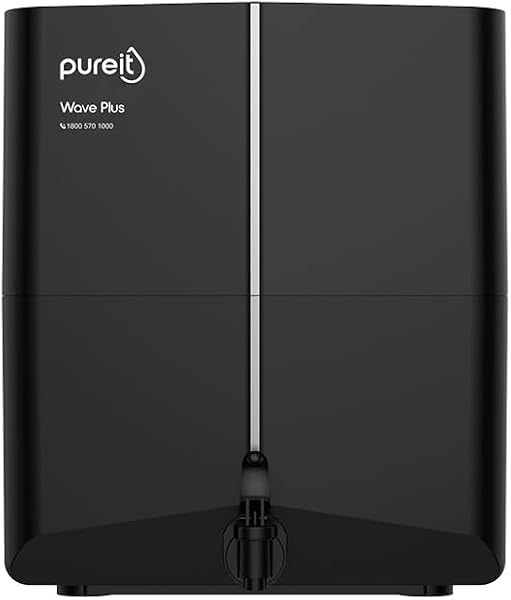
Aquaguard (Eureka Forbes) and HUL Pureit are the two other brands you will inevitably shortlist. Broadly: Aquaguard has excellent service reach and strong build quality but tends to be pricier with more expensive replacement filters. Pureit is competitive on price and offers good value in the ₹9,000–₹13,000 band. Kent's edge has traditionally been the TDS controller and aggressive online pricing; its weak point is that filter replacement costs can creep up if you do not stay on top of service schedules.
Quick comparison
| Model | Tech | Storage | Street Price (approx.) | Best For |
|---|---|---|---|---|
| Kent Supreme Plus Neo | RO + UV + UF + TDS controller | 8 L | ₹11,500–₹13,500 | High-TDS water, 3–5 member families |
| Kent Grand Plus | RO + UV + UF + TDS controller | 8 L | ₹13,500–₹16,000 | Buyers wanting a slightly more premium build |
| Kent Ultra Storage | RO + UV + UF + TDS controller | 9–10 L | ₹14,000–₹16,500 | Large families, frequent power cuts |
| HUL Pureit Copper+ | RO + UV + Copper | 8–10 L | ₹12,000–₹15,000 | Buyers wanting brand service depth |
| Aquaguard Delight NXT | RO + UV + MTDS | 8 L | ₹13,000–₹16,000 | Buyers prioritising service network |
Pros and Cons of the Kent Supreme Plus Neo RO Water Purifier
What works well
- Genuinely complete purification train. RO + UV + UF + TDS controller covers almost every contaminant concern an Indian household faces, including bacteria in stored water.
- TDS controller is a real differentiator. Most competing models at this price either lack mineral retention or implement it less effectively. The resulting taste is noticeably better than straight RO output.
- Low power draw. At around 60 W, running costs are negligible even in households with long daily usage.
- Wide service network. Kent's reach across tier-2 and tier-3 cities is a genuine advantage over smaller D2C purifier brands.
- Frequent discounting. This model is regularly discounted by 25–30% during online sale events, which makes it strong value at the ₹12,000 mark.
What could be better
- Water wastage. Like every RO purifier, it rejects a significant share of input water. Kent does not publish a precise recovery ratio for this model, but expect roughly 1 litre of reject water for every 2–3 litres purified. If you are in a water-scarce building, route the reject line to a bucket for cleaning or gardening.
- Only 8 litres of storage. Adequate, but not generous. Larger families will find themselves waiting during peak morning hours.
- Filter replacement cost adds up. Over five years, consumables will likely cost ₹12,000–₹18,000 — comparable to the purifier itself. Factor this in honestly.
- No smart features. There is no app connectivity, no water quality readout on your phone, and no Alexa integration. If you want that, the Mi Smart Purifier or Kent's own smart models are the alternatives.
- Plastic-heavy construction. Most of the housing is ABS plastic. It is durable enough for wall mounting but does not feel premium.
Price in India and Where to Buy
Current price range
The Kent Supreme Plus Neo RO water purifier carries an MRP in the ₹16,000–₹16,500 range, but it rarely sells at MRP. Realistic transaction prices over the past year have been:
- Amazon: ₹11,999–₹13,499, with bank offers occasionally pushing it to ₹11,499.
- Flipkart: ₹11,800–₹13,200, frequently bundled with an extra filter or installation voucher during Big Billion Days.
- Offline dealers (Croma, Reliance Digital, local Kent dealers): ₹13,000–₹15,500, but you often get free installation and a first-year AMC thrown in.
- Kent's own website: Usually MRP-linked with occasional exchange offers; rarely the cheapest option.
Amazon vs Flipkart vs offline
Online is almost always cheaper on the sticker price. The trade-off is installation — Amazon and Flipkart listings typically include free standard installation, but scheduling can take 3–7 days depending on your pincode. Offline purchases usually get installed within 24–48 hours, and you have a local person to call if something goes wrong. If you are replacing a purifier urgently, the extra ₹1,000–₹1,500 at an offline store can be worth it.
When to buy for the best value
Purifier discounts follow a predictable calendar in India:
- Amazon Great Indian Festival and Flipkart Big Billion Days (usually late September–October) — the deepest discounts of the year, often 30–35% off MRP with additional bank cashback.
- Republic Day and Holi sales (January–March) — good bank offers, slightly weaker headline discounts.
- Amazon Prime Day and Flipkart's mid-year sales (July) — decent, especially if you pair with an HDFC, ICICI or SBI card offer.
- End of financial quarter (March, June, September, December) — offline dealers are more willing to negotiate to hit targets.
Seller pitfalls to avoid
Buy only from the brand's official store or a Flipkart-Assured / Amazon-fulfilled seller. Grey-market units often ship without a valid Indian warranty, and Kent's service team will refuse free service on them. Also confirm in the listing whether installation is included and whether it covers a wall-tap connection — some sellers charge ₹500–₹800 extra for the plumbing kit if your kitchen does not already have a tap point.
Real-World Usage Tips for Indian Homes
- Test your water first. Buy a ₹150–₹300 TDS pen before you install anything. It tells you whether the TDS controller should be set to blend more or less, and it is your early-warning system for filter health.
- Install a pre-filter. A ₹500–₹900 sediment pre-filter on the inlet line will extend the life of the internal filters dramatically, especially if your building's water tank is old or rarely cleaned. This is the single highest-return investment for any RO owner.
- Clean the storage tank quarterly. Even with UV, a tank that is never cleaned develops a slimy biofilm. Kent's service visits include this, but if you skip AMC, do it yourself with a mild vinegar solution.
- Watch out during monsoon. Municipal supply in July–September often carries more turbidity and bacterial load. This is when the sediment filter clogs fastest — check
Affiliate Disclosure:
This post contains affiliate links. We may earn a commission when you purchase through our links, at no extra cost to you.
Share this: