Noise Junior Champ 3 Smart Watch for Kids: Honest Review, Price Guide and Where to Buy in India

About Rahul Verma: Rahul is a tech enthusiast and gadget reviewer with over 8 years of experience testing consumer electronics. He specializes in audio gear, smartwatches, and mobile accessories. When he is not testing products, you will find him exploring the latest in AI and smart home technology.
If your child has been asking for a smartwatch for the last three birthdays, you have probably spent a few evenings on Amazon comparing dozens of near-identical listings. The noise junior champ 3 smart watch for kids is one of the names that keeps coming up — and for good reason. It sits in the sweet spot where calling, GPS tracking and a usable touchscreen are priced within what most Indian parents are willing to spend, without tipping over into "I could buy a full smartphone for this" territory.
But a kids' smartwatch is a very different purchase from an adult wearable. You are not buying a gadget for yourself — you are buying a safety tool, a first screen, and a gift, all at once. Get it wrong and you end up with a watch that either cannot hold a call in your building's basement or becomes a ₹4,000 toy that is abandoned after a month.
This guide breaks down exactly what the noise junior champ 3 smart watch for kids offers, the alternatives worth considering at lower and higher price points, current street pricing in India, and the practical buying strategy — including which sales to wait for — so you do not overpay. We have also included real-world usage tips from the perspective of Indian parents dealing with school bags, summer heat and patchy network coverage.
Note: Prices and specifications on Indian e-commerce listings change frequently with new batches. Always cross-check the exact variant, warranty card and seller details on the product page before paying.
What Is the Noise Junior Champ 3 Smart Watch for Kids?
The Noise Junior Champ 3 is a connected smartwatch built specifically for children, from Noise — the Indian wearable brand that became one of the country's top-selling smartwatch labels. Rather than a shrunken-down adult watch, the Junior Champ line is designed around three parent priorities: staying reachable, knowing where the child is, and limiting what the child can do on the screen.
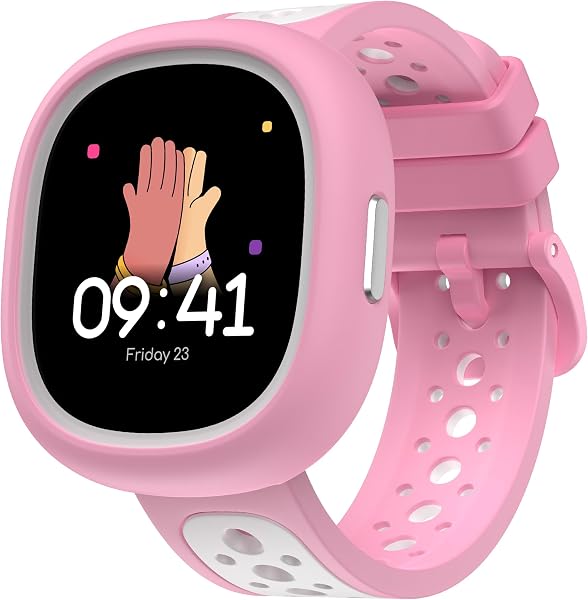
In practical terms, the noise junior champ 3 smart watch for kids combines a colour touchscreen, two-way calling over a cellular connection, GPS plus network-based location tracking, a dedicated SOS button, geofencing, and basic activity tracking. It pairs with a parent's phone through a companion app, which is where you control contact lists, safe zones and school-mode timings.
What makes it genuinely useful — and this is the part most listings bury — is the SIM-based calling. A Bluetooth-only kids' watch is a step counter with extra steps. A watch with its own SIM card means your child can call you from the school gate, the tuition class or a friend's building lobby without needing a phone of their own. That single feature is what justifies the price for most families.
Who is it actually aimed at?
Realistically, this watch works best for children in the 6 to 12 year age band. Younger children may find the interface and charging routine fiddly; older children, especially once they hit 13 or 14, usually start comparing it unfavourably with a hand-me-down smartphone. For the in-between years where you want contact and location visibility but are not ready to hand over a phone, this is close to ideal.
Key Factors to Consider Before Buying a Kids' Smartwatch in India
Before you compare models, get clear on the five things that actually determine whether a kids' smartwatch earns its place in your household. Everything else is cosmetic.
1. Connectivity: cellular vs Bluetooth-only
This is the single biggest fork in the road. Bluetooth-only watches (usually ₹1,500–₹2,500) need your phone within roughly 10–15 metres to do anything useful. That means no calling from school, no tracking while the child walks to the bus stop. Cellular watches with a SIM slot — which is where the Junior Champ 3 sits — work independently and are the only ones that deliver on the safety promise. Budget for a monthly prepaid recharge of roughly ₹99–₹199 with a data pack on top.
2. Location accuracy
Look for GPS combined with LBS (network tower-based location) and Wi-Fi positioning. GPS alone can drop out indoors or in dense urban pockets; LBS fills those gaps with lower precision. In Indian cities with tall buildings and flyovers, a watch with multi-source positioning will consistently outperform a GPS-only one. Expect accuracy in the range of 20–50 metres, not the pinpoint precision of your phone.
3. Build quality and water resistance
Children are hard on devices. A minimum of IP67 water resistance is essential given monsoon humidity, sweaty play and handwashing. Note that IP67 is splash and brief immersion resistance — not swimming. Check the strap material too; silicone is far more durable than the rubberised plastic used on cheaper models, which tends to crack at the lug points within months.
4. Battery life and charging routine
Most cellular kids' watches deliver one to two days of real use, dropping to well under a day with heavy calling and continuous tracking. That is normal, not a defect. What matters is whether the child can charge it independently and whether charging is magnetic-pogo (easy) or micro-USB (fiddly, and the port degrades). Factor the daily charging ritual into your evening routine.
5. Parental controls and data privacy
Check what the app lets you control: contact whitelist, do-not-disturb or class mode, remote power-off notices, and whether the watch accepts calls from unknown numbers. A whitelist-only calling model is a genuine safety feature. Also buy only from sellers who supply a proper BIS-compliant product with a valid Indian warranty — grey-market imports often lack local service support and post unclear data-handling policies.
Noise Junior Champ 3: Detailed Feature Breakdown
Display and design
The Junior Champ 3 uses a bright colour touchscreen in the roughly 1.4–1.8 inch range, sized to be readable by a child without dominating a small wrist. Colour themes and watch faces are customisable, which matters more than parents expect — the ability to pick a new face is what keeps a watch "interesting" in week six. The strap is soft silicone with a standard buckle, so replacing it later is straightforward and inexpensive.
Safety features: SOS, geofence and alerts
The SOS function is the headline safety feature. A long-press on the side button dials a pre-set guardian number and pushes an alert to the app. You can also draw safe zones — home, school, coaching centre — and receive notifications when the child enters or exits. One honest caveat: geofence alerts can be over-triggered in dense areas where location drifts between towers, so set generous radii rather than tight ones.
Calling and contact management
Two-way voice calling runs over the cellular network with the inserted SIM. Guardian numbers are added through the app, and a well-implemented whitelist will block unknown callers entirely — worth confirming on the listing for your specific variant. Call quality is serviceable for short check-ins, which is exactly the use case; do not expect speakerphone-grade audio in a noisy environment.
Activity tracking and games
Step counting, basic sleep tracking and a handful of pre-loaded mini-games are included. Treat the fitness data as motivational rather than medical — the step counter is directionally accurate but no substitute for a dedicated tracker. The games are deliberately lightweight, and parents can disable them during school hours through the app, which is the most useful setting on the entire watch.
Battery and charging
Expect around one to two days with moderate use, less if your child is calling every hour. Charging is typically via a magnetic pogo-pin cable, which is the right choice for kids — no fragile port to jam. Keep the cable in a fixed spot; proprietary cables are the most commonly lost accessory in this category.
Comparison Table: Noise Junior Champ 3 and Alternatives
| Model | Calling | Location | Water Resistance | Typical Street Price (₹) | Best For |
|---|---|---|---|---|---|
| Noise Junior Champ 3 | Cellular, two-way (SIM) | GPS + LBS | IP67 class | ₹3,499 – ₹4,499 | Most families wanting calling + tracking |
| Noise Junior Champ 2 | Cellular, two-way (SIM) | GPS + LBS | IP67 class | ₹2,799 – ₹3,499 | Budget pick if the newer model is overpriced |
| boAt Wanderer Kids | Cellular, two-way (SIM) | GPS + LBS | IP67 class | ₹2,999 – ₹3,999 | Style-focused buyers, boAt ecosystem users |
| Bluetooth-only kids watches | No (paired to phone) | None or phone-based | Varies, often IPX5 | ₹1,499 – ₹2,499 | Gift-only, no real safety requirement |
Figures are indicative market ranges and vary by sale event, colour variant and seller.
Product Recommendations at Different Price Points
Best overall: Noise Junior Champ 3 Smart Watch for Kids
For most Indian parents, the noise junior champ 3 smart watch for kids is the safest recommendation because it balances the three essentials — independent calling, multi-source location tracking and a genuinely usable parental app — without the premium markup of imported kids' watches. The SOS button placement is sensible, the strap holds up to daily wear, and Noise's service network in India is far easier to deal with than an unknown brand's.
Buy it if: your child is between 6 and 12, you want them reachable without a phone, and your monthly budget allows a small SIM recharge. Skip it if: your child is already carrying a phone, or your primary need is fitness tracking rather than safety.
Value alternative: Noise Junior Champ 2
If the Champ 3 is sitting near ₹4,500 during a non-sale window, the previous-generation Champ 2 at under ₹3,000 is a smart fallback. You lose a degree of display polish and some refinements, but the core safety feature set — calling, SOS, geofence — carries over. For a first watch that a child may outgrow in eighteen months, saving ₹1,000–₹1,500 is entirely rational.
Style-led alternative: boAt Wanderer Kids
boAt's kids' watch is a legitimate competitor with comparable connectivity and tracking, often priced slightly lower in sale periods. Where boAt tends to win is design and colour options, which matters if your child has strong opinions about how a watch looks. Where it can lose is app polish and long-term firmware updates. Either is a defensible choice; buy whichever is cheaper on the day with a strong seller rating.
Pros and Cons of the Noise Junior Champ 3
What works well
- True independence: the SIM-based calling means the watch works at school, tuition and the park without your phone nearby.
- Practical safety stack: SOS, geofencing and contact whitelisting cover the scenarios parents actually worry about.
- Child-friendly charging: magnetic pogo cable avoids the broken-port problem that kills cheaper watches.
- Indian service support: Noise's local warranty and service footprint is a real advantage over grey imports.
- School mode: disabling calls and games during class hours prevents the classic "distraction in the classroom" complaint.
What to be aware of
- Battery is a daily chore: one to two days of use means it joins the phone and earbuds on the nightstand charger.
- Location is approximate: expect 20–50 metre accuracy in urban areas, not building-level precision.
- Requires a SIM and recharge: the true cost of ownership includes roughly ₹100–₹200 per month.
- Not for swimming: IP67 handles splashes and rain, not pool sessions.
- Outgrown quickly by older kids: above 12, children usually want a phone instead.
Where and When to Buy: Pricing Strategy for Indian Buyers
Amazon vs Flipkart
Both platforms carry Noise wearables, and the price difference between them on any given day is usually ₹200–₹600. Check both before ordering. Buy from the brand's official store or a seller with a 90%+ positive rating and a stated replacement window — kids' watches are returned often, and a smooth return process matters. Avoid third-party listings without a warranty mention, however attractive the discount looks.
Best times to buy in India
- Amazon Great Indian Festival and Flipkart Big Billion Days (usually September–October): the deepest discounts, often 30–45% off MRP.
- Republic Day and Prime Day sales (January and mid-year): good secondary windows, slightly less aggressive.
- Back-to-school season (May–June): bundles and bank offers often appear as parents shop for the new academic year.
- Bank card offers: an instant 10% discount on HDFC, ICICI or SBI cards frequently beats the headline sale price. Always check the offer widget at checkout.
A realistic target price for the noise junior champ 3 smart watch for kids is ₹3,499–₹3,999. Anything under ₹3,500 for a sealed unit with full warranty is a good deal; anything above ₹4,500 outside a sale is worth waiting on.
Real-World Usage Tips for Indian Parents
- Pick the right SIM: a prepaid SIM from the network with the strongest coverage in your building and school route. Test call quality around the school gate before relying on it.
- Charge overnight, every night: treat it like a toothbrush routine. A watch that dies mid-school-day defeats the purpose.
- Set geofence radii generously: 200–300 metres around home and school reduces false alerts caused by tower switching.
- Teach the SOS button, then practise it: run one test call so your child knows what happens and does not panic.
- Enable school mode: schedule it for class hours; teachers will notice and appreciate it.
- Mind the summer heat: do not leave the watch on a car dashboard or in direct sun — lithium batteries in small devices degrade quickly at high temperatures.
- Keep the box and warranty card: Noise service centres usually ask for proof of purchase, and the box helps if you resell later.
Frequently Asked Questions
Does the Noise Junior Champ 3 need a SIM card to work?
Yes, the calling and independent tracking features require a nano-SIM with an active voice and data plan. Without a SIM, you are limited to whatever local functions the watch supports. Budget a small monthly recharge on top of the purchase price.
Is it waterproof enough for swimming or monsoon play?
It carries IP67-class water resistance, which means it handles rain, handwashing and sweat comfortably, but it is not designed for swimming or submersion. Remove it before pool sessions and baths.
Can I track my child's location in real time?
You get near-real-time location through the companion app using GPS, LBS and Wi-Fi positioning, plus a location history view. Accuracy is typically within 20–50 metres in Indian cities — good enough to confirm your child has reached school, not precise enough to locate them within a building.
What age group is this watch suitable for?
It is best suited to children aged roughly 6 to 12. Younger children may need help with charging and the interface; children above 12 typically prefer a phone. The sweet spot is the phase where you want contact and location visibility without handing over a smartphone.
Can my child play games on it during school hours?
Games are pre-loaded, but the parental app lets you disable them and restrict calls during defined hours. Set a school-mode schedule and leave it on — it removes the distraction argument entirely.
Is the Noise Junior Champ 3 worth it compared to a basic Bluetooth kids' watch?
If safety and reachability are the point, yes. Bluetooth-only watches (₹1,500–₹2,500) only work within range of your phone, which rules out school-hour contact and independent tracking. The ₹1,000–₹2,000 premium for cellular connectivity is the difference between a toy and a tool.
What about warranty and service in India?
Buy from an authorised seller on Amazon or Flipkart with a stated Noise India warranty, usually one year on the device. Retain the invoice — service centres require it. Grey-market imports often carry no local support, which is a serious risk on a device your child wears daily.
Final Verdict
The noise junior champ 3 smart watch for kids earns its recommendation because it solves the actual problem parents have: staying in touch and staying informed without giving a child a smartphone. Independent cellular calling, multi-source location tracking, a properly placed SOS button and a parental app that genuinely restricts what the child can do — that is a coherent safety package, not a feature list padded for the box.
It is not perfect. The battery is a nightly responsibility, location accuracy is approximate rather than exact, and the watch has a natural expiry date around age twelve. But at a realistic street price of
Affiliate Disclosure:
This post contains affiliate links. We may earn a commission when you purchase through our links, at no extra cost to you.
Share this: