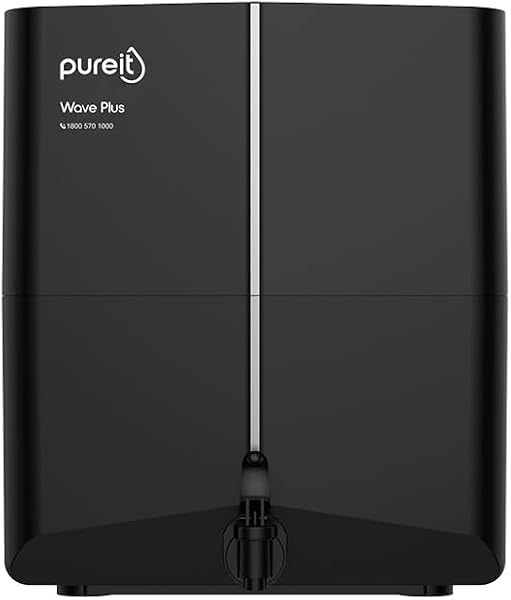
Pureit Eco Water Saver RO Purifier Black with ROUVMF Filtration: The Complete Buying Guide

About Rahul Verma: Rahul is a tech enthusiast and gadget reviewer with over 8 years of experience testing consumer electronics. He specializes in audio gear, smartwatches, and mobile accessories. When he is not testing products, you will find him exploring the latest in AI and smart home technology.
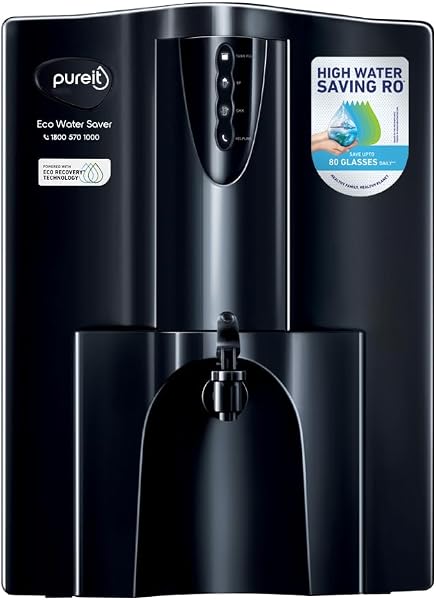
If you have spent any time scrolling through water purifier listings on Amazon or Flipkart, you have probably noticed the pureit eco water saver ro purifier black with rouvmf filtration sitting near the top of the bestseller charts. It is one of HUL Pureit's most popular models, and for good reason — it promises seven-stage purification, a 10-litre storage tank, and something most RO purifiers quietly ignore: the water they waste.
In this guide, we break down exactly what this model does, what "ROUVMF" actually means, how much it really costs to run for a year, and whether it makes sense for your home's water quality. We also compare it against three other purifiers at different price points so you can judge it on merit rather than marketing. By the end, you should know whether the pureit eco water saver ro purifier black with rouvmf filtration is the right buy for your kitchen — or whether a cheaper or more premium option fits you better.
What Is the Pureit Eco Water Saver RO Purifier Black with ROUVMF Filtration?
This is a wall-mountable, electrically operated reverse osmosis water purifier from Hindustan Unilever's Pureit range, finished in a matte black body. It stores purified water in a 10-litre food-grade tank and runs a seven-stage purification chain that combines reverse osmosis (RO), ultraviolet (UV) treatment, and microfiltration (MF) — which is what the "ROUVMF" in the product title refers to. Some listings spell it "ROUVMFF" and others "ROUVMF"; both mean the same thing, and neither indicates an extra filtration stage.
The headline feature, though, is the "Eco Water Saver" part. Conventional RO purifiers reject roughly two to three litres of water for every litre they purify, and that reject water usually goes straight down the drain. Pureit's Eco Recovery technology recirculates a large share of that reject water back through the membrane, which the brand claims recovers up to 60% of the water that would otherwise be wasted. For an Indian household using 12–15 litres of drinking water a day, that is a meaningful saving — typically 20–25 litres a day, or roughly 600–750 litres a month.
In terms of positioning, this sits in the upper-middle of Pureit's lineup: above the entry-level Classic and Verve models, and just below the Copper+ series. It is a no-frills, no-appliance-gimmick purifier — no Wi-Fi, no mobile app, no digital TDS display. What you pay for is the purification hardware and the water-saving mechanism.
Understanding ROUVMF Filtration: What Each Stage Actually Does
Marketing names aside, the filtration stack is the most important thing to evaluate. Here is what each component of the pureit eco water saver ro purifier black with rouvmf filtration contributes, in the order water passes through.
1. Pre-sediment and pre-carbon filters
The first two stages are mechanical and adsorptive. The sediment filter traps sand, mud, rust particles and suspended matter that come through municipal or borewell supply. The pre-carbon filter then removes chlorine, odour, colour and some organic compounds. These two are your cheapest consumables and they do most of the work of protecting the expensive RO membrane downstream.
2. Reverse osmosis (RO) membrane
This is the core of the system. The RO membrane forces water through a semi-permeable barrier at high pressure, rejecting dissolved salts, heavy metals, fluoride, nitrate, arsenic and most dissolved solids. Pureit rates this model to handle feed water up to about 2,000 mg/L TDS, which covers the vast majority of Indian municipal and borewell water. If your water is above that — common in parts of Rajasthan, Gujarat and coastal Maharashtra — you will need a higher-TDS-rated purifier or pre-treatment.
3. Post-carbon filter
RO-treated water can taste flat. The post-carbon polishes the taste and removes any residual odour picked up inside the storage tank. It also acts as a final safety barrier before the water reaches the tap.
4. UV sterilisation
UV does not remove dissolved impurities — it inactivates bacteria, viruses and other microorganisms by damaging their DNA. This matters most in the storage tank, where water can sit for hours. UV ensures that water drawn at 8 pm is as safe as water drawn immediately after purification.
5. Microfiltration (MF)
MF membranes have pores in the 0.1–0.2 micron range, trapping fine suspended particles and any cysts that survive earlier stages. It is the final physical barrier, and it is what earns the purifier its clear, sediment-free appearance in the glass.
Key Factors to Consider Before Buying
Before you hit "Buy Now" on the pureit eco water saver ro purifier black with rouvmf filtration, check these four things. They determine whether any purifier will work well in your home, not just this one.
Your water source and TDS
Buy a ₹200 TDS meter before you buy a ₹16,000 purifier. If your TDS is between 200 and 2,000 ppm, a standard RO is appropriate and this model will serve you well. If it is below 150 ppm — common in parts of Bengaluru, Mumbai and Delhi where the municipal supply is already low-TDS — a full RO will strip the water of minerals and leave it tasting bland. In that case, look for a model with a TDS controller or mineral retention feature instead.
Tank size versus family size
The 10-litre tank is right for families of three to five. A family of two will find it more than adequate; a family of six or a joint family with heavy cooking and drinking needs should consider a 12–15 litre tank or a model with a higher hourly purification rate.
Service network in your city
This is the most underrated factor. Every RO purifier needs filter changes once or twice a year, and a membrane replacement every 18–24 months. Pureit's service network is strong across Tier-1 and Tier-2 cities and most district headquarters, but coverage thins out in smaller towns. Check the Pureit service locator for your pincode before purchasing — an excellent purifier with no technician nearby becomes a headache.
Running cost, not just purchase price
A purifier's true cost is the purchase price plus three years of filters, membrane and service visits. Budget roughly ₹2,500–₹4,000 per year for consumables on this model, plus nominal service charges if you call a technician. We break this down in detail further below.
Specifications at a Glance
Here is the practical spec sheet, based on Pureit's published details for this model. Always confirm on the seller's page at the time of purchase, as HUL occasionally revises filter configurations.
- Purification technology: RO + UV + MF, seven stages total
- Storage capacity: 10 litres, food-grade plastic tank
- Water recovery: Up to 60% via Eco Recovery (recirculation of reject water)
- Max feed TDS: Approximately 2,000 mg/L
- Power consumption: Around 60 W during operation
- Installation: Wall-mount; needs a water inlet connection and a standard 5A power point
- Colour variant: Matte black body with contrasting accents
- Warranty: Pureit advertises an extended warranty on the unit — confirm the exact terms (unit and membrane coverage differ) at the time of purchase and register the product online
- Indicators: Basic LED status indicators for power and purification; no digital TDS readout
Price, Where to Buy, and When to Buy
The pureit eco water saver ro purifier black with rouvmf filtration carries a high printed MRP, but it is almost never sold at MRP. Street prices swing with marketplace offers, and the gap between a good deal and a bad one can be ₹3,000–₹4,000.
Current price range
At the time of writing, listings on Amazon India and Flipkart typically sit in the ₹15,000–₹18,500 range depending on the seller, the ongoing promotion, and whether a bundled filter kit is included. Offline retailers such as Croma, Reliance Digital and large Pureit dealers often land in the same band, sometimes slightly higher, but with the advantage of local installation scheduling and easier warranty support.
Where to buy
- Amazon India: Usually the widest seller choice and the most aggressive bank offers. Check whether the seller is Amazon-retailed or a third-party; for appliances, prefer fulfilled-by-Amazon listings for easier returns.
- Flipkart: Frequently matches or undercuts Amazon during flagship sales. Compare both before checking out — the difference on this model is often ₹500–₹1,500.
- Pureit's own website: Occasionally bundles an extra filter set or offers a longer warranty registration. Worth a look for the bundled consumables alone.
- Croma / Reliance Digital / Vijay Sales: Better if you want to see the unit in person, get same-week installation, and have a physical store to escalate service issues to.
When to buy
Timing your purchase around a sale is the single easiest way to save on this model. The strongest windows are the Amazon Great Indian Festival and Flipkart Big Billion Days (usually September–October), Republic Day sales in January, and Prime Day in July. Outside these windows, watch for bank card discounts (HDFC, ICICI, SBI and Axis run appliance offers regularly) and no-cost EMI on 6- and 9-month tenures. If you are not in a hurry, setting a price alert and waiting four to six weeks often saves more than any coupon.
One practical tip: check the exchange offer. Marketplaces often accept old purifiers — even non-working ones — for a ₹1,000–₹2,500 discount, which
Affiliate Disclosure:
This post contains affiliate links. We may earn a commission when you purchase through our links, at no extra cost to you.
Share this: