Pureit Wave Prime Water Purifier for Home Black with ROMF Filtration: Price, Review & Buying Guide

About Rahul Verma: Rahul is a tech enthusiast and gadget reviewer with over 8 years of experience testing consumer electronics. He specializes in audio gear, smartwatches, and mobile accessories. When he is not testing products, you will find him exploring the latest in AI and smart home technology.

If you have been scrolling through Amazon and Flipkart looking for a black water purifier that looks good on a modern kitchen counter and still handles Indian tap water, borewell water and tanker water without fuss, the Pureit Wave Prime Water Purifier for Home Black with ROMF Filtration is likely to show up in your shortlist. It sits in a sweet spot that most Indian families care about: a reputed HUL brand, a compact wall-mountable design, RO purification for hard and high-TDS water, and an MF (micro filtration) stage that adds an extra safety barrier before the water reaches your glass.
In this detailed buying guide, I break down exactly what this purifier does, how RO+MF filtration actually works, what it costs across Amazon, Flipkart and offline stores, how it compares with the Pureit Marvella and Ultima, and the practical things nobody tells you about owning an RO purifier in an Indian home — membrane life, service costs, reject water and the best months to buy.
What Is the Pureit Wave Prime Water Purifier for Home Black with ROMF Filtration?
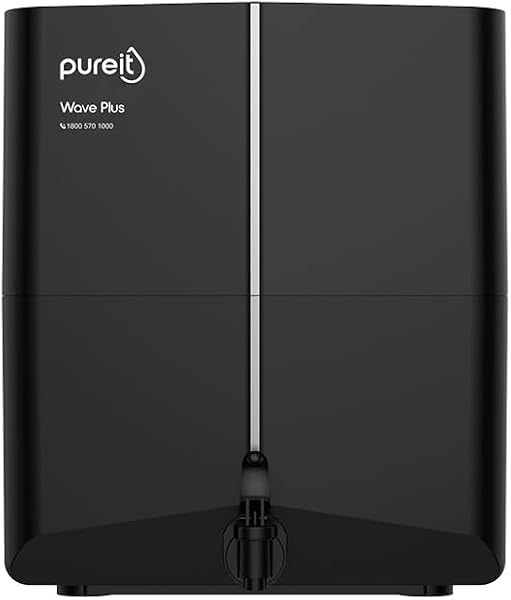
The Pureit Wave Prime is a storage-type, wall-mountable RO water purifier from HUL Pureit's Wave series, finished in a matte black body that is aimed squarely at contemporary Indian kitchens — the kind with dark granite counters and open shelving. Unlike the older ivory-and-white cabinets that dominated the category for years, the black finish hides water marks and looks less like an appliance and more like a design element.
The headline technology is RO+MF (often written ROMF). Reverse Osmosis handles the heavy lifting — it pushes water through a semi-permeable membrane with pore sizes around 0.0001 microns, removing dissolved salts, heavy metals, hardness, arsenic and fluoride, which is exactly what you need if your supply comes from a borewell or a high-TDS municipal line. The MF, or micro filtration, stage is a physical barrier that sits in the purification chain to catch fine suspended particles and micro-organisms, and it also protects the taste of the final output. Read the full name of the product — pureit wave prime water purifier for home black with romf filtration — and the ROMF part is the reason it is positioned above entry-level UV-only models.
Typical specifications of this model family include a 7-litre food-grade storage tank, multi-stage purification, a purification indicator with filter-change alert, auto shut-off when the tank is full, and a standard 1-year warranty on the unit (with a longer or extendable warranty on the RO membrane depending on the offer running at the time of purchase). It requires a 230V power point and a standard ½-inch inlet connection.
Understanding RO+MF Filtration: Why It Matters in Indian Homes
What RO removes
RO is the only mainstream purification technology that deals with dissolved impurities. In Indian cities where TDS (total dissolved solids) routinely crosses 500–1,200 ppm due to borewell water or ageing pipelines, UV-only purifiers are close to useless — they kill bacteria but leave the dissolved salts, hardness and metallic taste untouched. RO brings TDS down to a drinkable 50–150 ppm range, which is why it is the default choice for apartments in Gurugram, Hyderabad, Chennai and Pune.
What MF adds on top
The MF membrane in the Pureit Wave Prime Water Purifier for Home Black with ROMF Filtration acts as a final polishing barrier. Because MF works on physical size exclusion, it catches fine particulate matter and any micro-organisms that might slip past earlier stages, and it gives the water a cleaner mouthfeel. Practically speaking, it is a "belt and braces" stage — the RO membrane does the chemical work, and MF makes sure nothing particulate reaches the storage tank.
What RO+MF does not do
Two honest caveats. First, RO strips out beneficial minerals along with the bad stuff, so if your family is particular about mineral content, look at a model with a mineral/TDS controller or an added copper or mineral cartridge. Second, RO needs water pressure and electricity, and it rejects 30–50% of the input water as concentrate. If you live in a low-pressure colony or on the top floor of a building with weak head pressure, ask the installer about a booster pump before you commit.
Key Factors to Consider Before Buying a Black RO+MF Purifier
1. Your source water TDS
This is the single most important decision input. Test your tap water with a ₹300 TDS meter or ask your building's plumber. Under 200 ppm, a UV+UF purifier is cheaper to run and wastes no water. Between 200 and 2,000 ppm, RO is the right answer — and that is the zone the Wave Prime is built for. Above 2,000 ppm, you need a higher-capacity commercial-grade system.
2. Storage capacity versus your family size
A 7-litre tank comfortably covers a family of 3–4 for a morning rush, because RO fills the tank and then shuts off. If you have five or more people, frequent guests, or power cuts longer than four hours a day, step up to an 8–10 litre tank — the Pureit Ultima at 10 litres is the obvious upgrade.
3. Running and consumable costs
The purchase price is only the entry ticket. Budget roughly ₹1,500–₹2,500 per year for filter replacements and a membrane swap every 18–24 months. Pureit's service network is one of its strongest selling points — HUL Pureit has one of the widest authorised service footprints in India, including tier-2 and tier-3 towns, which matters more than any spec sheet when your purifier stops working during monsoon.
4. Finish and kitchen fit
The black variant is a wall-mount unit, roughly the size of a large microwave half. Confirm your counter overhang and the position of your existing tap before ordering; wall mounting needs a drilled bracket and a nearby plug point.
Pureit Wave Prime (Black, RO+MF): Detailed Feature Breakdown
Design and build quality
The matte-black ABS body resists yellowing and is easy to wipe down — a genuine improvement over white cabinets in Indian kitchens where turmeric stains and hard-water splashes are a daily reality. The front panel is minimal, with LED indicators rather than a touchscreen, which reduces failure points and makes servicing simpler.
Purification chain
The purification path typically runs: sediment/pre-filter → pre-carbon to remove chlorine, odour and organic matter → RO membrane for dissolved solids → post-carbon polisher for taste → MF membrane as the final barrier. This is a genuinely sensible configuration for Indian water, because the pre-filter catches the rust and silt that would otherwise destroy the RO membrane in months.
Capacity, flow and indicators
Fill rate on 7-litre RO models is in the region of 10–15 litres per hour, so the tank refills in well under an hour. The unit shuts off automatically once the tank is full and restarts as you draw water. A filter-change alert — Pureit's alert indicator — turns on when the purification stage needs attention, which saves you from that classic "tasting funny but nobody noticed" situation.
Installation and warranty
Installation is usually bundled free when you buy from Amazon, Flipkart or a Pureit authorised dealer. Standard warranty is one year on the unit, and Pureit periodically runs offers extending membrane coverage — always check the offer box on the listing. Keep the invoice; Pureit's warranty claims are invoice-linked.
Pureit Wave Prime Price in India and Where to Buy
Indicative street prices at the time of writing are in the ₹13,500–₹16,500 range, against an MRP that is typically listed closer to ₹19,000. The exact price fluctuates with bank offers and festive sales, so treat the table below as a comparison guide rather than a fixed quote.
| Where to buy | Typical price band | Why buy there |
|---|---|---|
| Amazon.in | ₹13,499–₹15,999 | Best exchange offers, no-cost EMI, easy 7–10 day returns |
| Flipkart | ₹13,999–₹16,499 | Strong bank cashback during Big Billion Days, SuperCoins |
| Croma / Reliance Digital | ₹15,499–₹18,999 | Physical demo, instant delivery, installation often same-day |
| Pureit authorised dealer | ₹15,000–₹18,500 | Local service relationship, free installation, AMC advice |
When to buy for the best price
Timing matters more in this category than most people realise. The deepest discounts on the pureit wave prime water purifier for home black with romf filtration show up during three windows: the Amazon Great Indian Festival and Flipkart Big Billion Days (September–October), Amazon Prime Day and the Republic Day sale (January), and end-of-quarter clearance in March. Outside these windows, you can still save ₹2,000–₹3,000 by stacking a bank credit card offer with an exchange of an old purifier — Amazon's exchange on water purifiers can knock off another ₹1,000–₹2,500.
One practical tip: compare the effective price, not the listed price. A ₹15,999 listing with a ₹1,500 instant bank discount plus free installation is often cheaper than a ₹14,499 listing with ₹500 installation charges and no EMI.
Comparison: Wave Prime vs Alternatives at Different Price Points
| Model | Filtration | Storage | Indicative price | Best for |
|---|---|---|---|---|
| Pureit Marvella RO+MF | RO+MF | 7 L | ₹12,000–₹14,500 | Budget buyers who want the same RO+MF core |
| Pureit Wave Prime (Black, RO+MF) | RO+MF | 7 L | ₹13,500–₹16,500 | Best balance of looks, filtration and price |
| Pureit Ultima RO+UV+MF | RO+UV+MF | 10 L | ₹16,500–₹19,500 | Large families and areas with long power cuts |
| Pureit Copper+ RO+UV+MF | RO+UV+MF + copper | 8 L | ₹19,000–₹23,000 | Buyers who want copper-infused water and premium finish |
| Kent Grand Plus | RO+UV+UF+TDS control | 8 L | ₹17,000–₹19,500 | Very high TDS (1,500+ ppm) with mineral retention needs |
Budget pick: Pureit Marvella RO+MF
If the black finish is not a dealbreaker, the Marvella delivers the same RO+MF purification logic for ₹1,500–₹2,000 less. You lose the modern black aesthetic and some cosmetic touches, but the water quality outcome is nearly identical. Good choice for a rented flat or a second home.
Mid-range pick: Pureit Wave Prime Black RO+MF
This is the model most readers of this guide should buy. It is priced close to the budget Pureit line but gives you a better-looking cabinet, a cleaner indicator layout, and the same wide HUL Pureit service network. For a 3–4 member family in a metro or tier-2 city on municipal-plus-borewell water, it is the sensible default.
Premium pick: Pureit Copper+ or Ultima
Choose the Ultima if you need 10 litres of stored water or want the added UV stage for extra assurance during monsoon when bacterial load spikes. Choose the Copper+ if you specifically want copper-infused water — marketing claims around copper are strong in India, and if that is a priority for your family, it is worth the ₹4,000–₹6,000 premium over the Wave Prime.
Pros and Cons: Pureit Wave Prime Black RO+MF
What works well
- RO+MF is the right technology for Indian water. It handles TDS up to around 2,000 ppm, which covers most borewell and tanker supplies.
- Black matte finish looks premium, hides stains, and suits dark modular kitchens.
- HUL Pureit's service network is genuinely wide — one phone call or the app gets a technician, even in smaller towns.
- 7-litre storage means you have drinking water during short power cuts.
- Straightforward maintenance — pre-filter cleaning is a DIY job and the filter-change alert prevents silent failures.
- Competitive pricing relative to Aquaguard and Kent models with similar specs.
What to watch out for
- No UV stage on the pure RO+MF variant — if your water source is unreliable and you want UV as a safety net, consider the Ultima instead.
- No mineral/TDS controller, so water can taste flat if your input TDS is already low (under 200 ppm) and you may not need RO at all.
- Reject water of 30–40% raises your water bill slightly; plan to reuse it for mopping or gardening.
- Consumable costs are recurring — budget ₹2,000 a year and don't be surprised by the membrane quote in year two.
- Wall-mount only; there is no countertop option in this chassis.
Buying Guide: What to Look For in a Home Water Purifier
Certification and testing
Look for ISI marking and, where available, WQA or equivalent third-party certification on the purification claims. Pureit products carry the relevant Indian standards certification, but always verify on the product label rather than the marketing image.
Match the technology to your TDS, not to the price tag
An expensive UV purifier is worse than a mid-priced RO unit if your water is hard. Measure TDS first, then choose: under 200 ppm → UV+UF; 200–2,000 ppm → RO+MF or RO+UV+MF; above 2,000 ppm → RO with TDS control and a booster.
Check the consumable price list before you buy
Ask the dealer for the cost of the sediment filter, carbon filter, RO membrane and MF membrane, plus the AMC (annual maintenance contract) rate. A purifier with a ₹12,000 price tag and ₹4,000 annual consumables is more expensive over five years than a ₹16,000 unit with ₹2,000 annual costs.
Verify installation charges and warranty terms
Free installation is standard online, but plumbing modifications (extra tubing, new tap, wall drilling through tile) can cost ₹300–₹800 extra. Read whether the RO membrane warranty is 1 year or longer, and whether the warranty lapses if you skip a scheduled filter change.
Real-World Usage Tips for Indian Households
- Flush the
Affiliate Disclosure:
This post contains affiliate links. We may earn a commission when you purchase through our links, at no extra cost to you.
Share this: