Wipro 14 Watt B22 WiFi Smart LED Bulb with Music Sync: The Complete Buying Guide for Indian Homes

About Rahul Verma: Rahul is a tech enthusiast and gadget reviewer with over 8 years of experience testing consumer electronics. He specializes in audio gear, smartwatches, and mobile accessories. When he is not testing products, you will find him exploring the latest in AI and smart home technology.

Most smart bulbs sold in India are 9W units that manage roughly 800–900 lumens — fine for a bedside lamp, underwhelming for a 12×14 bedroom or a living room where the family actually sits. That's the gap the Wipro 14 watt B22 WiFi smart LED bulb with music sync is built to fill. It gives you the colour-changing, app-controlled, voice-enabled smart lighting experience you want, but with meaningfully more light output than the entry-level bulbs that dominate Amazon and Flipkart listings.
In this guide, you'll find a full breakdown of what this bulb actually does, how its music sync feature works in practice, how it stacks up against cheaper and more expensive alternatives, current price expectations in ₹, the right time of year to buy, and the practical setup tips that most product pages never mention. By the end, you'll know whether the Wipro 14 watt B22 WiFi smart LED bulb with music sync is the right pick for your room — or whether a different wattage, base type or brand suits you better.
What Is the Wipro 14 Watt B22 WiFi Smart LED Bulb with Music Sync?
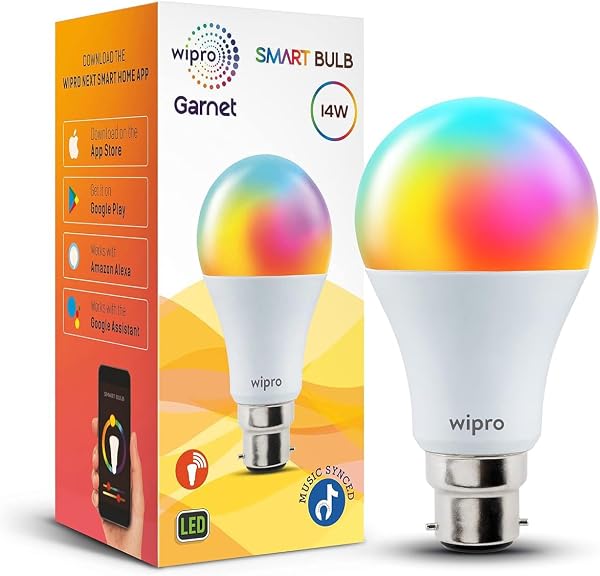
This is a Wi-Fi-connected LED bulb from Wipro's smart lighting range that connects directly to your home's 2.4GHz Wi-Fi network — no hub, no bridge, no additional hardware required. Once paired through the Wipro Next Smart Home app, you get full control over brightness, colour temperature and colour from your phone, along with scheduling, grouping and voice control through Amazon Alexa and Google Assistant.
The "music sync" part is the headline feature for a lot of buyers. The bulb can pulse, shift and change colour in response to ambient sound, turning a regular house party, a Diwali get-together or a kids' birthday into something a bit more theatrical. It's a genuinely fun feature — but it works differently from what most people imagine, and we'll cover that honestly below.
At-a-glance specifications
| Specification | Details |
|---|---|
| Wattage | 14W |
| Base type | B22 (bayonet pin — the standard Indian holder) |
| Light output | Approximately 1,300–1,450 lumens |
| Colour options | 16 million RGB colours plus tunable white (roughly 2,700K–6,500K) |
| Connectivity | Wi-Fi 2.4GHz (does not support 5GHz networks) |
| Hub required | No |
| App | Wipro Next Smart Home (Android and iOS) |
| Voice assistants | Amazon Alexa, Google Assistant |
| Operating voltage | 220–240V AC, 50/60Hz |
| Typical street price | ₹899 – ₹1,299 |
| Warranty | Typically 2 years — confirm on the exact listing before buying |
What's in the box
Wipro keeps the packaging minimal. You get the bulb itself, a quick-start leaflet with the QR code for the app, and the warranty card. There's no remote control and no hub, which is a plus for first-time smart bulb buyers — the phone is the remote. Do keep the box and invoice for the warranty period, since Wipro's service centres in India generally ask for proof of purchase.
How music sync actually works on this bulb
This is where buyers often get confused, so let's be precise: the music sync function listens through your smartphone's microphone, not through a microphone built into the bulb. The app picks up the sound around your phone and translates the beat into colour changes pushed to the bulb over Wi-Fi.
Practically, this means the bulb follows the music well when your phone is in the same room and reasonably close to the speaker. Put your phone in another room or bury it under a cushion, and the sync will lag or respond to the wrong sounds. There's also a slight delay inherent to cloud-based Wi-Fi control — typically a fraction of a second. For a party playlist it looks great; for beat-perfect synchronisation with a professional audio setup, it won't be frame-accurate. Set expectations accordingly and you'll enjoy it a lot more.
Why 14 Watts Matters More Than Most Buyers Realise
Smart bulb shopping in India is still dominated by wattage numbers, but what actually determines whether a room feels well lit is lumens. A typical 9W smart LED produces about 800–900 lumens. This 14W bulb is pushing roughly 1,300–1,450 lumens — a jump of well over 50% in usable light.
In practice, that difference decides where the bulb can go. A 9W colour smart bulb works beautifully as mood lighting, in a bedside lamp, or over a small study desk. Drop the same bulb into a 12×14 master bedroom with dark furniture, and you'll find yourself running it at 100% brightness most evenings with the white shade not quite bright enough to read under. The 14W version comfortably lights a room of that size at around 70–80% brightness, which also means it runs cooler and lasts longer.
If you're fitting out a hall, an open kitchen-dining area, a kids' study room or a home office where video calls happen, the extra output is worth the modest price premium. If you only need accent lighting or a night lamp, a 9W unit at a lower price makes more sense — you'd be overpaying for lumens you'll never use.
Key Factors to Consider Before You Buy
1. Confirm your holder is B22, not E27
The "B22" in the product name refers to the bayonet-pin base with two small side pins and a twist-lock action. This is the most common bulb holder in Indian homes, particularly in older fittings and ceiling rose holders. E27 is the screw-in type, common in floor lamps, some pendant lights and imported fixtures. Physically check the holder before ordering — B22 and E27 are not interchangeable, and there are no safe adapters worth recommending for permanent indoor use. If your fitting is E27, look for the E27 variant of the same Wipro range instead.
2. Match lumens to room size, not just wattage
As a rough Indian-home benchmark: 400–600 lumens suits a bedside lamp or corridor, 800–1,000 lumens suits a small bedroom, and 1,300+ lumens suits a standard bedroom, living room or study. Measure the room, factor in how much natural light it gets during the day, and buy accordingly. Dark-painted walls and dark wood furniture absorb a surprising amount of light.
3. Your Wi-Fi router needs a 2.4GHz network
This is the single biggest cause of setup frustration with every budget smart bulb sold in India. Nearly all of them — including this Wipro model — connect only to 2.4GHz Wi-Fi. If your router broadcasts a single combined network name (band steering) or is 5GHz-only, the bulb may fail to pair. The fix is to log into your router settings and enable a separate 2.4GHz SSID, then pair the bulb to that network. Also note that 2.4GHz has better wall penetration, which is genuinely useful for bulbs in far corners of the house.
4. App maturity and voice assistant support
A smart bulb is only as good as its app. Wipro's Next Smart Home app handles the basics well — on/off, brightness, colour wheel, scenes, schedules, timers and grouping — but its interface is functional rather than polished, and firmware updates occasionally need a re-pair. Alexa and Google Assistant integration works reliably for on/off, dimming and colour commands once the skill is linked. If you're already deep into the Alexa or Google ecosystem, this fits in fine.
5. Colour quality and CRI
Budget RGB smart bulbs typically sit around 80 CRI in white mode, which is acceptable for general lighting but noticeably less flattering than a dedicated warm-white bulb at 90+ CRI. The RGB colour output on any Wi-Fi bulb in this price band, Wipro included, is more saturated and "party-like" than accurate. If you need true colour fidelity — for a home studio, for photographing products, or for a reading lamp — use the tunable-white mode rather than the colour mode.
6. Warranty and service reach
Wipro's biggest practical advantage over imported smart lighting brands is its service network. The company has authorised service centres across most Indian cities and tier-2 towns, so a warranty claim doesn't mean shipping a ₹1,000 bulb to another state. Confirm the warranty period on your specific listing — it's usually two years, but multi-pack and marketplace-exclusive SKUs sometimes vary.
Product Options at Different Price Points
You don't have to buy the top-of-range option. Here's how the market actually breaks down in India right now, so you can pick the right trade-off.
Wipro 14W B22 WiFi Smart LED Bulb with Music Sync — ₹899 to ₹1,299
The subject of this guide, and the sweet spot for anyone who wants a genuinely bright smart bulb from a brand with a service network you can walk into. You're paying roughly ₹300–₹400 more than a 9W equivalent for around 60% more light output plus the music sync feature. For a main bedroom or living room fitting, that's a fair trade. Best for: living rooms, master bedrooms, kids' rooms, and anywhere you want a single bulb to do both everyday lighting and party duty.
Wipro 9W B22 Smart Bulb — ₹599 to ₹799
The budget sibling in the same ecosystem, with the same app, same voice assistant support and the same colour range — just less output. If you're buying three or four bulbs to spread across the house and only one or two need to be genuinely bright, mixing a 14W in the living room with 9W units in bedrooms and corridors is the smart money move. Best for: bedside lamps, corridors, smaller bedrooms, and multi-bulb installations where cost matters.
Philips WiZ Full-Colour Smart Bulbs — ₹899 to ₹1,499
Philips' WiZ range is the closest direct competitor and generally has the more polished app experience, with better scene presets and smoother transitions. Smart bulbs in the WiZ line-up cover the 9W segment well, with higher-output variants available at the upper end of the price band. You're paying a premium for software refinement and the Philips brand. Best for: buyers who care more about app quality and scene smoothness than raw lumens per rupee.
Syska and Havells Smart Bulbs — ₹699 to ₹1,099
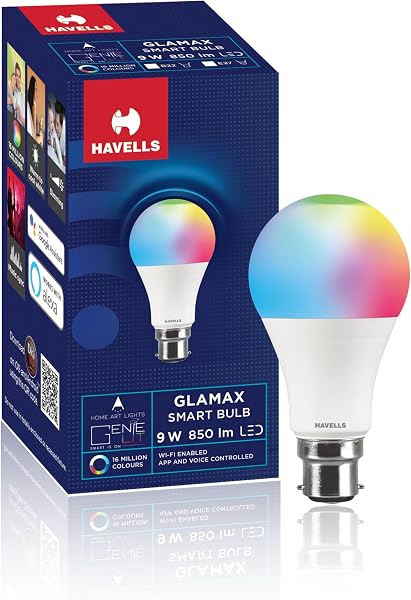
Both brands offer competent Wi-Fi smart bulbs with colour control and voice assistant support at prices between the Wipro 9W and 14W. Havells in particular has decent build quality and a wide offline retail presence, which helps if you prefer buying from a local dealer with easy replacement. App maturity is generally a step behind Wipro and Philips. Best for: buyers who want offline purchase options and local after-sales contact.
Mi / Yeelight Smart Bulbs — ₹499 to ₹899
The price leaders. Mi smart bulbs are excellent value if you're already inside the Mi Home ecosystem and want the lowest entry cost to colour smart lighting. The trade-offs are lower output on the affordable models, a heavier dependence on the Mi Home app, and less predictable service support compared to Wipro. Best for: budget-first buyers, students, renters, and people already using Mi Home devices.
Feature Comparison: How the Options Stack Up
| Product | Wattage / Output | Music Sync | Hub Needed | Typical Price | Best For |
|---|---|---|---|---|---|
| Wipro 14W B22 with Music Sync | 14W / ~1,400 lm | Yes | No | ₹899–₹1,299 | Living rooms, master bedrooms |
| Wipro 9W B22 Smart | 9W / ~800 lm | Yes | No | ₹599–₹799 | Bedside, corridors, multi-bulb setups |
| Philips WiZ Full Colour | 9W and higher variants | Yes | No | ₹899–₹1,499 | App quality, scene presets |
| Syska / Havells Smart | 9W–12W | Varies by model | No | ₹699–₹1,099 | Offline purchase, local support |
| Mi / Yeelight Smart | 7.5W–10W | Yes (app-based) | No | ₹499–₹899 | Budget entry, Mi ecosystem users |
Pros and Cons of the Wipro 14W B22 Smart Bulb
What works well
- Genuinely bright for a smart bulb. The ~1,400 lumen output is the single strongest reason to choose this over the crowded 9W field. It lights a normal Indian bedroom properly.
- Standard B22 base. No adapter, no electrician — it twists straight into the holder most Indian homes already have.
- No hub, no bridge. Direct Wi-Fi connectivity keeps the total cost of ownership low compared to ecosystems that need a gateway.
- Alexa and Google Assistant both supported. Voice control for on/off, dimming and colour works after a straightforward skill-linking step.
- Wipro's service network. A real, tangible advantage in India — authorised service centres in far more towns than most smart lighting competitors.
- Schedules and groups. Grouping multiple Wipro bulbs lets you control a whole room with one tap, and schedules are useful for a lived-in look when travelling.
Where it falls short
- 2.4GHz Wi-Fi only. Standard for the category, but still the most common source of pairing headaches. Router configuration is sometimes unavoidable.
- Music sync depends on your phone's microphone. The bulb itself doesn't hear anything, so the effect is only as good as your phone's position relative to the speaker.
- Slight cloud latency. Commands usually respond in under a second, but it isn't instant. Don't expect a wired-switch feel.
- App is serviceable, not delightful. Scenes and automation are basic compared to Philips WiZ. No local-only control mode worth relying on.
- Colour mode is
Affiliate Disclosure:
This post contains affiliate links. We may earn a commission when you purchase through our links, at no extra cost to you.
Share this: