How to Choose Power Banks in India: The Complete 2025 Buying Guide

About Rahul Verma: Rahul is a tech enthusiast and gadget reviewer with over 8 years of experience testing consumer electronics. He specializes in audio gear, smartwatches, and mobile accessories. When he is not testing products, you will find him exploring the latest in AI and smart home technology.
Your phone shows 8% battery, you are on a crowded Mumbai local, and the UPI payment at the station stall has to go through. That is the exact moment most people start looking up how to choose power banks in India — usually in a panic, usually on a phone that is about to die. The good news is that India's power bank market is genuinely excellent right now. For under ₹3,000, you can buy a 20,000mAh unit with 22.5W fast charging that will refill a modern smartphone three times over.
The bad news is that the packaging is designed to confuse you. A box screaming "20,000mAh" and "FAST CHARGE" tells you almost nothing about what you are actually buying. Rated capacity, conversion efficiency, charging protocols, input wattage, cell type, BIS certification — these are the numbers that decide whether your power bank is a reliable travel companion or a paperweight that gets hot after ten minutes.
This guide breaks all of it down in plain language: how a power bank actually works, what the specifications really mean, which features matter for Indian conditions (heat, humidity, long train journeys, load-shedding), and how to pick the right one for your specific phone and usage pattern. By the end, you will be able to read a spec sheet and know within thirty seconds whether a product is worth your money.
Understanding Power Banks: What You Are Actually Buying
Strip away the marketing and a power bank is a surprisingly simple device: one or more lithium cells, a printed circuit board that converts the cell's voltage into something your phone can use, and a set of protection circuits. The quality difference between a ₹899 unit and a ₹2,499 unit lives almost entirely in the cells and that circuit board — which is precisely what the packaging does not show you.
What Is a Power Bank and How Does It Work?
A power bank stores energy in lithium-ion cells. Inside the pack, those cells sit at a nominal 3.7V. Your phone charges at 5V (or 9V, 12V, or 20V with fast charging). So the power bank needs a boost converter to step 3.7V up to 5V, and a charging controller to negotiate the right voltage and current with your phone. Every one of those conversions loses energy as heat — which is why power banks get warm, and why the number on the box is never the number you get.
There are two cell types used in consumer power banks:
- 18650 cylindrical cells — the same form factor as older laptop batteries. Durable, cheap to manufacture, handles heat reasonably well, but bulkier. Most 20,000mAh packs use four of these.
- Lithium-polymer (Li-po) pouch cells — flat, lightweight, and allows slimmer designs. Common in 10,000mAh and ultra-slim models. Slightly more sensitive to physical damage and swelling.
Neither is inherently "better" for a buyer. What matters is that the manufacturer is using branded, graded cells rather than recycled or B-grade stock — and that is where established brands with Indian service networks earn their premium.
Why the Number on the Box Is Not the Number You Get
This is the single most misunderstood thing about power banks, and understanding it will immediately make you a smarter buyer.
Capacity printed on the box is measured at the cell's native 3.7V. But your phone draws power at 5V (or higher). When the power bank converts 3.7V to 5V, it loses roughly 10–15% to heat and conversion inefficiency. Then the cable loses a bit more, and your phone's own charging circuit loses a bit more. Net result: you typically get 60–75% of the stated capacity as usable charge at the phone end.
So a 10,000mAh power bank realistically delivers around 6,000–6,500mAh to your phone. A 20,000mAh unit gives you roughly 12,000–13,500mAh of usable energy. Here is what that means in practice:
| Power Bank (stated) | Realistic usable output | Full charges for a 5,000mAh phone | Full charges for a 3,300mAh iPhone |
|---|---|---|---|
| 10,000mAh | ~6,000–6,500mAh | ~1.2 charges | ~1.8 charges |
| 20,000mAh | ~12,000–13,500mAh | ~2.5–3 charges | ~3.5–4 charges |
| 27,000mAh | ~16,000–18,000mAh | ~3.5–4 charges | ~5 charges |
Good news for Indian buyers: BIS labelling norms now require manufacturers to print the rated capacity at 5V on the device — usually in small text on the back. If you see "Rated Capacity: 12,000mAh (5V)" on a 20,000mAh pack, that is a brand being honest with you, not a red flag. Conversely, a suspiciously cheap "50,000mAh" pack at ₹999 almost always contains two small cells and a lie.
The Indian Power Bank Market: What ₹1,000–₹3,000 Buys You
The sub-₹3,000 segment is where 90% of Indian power bank sales happen, and it has matured enormously since the early Mi Power Bank days. As of 2025, here is the realistic landscape:
- ₹700–₹1,200: 10,000mAh packs, usually 10W–15W output, micro-USB input, basic plastic build. Fine as a glovebox backup, not for daily use.
- ₹1,200–₹1,800: The sweet spot. 10,000mAh with 20W–22.5W PD, or a basic 20,000mAh with 18W. USB-C input is standard here.
- ₹1,800–₹2,500: 20,000mAh with 22.5W output and USB-C PD, plus useful extras like LED percentage displays and low-current mode.
- ₹2,500–₹3,000: Either premium 10,000mAh with 30W+ PD and aluminium builds, or entry-level 20,000mAh units with 45W–65W output for laptops.
Beyond ₹3,000 you are paying for 65W–140W laptop-class output, built-in cables, or niche features most people do not need. Below ₹700, you are usually buying uncertified cells.
Key Factors to Consider Before Buying a Power Bank in India
Eight things genuinely change your experience. Everything else on the box is decoration.
1. Capacity: Match It to Your Actual Usage, Not to Fear
The instinct is to buy the biggest number. Resist it. Capacity is a direct trade-off against weight, and the best power bank is the one you actually carry.
- 10,000mAh (~200–250g): Enough for one full top-up. Fits in a jeans pocket or small sling. The right choice if you charge your phone overnight and just need a safety net during commutes, meetings, or evenings out.
- 20,000mAh (~400–460g): Roughly the weight of a small water bottle. Ideal for overnight train journeys, multi-day trips, fieldwork, wedding-season travel, or if you use hotspot and camera heavily. Gets you through two to three days of moderate use.
- Above 20,000mAh: Rarely worth it. You cross the 100Wh airline threshold at around 27,000mAh (some carriers require approval between 100Wh and 160Wh), and you cross the "I left it at home" threshold much earlier.
Consider your phone's battery size too. If you use a Redmi Note or Realme with a 5,000mAh+ battery, a 10,000mAh pack gives you barely one charge — go 20,000mAh. If you use a compact iPhone, 10,000mAh comfortably delivers close to two full charges.
2. Output Power and Fast-Charging Protocols
This is where most buyers get silently disappointed. Your power bank and your phone must speak the same fast-charging language, or you fall back to slow 10W trickle charging.
- USB Power Delivery (PD): The universal standard. 20W PD is what modern iPhones need; 25W–45W PD covers most Samsung and Pixel devices. Look for "PD 3.0" on the spec sheet.
- Qualcomm Quick Charge (QC 3.0/4+): Still relevant for many mid-range Android phones.
- PPS (Programmable Power Supply): Critical if you own a Samsung Galaxy S-series or any device advertising "Super Fast Charging 2.0." A power bank without PPS will charge a Galaxy S23 at a disappointing 15W–18W even if it claims 45W PD.
- Proprietary protocols: VOOC/SuperVOOC (OnePlus, Realme, OPPO), Xiaomi's 33W, and vivo's FlashCharge only hit full speed with the original brand's charger. Third-party power banks will default to PD or QC instead — usually fine, just slower.
Practical baseline in 2025: do not buy anything below 20W output. 22.5W is the comfortable standard. 30W+ only matters if your phone supports it.
3. Input Charging Speed — the Most Ignored Specification
Everyone checks output. Almost nobody checks how fast the power bank itself refills — and then they are annoyed that a 20,000mAh pack takes nine hours to charge.
A 20,000mAh power bank with an 18W USB-C input needs roughly 6–7 hours for a full charge. The same pack with 22.5W–30W input finishes in about 4.5–5.5 hours. On a 10,000mAh unit, 18W input means about 2.5–3 hours.
This matters enormously in India, where many households still face voltage fluctuations and people charge devices in short windows. If you are away from home 12 hours a day, a power bank with slow input will essentially live half-empty. Always check that USB-C input is at least 18W, ideally 20W+.
4. Ports, Cables and the Micro-USB Trap
Look for at least one USB-C port that handles both input and output, plus one USB-A for legacy cables. Some budget models still ship with micro-USB input in 2025 — avoid them outright; that cable is a dead format.
Two practical Indian realities:
- Most sub-₹2,000 power banks include a short micro-USB cable in the box. That cable is nearly useless for a modern phone. Budget ₹300–₹500 for a decent USB-C to USB-C cable (or C-to-Lightning if you are on an iPhone 14 or older).
- iPhone 15 and newer use USB-C, which is great — but a C-to-C cable is still usually not included. Confirm before you assume.
Built-in-cable designs (a power bank with a fold-out C or Lightning connector) are genuinely convenient for travel, though they add a failure point. For heavy daily use, a separate cable is more durable.
5. Cells, Build Quality and BIS Certification
This is the difference between a product that lasts three years and one that swells in six months. Non-negotiable checks:
- BIS certification. Power banks must be registered with the Bureau of Indian Standards under IS 16046 (Part 2). Look for the ISI mark and an "R-" registration number on the label or the Amazon/Flipkart listing. Unregistered power banks are illegal to sell — and if a seller has hidden the certification, that tells you everything.
- Protection circuitry. A serious product lists over-charge, over-discharge, over-current, short-circuit, and temperature protection. These are not marketing fluff; they prevent fires.
- Build. Aluminium or textured polycarbonate shells resist the daily grind of being tossed into a bag. Glossy plastic looks nice for a week.
Heat is the enemy. Indian summers push ambient temperatures to 40°C+ in many cities, and a power bank left in a car or a sunny balcony is a genuine safety risk. Better cells and better boards tolerate this far more gracefully.
6. Size, Weight and Everyday Carry
Weigh this honestly: a 20,000mAh pack is about 420g — comparable to two smartphones. If it does not fit comfortably in your bag, you will stop carrying it, and a power bank you leave at home has zero value. Many buyers regret buying the biggest capacity and later buy a second 10,000mAh unit for daily use.
7. Brand, Warranty and Service in India
Warranty on power banks in India typically runs 6 months (many budget brands) to 18 months (premium brands). Two things matter more than the number itself:
- Whether the brand has a real Indian service presence. A brand with a local RMA centre in metros will replace a dead unit in 7–10 days. A grey-market import will not.
- Whether you buy from the authorised seller. Amazon's "Sold by" line matters. If the seller is a third-party with no brand affiliation, warranty claims become a fight you will lose.
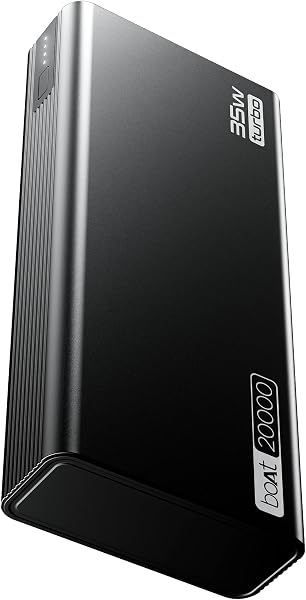
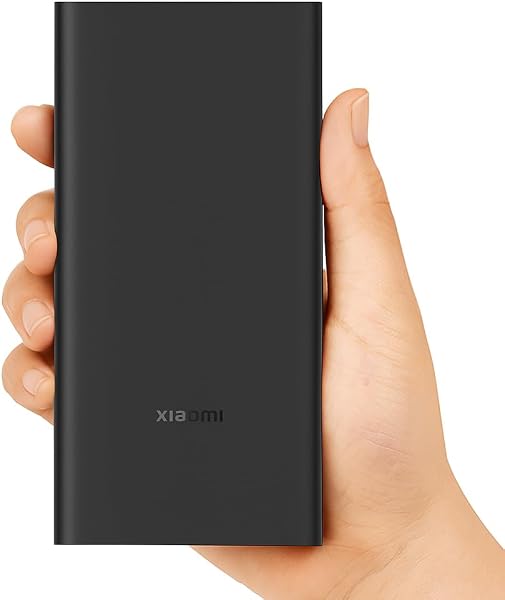
Established names with servicable Indian operations include Mi/Xiaomi, Ambrane, boAt, Realme, Portronics, pTron, Noise, Oraimo, Samsung, and Anker. For a ₹1,500 purchase, buying from a name you can actually call is worth ₹200 of premium.
8. Extras That Actually Matter
- Passthrough charging: Lets the power bank charge your phone while it charges itself. Excellent for overnight hotel stays. Not all models support it.
- Low-current / trickle mode: A button sequence that drops output to a trickle so your TWS earbuds or smartwatch do not get rejected as "too low draw." Genuinely useful if you own earbuds.
- Digital percentage display: Far more useful than four vague LEDs. Once you use one, you will not go back.
- Simultaneous multi-port output: Power is split when you charge two devices, so fast charging usually halves. Know this before you plan around it.