Ambrane PP40 Review: Is This 40,000mAh Power Bank Worth Your ₹3,000?

About Rahul Verma: Rahul is a tech enthusiast and gadget reviewer with over 8 years of experience testing consumer electronics. He specializes in audio gear, smartwatches, and mobile accessories. When he is not testing products, you will find him exploring the latest in AI and smart home technology.

If you have ever watched your phone drop to 3% while stuck in a Delhi Metro tunnel, on a 14-hour train ride to Nagpur, or in the middle of a power cut during a summer evening, you already know why a large-capacity power bank is not a luxury in India — it is basic survival gear. And that is exactly the gap the Ambrane PP40 is trying to fill.
This is not a small pocket power bank. The ambrane pp40 is a 40,000mAh unit that Ambrane positions as a "charge everything, charge often" solution for travellers, students, delivery partners and anyone who refuses to be the person asking for a charger at a wedding. But big numbers on a box are easy — the real question is whether the ambrane pp40 actually delivers usable power, whether it charges fast enough to be useful in 2025, and whether it is genuinely good value under ₹3,000.
In this guide, I break down the ambrane pp40 specifications in plain language, compare it against realistic alternatives from Mi, Realme, boAt and Ambrane's own lineup, share current price ranges across Amazon and Flipkart, flag the honest downsides, and tell you exactly who should buy it — and who should spend their money elsewhere.
What Is the Ambrane PP40?
The ambrane pp40 is a high-capacity lithium-polymer power bank from Ambrane, an Indian consumer electronics brand based in Delhi that has been making chargers, cables and power banks since 2012. Ambrane's model naming is fairly transparent: the "PP" series refers to power banks, and the number generally tracks capacity. So a PP20 is a 20,000mAh unit, and the ambrane pp40 is a 40,000mAh unit — roughly double the capacity of the most popular power bank size in India.
In practice, that means a fully charged ambrane pp40 can top up a typical 5,000mAh Android phone around six to seven times, or a 3,200mAh iPhone roughly ten times, before needing to be plugged into a wall socket itself. That is a genuinely different use case from a 10,000mAh slim power bank, which is really just "one extra day in your bag."
Ambrane PP40 Specifications at a Glance
| Specification | Details |
|---|---|
| Model | Ambrane PP40 |
| Cell capacity | 40,000mAh (typical) |
| Rated / usable capacity | Roughly 24,000–26,000mAh at 5V |
| Maximum output | 22.5W fast charging |
| Ports | USB-A outputs plus USB-C (input, and output on recent revisions) |
| Recharging input | Up to 18–20W via USB-C |
| Display | LED battery-level indicators |
| Weight | Approximately 700–800 grams |
| Warranty | 1 year (registered on Ambrane's site) |
| Typical street price | ₹2,399 – ₹2,999 |
One honest caveat: Ambrane has shipped minor revisions of the ambrane pp40 over time, so port layouts and input wattage can differ slightly between batches and listings. Before you buy, check the "specifications" section of the exact Amazon or Flipkart listing you are ordering from — a 30-second check saves a return.
What's in the Box
The retail pack is simple: the ambrane pp40 unit, a short USB-A to USB-C charging cable, a user manual, and the warranty card. There is no wall adapter included, which is normal at this price. You will need a 20W-or-higher charger of your own to refill the power bank at full speed — and if you do not own one, budget ₹500–₹900 extra for an Ambrane or boAt 20W adapter, because charging a 40,000mAh battery with an old 5W iPhone brick is an exercise in patience.
Why a 40,000mAh Power Bank Makes Sense for Indian Users
India's power bank market skews heavily towards 10,000mAh and 20,000mAh units, and for most office-goers that is the right call. But there are specific Indian scenarios where the ambrane pp40 makes far more sense:
- Long-distance train travel: Rajdhani and Duronto coaches have charging points, but they are famously unreliable, and a 20,000mAh bank is often dead by the second night of a 36-hour journey. The ambrane pp40 comfortably covers a three-day trip.
- Power cuts and outages: In smaller towns and during summer peak load, four to six hour outages are still common. One charge of the ambrane pp40 can keep a family's two phones and a pair of earbuds alive through an entire evening.
- Delivery and field work: Gig workers running Swiggy, Zomato, Amazon or logistics routes use GPS and screen-on navigation all day. A 40,000mAh bank removes the mid-shift panic.
- Group trips and weddings: One heavy power bank in the group bag means four people can recharge without hunting for wall sockets.
- Trekking and camping: No mains power for three days? The ambrane pp40 is the difference between a working phone and a paperweight, especially useful on Himachal and Uttarakhand trails.
The trade-off, of course, is weight. At roughly 750 grams, this is not something you slip into a jeans pocket. It belongs in a backpack, a bike top box, or a car glovebox.
Ambrane PP40 Performance: What It Actually Delivers
Charging Speed in Real Use
The ambrane pp40 advertises 22.5W peak output, which in practice means it can fast-charge most modern Android phones at, or close to, their maximum supported speed. A Redmi or Realme phone that supports 18W–33W charging will pull a solid 18W–22.5W from this bank, taking roughly 70–90 minutes for a 0–100% top-up. Samsung Galaxy M and A series phones will charge at their usual 15W–25W rates.
Two things to be clear about. First, 22.5W is not the same league as the 67W or 120W bricks that ship with flagship Xiaomi and OnePlus phones — those will fall back to a slower, safer rate. Second, iPhones will charge at standard USB-PD speeds if the port negotiates correctly, but you should use a genuine or MFi-certified Lightning cable; cheap ₹99 cables are the single biggest reason people conclude a power bank is "slow."
How Many Charges Should You Expect?
Here is the number that actually matters: usable capacity. A 40,000mAh cell rating converts to roughly 24,000–26,000mAh of real output at 5V after conversion losses. That translates to:
- 5,000mAh Android phone (typical 2024–25 mid-ranger): about 5 full charges
- 3,200mAh iPhone: about 7–8 full charges
- 5,000mAh phone plus wireless earbuds plus a smartwatch: roughly 4 full top-ups across all three
- A 13-inch laptop via USB-C (where supported): one partial top-up, not a full charge
Do not expect the marketing figure of "40,000mAh = 8 charges." Anyone who has owned a power bank knows the real number is always lower, and the ambrane pp40 is no exception. It is still roughly double what a 20,000mAh unit gives you.
Recharging the Power Bank Itself
This is where large power banks live or die. Using a 20W USB-C charger, the ambrane pp40 takes roughly 6 to 7 hours to go from empty to full. Using an old 10W charger, expect 11–13 hours — a full overnight plus some. My practical advice: plug it in when you go to sleep and unplug it in the morning; do not plan to "quickly top up the power bank" before a trip.
Ambrane PP40 Price in India and Where to Buy
Pricing on the ambrane pp40 fluctuates more than most products because Ambrane runs aggressive discounts on marketplaces and its own website. Here is the realistic range you should expect:
| Platform | Typical Price | Notes |
|---|---|---|
| Amazon India | ₹2,399 – ₹2,799 | Best for delivery speed and easy returns; check for "Ambrane Official" as the seller |
| Flipkart | ₹2,299 – ₹2,749 | Frequently lower during Big Billion Days; verify seller rating above 4.0 |
| Ambrane official website | ₹2,499 – ₹2,999 | Occasional bundle deals with cables; direct warranty registration is simpler |
| Reliance Digital / Croma (offline) | ₹2,799 – ₹3,299 | Higher MRP, but you can physically check weight and build before buying |
When to Buy for the Best Price
If you can wait, the ambrane pp40 sees its sharpest discounts during Amazon Prime Day (usually July), Flipkart Big Billion Days (late September/October), Amazon Great Indian Festival (October), and Republic Day sales in January. During these windows, it is not unusual to see the unit drop to ₹1,999–₹2,199 with bank offers on HDFC, ICICI or SBI cards.
Outside sale events, check two things before clicking buy: whether the listing is "fulfilled by Amazon" (returns are painless), and whether a no-cost EMI option is available. On a ₹2,500 purchase it hardly matters, but on bundles it can.
Avoid: third-party sellers with no ratings, "imported" listings with no BIS mark, and any listing priced suspiciously below ₹1,800 — counterfeit and refurbished power banks are a real problem in this category.
Ambrane PP40 vs Alternatives: Comparison Table
Before you commit, here is how the ambrane pp40 stacks up against the most sensible alternatives under ₹3,000:
| Model | Capacity | Max Output | Approx. Price | Best For |
|---|---|---|---|---|
| Ambrane PP40 | 40,000mAh | 22.5W | ₹2,399–₹2,999 | Multi-day trips, power cuts, group use |
| Ambrane PP20 | 20,000mAh | 22.5W | ₹1,299–₹1,699 | Daily commuting, lighter bag |
| Mi Power Bank 3i | 20,000mAh | 18W | ₹1,799–₹1,999 | Reliability, brand trust, dual-port use |
| Realme 20,000mAh Power Bank | 20,000mAh | 20W | ₹1,699–₹1,899 | Realme/Samsung fast charging |
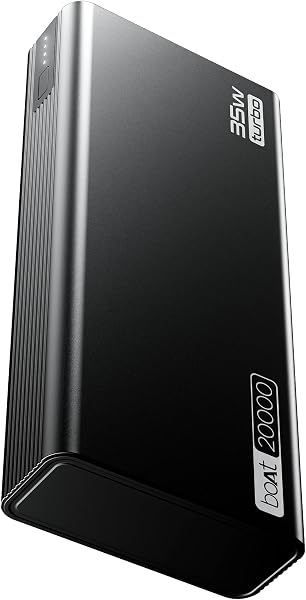
| boAt Energyshroom PB400 | 20,000mAh | 20W | ₹1,599–₹1,799 | Style, compactness, brand appeal |
| Ambrane Powerlit 10000 | 10,000mAh | 20W | ₹899–₹1,199 | Pocket carry, short day trips |
The comparison makes the positioning obvious: for roughly ₹700–₹1,000 more than a good 20,000mAh bank, the ambrane pp40 doubles your capacity. If you genuinely need that capacity, that is excellent value. If you do not, you are paying a premium in money and weight for something you will rarely use.
Pros and Cons of the Ambrane PP40
What Works Well
- Best-in-class capacity per rupee under ₹3,000. Very few 40,000mAh options exist at this price point in India, and fewer still from a brand with a service network.
- 22.5W fast charging across ports. Enough to genuinely fast-charge mid-range Android phones rather than trickle-charging them.
- Multi-device charging. Charge a phone, earbuds and a second phone simultaneously without the bank shutting down.
- Made in India and BIS certified. Ambrane manufactures locally, and units carry the BIS mark — important for safety and for warranty claims.
- Airline-compliant. At 40,000mAh the ambrane pp40 sits just under the 100Wh limit most airlines use for carry-on power banks (roughly 148Wh on paper, so check the Wh rating printed on the unit — see the note in the FAQs below).
- Genuine warranty support. Ambrane's service network is decent for Tier-1 and Tier-2 cities, and warranty registration on their site is straightforward.
What to Be Aware Of
- Heavy. Around 750g — that is a noticeable lump in a backpack, and it is not something you carry in a handbag daily.
- Slow self-recharge. Six to seven hours with a 20W charger is a real commitment; there is no 45W input here.
- No premium display. Basic LED indicators, not a percentage readout. You will not know if you are at 62% or 45%.
- Not for laptop-heavy users. 22.5W output will charge a phone well but will only slow the drain on most laptops.
- Build is functional, not premium. Matte plastic that is fine but not exciting — and the ports are not covered, so dust on a bike ride is a genuine risk.
Who Should Buy the Ambrane PP40 — and Who Should Skip It
Buy it if you travel by train more than twice a year, live in an area with unreliable power, work outdoors or on the move, regularly go on treks or camping trips, or need one power bank that serves a family of three during an outage.
Skip it if you are an office-goer who just needs a safety net for the commute — a 10,000mAh or 20,000mAh unit will serve you better and save your shoulder. Skip it too if you fly frequently on strict carriers, since some airlines in India and abroad are tightening enforcement on large power banks in checked baggage and even cabin use; a 20,000mAh unit is far less likely to be questioned.
Buying Guide: What to Check Before Buying Any Power Bank Under ₹3,000
1. Rated Capacity, Not Just Cell Capacity
Every power bank advertises cell capacity. The number that matters is rated capacity — the output at 5V after conversion losses, which is typically 60–65% of the advertised figure. Look for a rated capacity printed on the box or listed in the specs. Good listings show it; weak ones hide it. For the ambrane pp40, expect roughly 24,000mAh rated.
2. Fast Charging Protocol Compatibility
22.5W means nothing if your phone uses a proprietary protocol. Check whether the power bank supports USB-PD (for iPhones, Pixel, Samsung) and Quick Charge or the relevant VOOC/SuperVOOC variants if you use a OnePlus or Realme device. The ambrane pp40 covers PD and QC well; it will not match SuperVOOC speeds.
3. Ports and Pass-Through Charging
Two USB-A outputs plus a USB-C port is the practical minimum. Pass-through charging (charging the bank while it charges your phone) is convenient at hotels but can heat the unit, so use it sparingly.
4. BIS Certification and Warranty
In India, power banks must carry the BIS mark. Never buy an uncertified unit "cheap" — lithium cells are not a place to save ₹300. Check the warranty period (
Affiliate Disclosure:
This post contains affiliate links. We may earn a commission when you purchase through our links, at no extra cost to you.
Share this: