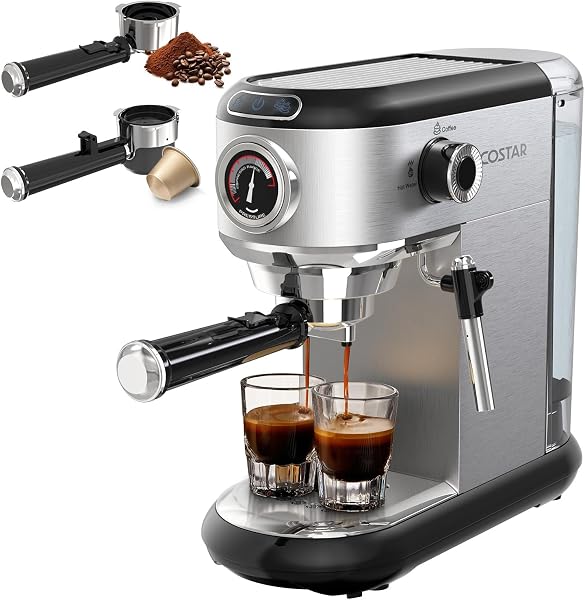
Domestica Brewcraft 35 Bar Espresso Coffee Maker Machine for Home — A Complete India Buying Guide

About Rahul Verma: Rahul is a tech enthusiast and gadget reviewer with over 8 years of experience testing consumer electronics. He specializes in audio gear, smartwatches, and mobile accessories. When he is not testing products, you will find him exploring the latest in AI and smart home technology.

A double espresso at a Bengaluru speciality café now costs anywhere between ₹180 and ₹280. Two cups a day, five days a week, and you are looking at close to ₹9,000 a month. That arithmetic is exactly why so many Indian households are searching for a domestica brewcraft 35bar espresso coffee maker machine for home — a sub-₹6,000 pump machine that promises café-style shots on your kitchen counter without the barista price tag.
But here is the honest part: budget espresso machines are not all built the same, and marketing numbers on the box rarely tell the full story. In this guide, we break down what the Domestica Brewcraft 35 Bar actually delivers, what the "35 bar" claim really means, how it compares against similarly priced machines from AGARO, Wonderchef and Morphy Richards, and exactly when and where to buy it in India for the best price. By the end, you will know whether this machine suits your kitchen, your coffee habits, and your budget.
Understanding the Domestica Brewcraft 35 Bar Espresso Machine
The Domestica Brewcraft is a pump-driven, single-group espresso machine aimed squarely at first-time home espresso buyers in India. It is typically listed on Amazon India and Flipkart in the ₹4,000–₹6,000 band, sitting just above entry-level steam-pressure machines and just below the branded mid-tier machines from AGARO and Wonderchef.
In practical terms, this is a machine designed to do three things: pull a concentrated espresso shot from finely ground coffee, produce steam to froth milk for a cappuccino or latte, and do all of it without occupying half your kitchen counter. It uses a vibratory pump, a pressurised portafilter basket, and a manual steam wand — the standard formula for budget espresso machines worldwide.
What does "35 Bar" actually mean?
This is the single most misunderstood spec on the box, so let's settle it. Real espresso is brewed at approximately 9 bar of pressure — that is the industry standard that Italian espresso culture settled on decades ago. A machine advertising 35 bar is quoting the maximum pump pressure, not the pressure at the coffee puck.
The pump inside can generate up to 35 bar, but an internal over-pressure valve (OPV) and the pressurised basket regulate the actual brewing pressure down to a usable range. So the 35 bar figure is a pump rating and a marketing headline, not a measure of espresso quality. What matters far more is whether the pump is consistent, whether the basket is clean and well-machined, and whether you grind and dose correctly. Do not let a rival machine's "20 bar" badge convince you it is half as capable — in this price band, pump ratings are largely a wash.
What the machine typically ships with
Standard listings for the Domestica Brewcraft 35 Bar include a portafilter with single and double shot filter baskets, a measuring spoon with tamper, a removable drip tray, a transparent water tank (usually in the 1.2–1.5 litre range), a manual steam wand for milk frothing, and a cup-warming plate on top. Power draw sits around 850–1000 W, which is well within a normal Indian 5A kitchen socket.
Specifications can change between batches and sellers, so always verify tank capacity, wattage and warranty terms on the live product page before checkout — especially if you are buying from a third-party seller rather than the brand's official store.
Why Indian Home Baristas Are Considering This Machine
There are three real reasons this machine keeps appearing in buying conversations. First, price. At under ₹6,000, it is the cheapest realistic route to a genuine pump-driven espresso shot — steam-pressure machines that cost ₹2,000 cannot produce the same crema or body. Second, size. Most Indian kitchens, especially in metro apartments, do not have the counter depth for a full-size espresso machine, and the Domestica footprint is compact enough to live beside a mixer grinder. Third, the steam wand. Many cheap machines skip proper frothing, and the ability to make a decent cappuccino at home is what actually converts people from occasional coffee drinkers into daily users.
It is also worth being realistic about what it is not. This is not a machine for someone who wants café-grade single-origin espresso with nuanced flavour separation. That requires a ₹25,000+ setup with a burr grinder, non-pressurised baskets and temperature stability. The Domestica is for the household that wants a reliable, satisfying milk-based coffee every morning — the kind most Indians actually drink.
Key Factors to Consider Before Buying an Espresso Machine in India
Before you commit to the domestica brewcraft 35bar espresso coffee maker machine for home, run through these six checks. They will tell you more about long-term satisfaction than any spec sheet.
1. Pressurised vs non-pressurised baskets
Budget machines use pressurised baskets, which create back-pressure artificially and let you get crema even from pre-ground coffee. The trade-off is that they are forgiving but not particularly refined. For a first machine, pressurised is the right choice — it means you are not forced to buy a ₹15,000 grinder on day one.
2. Grind quality and freshness
No machine can rescue stale, coarsely ground coffee. If you buy pre-ground, choose an espresso-specific grind (not filter grind) and buy small packs you will finish within three weeks. If you want to grind fresh, a basic burr grinder like the ones from Timemore or a manual 1Zpresso will serve you far better than any blade grinder.
3. Steam wand performance
A panarello-style wand (the sleeve type with air holes) is what you get in this price band. It froths milk quickly and forgivingly, which is ideal for beginners but gives you less control over microfoam texture. For home cappuccinos, it is perfectly adequate.
4. Descalability and water quality
Indian tap water is hard — Delhi, Chennai, Jaipur and most of the Gangetic plain run high on calcium and magnesium. If you use tap water in any espresso machine, you will be descaling within weeks. Use filtered or low-mineral water (RO water blended with a little tap water is a good compromise) and budget for a monthly descale with a citric-acid or commercial descaler.
5. Service and spare availability
This is the most underrated factor for Indian buyers. Before purchasing, check whether the seller lists a service centre network, whether portafilter gaskets and baskets are sold separately, and what the warranty covers. A ₹5,000 machine with no spare parts becomes a ₹5,000 paperweight in eighteen months.
6. Counter space and clearance
Measure the height between your counter and the overhead cabinet. Espresso machines need clearance above the cup-warming plate and space to lift the water tank lid. A machine that does not fit under your cabinet is a machine you will stop using.
Domestica Brewcraft 35 Bar — Detailed Breakdown
Build and design
The Brewcraft follows a familiar black-and-stainless silhouette that reads as more expensive than its price. The body is largely plastic with metal accents, which is expected at this price point — do not expect commercial-grade steel. The drip tray is removable and dishwasher-friendly, and the water tank detaches for refilling at the sink, which is a genuinely useful convenience compared to machines that force you to pour water in place.
Build quality is honest for the segment. Treat it gently, avoid yanking the portafilter, and it will hold up. What it will not tolerate is being knocked around during cleaning or left with water sitting in the tank for weeks.
Brewing performance
For a budget single-boiler machine, the Brewcraft does what it should: it heats up in roughly 60–90 seconds, produces a shot with visible crema from fresh espresso-grind coffee, and delivers enough body to stand up to milk. Shot volume is controlled manually, which means you decide when to stop the pump — more control than a preset button, but it requires you to pay attention the first few times.
The practical ceiling here is consistency. Temperature will drift slightly between shots, so if you are pulling back-to-back shots for a family of four, give the machine 30–60 seconds to recover between them. Expect the best results from a 16–18 g dose in the double basket, tamped firmly and level.
Milk frothing
The steam wand is the highlight for most buyers. It produces enough steam to froth 150–200 ml of milk in about 40–50 seconds, and the panarello sleeve makes it easy to get a thick, glossy foam without technique. Purge the wand for two seconds before and wipe it immediately after each use — dried milk on a budget wand is the fastest way to clog it permanently.
Ease of use and cleaning
Daily cleaning is straightforward: knock out the puck, rinse the basket, flush the group head for five seconds, wipe the steam wand. Weekly, remove the shower screen if accessible and backflush with water. Monthly, run a descaler through the system. The whole routine takes under three minutes a day, which is the difference between a machine you keep for years and one that gets relegated to a cabinet.
Pros and Cons of the Domestica Brewcraft 35 Bar
What works well:
- Price-to-capability ratio: Genuine pump-driven espresso and a working steam wand for under ₹6,000 is a strong proposition in the Indian market.
- Compact footprint: Fits on apartment kitchen counters without dominating them.
- Beginner-friendly: Pressurised baskets forgive imperfect grind and tamping, so you get drinkable coffee from day one.
- Detachable water tank: Easier refilling and cleaning than fixed-tank rivals.
- Manual shot control: Lets you dial in volume rather than accepting a factory preset.
What to be aware of:
- The 35 bar claim is pump pressure, not brew pressure. Ignore the number and judge the machine on results.
- Plastic-heavy construction: Normal at this price, but it will not feel premium.
- No pressure gauge: You learn by taste and timing rather than instrumentation.
- Single boiler: You cannot brew and steam simultaneously — steam after the shot, not during.
- Service network is thinner than established brands like Philips or Morphy Richards, so warranty terms deserve a close read.
Recommendations at Different Price Points
The Domestica Brewcraft is not the only sensible option, and your budget should drive the decision. Here is how the market breaks down in India as of 2025.
Under ₹3,000 — steam-pressure machines
Brands like Inalsa and Kent offer steam-driven "espresso" makers in this range. They produce strong, concentrated coffee but no real crema and no true pump pressure. Verdict: Fine for strong milk coffee, not for anyone chasing espresso character. If your ceiling is ₹3,000, buy a moka pot and a good frother instead.
₹4,000–₹7,000 — the Domestica's home ground
This is where the domestica brewcraft 35bar espresso coffee maker machine for home competes, alongside entry models from AGARO and Wonderchef. All use vibratory pumps, pressurised baskets and panarello wands. Differences come down to build finish, tank size and after-sales support. Verdict: The Domestica is a solid pick if the price is right and the seller is reputable; AGARO's equivalent is the safer bet if service network matters more to you than saving ₹800.
₹8,000–₹15,000 — the meaningful upgrade
Machines from Morphy Richards, Philips and the AGARO Imperial series start offering better temperature control, sturdier portafilters (often 51–58 mm), improved steam and sometimes a pressure gauge. Verdict: If you drink two or more coffees daily and plan to keep the machine for five years, stretching to this band is usually worth it.
₹20,000+ — enthusiast territory
De'Longhi Dedica, Breville Bambino and similar machines bring 15-bar pumps with proper OPV regulation, thermoblock heating, professional steam wands and non-pressurised basket compatibility. Verdict: Only worth it if you are prepared to also invest ₹10,000+ in a burr grinder. Without that, you will not extract the value you paid for.
Comparison Table — Budget Espresso Machines in India
| Machine | Typical Price (₹) | Pump Pressure | Steam Wand | Best For |
|---|---|---|---|---|
| Domestica Brewcraft 35 Bar | ₹4,000–₹6,000 | 35 bar (pump rating) | Yes, panarello | First-time buyers wanting espresso + frothing on a tight budget |
| AGARO Grand / Regalia | ₹5,000–₹8,000 | 15–20 bar | Yes | Buyers who value a wider service network |
| Wonderchef Regenta | ₹6,000–₹9,000 | 20 bar | Yes | Design-conscious kitchens, brand assurance |
| Morphy Richards Espresso | ₹9,000–₹14,000 | 15–19 bar | Yes, improved | Daily users wanting better build and support |
| De'Longhi Dedica EC685 | ₹22,000–₹28,000 | 15 bar with OPV | Yes, professional | Enthusiasts with a separate burr grinder |
Prices fluctuate with sales, seller and stock. Treat these as indicative bands, not fixed figures.
Where to Buy and When — Getting the Best Value
Amazon India is usually the primary listing channel for the Domestica Brewcraft and typically offers the widest seller choice, the clearest return window, and the most reliable delivery in smaller cities. Check that the seller is either the brand's official store or a well-rated fulfilment partner, and read the most recent reviews specifically for damage-in-transit complaints.
Flipkart runs competitive pricing on budget kitchen appliances and often undercuts Amazon during its own sale events. Compare both before checkout — the gap can be ₹500–₹1,000 on the same model.
Timing matters. The best windows for kitchen appliance discounts in India are the Great Indian Festival (September–October), Flipkart Big Billion Days (same period), Republic Day sales (January) and Amazon Prime Day (July). Outside these, watch for bank offers — ₹300–₹750 instant discounts on HDFC, ICICI, SBI and Axis cards are common on this price band and stack on top of the listed price.
Buying offline is worth considering if you live in a metro with a Croma, Reliance Digital or Vijay Sales nearby. You will usually pay ₹300–₹600 more, but you get to inspect the build, confirm the warranty card, and have a physical point of contact for service. For a first espresso machine, that assurance has real value.
Real-World Usage Tips for Indian Buyers
- Start with a known coffee. Buy a 250 g pack of espresso-grind from a roaster like Blue Tokai, Devan's, KC Roasters or Third Wave and get one variable right before experimenting.
- Use filtered water, not tap. This single habit will extend your machine's life more than any other.
- Preheat the cup. Place your cup on the warming plate for a minute before pulling the shot — a cold cup kills crema instantly.
- Run a blank shot first. A quick water-only flush before your first coffee of the day warms the group head and rinses out overnight residue.
- Steam milk immediately after the shot. The boiler is already hot, so you waste no time and get stronger steam.
- Do not store beans in the fridge. Indian humidity and condensation will ruin them. Keep them in an airtight container in a cool, dark cabinet.
- Adapt to monsoon. High humidity changes grind behaviour — you may need a slightly finer grind or a marginally firmer tamp in July and August.
Maintenance That Keeps It Running for Years
Daily: Rinse the basket and portafilter, flush the group head, wipe the steam wand. Weekly: Remove and rinse the drip tray and water tank with warm soapy water; backflush if your model supports it. Monthly: Descale using a citric acid solution or a commercial descaler — this is non-negotiable in most Indian cities. Every 12–18 months: Inspect the group head gasket for hardening or cracking and replace it if the portafilter no longer seals cleanly.
If you follow that schedule, a well-cared-for budget machine routinely lasts four to six years. If you skip descaling, expect scale buildup to choke the thermoblock within a year — and replacing that part often costs more than the machine is worth.
Frequently Asked Questions
1. Is the 35 bar pressure on the Domestica Brewcraft real, and does it matter?
The 35 bar figure refers to the pump's maximum rated output, not the pressure at which your coffee is actually brewed. Espresso brews at roughly 9 bar, regulated by an internal valve and the pressurised basket. So yes, the pump can generate high pressure — but the number on the box is not a quality indicator. Judge the machine by crema, body and consistency, not by the bar rating.
2. Can I use pre-ground coffee, or do I need to buy a grinder?
You can absolutely use pre-ground coffee with this machine, thanks to the pressurised baskets. Buy espresso-specific grind (ask for "espresso" or "moka" grind, not filter grind) in small 250 g packs and use it within three weeks of opening. A grinder becomes worthwhile only if you want to experiment seriously with freshness and dialling in.
3. How much electricity does it consume?
At roughly 850–1000 W, a 25-second shot plus a minute of steaming uses about 0.05 units of electricity. At average Indian domestic tariffs, that works out to well under ₹1 per coffee. Over a month of two cups a day, expect ₹30–₹60 added to your bill — negligible compared to café pricing.
4. Can I froth milk for chai or just for coffee?
The steam wand works for any milk, including full-fat buffalo milk commonly used in Indian homes. It will froth milk for cappuccinos, lattes and even a frothy cup for kids. It will not make chai — for that you still need your saucepan or a chai maker, since the steam wand does not boil water in volume.
5. What is the warranty and how do I get it serviced?
Warranty terms vary by seller and batch, typically spanning 1–2 years on the machine body. Before buying, confirm the warranty period on the listing, save the invoice as a PDF, and register the product with the brand if the manual asks you to. For service, contact the seller or brand helpline first; in metros, many third-party appliance repair shops also service budget espresso machines and stock common spares like gaskets and baskets.
Affiliate Disclosure:
This post contains affiliate links. We may earn a commission when you purchase through our links, at no extra cost to you.
Share this: