Syska Power Max 300 Review: Is This the Right Power Bank Under ₹3,000 for You?

About Rahul Verma: Rahul is a tech enthusiast and gadget reviewer with over 8 years of experience testing consumer electronics. He specializes in audio gear, smartwatches, and mobile accessories. When he is not testing products, you will find him exploring the latest in AI and smart home technology.
Picture this: you're on a 14-hour train from Mumbai to Nagpur, the charging socket in your coach isn't working, and your phone is at 8%. Or you're at a wedding in a banquet hall where every plug point is already taken by the caterer's equipment. If either scenario sounds familiar, a power bank isn't a luxury — it's basic survival gear. And in the crowded sub-₹3,000 segment, the syska power max 300 has been quietly showing up in a lot of shopping carts.
In this review, we'll break down exactly what the syska power max 300 offers, how it performs in real Indian conditions, how it stacks up against the Mi, Realme, boAt and Ambrane alternatives, and where you should actually buy it to get the best price. We'll also cover the practical stuff most reviews skip — like how many times it will genuinely charge your phone, whether it's cabin-baggage friendly, and what to check before you hit "Buy Now" during a Flipkart or Amazon sale.
What Is the Syska Power Max 300?
The syska power max 300 is a 10,000 mAh lithium-polymer power bank from Syska, a brand most Indian households already know from their LED bulbs, extension boards and home inverters. Syska has been steadily expanding into mobile accessories, and the Power Max series is its mainstream power bank line aimed at buyers who want dependable everyday charging without paying Anker-level prices.
What makes the syska power max 300 interesting is its positioning. It sits in the ₹1,199–₹1,599 street price band — comfortably below the ₹3,000 ceiling — yet claims fast-charging support, dual-device output and BIS certification. For a large section of Indian buyers who want a "known brand" power bank for under ₹1,500, that combination is hard to ignore.
Key specifications at a glance
- Capacity: 10,000 mAh (37Wh) lithium-polymer cells
- Max output: Up to 22.5W on supported Android devices; 20W USB-C Power Delivery for iPhones and compatible devices
- Ports: 1× USB-C (input/output), 2× USB-A output, 1× micro-USB input
- Recharge time: Roughly 4–5 hours via a 18W–20W USB-C charger
- Weight: Approximately 220–240 grams
- Safety: BIS certified with multi-layer protection against overcharge, over-discharge, short circuit and overheating
- Warranty: 12 months, serviceable through Syska's India-wide service network
Who is it designed for?
The syska power max 300 is aimed squarely at the everyday commuter, college student and budget-conscious traveller. If you carry an entry-level or mid-range Android phone — a Redmi, Realme, Poco, Samsung M-series or iQOO — and you need one reliable top-up during the day, this unit is sized correctly for that job. It's light enough to live permanently in a backpack side pocket and it charges quickly enough to be useful rather than ornamental.
Why the Sub-₹3,000 Power Bank Segment Matters in India
Most Indians don't need a 20,000 mAh brick that weighs half a kilo. What they need is a power bank that fits in a jeans pocket or a small sling bag and gives them a full charge on a 5,000 mAh phone battery. That's precisely why the ₹1,000–₹2,000 band is the highest-volume part of the Indian power bank market — and why brands like Syska, Ambrane, boAt and Mi fight so hard in it.
There's also the trust factor. Counterfeit power banks with wildly inflated capacity claims (a "30,000 mAh" unit for ₹599) are still widely sold on marketplaces and at local mobile shops. In that environment, a BIS-certified product from an established Indian brand with a real warranty and a service helpline is genuinely worth paying a small premium for. The syska power max 300 sits right in that sweet spot: certified, warrantied, and priced close enough to the grey-market stuff that the decision becomes easy.
Key Factors to Consider Before Buying Any Power Bank in India
Before you compare models, understand these six factors — they matter far more than the big number printed on the box.
1. Usable capacity is lower than rated capacity
A 10,000 mAh power bank stores energy at roughly 3.7V, but delivers it at 5V (or higher, with fast charging). Combined with conversion losses, you realistically get about 6,000–6,800 mAh of usable output. In practice, the syska power max 300 will charge a 5,000 mAh phone about 1.2–1.3 times, an iPhone 15 (3,349 mAh) around twice, and a Redmi Note with a 5,000 mAh battery about once fully plus a 25–30% top-up. Anyone promising you "three full charges" from 10,000 mAh is overselling.
2. Output wattage and charging protocol support
Your power bank is only as fast as the protocol your phone speaks. A Samsung Galaxy S-series device will fast-charge over USB-C PD; a OnePlus needs SuperVOOC; a Realme needs SUPERVOOC or Dart; a Vivo needs FlashCharge. The syska power max 300 supports USB PD and standard fast-charge profiles, which means it'll deliver solid 18W–20W speeds to most phones — but it won't hit the 65W–80W peaks that premium OnePlus or Realme chargers manage. For most buyers in this price bracket, that's perfectly acceptable.
3. Input charging speed
A power bank that takes 9 hours to refill is a power bank you'll stop using. Check that the unit supports USB-C input at 18W or above. The syska power max 300 recharges in roughly 4–5 hours using a 20W PD adapter — reasonable for its capacity, though you should factor in keeping a decent charger in your bag.
4. Build quality and portability
Look for a unit that feels dense and solid rather than hollow. Weight between 200g and 250g is the practical comfort zone for 10,000 mAh. Anything marketed as 10,000 mAh but weighing 130g is almost certainly misrepresenting its capacity.
5. BIS certification and warranty
Power banks are covered under mandatory BIS registration in India. Always check for the BIS mark (IS 16046) on the packaging, and confirm the warranty covers at least 12 months with a serviceable brand presence in India. This is where the syska power max 300 has a clear advantage over no-name imports.
6. Cycle life
Most lithium-polymer power banks retain around 80% of original capacity after 300–500 full cycles. With typical use (two partial charges a week), that's roughly three to four years of useful life. Store it at around 50–60% charge if you won't use it for weeks at a stretch.
Syska Power Max 300: Detailed Breakdown
Design and build
The syska power max 300 comes in a matte-textured polycarbonate shell that resists fingerprints far better than the glossy black finish used on several competitors. It's a two-tone design with rounded edges, which makes it comfortable to hold alongside a phone while charging. The four-LED capacity indicator is standard fare but bright enough to read in daylight — useful when you're hunting for it in a dimly lit bag. Port layout is sensible: USB-C and micro-USB on one edge, twin USB-A ports on the other, so cables don't tangle into each other.
Charging performance
In real-world use, the syska power max 300 delivers what it promises. Plugging in a Realme or Redmi phone with 20W+ fast-charge support pulls a solid 18W–20W, taking a 5,000 mAh battery from near-empty to about 55–60% in half an hour. iPhone users get USB-C PD at around 20W, which is the fastest an iPhone will accept from a third-party bank anyway. Charging two devices simultaneously is possible, but speeds split between the ports — fine for a phone plus earbuds, less ideal for two phones.
Heat management is decent but not exceptional. After 20–25 minutes of continuous fast charging, the body warms up noticeably but never becomes uncomfortable to hold. That's normal behaviour and a sign the thermal protection is doing its job rather than a red flag.
Safety features
Syska has equipped the syska power max 300 with the standard multi-protection suite: over-charge, over-discharge, over-current, short-circuit and temperature protection. The BIS certification is genuine and verifiable, which matters in a market where ₹499 power banks sometimes contain recycled laptop cells with no protection circuitry at all.
What could be better
Two things hold the syska power max 300 back from being a runaway recommendation. First, the absence of a digital percentage display — at this price, brands like Ambrane and boAt already offer LED readouts that show the exact battery percentage, which is genuinely more useful than four blinking dots. Second, there's no low-current mode for earbuds or smartwatches, so tiny devices may occasionally fail to trigger charging automatically. Neither is a dealbreaker, but both are worth knowing before you buy.
Syska Power Max 300 vs Alternatives: Comparison Table
| Model | Capacity | Max Output | Ports | Approx. Price | Best For |
|---|---|---|---|---|---|
| Syska Power Max 300 | 10,000 mAh | 22.5W | USB-C + 2× USB-A + micro-USB | ₹1,199–₹1,499 | Brand trust, warranty, everyday carry |
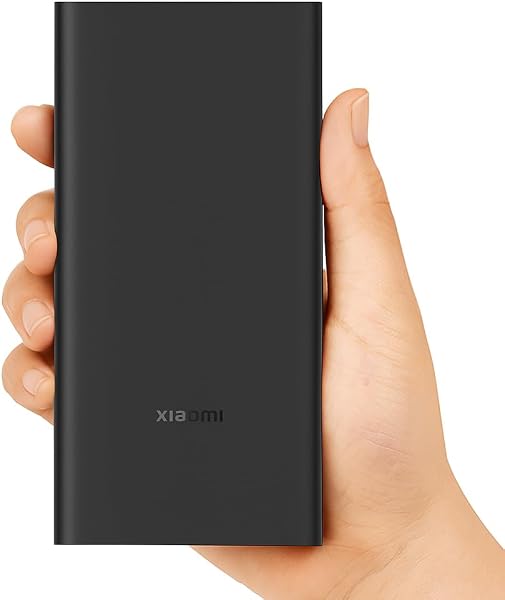
| Mi Power Bank 3i 10000 | 10,000 mAh | 18W | 2× USB-A + micro-USB/USB-C | ₹1,099–₹1,299 | Lowest price per unit of reliability |
| Realme 10,000 mAh 2i | 10,000 mAh | 18W | USB-C + USB-A | ₹999–₹1,199 | Budget pick for Realme/Android users |
| Ambrane 20,000 mAh (Stylo) | 20,000 mAh | 20W | USB-C + 2× USB-A | ₹1,499–₹1,799 | Travellers and two-phone households |
| Anker PowerCore 10000 PD | 10,000 mAh | 20W | USB-C + USB-A | ₹2,499–₹2,999 | Premium build and long-term reliability |
Prices are indicative of typical Amazon and Flipkart listings and fluctuate with sales, coupons and bank offers.
Best Power Bank Recommendations at Different Price Points
Under ₹1,500: The Value Zone
Syska Power Max 300 (₹1,199–₹1,499) is the strongest pick here if warranty and brand service matter to you. Syska's service network covers most tier-2 and tier-3 cities, something Ambrane and boAt are still catching up on in smaller towns. Mi Power Bank 3i (₹1,099–₹1,299) remains the benchmark for raw reliability at the entry level — Xiaomi's build quality and after-sales are excellent, though it caps out at 18W. Realme 10,000 mAh 2i (₹999–₹1,199) is the cheapest credible option and a great second unit to keep in a laptop bag.
₹1,500–₹2,200: The Capacity Upgrade
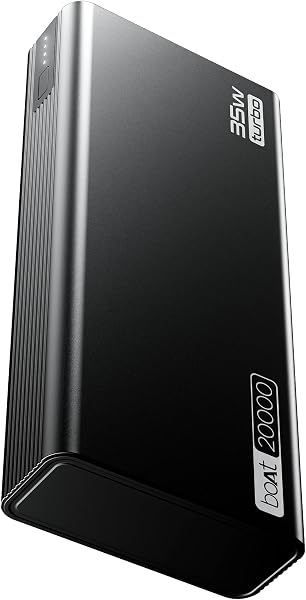
Ambrane 20,000 mAh Stylo (₹1,499–₹1,799) doubles your capacity for roughly the same money as a mid-tier 10,000 mAh unit — the obvious choice for frequent train or bus travellers. boAt EnergyShroom 20000 (₹1,699–₹1,999) adds a digital display and a more premium finish. If you want to stay with Syska but need more juice, the 20,000 mAh variant of the Power Max series is worth a look at around ₹1,899.
₹2,200–₹3,000: The Premium End
Anker PowerCore 10000 PD (₹2,499–₹2,999) is the one to buy if you plan to keep the power bank for four-plus years. Anker's cell quality, temperature control and 18-month warranty justify the premium. Mi Power Bank 3i 20000 (₹2,299–₹2,599) offers 20,000 mAh with 18W fast charging and remains the safest large-capacity buy in India.
Pros and Cons: Syska Power Max 300
Pros
- Genuine BIS certification with a 12-month warranty and India-wide service network
- 22.5W output is
Affiliate Disclosure:
This post contains affiliate links. We may earn a commission when you purchase through our links, at no extra cost to you.
Share this: