How to Choose Robot Vacuum Cleaners in India: A Practical, No-Nonsense Buying Guide

About Rahul Verma: Rahul is a tech enthusiast and gadget reviewer with over 8 years of experience testing consumer electronics. He specializes in audio gear, smartwatches, and mobile accessories. When he is not testing products, you will find him exploring the latest in AI and smart home technology.
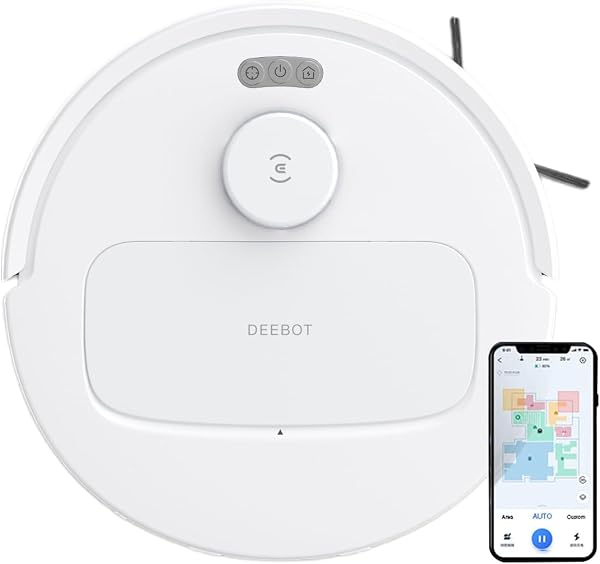
If you live in Delhi NCR in December, or in a ground-floor flat beside a construction site in Bengaluru, you already know the truth about Indian homes: dust is not a weekly problem, it is a daily one. A broom takes 20 minutes and simply redistributes half the dust into the air. That is exactly the gap robot vacuum cleaners are designed to fill — a daily 45-minute pass that keeps the floor at a manageable baseline instead of a weekend crisis.
But here is where most buyers get stuck. Walk into Amazon or Flipkart, search "robot vacuum", and you will see 200-odd listings ranging from ₹8,999 to ₹1,20,000, all claiming "smart mapping", "5000 Pa suction" and "wet and dry cleaning". The spec sheets look identical. The prices do not. Learning how to choose robot vacuum cleaners in India is less about comparing numbers on a box and more about matching the machine to your floor, your dust load, your home layout and — crucially — the service network available in your city.
This guide breaks all of that down. You will learn what the components actually do, why the Indian context changes the buying decision, which specifications genuinely matter (and which are marketing), how the three price bands differ in real-world performance, and the practical tips that separate a robot that lasts five years from one that ends up in a cupboard by month four.
Understanding What Robot Vacuum Cleaners Actually Do
A robot vacuum cleaner is a disc-shaped device, typically 30–35 cm in diameter and 7–10 cm tall, that moves autonomously across your floor, loosens dust with rotating brushes and sucks it into an onboard dustbin. Most modern models sold in India add a mopping attachment — a small water tank that drips onto a microfibre cloth dragged behind the unit. It is important to be clear about what this is: a maintenance device, not a deep-cleaning replacement for a vacuum cleaner or a wet mop every few days.
The core components (and why each matters)
- Main brush roll: The heart of the machine. Bristle brushes pick up fine dust well but tangle badly with hair. Rubber or hybrid brushes handle hair far better and are the smarter choice for Indian homes with long hair or pets.
- Side brushes: Three-armed spinners that sweep dust from corners and along skirting into the suction path. Cheap models have two; better ones have one or two with speed control.
- Suction motor and airflow: Rated in Pascals (Pa), but airflow and brush agitation matter just as much as the number on the box.
- Dustbin: Ranges from 300 ml on entry models to 600 ml on premium ones. In dusty Indian cities this fills faster than you expect.
- Filter: A washable mesh pre-filter plus a HEPA-grade filter traps fine particulate. Critical for allergy sufferers and for anyone in a high-PM2.5 city.
- Battery: Lithium-ion, 2,600–5,200 mAh. Runtime varies from 60 to 180 minutes depending on suction mode.
- Sensors: Cliff sensors stop the unit falling down stairs; bumper sensors handle collisions; LiDAR or camera modules build a map of your home.
Suction power in Pascals: how much do you really need?
Pa ratings in India have inflated dramatically over the last three years. A ₹12,000 robot now claims 2,700 Pa while a ₹45,000 model claims 8,000 Pa. What matters practically:
- 1,500–2,700 Pa: Fine for daily dust on hard floors in small flats. Struggles with rice grains, crumbs in grout lines and anything on carpets.
- 3,000–4,500 Pa: The practical sweet spot for Indian homes. Handles dust, hair, crumbs and light dhurries comfortably.
- 5,000 Pa and above: Necessary only if you have wall-to-wall carpets, heavy pet hair, or a genuinely large area.
A well-designed 3,000 Pa robot with a rubber brush and strong airflow will out-clean a poorly sealed 5,000 Pa unit. Do not buy on the Pa number alone — look at the brush type and the sealing around the dustbin.
Navigation: the single biggest quality differentiator
This is where the real money goes, and it is the specification most Indian buyers overlook.
- Random navigation (gyroscope-only): The robot bounces around, changes direction on contact, and hopes it covers everything. Common under ₹15,000. It will clean a single room fine but wastes battery and time across a full flat.
- LiDAR / dToF navigation: A spinning laser turret on top builds an accurate map of your home. Works in complete darkness, plans efficient back-and-forth paths, supports no-go zones and multi-room cleaning. This is the minimum you should aim for if your home is larger than 700 sq ft.
- Camera / vSLAM navigation: Uses a camera to identify landmarks. Works well in lit rooms, less reliably in the dark or in rooms with mirrors and reflective marble. Some privacy-conscious buyers avoid cameras entirely.
If your budget stretches to it, LiDAR navigation is worth more than an extra 2,000 Pa of suction. It is the difference between a robot you run daily and one you stop bothering with.
Why the Indian Context Changes Everything
Most robot vacuum cleaners are engineered for European and East Asian homes: low-dust environments, wall-to-wall carpet or sealed wood flooring, and standardised door thresholds. Indian homes present a different set of challenges, and understanding these is central to how to choose robot vacuum cleaners in India.
- Dust load is genuinely higher. In cities like Delhi, Gurugram, Kanpur and Jaipur, settled dust is a daily reality. A 300 ml dustbin in a 3BHK can fill up in a single run. Prioritise 450 ml and above, or a self-emptying model.
- Flooring is mostly hard and smooth. Vitrified tiles, marble and granite are ideal for robot vacuums — better traction than carpet and easy for wet cloths. But high-gloss, polished marble shows streaks if the mop is too wet. Look for models with a controlled drip or electronic water pump rather than gravity-fed tanks.
- Thresholds and tracks are the biggest barrier. Indian bathrooms typically have a 1.5–2.5 cm stone threshold. Most robots climb 1.5–2 cm; some premium ones manage 2 cm reliably. Balcony sliding-door tracks and thick door mats will stop almost any robot. Many homes end up using a "virtual wall" or no-go zone for these areas.
- Indian carpets are lightweight. Cotton dhurries and thin handloom rugs get pushed or bunched by a robot rather than cleaned. Carpet-boost mode helps, but heavy woollen carpets are best left to a proper vacuum cleaner.
- Long hair is the number one failure point. In Indian households with long hair, bristle brush rolls tangle within three runs. Rubber brush rolls are close to essential.
- Power cuts interrupt mapping and schedules. If your area has frequent outages, the robot will simply pause and often restart from scratch. Models that resume cleaning after power restoration are worth seeking out.
- Hard water clogs mop tanks. If your supply is hard, use RO or filtered water in the tank, or scale will block the drip mechanism within months.
- Service network varies wildly by brand. This is the most underrated factor. Check whether the brand has an authorised service centre in your city before you buy. A ₹50,000 robot with no local service support is a ₹50,000 paperweight if the LiDAR module fails.
Key Factors That Shape How to Choose Robot Vacuum Cleaners in India
Work through these eight factors in order. By the time you reach the end, your shortlist will have narrowed itself down considerably.
1. Home size, layout and number of floors
A 1BHK of 550 sq ft is comfortably handled by a random-navigation robot with 90 minutes of runtime. A 1,800 sq ft 3BHK across one floor needs mapping, at least 120 minutes of runtime and the ability to resume where it left off after recharging. Multi-storey homes need saved multi-floor maps — not all models support this, so check before buying.
2. Suction power matched to your floor type
All-hard-floor homes in dusty cities: 2,700–4,000 Pa is genuinely sufficient. Mixed flooring with dhurries: 4,000 Pa plus carpet boost. Wall-to-wall carpet or heavy pet hair: 5,000 Pa and above, plus a rubber brush roll.
3. Navigation and mapping quality
As covered above, LiDAR is the benchmark. Look specifically for: saved multi-floor maps, selective room cleaning, no-go zones and virtual walls, and zone-based cleaning. These features sound like frills but are what make daily use practical in a real Indian home.
4. Battery life and charging behaviour
A 3,200 mAh battery typically gives 90–110 minutes on standard suction. Remember that higher suction drains faster — a 5,200 mAh unit running at maximum power may last only 70 minutes. Check whether the robot supports auto-recharge-and-resume, which is far more useful than a marginally bigger battery.
5. Dustbin capacity and water tank size
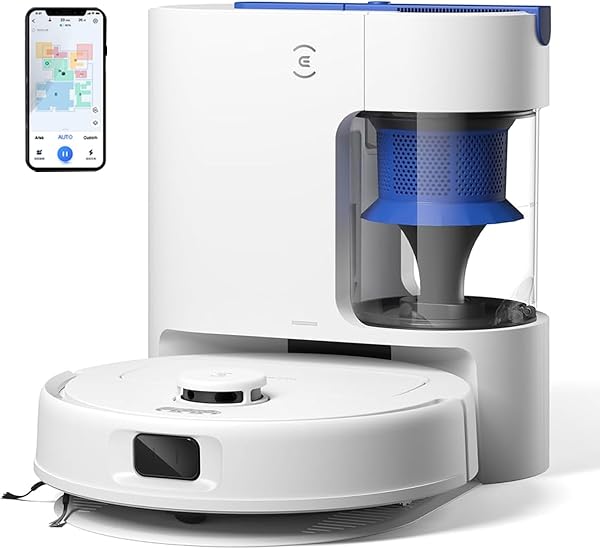
For Indian dust levels, 450–600 ml is the realistic minimum for a full-home run. Water tanks of 200–350 ml are adequate for mopping 700–1,000 sq ft. Self-emptying base stations (which transfer debris into a larger bag or bin for 30–60 days) are genuinely useful in dusty cities but push the price above ₹35,000 and need floor space plus a nearby power point.
6. Mopping: is it actually worth it?
Be realistic. A robot mop drags a damp microfibre cloth — it does not scrub. On Indian tile and marble it is excellent for daily dust-film removal and light stains. It will not remove dried dal, oil splatter near the hob, or bathroom grime. If you expect a deep mop, you will be disappointed. If you want to eliminate the daily "pocha", it is a genuine upgrade. Look for electronic water-pump control and a washable microfibre pad; vibrating or rotating mop heads (found above ₹30,000) do noticeably better on stuck stains.
7. Filtration and allergy considerations
Look for a HEPA H11 or better filter, ideally with a washable pre-filter. In high-pollution cities, a sealed HEPA system prevents the robot from blowing fine dust back into the air. Wash the filter every two to three weeks and replace it every 6–12 months — replacement filters are cheap and widely available on Amazon and Flipkart.
8. App, voice control and — most importantly — after-sales service
The companion app should be stable, in English (Hindi support is still patchy across brands), and should not require a subscription for basic features. Check recent reviews specifically for app complaints. Then check the service network: brands like Xiaomi and Eureka Forbes have broad networks in India; niche imports may not. Also confirm spare-part availability for brushes, filters and batteries — consumables you will need within a year.
The Three Segments of Robot Vacuum Cleaners Sold in India
Entry-level (₹9,000–₹18,000)
These are typically random-navigation or basic gyroscope models with 1,500–2,700 Pa suction, 300–400 ml dustbins and gravity-fed mop tanks. Examples include the Xiaomi Robot Vacuum-Mop 2i, Eureka Forbes Robo Vac N Mop and Milagrow's entry range. They are genuinely useful in a 1BHK–2BHK with hard floors, run daily. Expect noisy operation, imprecise coverage and no proper mapping. App quality is basic. Buy these as a first robot to test whether the habit suits your household — not as a long-term investment.
Mid-range (₹20,000–₹35,000)
This is the sweet spot for most Indian buyers. LiDAR navigation, 3,000–4,500 Pa suction, 400–500 ml dustbins, electronic water pumps and proper app-based mapping with no-go zones. Models such as the Xiaomi Robot Vacuum S10, Ecovacs Deebot N8 series, iRobot Roomba 694 and Dreame's mid-range units sit here. You get multi-room routing, scheduled cleaning, carpet detection and reasonable build quality. If you are serious about daily automation and your home is above 700 sq ft, start your shortlist in this band.
Premium and self-emptying (₹40,000–₹90,000+)
5,000–8,000 Pa suction, rotating or vibrating mop systems, self-emptying base stations, hot-water mop washing, auto-lift mop heads for carpets, and advanced obstacle avoidance (including small-object and pet-waste detection). The iRobot Roomba j7 series, Roborock Q-series, Ecovacs Deebot T-series and Dreame's higher models fall here. These are legitimate set-and-forget machines for large homes, but the price premium is steep relative to the cleaning gain. The value case is strongest for large homes with pets, heavy dust and buyers who will genuinely never touch the dustbin.
Feature Comparison by Segment
| Feature | Entry (₹9,000–₹18,000) | Mid-range (₹20,000–₹35,000) | Premium (₹40,000+) |
|---|---|---|---|
| Navigation | Random / basic gyroscope | LiDAR or vSLAM with mapping | Advanced LiDAR + obstacle avoidance |
| Suction | 1,500–2,700 Pa | 3,000–4,500 Pa | 5,000–8,000+ Pa |
| Runtime | 60–90 min | 100–150 min | 150–180 min, auto-resume |
| Dustbin | 300–400 ml | 400–500 ml | 400–600 ml + self-empty base |
| Mopping | Gravity-fed, basic cloth | Electronic pump, washable pad | Vibrating/rotating, auto mop-lift |
| App features | Start/stop, scheduling | Maps, no-go zones, room select | Multi-floor maps, zone cleaning, routines |
| Best suited for | 1–2BHK, hard floors, first-time buyers | 2–3BHK, mixed floors, daily use | Large homes, pets, heavy dust, low effort |
Pros and Cons of the Leading Options in India
Xiaomi Robot Vacuum S10 (approx. ₹22,000–₹25,000)
Pros: LiDAR mapping is accurate, the app is polished and regularly updated, 4,000 Pa handles Indian dust comfortably, and Xiaomi's service network is one of the widest in India. Spare brushes and filters are cheap and easy to find on Amazon
Share this: