Dreame L50 Robot Vacuum and Mop: The Complete India Buying Guide (2025)

About Rahul Verma: Rahul is a tech enthusiast and gadget reviewer with over 8 years of experience testing consumer electronics. He specializes in audio gear, smartwatches, and mobile accessories. When he is not testing products, you will find him exploring the latest in AI and smart home technology.

If you have spent any amount of time researching robot cleaners in India, you already know the frustration: most entry-level bots sweep well and mop badly, while the genuinely capable ones cost as much as a small car. The Dreame L50 robot vacuum and mop sits in that tricky middle zone where buyers want flagship-style mopping without paying flagship money — and that is exactly why so many people are searching for it right now.
In this guide, we break down what the L50 actually offers, how it compares with Dreame's own L-series and X-series models, what you should realistically pay in India, when to buy, and — importantly — whether it makes sense for your home if you have vitrified tiles, marble, carpets, pets, or a dusty balcony that never stays clean.
By the end, you will know whether the Dreame L50 robot vacuum and mop is the right purchase for you, or whether a different model in the lineup gives you better value for your money.
What Is the Dreame L50 Robot Vacuum and Mop?
Dreame Technology is a Chinese company founded in 2017 that built its reputation on high-speed digital motors — the same components that power many premium vacuum brands globally. In India, Dreame sells directly through Amazon, Flipkart and select retail chains like Croma and Reliance Digital, and it has gradually positioned itself as a more affordable alternative to iRobot, Roborock and Ecovacs.
The Dreame L50 robot vacuum and mop belongs to the company's L-series, which uses LiDAR (laser) navigation rather than camera-based mapping. In Dreame's naming, the "L" line generally prioritises reliable laser mapping and a full self-maintenance base station, while the "X" line carries the flagship extras like extending side brushes and mop pads that reach into corners.
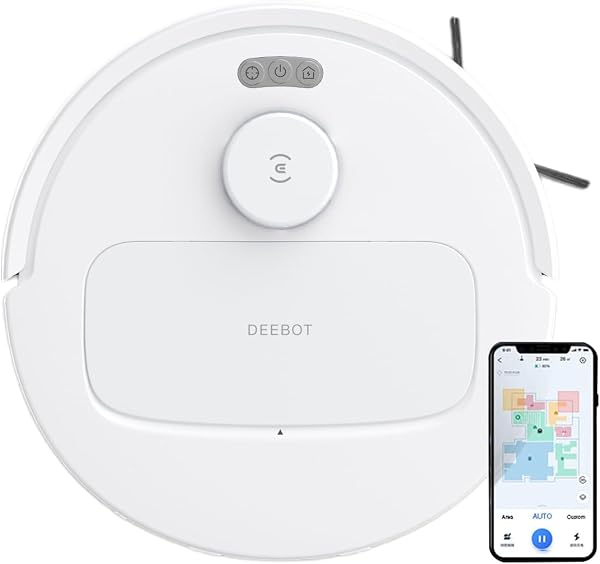
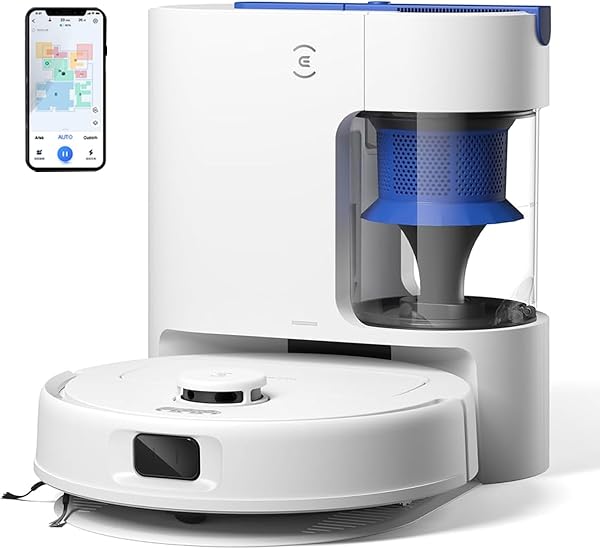
Practically speaking, the L50 is a two-in-one machine: a vacuum that lifts dust and debris off hard floors and carpets, plus a mopping system that wipes the floor using either a rotating-pad or roller-style module. It docks into a base station that empties the dustbin, washes the mop pads, and dries them — so you are not hand-cleaning the robot every single day.
A note on availability: Dreame releases the L50 in phases across markets, and the exact variant sold in India can differ from global listings in suction rating, base-station features and water tank capacity. Always confirm the specifications on the live Amazon or Flipkart product page before you order, because the model number on the box is what determines your warranty and service coverage in India.
Dreame L50 Robot Vacuum and Mop: Key Features at a Glance
Here is what the L50 class of machines typically brings to the table. Treat this as a checklist for what to verify on the product listing.
| Feature | What It Means for You |
|---|---|
| LiDAR navigation + mapping | Creates a floor plan, lets you set no-go zones and room-specific cleaning in the app |
| High-suction brushroll + side brush | Handles everyday Indian dust, rice grains, hair and light debris on tiles and marble |
| Mopping module with water tank | Wet wiping for daily maintenance; not a substitute for a deep scrub on stained floors |
| Self-emptying base station | You empty the base bag/tank roughly every 45–60 days instead of daily |
| Mop pad washing and drying | Reduces odour and bacterial build-up, especially during Indian monsoon months |
| App control + voice assistants | Works with the Dreamehome app; Alexa and Google Assistant support varies by region |
| Carpet detection and boost | Automatically raises suction when it moves onto a rug |
One clarification that trips up many buyers: a self-washing mop does not mean "zero maintenance." You still need to top up the clean water tank, empty the dirty water tank, clear hair from the brushroll, and wipe the base station sensors every couple of weeks.
Why a Robot Vacuum and Mop Makes Sense for Indian Homes
India is genuinely one of the toughest environments for a cleaning robot, and that is not marketing talk. Between construction dust from nearby sites, road dust settling on balconies, open windows during summer, and the fine particulate that coats every surface within hours of sweeping — a robot that runs daily keeps the floor at a baseline that is hard to maintain manually.
Most Indian apartments and independent houses use hard flooring: vitrified tiles, marble, granite and ceramic. This is the ideal surface for a robot mop, because there are no grout-heavy carpets to work around and wet wiping is a normal part of daily cleaning anyway.
Then there is the practical reality of household help. Domestic help is increasingly expensive and often unavailable on short notice. A robot does not replace deep cleaning, but it does reduce the number of times you need to mop in a week — which is precisely where the Dreame L50 robot vacuum and mop earns its keep.
Key Factors to Consider Before Buying
1. Your Carpet-to-Tile Ratio
If your home is 90% hard flooring with one or two rugs, almost any L-series model will work well. If you have large area carpets, wall-to-wall rugs or heavy woollen dhurries, prioritise suction rating and check whether the mop pads can lift automatically when the robot detects carpet — otherwise you will end up with damp patches on your rug.
2. The Mopping System Matters More Than the Tank Size
Rotating dual-pad systems give better scrubbing action on dried stains than a simple vibrating cloth. If your household cooks daily with oil-heavy food, a rotating pad or roller mop is a meaningful upgrade. If your floors just need a daily wipe-down, a simpler mop module is fine and costs less to maintain.
3. Base Station Features
This is where prices diverge sharply. A base that only charges is cheap; a base that self-empties, washes pads with hot water and dries them is not. In humid cities like Mumbai, Chennai and Kochi, the drying function is not a luxury — it prevents that damp-cloth smell from developing in the dock.
4. Height Clearance Under Furniture
Measure the gap under your sofa, bed and TV unit. Most robot vacuums need roughly 9.5–10.5 cm of clearance to slide underneath. If your furniture sits lower than that, no amount of suction power will help.
5. Service and Warranty in India
Dreame has expanded its Indian service network but coverage is still concentrated in metros. Before buying, check the warranty terms on the Indian listing — typically 1 year on the robot, with the base station and battery sometimes covered differently. Buying from Amazon India or Flipkart with an official invoice is far safer than importing, because grey-market units complicate both warranty and voltage handling.
6. Consumables and Running Costs
Budget for brushrolls, side brushes, mop pads, dust bags and cleaning solution. These are not expensive individually, but they add up to roughly ₹2,500–₹5,000 a year depending on usage. Check that replacement parts are listed on Amazon India before you commit.
7. Power and Connectivity
Indian units run on 220–240V, which matches the official Indian SKU. The robot needs 2.4GHz Wi-Fi for app setup — it will not connect to a 5GHz-only network, a common point of frustration during first-time setup.
Dreame L50 Robot Vacuum and Mop: Detailed Breakdown
Design and Build Quality
Dreame's L-series robots are finished in white or dark grey with a matte top surface and a raised LiDAR turret. Build quality is generally solid for the segment, with the base station being the bulkiest component — plan for roughly 35–45 cm of width and enough vertical clearance if you intend to tuck it under a counter. Keep the dock near a 3-pin socket and, ideally, near a drain or bathroom for easy dirty-water disposal.
Cleaning Performance on Indian Floors
On vitrified tiles and marble, the L50's brushroll and side brush combination handles the everyday load well: dust, hair, crumbs, rice grains and light garden debris tracked in from the balcony. The real test is edges and corners, and here you should check whether the Indian variant includes a side brush that extends outward — non-extending brushes leave a visible line of dust along skirting boards.
On medium-pile carpets, expect decent surface cleaning but not the deep extraction of a dedicated canister vacuum. For most Indian homes, where carpets are area rugs rather than wall-to-wall installations, this is a non-issue.
Navigation and Mapping
LiDAR navigation is the L-series' strongest suit. The robot generates an accurate floor plan within one or two runs, handles multiple floors (with map storage), and lets you draw no-go zones around pet bowls, pooja room thresholds or loose wires. It also supports room-based cleaning, so you can tell it to clean only the kitchen after cooking.
Mopping Performance
This is the most important part of the Dreame L50 robot vacuum and mop equation, and expectations need to be calibrated. It will wipe up dust, light stains and dried spills. It will not remove years of grout darkening, hard-water scaling near bathroom doors, or oil stains that have set into the kitchen floor. Think of it as a daily maintenance mop, not a replacement for a monthly scrub with a brush and phenyl.
App Experience and Automation
The Dreamehome app is reasonably polished, with scheduling, suction and water-flow controls, map editing and cleaning history. Setting up daily schedules around your household routine — say, 10 AM after everyone has left — is where the machine delivers the most value.
Dreame L50 Robot Vacuum and Mop: Pros and Cons
Pros
- Genuine two-in-one cleaning — vacuuming and mopping in a single run saves real time on hard floors.
- LiDAR mapping is accurate and fast, with reliable no-go zones and room-level control.
- Self-maintenance base station cuts daily effort dramatically compared to older robots.
- Strong value positioning against Roborock and Ecovacs equivalents at the same price band.
- Parts availability in India is decent for the L-series, with consumables listed on Amazon India.
Cons
- Not a deep-scrub mop — stubborn stains still need manual attention.
- Base station footprint is large, which is a real constraint in compact 2BHK apartments.
- App and onboarding can be fiddly on 5GHz-only home networks.
- Service network is metro-heavy; smaller towns may face longer turnaround times.
- Variant confusion — global and Indian listings sometimes differ, so spec-checking is essential.
Dreame L50 Price in India and Where to Buy
Robot vacuum pricing in India moves constantly because of bank offers, exchange bonuses and festive sales. Based on how Dreame has positioned its L-series locally, expect the Dreame L50 robot vacuum and mop to sit roughly in the ₹70,000–₹1,00,000 band depending on variant, base-station features and the sale period. Always check the live listing, because these numbers shift by ₹10,000–₹20,000 across sale events.
Where to Buy
- Amazon India — usually the widest Dreame selection, with the clearest warranty paperwork and easy returns within the return window.
- Flipkart — frequently matches or undercuts Amazon during Big Billion Days; check the seller rating carefully.
- Dreame India official store — best for genuine parts and confirmed warranty, though discounts are smaller.
- Croma / Reliance Digital — useful if you want to see the base station size in person and prefer offline billing.
When to Buy for the Best Price
- Amazon Great Indian Festival (Sept–Oct) and Flipkart Big Billion Days — historically the deepest discounts on robot vacuums.
- Republic Day and Prime Day sales — decent secondary windows, especially on older L-series stock.
- Bank card offers — HDFC, ICICI and SBI frequently run ₹3,000–₹7,500 instant discounts on appliances.
- Exchange offers — often overlooked; some listings accept old vacuum cleaners for a further discount.
Ignore imported listings that are significantly cheaper. A grey-market unit may not have India warranty, may ship with a different plug, and will be difficult to service.
Alternatives at Different Price Points
Budget: Dreame D10 Plus (approx. ₹25,000–₹30,000)
A self-emptying robot vacuum with basic mopping. It does not wash its own mop pad and lacks the L50's navigation refinement, but for a first robot in a 2BHK with mostly hard floors, it delivers a surprising amount of value.
Mid-Range: Dreame L10s Pro Ultra (approx. ₹55,000–₹70,000)
This is the closest realistic alternative and, for many buyers, the smarter purchase. You get self-emptying, mop washing and hot-water cleaning at a lower price than the L50 is likely to command. If the L50's upgrades do not matter to you, the L10s Pro Ultra is the value pick.
Upper Mid: Dreame L20 Ultra (approx. ₹85,000–₹1,00,000)
Adds mop-pad lifting for carpets and stronger suction. If you have significant carpeting, this matters more than anything the L50 offers.
Premium: Dreame X40 Ultra / X50 Ultra (approx. ₹1,30,000+)
Flagship territory — extending side brushes, dramatically higher suction and the most complete self-maintenance dock. Only worth it if budget is genuinely not a constraint.
Comparison Summary
| Model | Approx. Price (₹) | Best For |
|---|---|---|
| Dreame D10 Plus | 25,000–30,000 | First-time buyers, 2BHK, hard floors only |
| Dreame L10s Pro Ultra | 55,000–70,000 | Best overall value; full self-maintenance dock |
| Dreame L50 | 70,000–1,00,000 | Newer LiDAR navigation, refined mopping, modern dock |
| Dreame L20 Ultra | 85,000–1,00,000 | Homes with carpets and rugs |
| Dreame X40 / X50 Ultra | 1,30,000+ | Flagship performance, corner cleaning, large homes |
Real-World Usage Tips for Indian Consumers
A robot vacuum is only as good as the home it runs in. These practical tips come from how these machines actually behave in Indian apartments.
- Do a "clutter sweep" before every run. Charging cables, dupattas, loose socks and curtain hems are the number one cause of mid-run stalls. Ten seconds of tidying saves ten minutes of untangling.
- Set no-go zones around pooja rooms, rangoli areas and pet bowls. Wet rangoli colours and pet food will spread across the floor if the mop pad runs over them.
- Run it dry first, mop second. Use the vacuum-only mode on dusty days and the mop mode after, rather than mopping dust into mud.
- Use filtered or RO water in the clean tank. Hard water leaves scaling inside the tank and clogs the mop spray nozzles over time — a very common issue in Delhi, Jaipur and Chennai.
- Never add phenyl, harpic or floor cleaners to the tank unless the manufacturer explicitly approves them. Use only the recommended low-foaming solution; foam can damage the pump.
- Clear hair from the brushroll weekly. Long hair from family members wraps around the roller and quietly kills suction performance.
- Run a dry cycle in the monsoon. If your base station has warm-air drying, use it — a damp mop pad left in a humid Mumbai or Kolkata flat will smell within two days.
- Map during daylight with all lights on and doors open. The first mapping run defines how well every subsequent run performs.
- Schedule around your inverter. If your building has frequent power cuts, avoid scheduling runs at peak outage times so a half-charged robot does not die mid-room.
Frequently Asked Questions
Is the
Affiliate Disclosure:
This post contains affiliate links. We may earn a commission when you purchase through our links, at no extra cost to you.
Share this: