Eureka Forbes SmartClean with Auto Bin Turbo: Is It Worth Buying in 2025?

About Rahul Verma: Rahul is a tech enthusiast and gadget reviewer with over 8 years of experience testing consumer electronics. He specializes in audio gear, smartwatches, and mobile accessories. When he is not testing products, you will find him exploring the latest in AI and smart home technology.

If you have been putting off buying a robot vacuum because you can't stand the idea of emptying a dustbin every single day, the Eureka Forbes SmartClean with Auto Bin Turbo is aimed squarely at you. Eureka Forbes — the same company that has been servicing Indian homes with Aquaguard purifiers and Euroclean vacuums for over four decades — has built a robot vacuum that docks itself, sucks its own dust into a sealed bag, and then quietly waits for its next run.
But "auto bin" is only half the story. The Turbo variant adds a higher-suction mode, mopping, app control and voice assistant support. In this guide, we break down exactly what you get, what you don't, how it stacks up against the competition at similar price points, and — most importantly — when and where to buy it in India so you don't overpay. We've also included real-world usage advice for Indian flooring, dust conditions and monsoon humidity, because a robot vacuum that works in a German apartment doesn't automatically work in a Delhi flat in June.
What Exactly Is the Eureka Forbes SmartClean with Auto Bin Turbo?
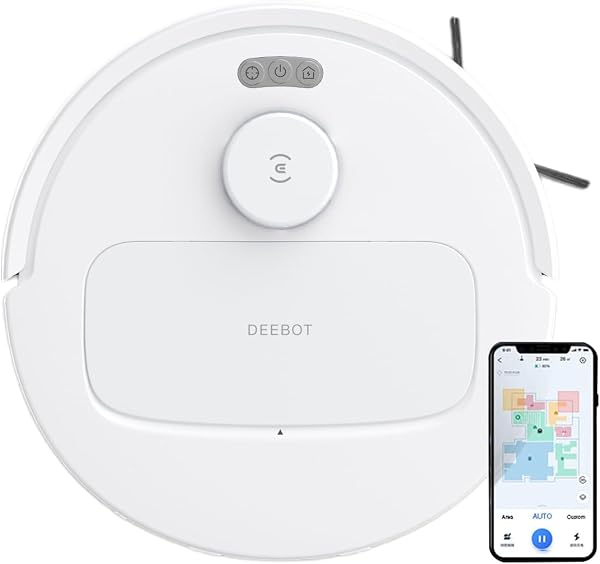
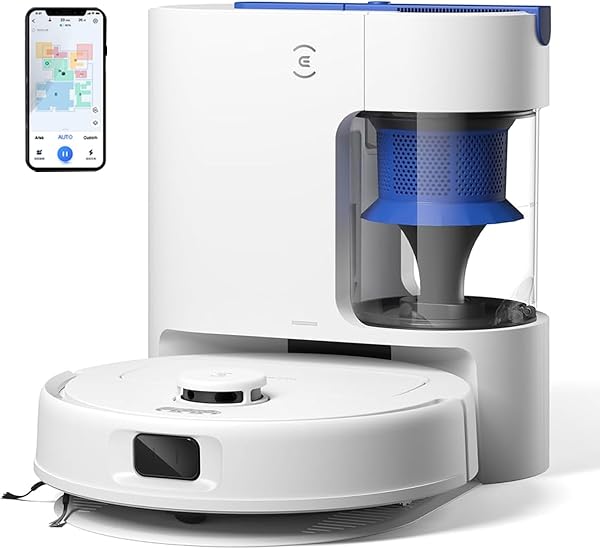
The Eureka Forbes SmartClean with Auto Bin Turbo is a self-emptying robot vacuum cleaner that combines vacuuming, dry sweeping and damp mopping in one unit. The headline feature is the Auto Bin docking station: when the robot finishes a cleaning cycle (or when its onboard dust box fills up), it returns to the dock and the station vacuums the debris out of the robot's bin and into a larger, sealed dust bag inside the base.
Eureka Forbes positions this as "hands-free cleaning for up to 45 days" — meaning in a typical Indian 2BHK, you could go over a month without physically touching the dust. That claim depends heavily on how dusty your home is and how often you run the robot, so treat 30–45 days as the realistic range for a moderately dusty apartment, and closer to 20–25 days if you live near a main road or construction activity.
The "Turbo" part of the name
Turbo refers to a boosted suction mode. On standard mode, the robot runs quieter and delivers longer runtime (roughly 90–110 minutes on a full charge). Switch on Turbo and the motor spins faster for stronger pickup on hard floors and low-pile rugs — at the cost of battery life and noticeably more noise. In practice, most Indian users will run it in Turbo once or twice a week for a deep pass and use standard mode for daily maintenance.
What's in the box
- Robot vacuum unit with onboard dust box and water tank
- Auto-emptying charging dock with a pre-fitted dust bag
- One spare dust bag (usually), side brushes, mop pad and holder
- Power adapter and quick-start guide
- Access to the Eureka Forbes app (Android and iOS), with Alexa and Google Assistant support
Why the Auto Bin Actually Matters in an Indian Home
Here's the honest truth about robot vacuums: the cleaning is the easy part — the maintenance is what makes people abandon them. On a standard robot vacuum, you're emptying a 300–400 ml dust box after every single run, and in Indian conditions (road dust, open windows, ceiling fan fallout) that bin fills up fast. Within three weeks, most people stop using the robot because it has become another chore.
The self-emptying dock changes that equation. You empty a 2.5–3 litre bag once a month instead of a small bin once a day. That single design decision is the difference between a device you use daily and one that gathers dust in a corner. If you're buying a robot vacuum in India specifically because you don't want to deal with daily dust, the auto-bin variant is worth the price premium over the standard SmartClean.
Key Factors to Consider Before You Buy
1. Your floor type
Robot vacuums shine on hard flooring — vitrified tiles, marble, granite, and the kind of flooring found in most Indian apartments. The Eureka Forbes SmartClean with Auto Bin Turbo handles these beautifully. On thick Indian carpets or dhurries, pickup is decent but not deep-clean level; the Turbo mode helps, but don't expect a Miele-level carpet clean.
2. Dust volume and type
Indian homes generate a lot of fine, silty dust plus hair. A HEPA-grade filter matters here, because a cheap filter just recirculates the fine particles back into the room. Check that replacement filters are easily available — they are consumables, and you'll need one every 3–6 months.
3. Navigation technology
The SmartClean range uses gyroscope-based navigation rather than LiDAR. Practically, this means it covers rooms in a systematic pattern rather than randomly, but it can occasionally miss corners and takes longer than a LiDAR robot. If your home has many small, cluttered rooms, a LiDAR-equipped competitor may navigate more efficiently. For open-plan 2BHK/3BHK layouts, gyro is perfectly adequate.
4. Thresholds and obstacles
Check the climb capability — typically 15–20 mm. Most Indian bathroom thresholds fall within this, but raised door frames and thick doormats can trap the robot. Do a quick measurement before buying.
5. Service network
This is where Eureka Forbes genuinely wins. The company has one of the widest service networks in India for home appliances, with authorised centres in most tier-2 and tier-3 cities. For a device with a motor, battery and sensors, this matters more than an extra 500 Pa of suction.
Product Options Across Price Points
Eureka Forbes sells several SmartClean variants, and the naming can be confusing. Here's how the range typically breaks down, with indicative street prices. Note: robot vacuum prices in India swing wildly during sales, so treat these as ballpark figures rather than fixed MRPs.
Entry level: SmartClean Robotic Vacuum (no auto bin)
Indicative price: ₹11,999 – ₹14,999
The basic model covers sweeping and mopping with app control but requires you to empty the onboard bin manually after every run. If your budget is tight and you're only testing whether a robot vacuum suits your lifestyle, this is the sensible entry point. But if you already know you want a hands-off setup, don't buy this and then regret it — the manual emptying is exactly what the auto bin solves.
Mid-range: SmartClean with Auto Bin (non-Turbo)
Indicative price: ₹18,999 – ₹23,999
This gives you the self-emptying dock and mopping, but without the boosted suction mode. It's a solid buy for smaller homes (up to ~1,000 sq ft) with mainly hard flooring and no pets. The gap between this and the Turbo variant is usually ₹2,000–₹4,000 — and for most buyers, that gap is worth closing.
Recommended: Eureka Forbes SmartClean with Auto Bin Turbo
Indicative price: ₹22,999 – ₹27,999
This is the variant this article focuses on, and it's the one we'd recommend for most Indian households. You get the self-emptying dock, sweep + mop + vacuum, Turbo suction for weekly deep passes, app-based scheduling and zone cleaning, and voice control via Alexa or Google Assistant. It's the sweet spot in the range: you're paying for the feature that actually changes your daily routine (auto bin) plus the one that improves cleaning performance (Turbo).
Premium alternatives worth cross-shopping
- Dreame D10 Plus — LiDAR navigation, ~4,000 Pa suction, self-emptying dock. Indicative ₹24,999–₹29,999. Stronger specs on paper, but service reach in India is narrower.
- Ecovacs Deebot N8+ — self-empty, LiDAR, good app. Indicative ₹29,999+. Better navigation, higher price.
- iRobot Roomba j7+ — excellent obstacle avoidance with camera-based AI. Indicative ₹55,000+. Only worth it if you have pets and a large home.
At-a-glance comparison
| Model | Suction | Auto-Empty Dock | Mopping | Navigation | Indicative Price |
|---|---|---|---|---|---|
| Eureka SmartClean (base) | ~2,700 Pa | No | No | Gyro | ₹11,999–₹14,999 |
| Eureka SmartClean Max | ~2,700 Pa | No | Yes | Gyro | ₹16,999–₹19,999 |
| Eureka SmartClean with Auto Bin | ~2,700 Pa | Yes (2.5–3 L) | Yes | Gyro | ₹18,999–₹23,999 |
| Eureka SmartClean with Auto Bin Turbo | ~3,000 Pa (Turbo) | Yes (2.5–3 L) | Yes | Gyro | ₹22,999–₹27,999 |
| Dreame D10 Plus | ~4,000 Pa | Yes | Yes | LiDAR | ₹24,999–₹29,999 |
| Ecovacs Deebot N8+ | ~3,000 Pa | Yes | Yes | LiDAR | ₹29,999+ |
Specifications and prices are indicative and vary by listing and sale period. Always verify on the live product page before ordering.
Pros and Cons of the Eureka Forbes SmartClean with Auto Bin Turbo
What works well
- Genuinely hands-off dust management. The sealed bag in the dock keeps dust contained — important if anyone in the family has dust allergies or asthma.
- Best-in-class service network. Eureka Forbes has service coverage in cities where most robot vacuum brands have zero presence. For a ₹25,000 appliance, this is a real, tangible benefit.
- 3-in-1 functionality. Vacuum, sweep and mop in one pass (or separately, if you prefer vacuuming before mopping).
- Turbo mode is useful, not just marketing. On Indian hard floors with fine dust, the boost in suction is noticeable.
- Scheduling and zone cleaning via app. You can set it to clean the living room while you're at work and restrict it from the pooja room.
- Consumables are affordable and available online. Dust bags, filters, side brushes and mop pads are all stocked on Amazon and the Eureka Forbes site.
Where it falls short
- Gyro navigation is not LiDAR. It will occasionally bump into things, take longer on complex layouts, and may need a couple of runs to cover everything.
- Mopping is basic. It's a damp-mop drag, not a scrubbing mop. Great for daily maintenance, useless for dried-on stains or sticky spills.
- Dust bags are a recurring cost. Roughly ₹300–₹500 per bag, so budget ~₹4,000–₹6,000 a year if you change them monthly. Some users cut the bag and empty it — not recommended, since you lose the allergy benefit.
- Turbo mode is loud and drains battery faster. Expect runtime to drop meaningfully versus standard mode.
- Needs a 2.4 GHz Wi-Fi network. Most modern Indian dual-band routers broadcast both bands on the same SSID, which can trip up the setup. You may need to split the SSIDs temporarily.
Buying Guide: What to Look For Before You Pay
Check the dock footprint
The auto-empty dock is bulkier than a standard charging dock — plan for roughly 30 cm of wall space with a power socket nearby. It should ideally sit against a wall with at least 50 cm of clearance on both sides, otherwise the robot struggles to dock reliably.
Confirm the warranty terms
Standard warranty on Eureka Forbes robot vacuums is typically one year comprehensive. Ask specifically whether the battery and the motor are covered, and whether the dust bags are included in any warranty claim. Consider the extended warranty offered at checkout on Amazon or Flipkart — on a device with a lithium battery and a suction motor, it often pays for itself.
Buy in the right sale window
Robot vacuum pricing in India is highly seasonal. The best discounts show up during:
- Amazon Prime Day and Amazon Great Indian Festival (usually September–October)
- Flipkart Big Billion Days (same window)
- Republic Day and Holi sales (January and March)
- Eureka Forbes' own website promotions — often bundled with extra dust bags or a free extended warranty, which can beat the marketplaces on total value even when the sticker price is higher
Outside these windows, expect to pay ₹2,000–₹4,000 more. Don't buy in the last week of December or the first week of January — prices are at their least competitive then.
Where to buy
Amazon India is usually the best combination of price, easy returns and verified consumables. Flipkart runs aggressive bank offers and often matches or beats Amazon during BBD. Eureka Forbes' official website is worth checking for bundle deals, and it's the safest route if you want the installation demo — Eureka Forbes typically arranges a free demo visit for direct purchases, which genuinely helps first-time robot vacuum owners. Avoid third-party sellers with no service backing.
Pay smart
No-cost EMI is almost always available on this price band on both Amazon and Flipkart — a ₹25,000 unit over 6 months works out to roughly ₹4,200 a month with no interest, provided you use the right bank card. Check the bank offer section before checkout; a flat ₹1,500–₹2,500 instant discount is common.
Real-World Usage Tips for Indian Homes
Do a dry run before mopping. Indian dust is fine and gritty. If you mop first, you'll create mud streaks. Run the robot in vacuum/Turbo mode, then follow up with the mop pad on a second pass.
Keep the dock away from direct sunlight and humidity. Bathroom-adjacent walls in Indian homes attract moisture that can affect the dock's charging contacts over time. A living room wall is ideal.
Tame the cables. Charging cables, TV wires and the ubiquitous extension cord are the number one cause of robot vacuum jams. A ₹200 cable-management sleeve solves it permanently.
Watch out for the pooja room and rangoli powder. Fine coloured powders will coat the filter quickly. Use the app's zone restriction feature to keep the robot out of the pooja area, or run it only after the powder has been cleaned manually.
During monsoon, skip the mop. High humidity plus a damp mop pad equals a floor that stays wet for ages and a
Affiliate Disclosure:
This post contains affiliate links. We may earn a commission when you purchase through our links, at no extra cost to you.
Share this: