ILIFE A30 Pro Robot Vacuum Cleaner with LiDAR Navigation: Full Review, Price & Buying Guide

About Rahul Verma: Rahul is a tech enthusiast and gadget reviewer with over 8 years of experience testing consumer electronics. He specializes in audio gear, smartwatches, and mobile accessories. When he is not testing products, you will find him exploring the latest in AI and smart home technology.
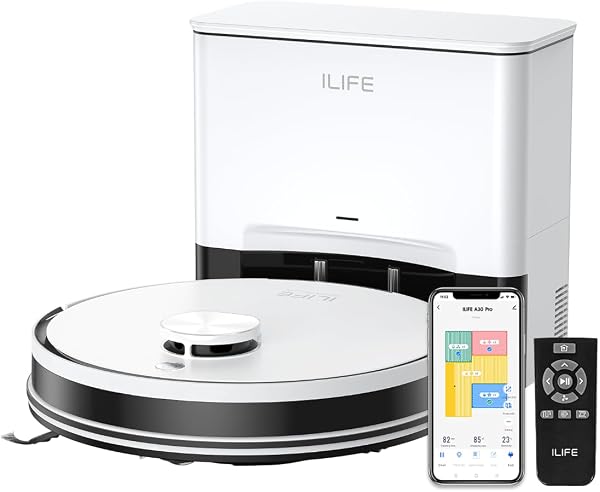
A robot vacuum that bumps into furniture, gets stuck under the sofa and maps your living room by trial and error is not really a smart appliance — it's a bumper car. That's exactly why the ILIFE A30 Pro robot vacuum cleaner with LiDAR navigation has become one of the more interesting mid-range options for Indian buyers in 2025. Instead of random-walk cleaning, it uses a spinning laser turret to map your home, plan straight-line paths and let you tell it exactly where to clean (and where never to go).
In this guide, we break down what the A30 Pro actually does well, how its laser navigation compares with the gyroscope-based bots sold at ₹10,000–₹15,000, what it realistically costs on Amazon and Flipkart, and how it stacks up against the Xiaomi, Dreame and Ecovacs options in the same price band. We also cover the practical stuff most reviews skip — hard water in the water tank, hair wrapped around the brush roll, threshold strips at the balcony door, and the right time of year to buy.
Note: Prices mentioned are indicative retail ranges at the time of writing and move frequently during sales. Always confirm the current price, variant and seller warranty on the product listing before buying.
What Is the ILIFE A30 Pro Robot Vacuum Cleaner with LiDAR Navigation?
The ILIFE A30 Pro is a 2-in-1 robot vacuum and mop aimed at the ₹18,000–₹25,000 segment. The headline feature is its LDS (Laser Distance Sensor) module — the small raised turret on top of the unit — which fires laser pulses in a 360° sweep roughly 8–10 times per second and measures how long they take to bounce back. From those measurements it builds a digital floor plan of your home, which the robot then uses to clean in systematic rows instead of zig-zagging randomly.
In practical terms, that means a few things you'll notice within the first week:
- Faster cleaning cycles. A mapped 900 sq ft apartment typically gets covered in one pass without re-cleaning the same patch five times.
- Better battery efficiency. Straight-line, back-and-forth movement draws far less power than random navigation, so a mid-size flat finishes on a single charge.
- Real map controls. In the app you can draw no-go zones, split rooms, name them and send the robot to just the kitchen after cooking.
- Works in the dark. Because LiDAR doesn't depend on light (unlike camera-based vSLAM systems), the robot cleans just as reliably with the lights off — and there's no camera in your bedroom.
LiDAR vs. gyroscope: why it matters in an Indian home
Most sub-₹15,000 robot vacuums in India use a gyroscope plus a few infrared bumper sensors. They can track their own movement roughly, but they cannot "see" the room, so they don't build a usable map and they can't hold a no-go zone in memory. This is fine for a single bedroom; it's frustrating in a 3BHK with a dining table, a sofa with a low clearance, and a pooja area with a rug.
The ILIFE A30 Pro robot vacuum cleaner with LiDAR navigation solves that by storing the map — usually up to 3–5 floor layouts, which is handy if your home has two levels. You can also set virtual walls so the robot never enters the bathroom during a dry-vacuum run, or keeps away from the pet feeding mat.
Key Factors to Consider Before Buying a LiDAR Robot Vacuum
1. Suction power vs. your flooring
Indian homes are usually a mix of vitrified tiles, granite, marble and a few cotton or synthetic dhurries. On hard floors, anything above 2,000 Pa picks up loose dust comfortably. What you actually need higher suction for is carpet edges, pet hair embedded in rugs, and fine construction dust from nearby building work. The A30 Pro is rated in the ~4,000 Pa class, which is competitive for its price and enough for low-pile rugs — but don't expect it to deep-clean a shaggy carpet the way a plug-in vacuum would.
2. Navigation quality, not just the label
"LiDAR" is not a single standard. Look for consistent map-saving, room segmentation, no-go zones and the ability to resume after recharging. A robot that maps well but loses the map every week will annoy you more than one with weaker suction.
3. Battery, runtime and home size
Battery capacity in the 4,000–5,200 mAh range generally gives 90–150 minutes of run time, which realistically covers 1,000–1,800 sq ft of hard flooring on standard suction. If your home is larger than that, prioritise models with auto-recharge-and-resume.
4. Mopping: honest expectations
Every robot mop under ₹30,000 is a maintenance mop, not a scrubber. It drags a damp cloth and lifts light dust, stains and kitchen grease film. It will not remove dried turmeric or oil splatter near the hob. Buy with that expectation and you'll be happy; buy expecting a bucket-and-mop replacement and you won't.
5. Service and warranty in India
Robot vacuums have moving parts — brush motors, wheels, the LiDAR turret belt — and something eventually needs attention. Buy only from the brand's official store on Amazon or Flipkart, or an authorised seller, so the invoice supports an Indian warranty claim. Grey-market imports look cheaper but typically carry no local service.
ILIFE A30 Pro in Detail: Features That Actually Matter
Suction and cleaning hardware
The unit uses a main rolling brush (combined bristle and rubber fins), a single side brush and a suction inlet, feeding into a dustbin in the 450–500 ml range. On tiles, the side brush is what pulls debris out of corners and along skirting boards; the main brush agitator is what lifts hair and crumbs. Expect to run it daily at low or medium suction for maintenance rather than weekly at maximum — daily light passes keep a home cleaner than one heavy weekly pass.
Mapping, zoning and app control
Through the ILIFE app (paired over Wi-Fi 2.4 GHz), the A30 Pro supports:
- Live map tracking during a run, so you can see coverage gaps.
- Selective room cleaning — send it to the kitchen after dinner without redoing the whole flat.
- No-go zones and virtual walls — essential if you have a temple area, a cable-filled work desk or a toddler's play mat.
- Cleaning modes — auto, spot, edge and scheduling (daily or specific days of the week).
- Voice assistant support — works with Alexa and Google Assistant for basic start/stop/dock commands.
Mopping and water tank
The bundled water tank is a manual-fill, gravity-drip type in the 250–300 ml range. You wet the pad, clip it on, and the robot drags it behind the vacuum. Gravity-fed tanks drip faster at the start of a run — a known characteristic of budget mops — so set the robot to a small zone if you want an even finish. Never leave water sitting in the tank between runs, and never put shampoo or floor cleaner concentrate in it.
Climbing, clearance and getting unstuck
These robots typically climb obstacles up to about 15–20 mm. That clears a standard doorframe and most tile-to-marble transitions, but not a 25 mm balcony threshold or a thick bath mat. Clear cables, sari borders and charger cords off the floor before the first few runs — a robot that snags a phone cable can drag it across the room. The body height is usually under 8 cm, which is what lets it get under most Indian sofa and bed frames; measure your lowest gap before assuming it will fit.
Price in India and Where to Buy
The ILIFE A30 Pro robot vacuum cleaner with LiDAR navigation generally retails in the ₹18,000–₹25,000 band depending on the sale cycle, the bundled accessories and the seller. The effective price you should target:
| Purchase channel | Typical price band | What to check |
|---|---|---|
| Amazon India (official brand store) | ₹18,500 – ₹24,000 | Sold by brand/authorised seller, invoice warranty, accessory bundle |
| Flipkart (brand store / verified seller) | ₹18,000 – ₹24,500 | Bank offers, exchange value, seller rating |
| Major offline electronics chains | ₹21,000 – ₹26,000 | Demo unit, in-person service assurance, no online discounts |
When to buy for the best value
Robot vacuum pricing in India swings sharply during three windows: the Amazon Great Indian Festival and Flipkart Big Billion Days (usually late September to October), Republic Day sales in January, and the smaller Prime Day / monsoon sale events mid-year. Discounts of 15–30% off MRP are common in these periods, and bank card offers (HDFC, ICICI, Axis) can shave another ₹1,000–₹2,500. Outside sales, check the price history on a tracking tool for 30 days — if the listed price is at or near its 90-day low, it's a fair buy. Also factor in the cost of consumables: replacement brush rolls, side brushes and mop pads typically run ₹500–₹1,500 per set and last 3–6 months with regular use.
How It Compares: Alternatives at Different Budgets
Budget tier (₹10,000–₹15,000)
Xiaomi Robot Vacuum-Mop 2i and ILIFE A10s / A80 Plus live here. These are gyroscope-and-bumper machines with no true map. They vacuum competently on hard floors and mop with a basic gravity tank, but they wander. If your home is a single-room or 1BHK setup and you mainly want dust off the floor daily, save the money. If you have three rooms and furniture, the extra ₹6,000–₹8,000 for LiDAR is genuinely worth it.
Mid tier (₹18,000–₹25,000) — where the A30 Pro sits
Ecovacs Deebot N8 offers strong mapping and good suction with a well-established service network. Dreame D10 Plus adds a self-emptying base station, which is a genuinely nice upgrade if you hate emptying dustbins — but it commands a premium and the base takes up floor space. The A30 Pro's case rests on LiDAR navigation, map memory and no-camera privacy at a slightly lower price than both, with a simpler feature set.
Premium tier (₹30,000+)
iRobot Roomba i3+ and Dreame L10s Pro / Ecovacs T-series add self-emptying bases, better mop agitation, stronger suction and more mature software. If your budget genuinely extends there and you have pets or carpets, the jump is worthwhile. If not, a good mid-tier LiDAR bot run daily outperforms an expensive one run monthly.
Side-by-side summary
| Model (approx.) | Navigation | Suction class | Mop | Self-empty base | Indicative price |
|---|---|---|---|---|---|
| ILIFE A30 Pro | LiDAR (LDS) + mapping | ~4,000 Pa | Yes, gravity tank | No | ₹18,000 – ₹25,000 |
| Xiaomi Robot Vacuum-Mop 2i | Gyroscope, no real map | ~2,700 Pa | Yes, basic | No | ₹11,000 – ₹15,000 |
| Ecovacs Deebot N8 | LiDAR + mapping | ~2,300–3,000 Pa | Yes | No | ₹20,000 – ₹26,000 |
| Dreame D10 Plus | LiDAR + mapping | ~4,000 Pa | Yes | Yes | ₹24,000 – ₹30,000 |
| iRobot Roomba i3+ | Camera/gyro hybrid (no LDS turret) | ~2,000–2,500 Pa | No | Yes | ₹32,000 – ₹40,000 |
Pros and Cons of the ILIFE A30 Pro
What works well
- Real LiDAR mapping at a mid-range price — systematic rows, saved maps, room-wise cleaning.
- No camera — a privacy advantage in bedrooms and dressing areas; also cleans reliably in low light.
- Solid suction for the money — handles tile dust, crumbs, hair and low-pile rugs comfortably.
- Multi-floor map memory — useful for duplexes and independent houses.
- Scheduling that runs daily — the biggest real-world benefit of a mapped robot.
Where it falls short
- Gravity-fed mop tank — uneven water flow, no scrubbing action, no auto-lift for carpets.
- No self-emptying base — you'll empty a ~500 ml bin every 2–3 days in a dusty Indian city.
- No obstacle-avoidance camera — it will nudge shoes and socks rather than route around them.
- App polish — functional, but less refined than Xiaomi Home or Dreame's interface; firmware updates are infrequent.
- Service network — narrower than iRobot or Xiaomi, so keep the invoice and register the product promptly.
Buying Guide: What to Look For in a LiDAR Robot Vacuum
Prioritise mapping over suction. A 4,000 Pa robot with a good map cleans better every day than a 6,000 Pa one that wanders. Check reviews specifically for "map saving" and "no-go zone" reliability.
Insist on 2.4 GHz Wi-Fi compatibility. Many Indian homes run dual-band routers, and some robots fail to pair on 5 GHz-only SSIDs. Set up a dedicated 2.4 GHz network band if pairing fails.
Check consumable availability before buying. Search Amazon for "ILIFE A30 Pro brush roll" or "mop pad refill". If spares are hard to find or expensive, maintenance will become an irritant.
Budget for the whole cost of ownership. Add ₹1,500–₹3,000 per year for filters, side brushes, main brushes and mop pads. A ₹20,000 robot over four years costs closer to ₹26,000.
Confirm the warranty terms in writing. Look for at least a 1-year warranty covering the motor and electronics, note whether the battery is covered, and confirm the authorised service partner in your city.
Real-World Usage Tips for Indian Homes
- Use filtered or RO water in the tank. Borewell and tap water in most Indian cities is hard enough to leave white scale inside the tank and clog the drip outlet within weeks. Rinse the tank weekly with a mild vinegar solution.
- Dry-vacuum daily, wet-mop on alternate days. Running the mop attachment on wet, humid monsoon afternoons just smears dust. Skip mopping on high-humidity days.
- Clear the floor before each run. Cables, chappals, sari falls, dupattas and rubber bands are the top causes of the robot getting stuck. Do a 30-second sweep of the floor before the scheduled run.
- Deal with hair weekly. The main brush roll collects hair fast in Indian homes — clean it every 5–7 days with the bundled cutting tool. Matted hair is the number one cause of "motor overload" errors.
- Protect the dock location. Place the charging dock against a wall on a flat
Affiliate Disclosure:
This post contains affiliate links. We may earn a commission when you purchase through our links, at no extra cost to you.
Share this: